TREAD carefully with your conclusions! Exercise to treat depression – is it effective?

Depression is one of the most prevalent mental disorders in the World and the global incidence is on the rise. It is already the leading cause of disability, and the fourth leading contributor to the global disease burden according to the World Health Organisation (WHO). WHO is predicting depression to reach second place in the rankings of disability-adjusted life years calculated for all ages and both genders. At least 121 million people are thought to be affected worldwide, with this figure likely being an underestimate.

Exercise has long been thought of as a positive treatment intervention for depression, and many healthcare practitioners recommend exercise as part of a treatment strategy. However, the publication of a new paper by Chalder and colleagues in the British Medical Journal at the start of this month has caused much controversy and debate amongst physicians and patients alike.

Chalder and colleagues reported the results of a UK-based multi-centre, two-armed parallel randomised controlled trial in primary care entitled the TREAD’ study (TREAtment of Depression with physical activity).

The study participants were 361 adults aged between 18 and 69 who had consulted their primary care clinician with symptoms of depression. The intervention consisted of 3 face-to-face sessions and ten telephone calls with a trained physical activity facilitator over an 8 month period designed to offer individually-tailored support for patients to engage in physical activity, and both intervention and control groups were offered ‘usual care’ including antidepressant treatment.

The primary outcome measure was the Beck Depression Inventory score at 4 months follow-up, with secondary outcome measures of the same score at 8 and 12 months, and a self-reported measure of antidepressant use. Physical activity was measured by use of a self-reported 7-day recall diary in which individuals were requested to record 10 minute bouts of light, moderate, and vigorous physical activity, and these were subsequently converted to metabolic equivalents (METS) by multiplying by a factor thought appropriate to each level of activity. An attempt was made to check the validity of this method of data collection by comparison with accelerometry data which found a reasonable correlation between self-reported data and light-moderate physical activity, with less of a correlation at higher levels.

The group found no differences between the groups in Beck Depression Inventory scores at the four, eight or twelve month stage, and no evidence of a decrease in antidepressant use in the treatment group compared with the control group. They concluded that ‘The addition of a facilitated physical activity intervention to usual care did not improve depression outcome or reduce use of antidepressants compared with usual care alone.’
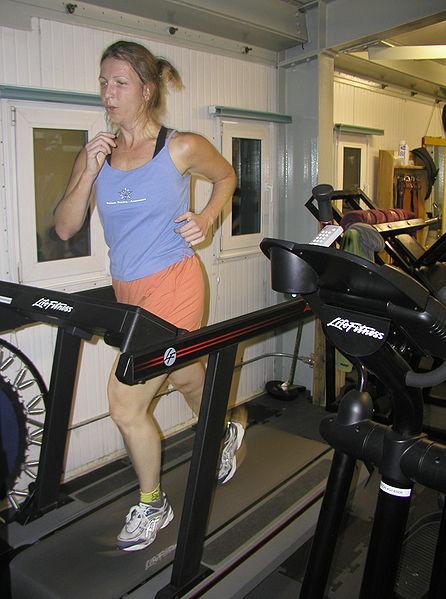
These findings sparked a number of media headlines in different sources including the Daily Telegraph newspaper, the BBC website, and the Guardian newspaper suggesting that exercise is not effective in the treatment of depression.This leap of faith in media reporting in pronouncing that exercise will not help to treat depression as a result of the findings of this trial is quite astonishing but perhaps not surprising.

The devil is, as ever, in the detail and there has been a vociferous response from clinicians and patients alike pointing out the many limitations of the study, including :

1) Questions about the accuracy of self-reported physical activity data ;

2) High drop-out rate during the trial (36.8% and 40.2% at 8 months) ;

3) Lack of a controlled physical activity intervention with doubts about the frequency, intensity, time and type of physical activity undertaken by individuals ;

4) Lack of recording of the exact nature of ‘physical activities’ that were performed by the intervention group including whether these were individual or group activities ;

5) Heterogeneity of possible diagnoses involving depressive symptomatology amongst the study groups (eg bipolar, unipolar, reactive, depressive personality disorder etc) ;

6) Lack of enough well-defined exclusion criteria ;

7) Debate about the suitability of the Beck Depression Inventory for monitoring a treatment response in patients with depression or with depressive symptomatology ;

8) Lack of availability of pre-study physiological parameters (eg VO2 max / Max HR etc) ;

9) Use of an arbitrarily-defined threshold for the ‘desired’ physical activity level ;

10) Lack of controlling for other possible bias and confounding factors (eg psychosocial issues such as alcohol use, unemployment, poverty, previous depressive illness etc).

There is a plethora of evidence for a positive treatment effect of exercise on depression. However, many studies to date have methodological limitations which makes it difficult to make firm conclusions about a treatment effect.
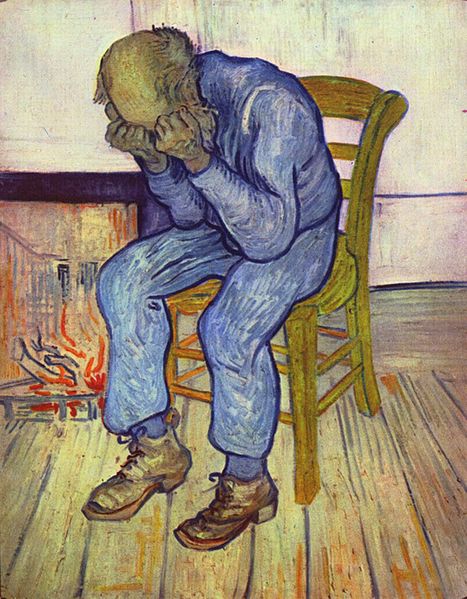
 A Cochrane review conducted by Mead and colleagues in 2010 included 25 relevant randomised controlled trials, many of which had methodological weaknesses, and concluded that exercise did seem to improve symptoms of depression but that the effect sizes were moderate and not statistically significant.

Regardless of the methodological limitations of the TREAD study, given the complicated nature of depression, together with the wider bio-psycho-social associated factors, perhaps a controlled trial to investigate the effects of physical activity on depression is not the correct approach to take, and certainly it looks like few conclusions can be taken from this trial and effectively translated into clinical practice.

If exercise is an effective intervention for some forms of depression then the optimum time, type, frequency, and intensity still remains unknown.

In addition, we are still unsure of the possible mechanisms for a treatment effect of physical activity and exercise on depression. These are complicated and may be divided into physiological and psychological mechanisms including:

1) Physiological – monoamine hypothesis, endorphin hypothesis, regulation of hypothalamo-pituitary axis ;

2) Psychological – distraction, self-efficacy, mastery and social interaction hypotheses.

There may, of course, be a combination of mechanisms involved.

CJSM would like to hear your thoughts about physical activity and exercise as a treatment for depression. In addition, we would like to hear your thoughts about study limitations in general, and issues related to the translation of knowledge into clinical practice.

In the meantime, here are a few blog links mentioning the TREAD study you might want to check out :

1) The lay scientist – Martin Robbins (UK)

2) The ‘Mind’ blog (UK)

3) Scientific American blog (US)

4) About.com depression blog (US)

5) Science Media Centre (NZ)

Leave a Comment

Leave a Comment

References

1) Chalder M et al. 2012. Facilitated physical activity as a treatment for depressed adults: randomised controlled trial. BMJ 2012 344:e2758

2) Baxter H et al. 2010. Physical activity as a treatment for depression: the TREAD randomised trial protocol. Trials 11: 105

3) Mead GE, Morley W, Campbell P, Greig CA, McMurdo M, Lawlor DA. Exercise for depression. Cochrane Database of Systematic Reviews 2009, Issue 3. Art. No.: CD004366. DOI: 10.1002/14651858.CD004366.pub4.

Back to the iPad – explaining spinal conditions to your patients using iSpineCare

Regular blog readers will recall previous posts describing a range of different anatomy applications for the iPhone and iPad, useful for both learning anatomy and for patient education. A particular favourite of mine thus far has been the 3D4Medical series of Apps discussed in a previous blog post, describing anatomy and pathology of various joints in the body, but these have not included an app designed specifically to cover just anatomy and pathology of the spine to date.

Anatomate-Apps (anatomical animation applications) is a Australian Company founded in 2009  by Dr John Hart, in order to develop iTunes applications designed by clinicians involved in the assessment and treatment of patients with spinal conditions, for use as patient education tools.

The over-riding idea is that patients who are given visual and spoken information in the form of interactive digital media during the consultation may experience an improved quality of care overall, as they are better informed about their condition(s) in a way that they can easily understand, and can then go on to make better informed decisions about their subsequent care.

Whilst there are some patients and clinicians such as myself who undoubtedly welcome these applications for use during the consultation, there are other patients and clinicians who will prefer a more traditional approach. Nevertheless, it is hard to argue against the view that the use of applications designed for patient education on the new iDevices is likely to significantly increase in the future, and I for one am using these more and more in my patient consultations to good effect.

iSpineCare is the first spinal anatomy and patient education application for iDevices that I have come across with such a comprehensive and accurate description of spinal anatomy and pathology. Constituting a hefty download at around 1.7GB of information on iPhone or iPad, the application consists of a main menu with folders relating to cervical and lumbar spinal anatomy, movements, and pathologies together with a folder of conservative care options and an exercise library folder.

Navigating through the different sections is easy and quick, and takes you to a context-specific menu which contains links to a series of movies which can be paused, rewound, or fast-forwarded to different points of interest, together with an image library of key stills from the movies allowing for prolonged discussion around particular points of interest. In addition, a pdf document linked to each movie is presented giving a more detailed explanation of different topics.

Another bonus is the availability of medical imaging alongside the individual movies. This section contains a series of x-rays, CT scans and MRI scans and has interactive labels  and reports to help to explain the images further to patients. This section may also be useful for junior clinicians to assist with learning about spinal pathology from a visual perspective.

The quality of the images and in particular the movies is outstanding, with crystal-clear animations allowing for easy recognition of the relevant spinal anatomy and pathologies. Some of the movies have voice-overs explaining salient points, whereas others are animation-only allowing for the clinician to talk the patient through the particular points of interest important for that individual patient to be aware of and focus on during the consultation. In addition, there is a section where particular images can be added to a list of the user’s favourite movies allowing for quick access to a particular user’s most often-used animations.

Another section of movies under the folder ‘Conservative Care’ offers a number of movies describing back-safe ways of performing everyday duties such as gardening, shopping and typing. There are also movies offering advice on a variety of lifestyle topics.

Finally, there is an ‘Exercise Library’ folder with several sub-folders offering animations describing a series of exercises for different purposes including cervical flexibility exercises and core stability exercises.

The overall package is very slick, well thought-out, and accurate in the descriptions of spinal pathologies and anatomical features. Stand-out points are the quality of the animations and the wide range of animations available. An internet connection is not necessary for the app to run, as all of the animations are downloaded embedded within the main app.

Anatomate-Apps also offers other similar applications describing spinal surgery (iSpineOperations) and pain management (iSpinePainManagement), and there are some smaller-sized applications offering information focussed on some particular aspects of spinal pathologies and operations for those who don’t need the larger apps.

As a Sport and Exercise Medicine Physician, I would have liked a little more emphasis on some of the conditions more commonly seen in my patient population including symptomatic spondylolysis, and cervical ‘stingers’ and ‘burners.’  However, most common pathologies are well represented and I can see iSpineCare and iSpinePainManagement becoming an important part of my clinical practice in the future.

Anatomate-Apps are available on the iTunes Apps store, and a video review of iSpineCare highlighting some of its features is available from the App show iPad edition on the link below.

Gearing up for the London 2012 Olympiad – Games Makers at the ready

With less than 8 weeks to go before the opening ceremony of the 2012 Olympiad, London’s preparation for the forthcoming Olympics is moving into the final stages.

There have been a large number of test events so far, two of which I have had the personal privilege of being involved with whilst providing medical cover – namely archery and swimming. The torch relay is well underway, and the media attention in the UK is starting to reach fever pitch.

During the Games, there will be 30 days of competition and around 10 million tickets will be sold. 15,000 athletes will be competing in 46 different sports in a total of 805 events. There will be over 4,000 technical officials, and almost 10,000 team officials on duty.

Of the team delivering the Games, there will be approximately 6,000 staff from the London Organising Committee of the Olympic and Paralympic Games (LOCOG) and more than 125,000 contractors from more than 100 organisations in addition to the volunteer work-force.

A large part of the preparations for the Games is the training of London’s 70,000 or so volunteers, known as the Games Makers. Indeed, volunteers were used for the first time at the Games in 1948 when London was the host City for the second time.

As a member of the medical workforce, I have been required to attend both role-specific training, and venue specific training in order to prepare me for the work ahead as a medical Games Maker volunteer. Role-specific training focuses on some of the generic aspects of the Games Maker role. This includes information about the background to the Games, the venues and the athletes, and offers advice about aspects of the role where Games Makers can make a real difference in delivering a memorable Games to all of our visitors from around the World.

Venue-specific training focuses on the aspects of the individual roles particular to certain venues. Most of the sporting events will take place in the Olympic Park which houses nine venues in total, but there will be other events in different London venues and up and down the Country as well. Competition venues in the Olympic Park include the BMX tract, Water Polo Arena, Velodrome, Copper Box, Riverbank Arena, Basketball Arena, Eton Manor and the Aquatics Centre.

Further afield but still within London, events will take place at Earls Court, Greenwich Park, the Mall, Hampton Court Palace, Horse Guards Parade, Hyde Park, Lord’s Cricket Ground, Wimbledon, the Royal Artillery Barracks, the ExCel Centre, Wembley Arena, North Greenwich Arena, and last but not least Wembley Stadium where I will be assisting in providing medical cover for the football (soccer) events.

Competition venues outside London will include Brands Hatch, Eton Dorney, Hadleigh Farm, Weymouth and Portland, and the Lee Valley White Water Centre.

In addition to the competition areas, there are many other important non-competition venues being used for the Games including Heathrow Airport, St Pancras International Rail Station, the International Broadcast Centre and the Olympic and Paralympic Village that will host 17,000 athletes and team officials during the Olympic Games, and 6,000 athletes and team officials during the Paralympic Games.

Things have largely gone smoothly with the preparations so far, and next weekend I will be collecting my Games Maker uniform and accreditation. There is a real feeling of excitement with the Games just around the corner. Given that the last Games in London was held over 60 years ago, it’s unlikely that I will be able to be involved in a Games taking part in my home City again in my lifetime, and I feel lucky, proud and privileged to be able to make a contribution as a Games Maker in London this time around.

Perhaps of even more importance than my contribution to the Games as a Sport and Exercise Medicine Physician is that of working towards ensuring the success of the Olympic Legacy for health for our Nation. This is the first time that a deliberate and co-ordinated action to attempt to achieve a Legacy for improving the Health of the host Country has been attempted in relation to the Games – this is something that excites me even more than the Games itself. I’ll have more to say about the Olympic Legacy for Health in a future blog post.

Statistics re: 2012 Olympiad taken from the 2012 Games Maker Workbook, pictured

Olympic Torch picture by John Candy at Wikimedia Commons

Olympic Stadium picture at Wikimedia Commons

Leave a Comment

Leave a Comment