The Greatest Show on Earth gets off to a flier – London 2012 Olympics Opening Ceremony

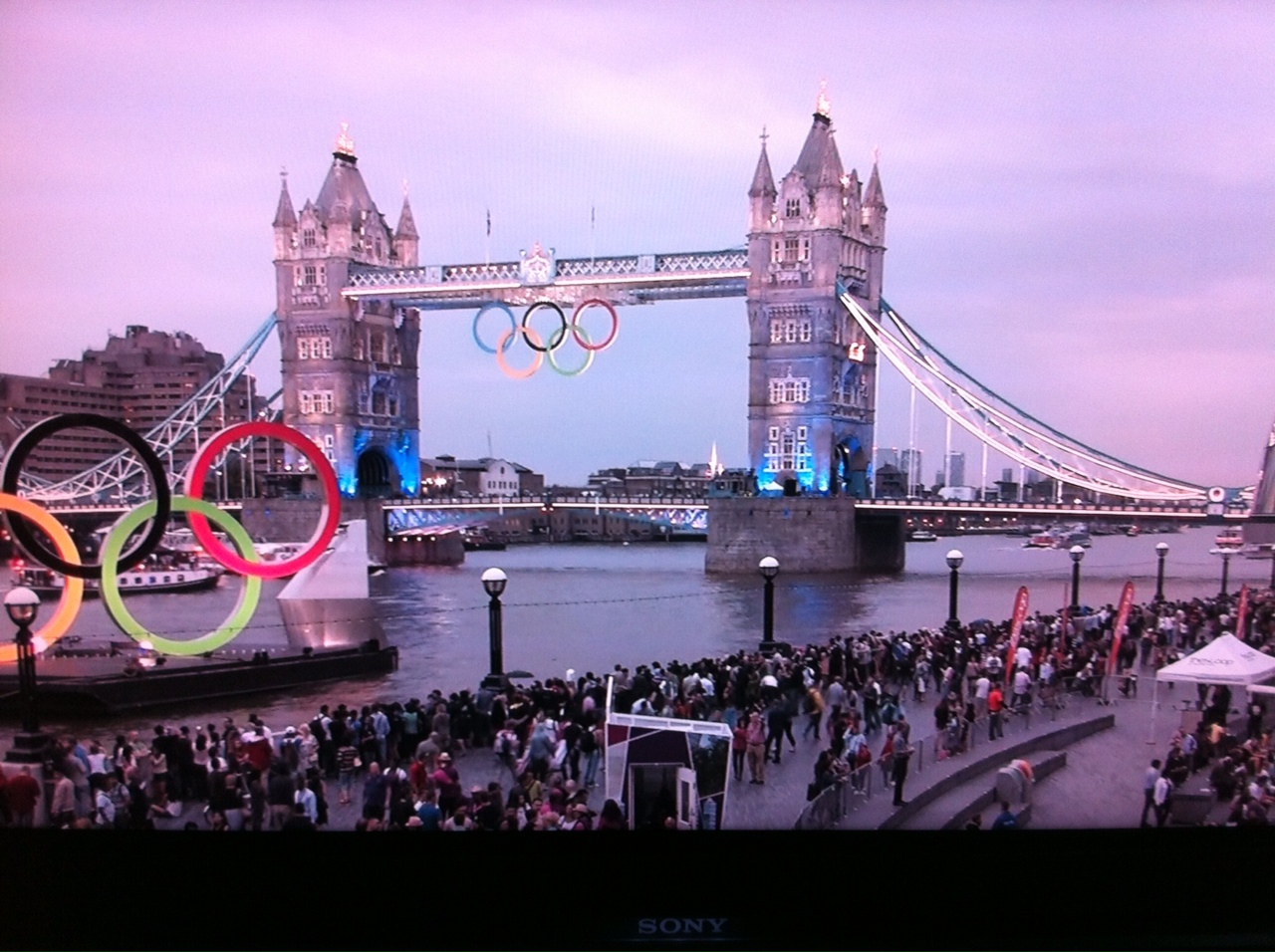
And so to the Games of the XXX Olympiad – London 2012. The self-styled ‘Greatest Show on Earth’ was declared open by Her Majesty Queen Elizabeth the Second following a spectacular opening ceremony culminating in a fireworks display.

Having been shrouded in secrecy prior to the opening night, there had been much debate and rumour as to the nature of the ceremony, and in particular who would be lighting the cauldron. Danny Boyle, a local resident to Olympic Park and perhaps more famous for his movies including blockbusters such as Slumdog Millionaire, was tasked as artistic director of the opening ceremony. His previous experience as a theatre director was probably more relevant and useful to his role in shaping the vision for the ceremony, and this was conducted with a British flavour and sense of humour.


Watched by billions of people around the World, the so-called ‘Isles of Wonder’ ceremony was a triumph. Particular highlights for me included the forging of the Olympic rings during the Industrial Revolution sequence,  the dancing doctors and nurses section highlighting the important role of the NHS and the work of the World-famous pediatric hospital Great Ormond Street, Mr Bean and the ‘Chariots of Fire,’ a skydiving James Bond and ‘Her Majesty the Queen,’ the historical walk through Britain’s music, and a quite beautiful sequence of the lighting of the Olympic cauldron which was performed by seven young future Olympic hopefuls – each sponsored by a British Olympic medalist. The cauldren itself was made up of 204 copper petals representing the number of competing Nations in the Games.

The vast majority of the performers during the Ceremony were Games Maker volunteers, and the diversity of representation made the overall performance very special, as this truly was an inspired welcome from the British people to the World.

Now the serious business of the Games themselves begins. There have already been some powerful performances, including a World record for Kiwi rowing men’s pair Hamish Bond and Eric Murray who demolished the previous World’s best time held by Great Britain rowers Matthew Pinsent and James Cracknell by almost 6 seconds – a huge margin in this event.

On a sadder note, the first doping offences of the Games have already led to withdrawals for two athletes. World indoor High Jump Champion, Dimitris Chondrokoukis, one of Greece’s top hopes for an athletics medal, tested positive for stanozolol. Although he denies ever taking this substance, he withdrew himself from the team. In addition, Hungary’s 2004 Olympic silver medallist Zoltan Kovago refused to take an out-of-competition test. Kovago becomes the second Hungarian discus thrower this year to commit a doping offence, following the news of Robert Fazekas testing positive.
Hopefully, these will be the first and last doping offences of the Games, and the Spirit of the Olympic Games will prevail.There is much to look forward to, and the host Nation, Great Britain, is hoping for a record haul of medals.

Alongside many other medical Games Maker volunteers, I will be working together with my colleagues to provide medical support for the athletes during the Games. This is a great opportunity for Sports Physicians in the UK to be involved with the provision of care during a home Games, and one that I am looking forward to relishing.

The last word on the Games here goes to Baron Pierre de Coubertain, second  President of the International Olympic Committee from 1896-1925, who said that “The most important thing in the Olympic Games is not winning but taking part; the essential thing in life is not conquering but fighting well.”

Enjoy London 2012.

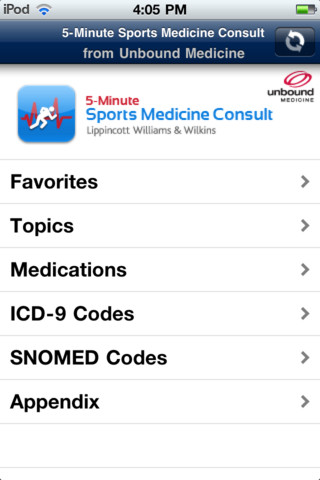
5-Minute Sports Medicine Consult app – essential Sports Medicine knowledge on your iDevice

Many of our blog readers will be familiar with the widely read text published by Lippincott Williams and Wilkins and produced in partnership with the American Medical Society for Sports Medicine (AMSSM), the 5-Minute Sports Medicine Consult, which is now in it’s second edition.

First published in 1991, the book consists of a wide range of topics relevant to Sports Medicine, arranged in alphabetical order for easy reference. The topics are presented in a structured fashion, with similar headings for each topic. These include the Basics which consist of descriptions, epidemiology, etiology, and commonly-associated conditions. Diagnosis follows on from Basics, with history, physical examination findings, diagnostic tests and differential diagnosis. Treatment and ongoing care are then presented, and finally there is a list of additional reading and references for each topic together with ICD9 and 10 codes where relevant, and clinical pearls, with the topic authors listed at the end.

Whilst the hard copy version is a great resource, it is a large text and not practical to take to locations outside of the consulting room. Recently, a kindle edition became available which is a straight copy of the text in the book. Now we have the launch of the electronic version of the text for iOS devices on the Apple App store, including the iPhone and iPad, this information is available to the Sports Physician on the go, and the app offers a whole deal more for users than either the hard copy or the kindle edition.

The startup interface includes links to favourite topics, with all of the topics arranged alphabetically as in the print version. In addition, there are links to medications, ICD-9 codes, SNOMED codes, and 3 separate appendices including musculoskeletal radiography, office rehabilitation, and joint and soft tissue injection.

The entire text of the book is available offline. Individual topics are presented as in the book, with additional features including links to citations on Medline for each reference which makes it easy for the reader to go straight to the abstracts, although this features does require an active Wi-Fi or 3G connection to work.

Where radiological plates and illustrations are included in the source text, these can be seen in the text and figures can be selected and magnified for easy viewing which makes a great improvement on the viewing size of the graphics as seen in the textbook version. The x-rays in particular are very clear when magnified, and this feature is well implemented.

Over 280 separate topics are presented in the text, including over 20 new chapters since the publication of the first edition. Topics are varied, and range from athlete heart syndrome and several bone fractures through to medical disorders including menstrual disorders in the athlete, pericarditis and onychomycosis. Particularly useful are the clinical pearls offered at the end of many of the clinical topics which give useful hints and tips for clinical management of cases.

Each topic can be put into a personal list of favourites by highlighting a ‘star’ tab, for easy reference afterwards of those topics you might want to look at on a regular basis.

The topics are mostly up-to-date, although there are some notable omissions of some reference material that would have been useful to include such as the SCAT2 criteria for assessment of concussion, although these are clearly referenced in the text. in addition, there are a few personal bug-bears such as achilles tendinitis being presented as a topic where the use of the term ‘tendinopathy’ might have been more appropriate, omission of the importance of recognising enthesopathies as possible associations with rheumatological conditions as seen in the entry for plantar fasciitis, and no mention of MRI as a useful investigation for thigh adductor injuries. However, these are minor points and to some extent of personal preference.

The medications tab takes you straight to articles where the relevant medication is listed in the main text. Where a medication is mentioned in several articles, these are all listed with direct links to the relevant article, although one has to read the whole article to find out exactly where the medication is mentioned within the text. ICD-9 and SNOMED code tabs likewise take the reader to the start of the relevant articles where these codes are referenced in the main text.

The appendices of the main text are included in full, together with all their images. Appendix A, Musculoskeletal radiography, contains general tips on ordering x-ray investigations, and is arranged in a regional format with a wide range of different x-ray plates on show. Again, the selection and magnification feature works particularly well here. Unfortunately, there are no other imaging modalities included such as ultrasound, CT, or MRI.

Appendix B, Office Rehabilitation, contains 7 different topics including hamstring strain, patella femoral pain syndrome, ankle sprains, shin splints, plantar fasciitis, rotator cuff tendinitis, and epicondylitis. The articles are written for patients, and useful illustrations are included including exercises and stretches. A useful feature would be able to print out these topics for patients.

The final Appendix focuses on Joint and Soft Tissue Injections, and includes detailed information for the use of soft tissue injections for a wide number of specific indications. Information includes indications for injection, detailed regional anatomy with illustrations, supplies and techniques of injection, and aftercare and is very comprehensive. CPT Codes are also included for reference.

Perhaps the crucial feature that gives a big advantage over the text is the updating tab – this imports regular updates of the text via the web, and ensures that the topic information should be kept up to date.

All in all, this is a well-implemented iOS version of a valued textbook, and I’m sure that many of you will be delighted to have it available to you on the go. It will be of use to clinicians studying for board exams in Sports Medicine who want a focused yet comprehensive summary of a particular topic, and to more senior clinicians who may wish to update themselves on particular topics. Future developments for the iOS version might include the incorporation of other radiological imaging modalities such as MRI, the use of colour images, and perhaps videos of joint injection techniques. The price on the App store compares well with the cost of the hard copy and kindle versions, and with the extra features and regular updates, this one looks a winner all the way.

The 5-Minute Sports Medicine Consult app is available now on the Apple App store for $94.99

Chronic exertional compartment syndrome – the case for the trace. Guest blog by Drs Nat Padhiar & Osama Aweid

In our view, looking at intra-compartment pressure for the diagnosis of chronic exertional compartment syndrome (CECS) without visualising a pressure tracing is like trying to interpret an ECG without the ECG tracing. How do you know what is wrong with the cardiac muscle? We are not for one minute suggesting that the two conditions are the same, but would like to put forward an argument for intra-compartmental pressure (ICP) testing using a pressure tracing as a very useful and more objective tool in making a diagnosis of CECS.

A pressure tracing can provide the following data which can be very useful :

(1)  It allows an opportunity to check whether the catheter is in the right compartment and that the catheter is patent by squeezing the compartment that is being investigated (Fig.1 – below)

Fig.1. Squeezing the compartment being investigated causes a deflection, thus confirming correct placement of the catheter and ensuring its patency.

(2)  One can measure maximum, mean, relaxation and resting pressures (Fig.2. – below)

Fig.2. Dynamic ICP of 4 compartments showing on-line pressure tracing from which maximum, mean, relaxation and resting pressures can be calculated.

(3)  It can detect blockage at tip of the catheter, from wave form changes.

(4)  It can detect whether the catheter has slipped and sitting under the skin, from wave form changes.

(5)  It can detect whether it is part or fully in the blood vessel, from wave form changes.

(6)  In some patients, the increase in ICP is exercise specific. ICP with tracing allows for comparison between different exercises at the time of testing (Fig.3. below)

Fig.3. A Skater being tested on a training mat, activity that brought on his symptoms of CECS. His pressures between jogging on the spot and skating were vastly different in dimension and wave form.

Drs Osama Aweid & Nat Padhiar are co-authors of the systematic review article on ICP monitoring for the diagnosis of CECP in this month’s CJSM

References

Aweid, O; Del Buono, A; Malliaras P; Iqbal, Hassan; Morrissey D; Maffulli N, Padhiar N. Systematic Review and Recommendations for Intracompartmental Pressure Monitoring in Diagnosing Chronic Exertional Compartment Syndrome of the Leg. Clin J Sport Med 22(4): 356-370

Leave a Comment

Leave a Comment

Risk / tolerance approach in return to play decision making – the right approach?

This month’s Editorial in CJSM by Levy and Delaney highlights the issue of the role of the Team Physician in the process of the Preparticipation evaluation.

Team Doctors are often called upon to make a decision about the suitability of an individual for return to play. In this role, the burden of responsibility for the decision making process is likely to lie with the clinician, at least in the first instance, whether or not the team manager and the player decide to follow their advice.

Few would argue that the clinician is best placed to make a definitive ‘medical’ decision on return to play decisions since they are likely to have the most educated opinion about decisions related to the health of the player within the team environment. However, the question of where the responsibility should lie with the ultimate decision made is a contentious one.

In the context of return to play decisions, the clinician offers a medical opinion based on the suitability of the player for a return to play, taking into account the potential risks to the individual. These may include a worsening of a pre-existing injury or medical condition, together with the  potential for further injury or illness as a result of a return to participation in sport.

The factors governing medical decision making in these circumstances are many, and include the clinician’s prior level of medical knowledge, defensive practice and risk-taking in clinical decision making, conflicts of interest (for example doctor versus fan and player versus team), pressure from external sources on return to play, the availability of sports risk modifiers, and the clinician’s perception of the risk ratio of benefit to harm for the patient. On occasion, the clinician must also consider the potential risks to others involved in sport of a participant’s return to competition, for example, with motor vehicle racing in the case of a driver with epilepsy.

Return to play decision making from the coach’s point of view may be governed by a different set of variables including contract issues, perceptions about the importance of the next game and the importance of the particular player to the team, the availability of other players, pressure from internal and external sources, and differences in perceptions about clinical risk to benefit ratios.

Similarly, from the player’s point of view, important factors in their decision making on return to play include their understanding of their own injuries or medical conditions, individual risk-taking behaviour, contract issues, and pressures from internal or external sources.

The key difference in decision making between these three different sources is that the clinician is morally and duty bound to consciously consider the welfare of their patient in the first instance and to prioritise this in their decision making process, whereas the coaching staff may have an entirely different set of priorities, and the player may well put other factors in front of their own health.

Who should have the final say on return to play decisions?

As described in this month’s CJSM Editorial by Levy and Delaney , the authors take a novel ‘risk / tolerance’ approach in the preparticipation evaluation setting, starting with a clinical assessment of risk made by the team medical staff based on four different risk category classes, which are in turn based on subjective criteria of the medical team’s perception of risk to an individual of participation in sport. This risk category class is then shared with the management and with the player, and the management then make their own decisions based on this information.

The authors argue that this is a transparent system which can serve to inform and to help everyone involved, and removes the clinician’s absolute responsibility in the decision-making process.

However, a question one might ask is it simply passing the buck? Taken to its logical conclusion, this could result in a return to play for a player whom the medical staff consider is medically unsuitable for play. Is this the right approach?

Creighton and colleagues previously published a 3-step decision-based return to play model in an attempt to clarify the processes that clinicians follow both consciously and subconsciously when making return to play decisions, and to provide a structure for this decision making process.

Could Levy and Delaney’s risk / tolerance approach model logically follow on from the 3-step decision-based return to play model described by Creighton and colleagues? Would this work in Practice? Do any of our readers currently adopt a similar approach, or is this just a simplification of a far more complicated decision-making process?

CJSM would like to hear your thoughts.

References

Leave a Comment

Leave a Comment

1) Levy, David ; Delaney,  J.Scott. A Risk/Tolerance Approach to the Preparticipation Examination. Clin J SportMed. 2012;22:309-310 

2) Creighton DW, Shrier I, Shultz R, et al. Return-to-play in sport: a decision-based model. Clin J SportMed. 2010;20:379-385

3) Shrier I et al. 2010. The Sociology of Return-to-Play Decision Making:A Clinical Perspective. Clin J SportMed. 2010;20:333-335

Photograph – Josef Schmitt – Germany FC National Football Team Doctor. Wikimedia Commons