Ovid Concussion to consequence Webinar – Managing Sport-related Concussion On & Off the Field – Tuesday 18th October 2011 12:00pm EST
September 18, 2011 1 Comment
 Many of our readers will be involved on a regular basis with the management of sports participants with concussion, whether that is at the pitch side, at the training ground, or in a secondary or tertiary care environment.
As part of the Ovid webcast series, there is a forthcoming event on the Management of Sport-related Concussion both on and off the field on Tuesday, October 18, 2011 at 12:00PM Eastern / 9:00AM Pacific time.
Margot Putukian, Director of Athletic Medicine at Princeton University, Past President of the American Medical Society for Sports Medicine, and member of the NFL’s Head, Neck and Spine Committee will be joining John D. Corrigan, Professor in the Department of Physical Medicine and Rehabilitation at Ohio State University and Editor-in-Chief of the Journal of Head Trauma Rehabilitation for a 60 minute discussion on what is known, and what is not known about managing concussion as an acute event – particularly in the context of sports, and as a marker within a person’s lifetime history of effects on brain functioning.
You can register for the Concussion to Consequence Ovid Webcast here.
For those of you who are not familiar with the Ovid Webinars and podcasts, these resources highlight a wide range of current issues in the health sciences and medicine and are well worth checking out. Archived Webinars can be found here, and the iTunes series of Ovid podcasts has free podcast downloads here.
Most of you will be familiar with the Consensus statement on Concussion in Sport from the 3rd International Conference on Concussion in Sport held in Zurich, 2008 which is available in full text online from CJSM, together with appendices including the second full Sports Concussion Assessment Tool (SCAT2) and Pocket SCAT2.
Some questions I have for our blog readers include :
1) How useful do you find the Pocket SCAT2 in practice? What are it’s pros and cons?
2) Are you using SCAT2 as part of preparticipation evaluation baseline screening and, if so, how useful do you find it?
3) What improvements do you think could be made to SCAT2 and the Pocket SCAT2?
CJSM would like to hear your views.

Leave a Comment


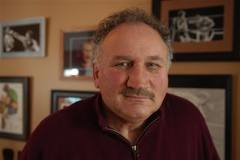 I was saddened to hear of the death of the ‘Fighting Frenchman,’ Alan Scott LeDoux last week. LeDoux died of Amyotrophic Lateral Sclerosis (ALS), also widely known as Lou Gehrig’s disease, which was originally diagnosed in 2008. He had a distinguished and colourful career having fought many famous heavyweight fighters including George Foreman, Larry Holmes, Leon Spinks, Ken Norton, and Gerry Coetzee. He also fought Muhammad Ali in a five round exhibition match, and his final bout was against Britain’s Frank Bruno in 1983 which ended in a technical knock-out. LeDoux ended his career with a record of 33-13-4, with 22 knockouts.
 Clinical Journal of Sport Medicine Blog