CJSM makes an even bigger impact

We are pleased to report that the Clinical Journal of Sport Medicine saw an increase in its 2010 Impact Factor, with a new figure of 2.110.
CJSM is now at #17 amongst all journals in the Orthopaedics category, a rise from #25 last year, and at #25 amongst all journals in the Sport Science category which represents a leap from #32 last year.

The message is simple – if you want your research in the field of Sport and Exercise Medicine to be cited, CJSM is the place to publish.

The concept of the Impact Factor was first introduced by Eugene Garfield in 1955, the founder of the Institute for Scientific Information which is now part of Thomson Reuters. For those of you who would like to learn a little more about Impact Factors, a good place to start is the Thomson Reuters Web of Knowledge website which goes into some detail in explaining the concept of the Impact Factor . Interested readers can find out more about the history and meaning of the Impact Factor from Garfield’s presentation given at the International Congress on Peer Review and Biomedical Publication in Chicago, 2005 which is freely available as a pdf file online (requires Adobe Acrobat Reader to view, available for free here).

The Clinical Journal of Sport Medicine – making a real impact in the world of Sport and Exercise Medicine.

A feat too far for Haye?

Injuries to the feet of prominent athletes have caused some high-profile headlines over the last few years. In the UK, most football fans will remember the National crisis over David Beckham and Wayne Rooney who both had metatarsal injuries prior to important International football tournaments.
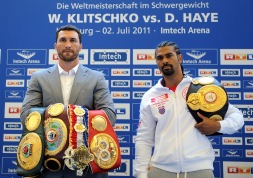
There was yet another cause for much discussion and debate following the World Heavyweight Championship boxing clash at the weekend between Wladamir Klitschko and David Haye in Hamburg, when Haye implicated a recent foot injury in his downfall.

Haye mentioned that he had sustained an injury to his right little toe approximately three weeks prior to the fight which had interfered with his preparation, causing him to stop his pre-fight sparring. He also said that he had had a local anaesthetic injection just before the clash with Klitchsko, which was the reason for his late entry to the ring on the night. Haye told viewers that the toe injury had caused him to have problems pushing off in order to land his right hand punches, which he thought had possibly affected the outcome of the fight.

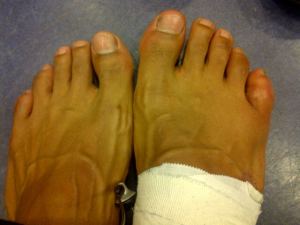
The issue was highighted by Haye himself the day after the fight on Twitter, when he posted this picture taken by himself of his feet, showing the external appearance of the alleged injury to his right little toe. This suggests a fracture of the proximal phalanx, but I have not seen an x-ray to confirm this. He was also to show off his injured toe at the post-fight press conference.

Perhaps predictably, Haye’s claims were met with derision by many prominent people involved in the sport including boxers and journalists who thought that he was making excuses for his ineffective performance in the fight. Klitschko himself thought that Haye had opened himself to being criticised as a ‘sore loser,’ and when showed the offending toe by Haye laughed saying ‘it’s a bee sting.’ However, some individuals, notably including the former World Heavyweight Champion UK boxer Frank Bruno, stated that they felt that the injury would have significantly hampered Haye during the fight and that he should not have fought.
The debate as to whether or not Haye’s injury affected the outcome of the fight rests largely on an understanding of the biomechanics of boxing, including the effect of the injury on posture and mobility around the ring, plus the effect on the delivery of punches and their power, together with an understanding of the principle of the kinetic chain. Torsion and ground reaction forces are important factors to consider. Haye claimed that he was unable to ‘explode off my foot with the Hayemaker’ (right-handed power punch), which would imply a problem most likely with initially shifting his weight towards the front and lateral border of his right foot whilst in a semi-crouching position in preparation to push forwards and upwards through the medial border of the right foot whilst throwing a full right-handed punch.

However, it is perhaps hard to imagine why it was this particular position which would have caused most of his problems as he would be required to adopt very similar positions whilst manouvering around the ring and dodging and weaving during defensive manouvres. The former Liverpool Football Club Physiotherapist, Mark Leather, wrote in the Mail Online that he felt that ‘the biomechanics of his (Haye’s) argument do not stand up.’  However, I could find nothing on the effect of toe injuries on the biomechanics of boxing and on performance in the literature, and nothing specifically on foot biomechanics as related to performance in boxing.

There are, of course, other considerations pertaining to Haye’s injury, for example the effectiveness of local anaesthetics and protective orthoses. Psychological factors must also be considered, including the effect on the performance of a boxer entering the ring for a World Heavyweight Championship fight with an injury.

At least Haye has a sense of humour about it all. Having been subjected to derision by many in the media and on Twitter, he had the ability to make a few quips, claiming to have been offered a movie role in next year’s remake of ‘Scarface’ playing Toe-ny Montana!

What do you think? Was Haye making excuses, or do you think that he had a point? CJSM would love to hear your views.

(image taken by David Haye and posted on Twitter here)

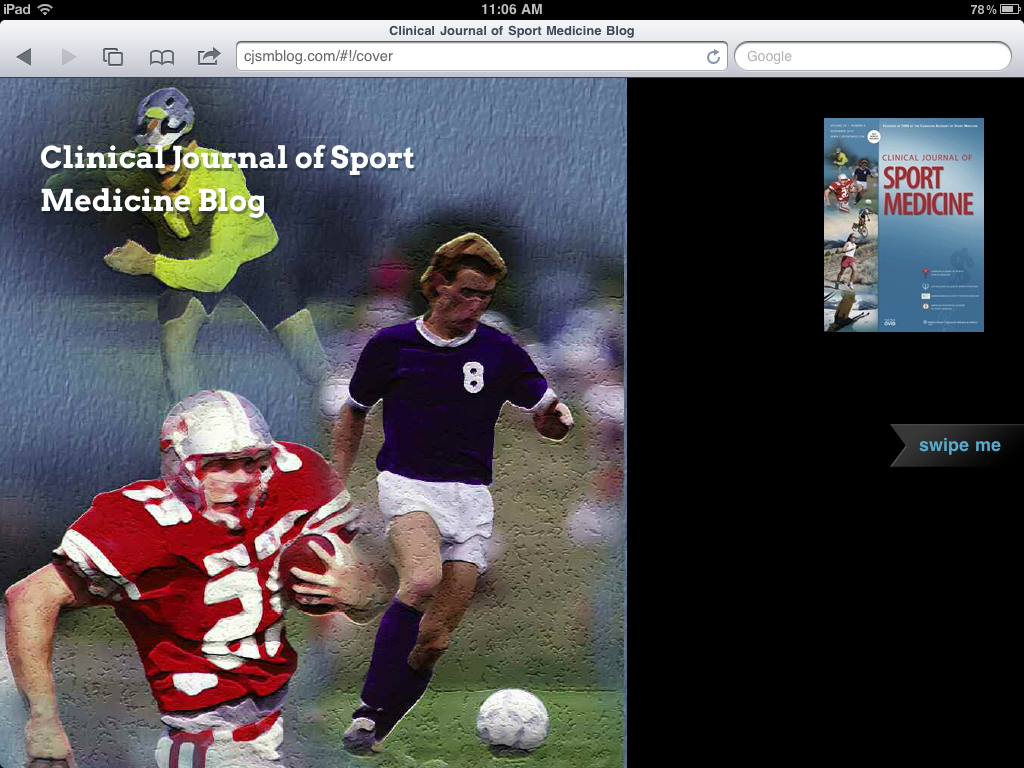
NEW – CJSM Blog iPad Edition

All of you lucky iPad owners out there (and according to Apple, that’s 25 million of you) now have the chance to view the new iPad edition of the CJSM Blog for free!

The iPad edition, fully compatible with iPad 1 and 2, is presented in a magazine style format that allows you to turn the pages easily with just a swipe of your finger. This format is really easy to use, and has the feel of reading a traditional glossy magazine. It’s also a great way to show off your iPad to your friends and colleagues, and has a real ‘wow’ factor built in. Once you have turned the cover page, you will access the ‘all posts’ page where individual blog posts are listed in boxes and easily accessed with the tap of a finger. This makes it really easy to link to the posts you want to read straight away.


There is a menu on the upper right hand screen of the ‘all posts’ page which allows you to select individual categories of blog posts to list on the posts page if you wish, so you can just see the categories you wish to access.

When you access individual blog posts, they will appear in a scrolling format, with the ability to read other readers’ comments and to add your own by pressing the word cloud icon in the top right hand corner of the post. In addition, you can share the blog posts with your friends and colleagues easily by email, or by several social media and knowledge sharing applications using the icons at the bottom of the blog post page which link directly to Facebook, Twitter, StumbleUpon and Reddit. In addition, you can easily switch to the traditional browser format of the blog if you want to.

We at CJSM are excited with the new iPad edition of the blog and hope that you will enjoy it too. It’s so easy to share the posts with your friends and colleagues and to get involved with the conversation. Come and give it a go, and don’t forget to let us know what you think.

Preparticipation screening and new player medicals – a few points to ponder

It’s currently pre-season in the UK for our Football Leagues, and many Football Club doctors like myself are being kept busy with new player signing medicals and pre-participation evaluations (PPE).

Despite the widespread use of pre-participation evaluation testing, there is still little consensus on the exact nature, composition, and effectiveness of the PPE as a screening procedure for the primary and secondary prevention of medical conditions, and as part of an overall injury prevention strategy. Similarly, there is much variation in the way that new player medicals are conducted, depending amongst other things on the Country, the Sport, and the availability of local resources.

During the PPEs in which I have been involved, in a number of different settings and in the context of a number of different sports and with a number of different teams, I have always wondered if I have been performing the most appropriate examinations and ordering the correct investigations at the right time to make a difference to the health of the sports participant.

Here are just three of many different points to ponder with regard to PPEs and player screening medicals :

1) Special tests in physical examination – which, when, who and why?

Many PPE and medical screening proformas include a battery of physical examination tests which must be completed and ticked off as either ‘normal’ or showing some abnormality which may or may not have particular relevance. One has to consider which tests are appropriate for different individuals in different sports, and the reliability and validity of these tests. It is easy to forget the difference in pre-test probabilities when comparing asymptomatic athletes with those with specific symptoms, and sometimes a puzzle to know what to do if some of the tests do turn out to be positive. Who conducts the examination obviously has an effect on reliability, validity and reproducibility. Importantly, we need to ask ourselves why we are doing the tests – is it to detect problems and potential issues, to document ‘baseline’ observations against future observations, or both?

2) Cost-effectiveness

There is a wide variation of resources available to different teams and individual athletes, and it is sometimes hard to know if a screening programme or new player medical is a cost-effective intervention. What’s even harder is to work out is which tests and investigations are the ones that are likely to give the most ‘bang for your buck.’ One example is the routine MRI scanning employed by some Football Clubs as a screening tool to detect joint problems. These are done at considerable cost, and may detect lesions whose natural history may be difficult to interpret when put into context of the whole clinical picture.

For those Clubs that are less well off, can the cost of video-analysis and functional movement testing be justified as cost-effective? What about ‘routine’ blood tests for haemoglobin and iron etc?

3) Risk-benefit ratio

Using the MRI screening issue as an example, if an asymptomatic lesion is discovered which may have a poorly understood natural course, in sharing that information with the individual how much physical and possibly psychological harm can be caused? Will scans lead to unnecessary and possibly harmful interventions? Will the results affect the player’s career in terms of ongoing transfers? Will player concern about lesions detected on scans lead to poor performance?

There are still perhaps many more questions to be answered in relation to PPE and new player medicals than we currently have the evidence-based answers for.

Check out this 2004 thematic issue of CJSM for a wider look at some of the issues involved in PPE. The other resource well worth a read is the 4th Edition of ‘Preparticipation Physical Evaluation’ published by the American Academy of Pediatrics and co-authored by the AAFP, AAP, ACSM, AMSSM, AOSSM and AOASM.

CJSM would like to know about your experience with PPEs and new player medicals – what dilemmas you have come across with these, and what goes on in your PPEs and new player medicals?

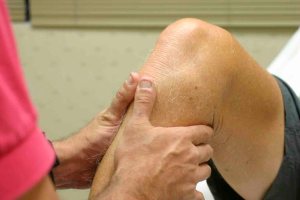
(photograph by Charlie Goldberg, UCSD School of Medicine)