2012 Olympics – the author’s experience

Things have been particularly busy for myself and for around 70,000 other Games Maker volunteers  working at London 2012 during the last few weeks, and I thought I’d share some of my experiences with you.

Having never been involved in an Olympics before, London 2012 represented  a wonderful opportunity for me and for many others to become a part of the numerous medical teams providing care for the Olympic athletes and their support staff.

My journey to the Games began, like that of many others, with an application process over a year ago and involved submitting an online application to the Games Maker website where information about previous experience and qualifications was sought. Following this, prospective volunteers were selected for interview, and I was one of the lucky ones to be given the chance to shine. This was a fairly straightforward process, and following this I was selected to become a member of one of the medical teams.

I was initially scheduled to be providing medical care for the triathlon and road cycling, but following a conversation with some of the senior medical staff and after some arm twisting, I found myself in my preferred, familiar position as part of the field-of-play team providing medical care for the soccer tournament.

After finding out about my placement, I attended role-specific training and then further venue-specific training at my main venue, Wembley Stadium in London, where the finer points of the aspects of medical care provision specific to that venue were detailed.

In addition to providing care at Wembley on match days, I was also one of those responsible for providing medical care at several soccer training venues throughout London. These venues were situated in a number of different locations within easy reach of the Olympic Village, and were well prepared and stocked with all of the equipment necessary for providing an excellent standard of immediate medical care.

Most of the soccer teams had physiotherapy and medical support within their ranks, and the job of the football medical support team was mainly to provide additional support as necessary, including emergency medical support for serious injuries.

Shift times at the various venues were varied, as was the skill-mix and team members on each day, although there was continuity with the team leaders at the main venue.

On each match day, following familiarisation and a daily orientation and planning meeting, the field-of-play team practised on-pitch and pitch-side management including immediate medical management and retrieval, simulating various scenarios including the unconscious patient with suspected spinal cord injury, cardiac arrests, head injuries and major limb injuries.

Following each of the events, a debriefing session was held where aspects of the care provided that day were discussed, and lessons were learned where they needed to be learnt.

Memorable points for me were the friendliness and camaraderie of the members of the field-of-play team and the other volunteers, the enthusiastic and overwhelmingly positive crowds, and the high-quality of soccer on show from both the mens’ and womens’ teams.

The final matches for both events attracted over 86,000 spectators, and were particularly memorable for the medal ceremonies afterwards.

Although I didn’t get to see the Olympic Park or to the polyclinic in person, I was fortunate enough to speak to several other medical colleagues based at these venues and they all commented on what a fantastic experience the Games had been for them, and how well organised the medical care was throughout the many different venues.

All-in-all, this was a magical event in which to be involved as a Sports Physician. I made new friends, learned some useful medical tips and hints, saw some excellent quality soccer, and had fun. The key word for me throughout the events was teamwork, and this really shone through from the field-of-play team.

Now for the 2012 Paralympics starting on the 29th of August, where an estimated 4,200 athletes will be competing in 503 events in 21 different sports.This will be the biggest Paralympic games in history, and this time I’ll be looking forward to relaxing whilst spectating rather than providing medical cover at the events.

Pictures :

Top – the author at Wembley prior to game-time ; Middle – Wembley Stadium ; Bottom – Field-of-Play team practising pitch-side retrieval

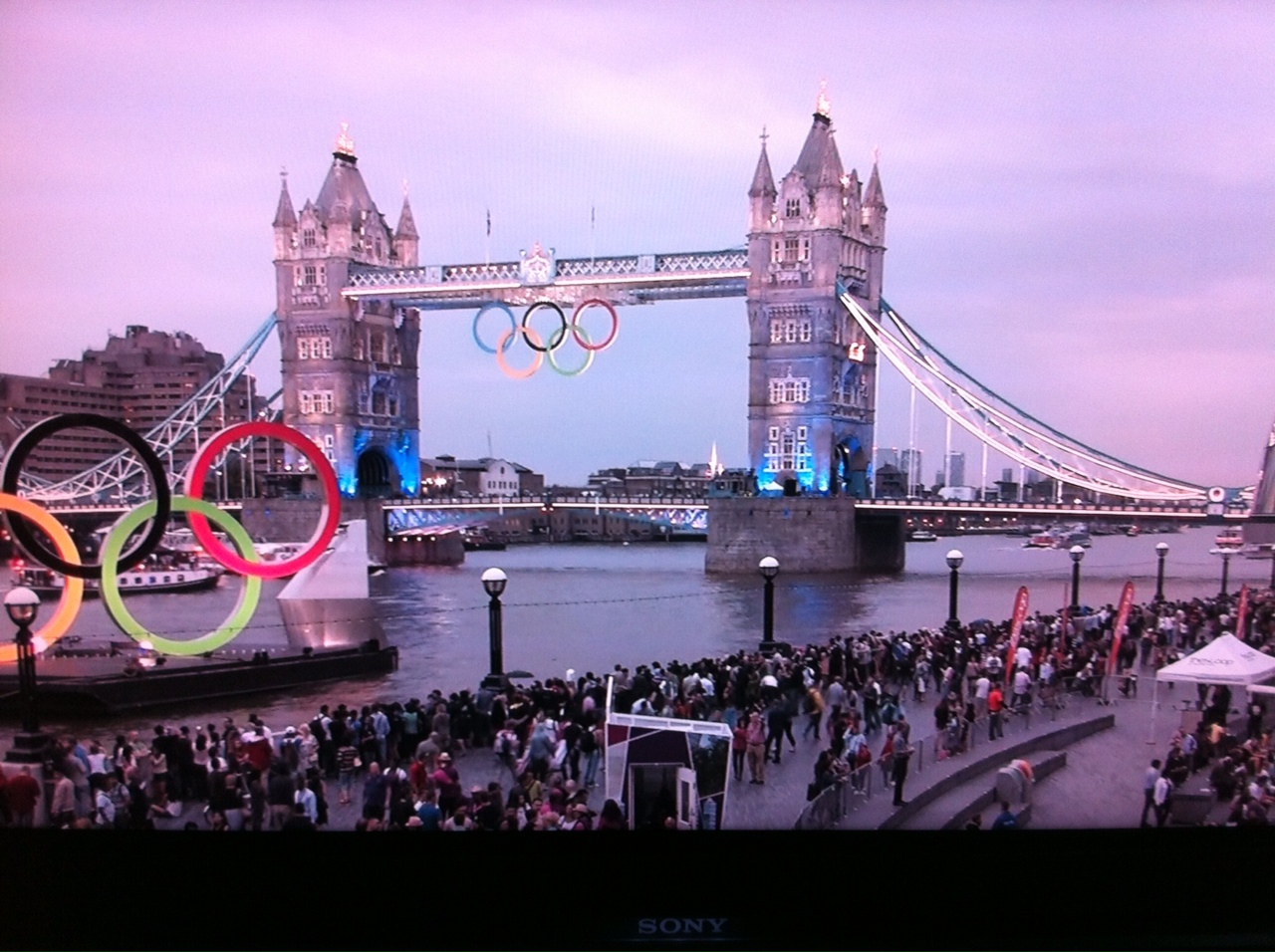
The Greatest Show on Earth gets off to a flier – London 2012 Olympics Opening Ceremony

And so to the Games of the XXX Olympiad – London 2012. The self-styled ‘Greatest Show on Earth’ was declared open by Her Majesty Queen Elizabeth the Second following a spectacular opening ceremony culminating in a fireworks display.

Having been shrouded in secrecy prior to the opening night, there had been much debate and rumour as to the nature of the ceremony, and in particular who would be lighting the cauldron. Danny Boyle, a local resident to Olympic Park and perhaps more famous for his movies including blockbusters such as Slumdog Millionaire, was tasked as artistic director of the opening ceremony. His previous experience as a theatre director was probably more relevant and useful to his role in shaping the vision for the ceremony, and this was conducted with a British flavour and sense of humour.


Watched by billions of people around the World, the so-called ‘Isles of Wonder’ ceremony was a triumph. Particular highlights for me included the forging of the Olympic rings during the Industrial Revolution sequence,  the dancing doctors and nurses section highlighting the important role of the NHS and the work of the World-famous pediatric hospital Great Ormond Street, Mr Bean and the ‘Chariots of Fire,’ a skydiving James Bond and ‘Her Majesty the Queen,’ the historical walk through Britain’s music, and a quite beautiful sequence of the lighting of the Olympic cauldron which was performed by seven young future Olympic hopefuls – each sponsored by a British Olympic medalist. The cauldren itself was made up of 204 copper petals representing the number of competing Nations in the Games.

The vast majority of the performers during the Ceremony were Games Maker volunteers, and the diversity of representation made the overall performance very special, as this truly was an inspired welcome from the British people to the World.

Now the serious business of the Games themselves begins. There have already been some powerful performances, including a World record for Kiwi rowing men’s pair Hamish Bond and Eric Murray who demolished the previous World’s best time held by Great Britain rowers Matthew Pinsent and James Cracknell by almost 6 seconds – a huge margin in this event.

On a sadder note, the first doping offences of the Games have already led to withdrawals for two athletes. World indoor High Jump Champion, Dimitris Chondrokoukis, one of Greece’s top hopes for an athletics medal, tested positive for stanozolol. Although he denies ever taking this substance, he withdrew himself from the team. In addition, Hungary’s 2004 Olympic silver medallist Zoltan Kovago refused to take an out-of-competition test. Kovago becomes the second Hungarian discus thrower this year to commit a doping offence, following the news of Robert Fazekas testing positive.

Hopefully, these will be the first and last doping offences of the Games, and the Spirit of the Olympic Games will prevail.There is much to look forward to, and the host Nation, Great Britain, is hoping for a record haul of medals.

Alongside many other medical Games Maker volunteers, I will be working together with my colleagues to provide medical support for the athletes during the Games. This is a great opportunity for Sports Physicians in the UK to be involved with the provision of care during a home Games, and one that I am looking forward to relishing.

The last word on the Games here goes to Baron Pierre de Coubertain, second  President of the International Olympic Committee from 1896-1925, who said that “The most important thing in the Olympic Games is not winning but taking part; the essential thing in life is not conquering but fighting well.”

Enjoy London 2012.

Risk / tolerance approach in return to play decision making – the right approach?

This month’s Editorial in CJSM by Levy and Delaney highlights the issue of the role of the Team Physician in the process of the Preparticipation evaluation.

Team Doctors are often called upon to make a decision about the suitability of an individual for return to play. In this role, the burden of responsibility for the decision making process is likely to lie with the clinician, at least in the first instance, whether or not the team manager and the player decide to follow their advice.

Few would argue that the clinician is best placed to make a definitive ‘medical’ decision on return to play decisions since they are likely to have the most educated opinion about decisions related to the health of the player within the team environment. However, the question of where the responsibility should lie with the ultimate decision made is a contentious one.

In the context of return to play decisions, the clinician offers a medical opinion based on the suitability of the player for a return to play, taking into account the potential risks to the individual. These may include a worsening of a pre-existing injury or medical condition, together with the  potential for further injury or illness as a result of a return to participation in sport.

The factors governing medical decision making in these circumstances are many, and include the clinician’s prior level of medical knowledge, defensive practice and risk-taking in clinical decision making, conflicts of interest (for example doctor versus fan and player versus team), pressure from external sources on return to play, the availability of sports risk modifiers, and the clinician’s perception of the risk ratio of benefit to harm for the patient. On occasion, the clinician must also consider the potential risks to others involved in sport of a participant’s return to competition, for example, with motor vehicle racing in the case of a driver with epilepsy.

Return to play decision making from the coach’s point of view may be governed by a different set of variables including contract issues, perceptions about the importance of the next game and the importance of the particular player to the team, the availability of other players, pressure from internal and external sources, and differences in perceptions about clinical risk to benefit ratios.

Similarly, from the player’s point of view, important factors in their decision making on return to play include their understanding of their own injuries or medical conditions, individual risk-taking behaviour, contract issues, and pressures from internal or external sources.

The key difference in decision making between these three different sources is that the clinician is morally and duty bound to consciously consider the welfare of their patient in the first instance and to prioritise this in their decision making process, whereas the coaching staff may have an entirely different set of priorities, and the player may well put other factors in front of their own health.

Who should have the final say on return to play decisions?

As described in this month’s CJSM Editorial by Levy and Delaney , the authors take a novel ‘risk / tolerance’ approach in the preparticipation evaluation setting, starting with a clinical assessment of risk made by the team medical staff based on four different risk category classes, which are in turn based on subjective criteria of the medical team’s perception of risk to an individual of participation in sport. This risk category class is then shared with the management and with the player, and the management then make their own decisions based on this information.

The authors argue that this is a transparent system which can serve to inform and to help everyone involved, and removes the clinician’s absolute responsibility in the decision-making process.

However, a question one might ask is it simply passing the buck? Taken to its logical conclusion, this could result in a return to play for a player whom the medical staff consider is medically unsuitable for play. Is this the right approach?

Creighton and colleagues previously published a 3-step decision-based return to play model in an attempt to clarify the processes that clinicians follow both consciously and subconsciously when making return to play decisions, and to provide a structure for this decision making process.

Could Levy and Delaney’s risk / tolerance approach model logically follow on from the 3-step decision-based return to play model described by Creighton and colleagues? Would this work in Practice? Do any of our readers currently adopt a similar approach, or is this just a simplification of a far more complicated decision-making process?

CJSM would like to hear your thoughts.

References

Leave a Comment

Leave a Comment

1) Levy, David ; Delaney,  J.Scott. A Risk/Tolerance Approach to the Preparticipation Examination. Clin J SportMed. 2012;22:309-310 

2) Creighton DW, Shrier I, Shultz R, et al. Return-to-play in sport: a decision-based model. Clin J SportMed. 2010;20:379-385

3) Shrier I et al. 2010. The Sociology of Return-to-Play Decision Making:A Clinical Perspective. Clin J SportMed. 2010;20:333-335

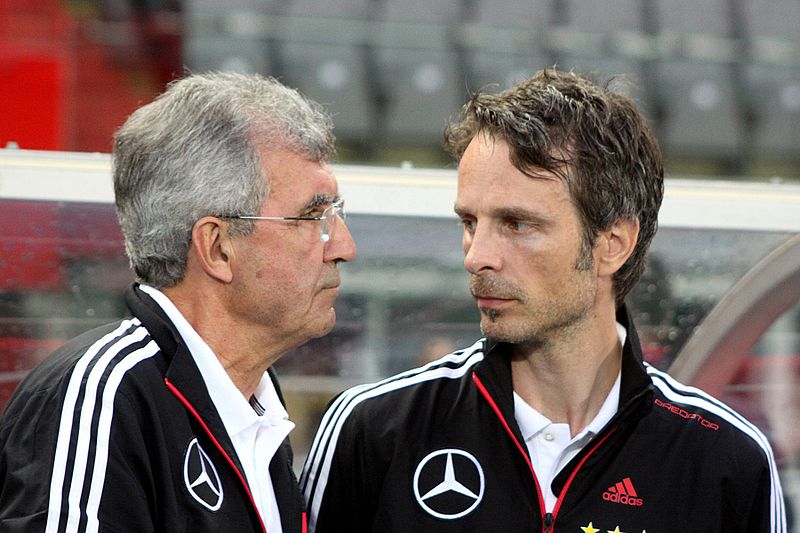
Photograph – Josef Schmitt – Germany FC National Football Team Doctor. Wikimedia Commons

Gearing up for the London 2012 Olympiad – Games Makers at the ready

With less than 8 weeks to go before the opening ceremony of the 2012 Olympiad, London’s preparation for the forthcoming Olympics is moving into the final stages.

There have been a large number of test events so far, two of which I have had the personal privilege of being involved with whilst providing medical cover – namely archery and swimming. The torch relay is well underway, and the media attention in the UK is starting to reach fever pitch.

During the Games, there will be 30 days of competition and around 10 million tickets will be sold. 15,000 athletes will be competing in 46 different sports in a total of 805 events. There will be over 4,000 technical officials, and almost 10,000 team officials on duty.

Of the team delivering the Games, there will be approximately 6,000 staff from the London Organising Committee of the Olympic and Paralympic Games (LOCOG) and more than 125,000 contractors from more than 100 organisations in addition to the volunteer work-force.

A large part of the preparations for the Games is the training of London’s 70,000 or so volunteers, known as the Games Makers. Indeed, volunteers were used for the first time at the Games in 1948 when London was the host City for the second time.

As a member of the medical workforce, I have been required to attend both role-specific training, and venue specific training in order to prepare me for the work ahead as a medical Games Maker volunteer. Role-specific training focuses on some of the generic aspects of the Games Maker role. This includes information about the background to the Games, the venues and the athletes, and offers advice about aspects of the role where Games Makers can make a real difference in delivering a memorable Games to all of our visitors from around the World.

Venue-specific training focuses on the aspects of the individual roles particular to certain venues. Most of the sporting events will take place in the Olympic Park which houses nine venues in total, but there will be other events in different London venues and up and down the Country as well. Competition venues in the Olympic Park include the BMX tract, Water Polo Arena, Velodrome, Copper Box, Riverbank Arena, Basketball Arena, Eton Manor and the Aquatics Centre.

Further afield but still within London, events will take place at Earls Court, Greenwich Park, the Mall, Hampton Court Palace, Horse Guards Parade, Hyde Park, Lord’s Cricket Ground, Wimbledon, the Royal Artillery Barracks, the ExCel Centre, Wembley Arena, North Greenwich Arena, and last but not least Wembley Stadium where I will be assisting in providing medical cover for the football (soccer) events.

Competition venues outside London will include Brands Hatch, Eton Dorney, Hadleigh Farm, Weymouth and Portland, and the Lee Valley White Water Centre.

In addition to the competition areas, there are many other important non-competition venues being used for the Games including Heathrow Airport, St Pancras International Rail Station, the International Broadcast Centre and the Olympic and Paralympic Village that will host 17,000 athletes and team officials during the Olympic Games, and 6,000 athletes and team officials during the Paralympic Games.

Things have largely gone smoothly with the preparations so far, and next weekend I will be collecting my Games Maker uniform and accreditation. There is a real feeling of excitement with the Games just around the corner. Given that the last Games in London was held over 60 years ago, it’s unlikely that I will be able to be involved in a Games taking part in my home City again in my lifetime, and I feel lucky, proud and privileged to be able to make a contribution as a Games Maker in London this time around.

Perhaps of even more importance than my contribution to the Games as a Sport and Exercise Medicine Physician is that of working towards ensuring the success of the Olympic Legacy for health for our Nation. This is the first time that a deliberate and co-ordinated action to attempt to achieve a Legacy for improving the Health of the host Country has been attempted in relation to the Games – this is something that excites me even more than the Games itself. I’ll have more to say about the Olympic Legacy for Health in a future blog post.

Statistics re: 2012 Olympiad taken from the 2012 Games Maker Workbook, pictured

Olympic Torch picture by John Candy at Wikimedia Commons

Olympic Stadium picture at Wikimedia Commons

Leave a Comment

Leave a Comment