Boosting – time to be aware

Most Sports Physicians are well aware of the issue of doping in elite sport and many of the methods used by sports participants. However, some of us may well not have come across a method used by some athletes with a disability called ‘Boosting.’ With the forthcoming Paralympics just around the corner, now is the time to consider this method of doping for those of us who are involved with events later on this year in London 2012.

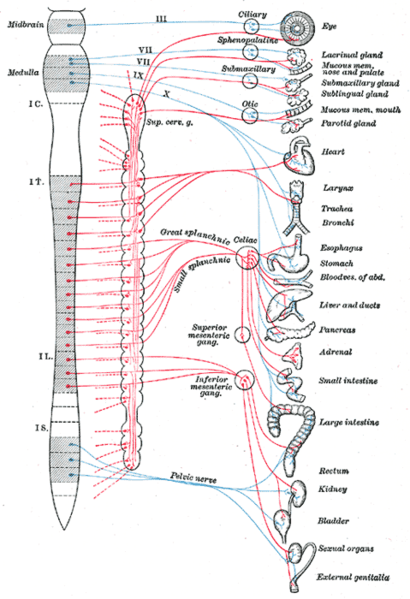
Some athletes with a high level spinal cord injury (T6 and above) may voluntarily induce an episode of autonomic dysreflexia (AD) prior to, or during, an event in order to enhance their performance. A variety of methods may be used by athletes, including clamping catheters, sitting on sharp objects, and using tight leg straps.

The resulting physiological response leads to a significantly raised blood pressure, with improved blood flow to working muscles. The performance enhancement that may ensue as a result of this response may be significant and lead to an improvement in VO2.

It is not always easy to determine whether or not a deliberate attempt to induce AD has taken place as AD is not uncommonly caused by a number of common triggers including urinary retention due to catheter blockage or misplacement, infections, constipation, or noxious stimuli from other sources such as pain due to a lower limb injury.

My first clinical encounter with a patient with AD was during my registrar training when I was working on a spinal cord injuries unit (SCIU) – the cause on that occasion was a blocked catheter. Recognition was swift due to the awareness of the ward nursing staff to the condition. The patient was treated with nifedipine plus a catheter replacement and bladder washout, and made a swift and uneventful recovery. I was to encounter a few more episodes of AD occurring in in-patients during the next 6 months when I was working on the SCIU.
Whilst not only banned by the International Paralympic Committee as a doping method, boosting is dangerous to the health of athletes and may lead to a hypertensive crisis, stroke and death.

The signs and symptoms of mild-to-moderate AD include piloerection, sweating above the level of the spinal cord lesion, headaches, blurred vision, bradycardia, facial flushing, nasal congestion and anxiety. Systolic blood pressure may rise to over 250mmHg.

Athletes are routinely checked prior to competition for any of these signs and symptoms, and repeated blood pressure measurements are taken if there is any suspicion of boosting or AD. If a systolic blood pressure of 180mm Hg or higher is persistently measured, then the athlete is not allowed to compete in the event and possible causes of AD are searched for.

In this month’s Thematic issue of the Clinical Journal of Sport Medicine on Paralympic Sports Medicine, our featured freely-available article by Krassioukov focuses on blood pressure control and AD in athletes, discussing the physiological mechanisms behind this doping method and what we know about the practice of boosting.

For those who may wish to raise awareness of boosting as a doping method, there is a useful presentation on AD and boosting available on the official website of the Paralympic movement, funded in part by the World Anti Doping Agency (WADA) and the IPC.

(Image of Iran v South Africa at 2008 Paralympic games available at Wikimedia Commons, and Autonomic Nervous System originally from ‘Gray’s Anatomy’ )

Leave a Comment


Leave a Comment


Local anesthetic use in sport for early return to play – should we be offering these jabs?

The use of local anesthetics in sports injury management is a bit of dark art – often practised, but not so often talked about. Certainly, there is a paucity of medical literature on the subject, with perhaps more articles in the lay press.

Statistics on the use of local anesthetics in different sports are not widely available, but it is likely that they are most widely used in the contact sports including the football codes (American football, soccer, and rugby league and union).

When they are used, the aim is usually to eliminate or diminish pain caused by an injury which may be acute or chronic, or another condition such as an ingrowing toenail, significantly enough in order for a player to return to play.

Some questions remain about their use, however –

– Are they safe for players in the short and long term?

– Are we currently using them in an ethically-sound manner?

The World Anti-doping Agency currently places no restrictions on the use of local anesthetics in sport, although there is a debate about whether the elimination of pain constitutes a performance enhancing intervention. Most governing bodies leave the decision as to whether use local anesthetics to the team physician and patient. The NCAA, for example, mentions that ‘use is medically justified only when permitting the athlete to continue the competition without potential risk to his or her health.’ (see section 31.2.3.4.1 of NCAA drug policies).

The assessment of potential risk to health from using local anesthetics in order to assist a player to return to play is a difficult one. To a large extent, the risk depends upon the nature of the injury. Most of us would, I suspect, be reluctant to administer a local anesthetic to a player with an acute grade 1 medial collateral ligament injury of the knee in order for them to attempt to play, but may be less concerned about blocking a toe with an undisplaced phalangeal fracture.

Orchard and colleagues reviewed a case series of 268 injuries over a 6 year period in which local anesthetic was administered to allow an early return to play. In this series, around 10% of players competing did so with the assistance of a local anesthetic. The most common injuries for which local anesthetics were administered were rib injuries, iliac crest hematomas, acromioclavicular joint injuries, and finger and thumb injuries. A total of 6 ‘major’ complications were noted, including two cases of distal clavicle osteolysis (questionable as to whether this was a true complication), a partial tendoachilles rupture, an adductor longus tendinopathy (again, causality is questionable), prepatellar infected bursitis and a scapholunate ligament tear, with 11 ‘minor’ complications.

Orchard and colleagues went on to publish a retrospective survey of 100 players over ten seasons who had been injected with local anesthetic on 1023 occasions for 307 injuries. There was an average of 5 years’ follow-up. They found that 98% of players stated they would have had the procedure in the same circumstances again, although nearly a third felt that there were side effects associated with the use of the local anesthetic. 22% of players thought that the anesthetic had delayed their recovery and 6% thought that their injury was worsened due to playing on with a local anesthetic block.

The authors concluded that ‘the most commonly injected injuries – acromioclavicular joint sprains, finger and rib injuries, and iliac crest contusions appear to be quite safe (in the context of professional sport) to inject at long-term follow up.’

They conceded that ‘a few injuries may have been made substantially worse by playing after an injection,’ and also mentioned that there was ‘still insufficient evidence to completely determine the safety of local anesthetic injections in the majority of potential circumstances,’ calling for further studies to assess long-term safety.

There is good evidence that local anesthetic injections are both chondrotoxic and myotoxic when administered during both in vitro and in vivo studies. Given that the long-term safety of local anesthetic injections is unknown, can we safely recommend and administer these to our patients in order to allow them an early return to play?

Perhaps even more important are the ethical and safeguarding issues surrounding the use of local anesthetics in sports injury. What happens if a player chooses not to have an injection following  an injury when it is common practice amongst the team for other players to have this intervention in order that they may be able to play with a similar injury? Will they be discriminated against by the team manager or other players, or be subject to coercion?

Should there be an independent assessment of the appropriateness of using these injections prior to administration?

Do we need a review and a consensus opinion from WADA or individual governing bodies ?

CJSM would like to hear your thoughts

Leave a Comment

Leave a Comment

Team Doctor AND fan? Avoiding conflicts of interest and issues affecting clinical judgement in Sports Medicine

This weekend was one of the weekends that I both look forward to and dread at the same time, in equal measure – when ‘my’ team play the team with whom I am currently working as team doctor.

I started supporting Sheffield Wednesday Football Club when I was around 5 years old, spurred on by my father who was, and still is, an ardent fan. He took me along to my first game against Peterborough United on a cold winter’s day and an exciting game led to a 3-3 draw. However, by all accounts, I was not particularly engaged with the game itself, choosing instead to run amok up and down the gangways of the main stand and only becoming particularly focussed at half time when I was given a bag of sweets to demolish.

Nevertheless, I grew into a diehard Wednesday fan myself and became a regular season ticket holder, attending games regularly with my father. Much of my childhood conversation at home and at school was on the topic of how the Owls were performing each week. I still remember well the first day that I became a member of the Young Owls Club, proudly sporting my Club badge, shaking hands with some of the players and collecting autographs. One of the players whose autograph I still have from that day was Gary Megson, an honest and hard-working midfielder. He was later to become Club Manager, having been appointed just last year to the role with the Club. I still have a close affiliation with the Club as a fan, and those conversations about the team with my father still remain as regular as they were over 30 years ago.

Although I have looked after several different teams in the past and have been involved in lots of different sporting events, the first time I was called to be involved in any sort of Professional capacity at an event at which ‘my’ team were playing was last year when Leyton Orient were due to face Sheffield Wednesday in Sheffield at Hillsborough, the ground in which I had spent so much of my time over the years watching my team.

In Football League 1 in the UK, it is standard practice for the home team doctor to care for both the home and away teams during the game itself, so there was no requirement for me to attend that day as club doctor for Leyton Orient. However, I was very keen to go along as a football fan, at least. Despite being invited to take up my usual position on the bench with Leyton Orient, my instincts told me that I would be much better off in the stands with my father and brothers watching the game as a fan. It was with a strange mix of emotions that I watched the match that day, feeling a desire for both teams to do well and certainly not feeling like a team doctor. Being up in the stand, I could enjoy the game as a spectacle rather than approaching the game as I usually do when I am on duty as team doctor.

Later on in the season, Leyton Orient played Sheffield Wednesday in London. Although I approached the game with a little trepidation at first, I felt much more professionally detached and objective on the day which was perhaps down to the familiarity of my usual working environment. I found it relatively easy to concentrate on my club doctor role and to care for both sets of players on the day.

There are a number of possible ways in which being a fan might potentially cause a conflict of interests or influence the clinical judgement of a team physician both in a conscious or  in a subconscious manner. Perhaps the most difficult situation is when a clinician is both team physician and a fan of the same team – a situation perhaps not as uncommon as one might think. The team physician may or may not start out as a fan of the team, but they may develop into a fan without being truly aware of this such that objective clinical judgement may be affected and insight might be poor. A decision might be taken, for example, to ‘patch up’ an important player in a vital game and let them continue to play rather than taking a different view.

Whilst conflicts of interest between what might be best for a player and what might be best for a team are not so uncommon and are well known to team doctors, matters of clinical judgement related to a doctor’s ‘fan status’ may not be so apparent, and there may be a lack of awareness on all sides.

Perhaps the most important requirement for a team physician in order to prevent any potential adverse effects on objective clinical judgement alongside a Professional approach is the capacity for self-reflection and insight.

Is it time for clear ethical guidance on this issue?

Should we have a section on a team doctor’s annual appraisal on probity issues related to ‘fan versus doctor’ to facilitate and encourage reflection?

CJSM would like to hear your views.

Leave a Comment

Leave a Comment

Seasonal influenza vaccination for professional athletes – who’s for the jab?

It’s that time of year for many of us in the Northern hemisphere when colleagues involved in caring for participants in elite sports are being asked, ‘Doc, should I have a flu shot?’

The decision may have already been made by the athlete (or, indeed, the Club or organisation) that they either ‘need’ or ‘don’t need’ influenza vaccination, which may make life easy or hard for clinicians if there is a difference of opinion on the subject.

Whilst our patients might perhaps expect an easy and straightforward ‘yes’ or ‘no’ answer on the question of seasonal influenza vaccination, the reality is that the decision to be made on requirements for seasonal influenza vaccination requires a consideration of a number of complex factors relating to the susceptibility of individuals and populations to the disease, together with the risks of serious complications to particular groups of individuals and their contacts in society.

These can be broadly grouped into extrinsic and intrinsic factors :

1) Extrinsic factors

– Regional projected population prevalence of viral load (based on WHO Health surveillance data)

– Regional variance in delivery policies and availability of vaccines (may include rationing)

– Meteorological forecasts

– Other socioeconomic factors (occupation, housing etc)

2) Intrinsic factors

– Co-morbidities such as asthma, diabetes

– Patient choice

In the United States, seasonal influenza vaccination is recommended for all individuals over the age of 6 months, but local recommendations vary considerably in different countries. In the UK, for example, universal vaccination is not currently recommended, with a more targeted approach being adopted towards vaccinating certain individuals.

When it comes to particular groups such as athletes, all of the considerations mentioned above apply but there is the added question about the effect of moderate-to-high levels of physical activity on immune system function and susceptibility to infection to consider. It may also be important to consider the effect of travel and time-zone adjustment. In addition, when it comes to hard outcomes, it’s important to consider the evidence for the effectiveness of influenza vaccination on disease prevention in individuals, and for prevention of cross-infection of colleagues within a team environment.

There is a whole host of guidance available to clinicians from organisations such as the World Health Organisation, the Centers for Disease Control and Prevention, and the Department for Health in the UK which describe recommendations for vaccination in individual groups related to age and co-morbidities.

However, there is little information in the literature based on good quality evidence to inform clinical practice when it comes to the immunisation of professional athletes based on a consideration of the effect of high levels of physical activity on immune system functioning.

Perhaps as our understanding of exercise immunology improves, the basic science knowledge will better inform clinical practice.

An interesting position statement on immune function and exercise and maintaining immune health, published this year over two articles in Exercise Immunology Review should help us to get there. The articles provide a comprehensive review of topics in exercise immunology, and are available on the web here (Part 1) and (Part 2).

In the meantime, for those of us in the UK and other Countries where universal seasonal influenza vaccination is not currently recommended, the references at the end of this post may prove useful for those of us making decisions with our athletic patients.

CJSM would be interested to hear your thoughts and strategies for seasonal influenza vaccination of athletes, especially from team physicians.

1)  Constantini N et al. 2008. Vaccinations in sports and recommendations for immunization against flu, hepatitis A and hepatitis B.  Harefuah 140(12):1191-5

2) Daly P, & Gustafson R. 2011. Public Health recommendations for athletes attending sporting events. Clin J Sports
Med. 21(1): 67-70

3) Schaffner W. Rehm SJ. File TM Jr. 2010. Keeping our adult patients healthy and active:the role of vaccines across the lifespan. Physician and SportsMed 38(4): 35-47

4) Malm C. 2004. Exercise Immunology : the current state of man and mouse. Sports Medicine 34(9): 555-560

5) Ross DS et al. 2001. Study indicates influenza vaccine beneficial for college athletes. West Virginia Medical Journal 97(5): 235

6) Tarrant M & Challis EB. 1988. Influenza vaccination for athletes? Canadian Medical Association Journal 139(4): 282

Leave a Comment

Leave a Comment