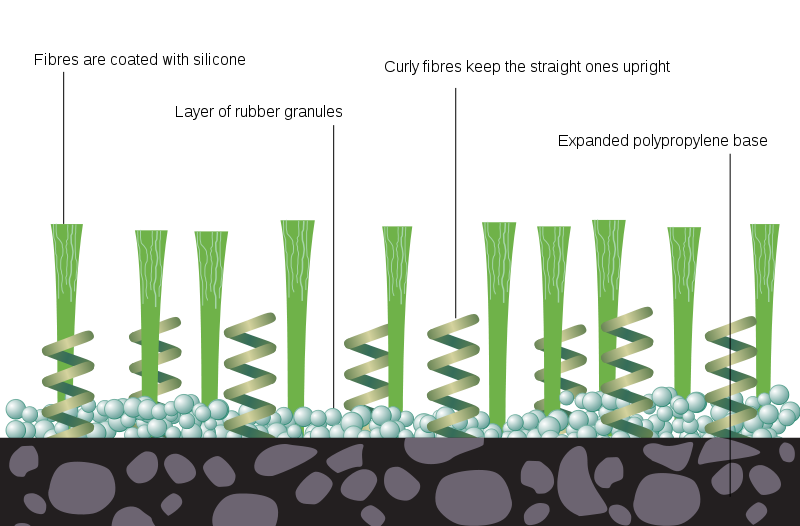
Injury risks of artificial turf in soccer

Ever since Astroturf was first installed at the Houston Astrodome back in the 1960’s, there has been much controversy about the use of artifical grass playing surfaces used in a number of different sports. The main issues relate both to ‘playability’ and the way that the surface properties affect playing dynamics, and to the risk of injuries occuring on artificial surfaces.

Despite this controversy, artificial surfaces have been used in a wide range of different sports and in some famous venues. In American Football, for example, the New England Patriots and the New England Revolution share an artificial playing surface at the Gillette stadium, whilst most field hockey games these days are played on an artificial surface.

In the UK, I vividly remember the early artificial surfaces used in football back in the 1980’s, when many teams dreaded the trip to Queens Park Rangers, Luton Town, Oldham Athletic and Preston North End on account of their ‘plastic pitches.’ At the time, most of the pitches were derided by football fans due a combination of their poor playability and recurrent carpet-burn injuries sustained by the players and they lost favour quickly.

I was therefore somewhat surprised to read on the BBC sport website that there are moves afoot for a return to the use of artificial turf in the Football League, headed by Wycombe Wanderers and Accrington Stanley. My interest was all the more galvanised by the fact that Wycombe play in the same league as the team that I look after, Leyton Orient. From the Clubs’ point of view, the argument for installing an artificial playing surface centres on economics, with artificial pitches being much easier to maintain than grass. In addition, it is easy to host other events at stadia with an artificial surface such as pop concerts and other social events. There are independent advocates both for the use of artificial surfaces in soccer, and against their use.

As a team physician, my immediate thoughts turned to the risks of injury when playing on artificial playing surfaces. There is no doubt that there has been an evolution of the quality of playing surfaces over the years. Astroturf, developed back in the 1960’s, was known for it’s somewhat abrasive properties, and the risk of ‘carpet burn’ injuries was all-too-apparent to anyone who dared to perform a slide tackle or similar manouvre on the surface. These were not the only injuries of concern on early artificial surfaces, and there were plenty of papers in the literature that reported an increased risk of other injuries on artificial playing surfaces (see Ekstrand & Nigg, 1989 ; Girard et al, 2007 ; & Steele & Milburn, 1988).

However, the modern third and fourth generation pitches are very different in construction and often promoted as possessing the same properties and injury-risk profiles as grass. For example, Dragoo and Braun reported that the overall injury rate on the new surfaces is comparable to that seen on natural pitches.

Therefore, it was with interest that I read a new review article by Williams and colleagues published in Sports Medicine in November 2011 of football injuries on third and fourth generation artificial turfs compared with natural turf.

The authors performed a literature search using Cochrane Collaboration review methodology to evaluate injury characteristics and risk factors for injury on artificial turfs compared with natural grass turf over a range of ‘football’ codes including Rugby Union, Soccer and American Football. The outcome measure used to assess each included study was the incidence rate ratio for injuries on natural and artificial turf, calculated using natural turf as the reference.

The authors found an increased incidence of ankle injury playing on artificial turf in 8 cohorts, although injury risk for knee injuries was inconsistent. There seemed to be a trend towards less muscle injuries playing on artificial turf compared with natural turf. There was, however, no data on head injuries and concussion.They concluded that their included studies showed a trivial difference in injury rates between third and fourth generation artificial turf when compared with natural turf. Limitations of the study were accepted, including the need for longitudinal prospective cohort studies including an adequate number of teams, and controlling for confounding factors such as weather and gender etc, and I think that there were indeed a number of important limitations of the study such that it is perhaps difficult to draw conclusions based on the evidence we have.

For me, the jury’s still out on the issue of injury risk with the newer artificial playing surfaces, but the traditionalist in me still thinks that soccer was meant to be played on a natural surface. Even if the risk of injury is, in time, proved to be no greater on an artificial surface, having watched soccer played on 3rd generation pitches and having played on them myself, I can say that from my point of view it never really looks or feels the same.

What do our readers think?

Should we entertain an expansion of artificial playing surfaces? If so, should that be just within specific sports? How do you think that we should assess injury risk on these surfaces and do you think that the effects seen would be different in different sports?

CJSM would like to hear your thoughts.

References :

Ekstrand J, Nigg BM. 1989. Surface-related injuries in soccer. Sport Med 8(1):56-62

Girard O et al. 2007. Effects of playing surface on plantar pressures and potential injuries in tennis. Br. J. Sp. Med. 41(11):733-8

Steele JR & Milburn PD. 1988. Effect of different synthetic sport surfaces on ground reaction forces at landing in netball. J. Sport. Biomech. 4(2):130-45

Dragoo JL & Braun HJ. 2010. The effect of playing surface on injury rate :a review of the current literature. Sport Med. 40(11):981-990

Williams S, Hume PA & Kara S. 2011. A Review of Football Injuries on Third and Fourth Generation Artificial Turfs Compared with Natural Turf. Sports Med. 41(11):903-923

(Images of (1) modern artifical turf diagrammatic, (2) side view of artificial turf, and (3) Aspmyra, Norway taken from Wikimedia)
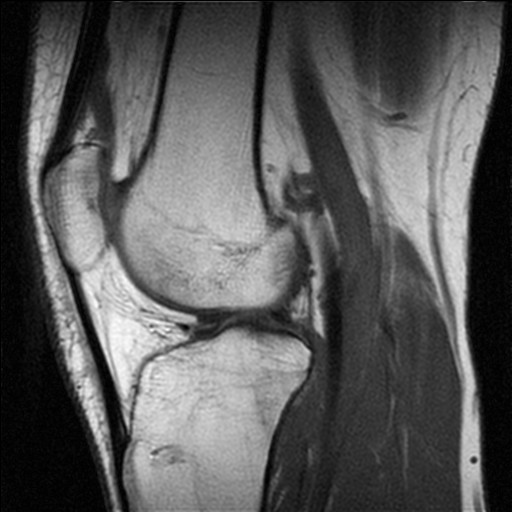

 

MRI scans in Sports Medicine – use or abuse?

There was an interesting article in the New York Times this week that caught my eye, thanks to an alert from our Publisher at CJSM (thanks, Paul!)

In the article by Gina Kolata, a science journalist for the New York Times, Dr James Andrews, of the Andrews Institute for Orthopaedics and Sports Medicine, was quoted as saying ‘If you want an excuse to operate on a pitcher’s throwing shoulder, just get an MRI.’

The article claims that Dr Andrews was involved in a piece of research where the pitching shoulders of 31 asymptomatic Professional Baseball pitchers were scanned using MRI, with findings of ‘abnormal shoulder cartilage’ in 90% of the shoulders, and ‘abnormal rotator cuff tendons’ in 87% of the shoulders. There was no indication as to whether or not this research was published.

Other clinicians are subsequently quoted, including Professor Bruce Sangeorzan, Vice Chairman of the Department of Orthopaedics and Sports Medicine at the University of Washington saying ‘an MRI is unlike any other imaging tool we use… It is a very sensitive tool, but it is not very specific. That’s the problem.’

In addition, Professor Christopher DiGiovanni, Sports Medicine and Orthopaedic Specialist at Brown University, is quoted as saying ‘It is very rare for an MRI to come back with the words “normal study” … I can’t tell you the last time I’ve seen it.’

Following quotes from these clinicans, the author goes on to make what some might call a leap of faith in then stating that ‘MRIs are not the only scans that are overused in medicine, but in sports medicine where many injuries involve soft tissues like muscles and tendons, they rise to the fore,’ the statement regarding ‘overuse’ having been drawn, presumably, from inferences from some of the clinicians quoted in the article.

Later on in the article, a retrospective study from 2005 by Bradley and colleagues  of 101 patients with chronic atraumatic shoulder pain is mentioned which examined the effect of pre-evaluation MRI on patient treatment and outcome, and concluded that MRI was not helpful as a screening tool for atraumatic shoulder pain before a comprehensive clinical evaluation of the shoulder.

In addition, another retrospective study from 2007 was mentioned by Tocci and colleagues who set out to prove the alternative hypothesis that rising accessibility of MRI may be resulting in it’s overuse by retrospectively reviewing 221 patients seen over a 3 month period for the treatment of a lower extremity problem. The authors concluded that ‘many of the pre-referral foot or ankle MRI scans obtained before evaluation by a foot and ankle specialist are not necessary.’

The New York Times article certainly seems to have sparked a flame of interest spreading amongst other newspaper and website authors and has been widely quoted in the few days since it has been published.

There is no doubt that there are a number of factors that could lead MRI scans to become overused as an investigation in the assessment of patients seen by Sports Medicine clinicians. These could include improved accessibility to MRI scanners, reduced cost for examinations, inadequate clinician history taking and / or examination skills, laziness on the part of clinicians in performing an appropriate assessment, financial incentives, patient pressure for scans, and defensive medical practice.

However, any clinician worth their salt surely recognises the need for an excellent history, targeted clinical examination, formulation of a differential diagnosis and appropriate investigation on the basis of these.

They would also surely realise issues regarding the sensitivity and specificity of MRI scans for detecting lesions, and the fact that the natural history of some lesions detected by MRI scans that have hitherto been undetectable is not well known, limiting the conclusions that can be drawn from some scans relating to treatment and prognosis.

In addition, the limitations of MRI scanning as a screening tool should also be known by responsible clinicians, although there is no doubt in my mind that some colleagues are using MRI scanning in a non-evidence based way for screening and that this may ultimately lead to unnecessary procedures and psychosocial harm.

I don’t agree with the quote from Dr Andrews implying that if one wants to operate on a pitcher’s shoulder then all one needs to do is order an MRI scan – good surgeons operate on patients, not scans, and should surely follow the time-honoured approach I have highlighted above.

The article by Kolata in the New York Times presents little if any evidence that MRI scans are indeed overused in Sports Medicine, and it is my opinion that the views of a few individuals plus a couple of retrospective studies don’t really form a convincing argument to support the inference in the title of author’s article, that MRIs are indeed overused in Sports Medicine.

It’s interesting that our Specialty was targeted in this article.

Is this a thinly-veiled attack on Sports Medicine clinicians?

What do our readers think?

Leave a Comment

Leave a Comment

PRP – magic bullet, or damp squib?

I’m guessing that not many of you will have seen the Academy Award-nominated biographical movie ‘Dr Ehrlich’s Magic Bullet’ starring Edward G Robinson. It outlines part of the career of the famous German scientist  Dr Paul Ehrlich, who popularised the concept of the ‘magic bullet’ therapy for the treatment of specific diseases. The film focuses on arsphenamine, ‘compound 606,’ and Ehrlich’s cure for syphylis.

The concept of the ‘magic bullet’ is rather older however, dating back at least to the 1800’s and deriving from the histochemical staining of tissues. It was Ehrlich’s opinion that, if a chemical could be found that targeted a pathogen, then a toxin could be delivered along with that chemical and hence a ‘magic bullet’ would be created that would destroy the pathogen leading to the elimination of a disease state. The concept was later realised following the discovery of monoclonal antibodies for which Köhler, Milstein and Jerne shared a Nobel Prize in 1984.

So-called ‘targeted therapies’ do not necessarily destroy their target as such, but may act to cause some form of modification, for example to a cell membrane via second messenger cascades or within the cell nucleus itself, leading to alterations in cellular genetic expression which then lead to a sequence of events that ultimately results in healing or an improvement in clinical symptoms.

Platelet-rich plasma (PRP) has been perhaps the most widely investigated preparation of late. PRP contains a number of growth factors including PDGF, IL-8, and CTGF, which have a number of different effects on different cells. Many of these actions are poorly understood, despite much basic science research, yet this has not prevented the clinical application of PRP for tendinopathies which is perhaps not surprising given the search for effective therapies for tendinopathies and the drive for ‘cutting-edge’ therapies in Sports Medicine.

However, when one stops to consider the knowledge gaps we have concerning the pathophysiology of tendinopathies, and our lack of understanding of the complex interactions involved in cellular healing mechanisms, then perhaps one may not be surprised to see the heterogeneity of results from clinical trials using PRP in the treatment of these conditions. The three main theories for the genesis of tendinopathy, namely overuse, overload and thermal stress, are still open to debate and there is a very wide range of possible actions of PRP on tendinopathic tendons.

Well-conducted clinical trials such as this one by de Jong et al on PRP for achilles tendinopathy, and systematic reviews such as this one by de Vos and colleagues ,have failed to find a positive clinical effect when using PRP use for the treatment of tendinopathies.

In this month’s systematic review in CJSM on the use of PRP in Sports Medicine as a new treatment for tendon and ligament injuries, Taylor and colleagues concluded that, despite several possible theoretical advantages to the use of PRP, there are very few well-conducted prospective studies and clinical trials available with which to inform clinical practice.

The recent IOC consensus paper on the use of PRP in sports medicine published in BJSM also highlighted the limited amount of basic science research, the paucity of well-conducted clinical studies on PRP, and the heterogeneity of methodological issues between different studies making comparisons of clinical effects difficult to judge. The IOC group’s recommendation was that clinicans should proceed with caution in the clinical use of PRP.

The debate is on as to whether there is a true lack of efficacy of PRP in the treatment of tendinopathies, or whether we simply need more well-designed clinical research.

What do you think? Where do we need to focus our research efforts? Should we forget the idea of ‘targeted therapies’ such as PRP and ‘magic bullets’ for tendinopathies?

CJSM would like to hear your views.

Leave a Comment

Leave a Comment