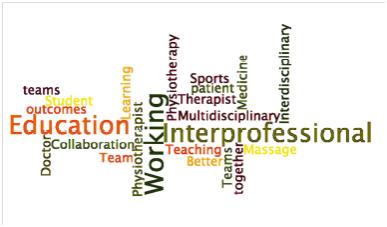
Working in teams – what about learning in teams? Interprofessional Education in Sports Medicine

There are a wide variety of healthcare professionals working in the sports medicine environment, whether that be in primary or secondary care, or within a sports team.

These might typically include physiotherapists, physicians, massage therapists, strength and conditioning coaches, nutritionalists, biomechanicists, sports psychologists and others.

Most of us working as healthcare professionals in a sports medicine environment are no strangers to the multidisciplinary team way of working, but how often do we think about how we learn together, and from each other, in teams?

The term ‘Interprofessional Education (IPE),’ as suggested by the Centre for the Advancement of Interprofessional Education (CAIPE), may be used to define a process that ‘occurs when two or more professions learn with, from and about each other to improve collaboration and quality of care.’ CAIPE go on to state that ‘IPE includes all such learning in academic and work-based settings before and after qualification, adopting an inclusive view of ‘professional.’

The unique concept of IPE is one of deliberately bringing together a group of heterogeneous healthcare practitioners to discuss educational topics. As a consequence of this, it is hoped that the diversity amongst the group together with effective knowledge sharing will allow for better learning for all within the group. Hopefully, this goes on to lead to improved patient care and patient outcomes.

IPE approaches to learning have been studied extensively, and Freeth (5) noted that some have indeed led to improved outcomes for patients, including improved preventative care, screening effectiveness and immunisation rates (1), improved teamwork and less perceived errors occurring in an emergency department (2), and increased interprofessional participation in planning and reviewing care (3, 4). However, there is a paucity of research on the implementation of IPE in a sports medicine environment, let alone on whether it leads to the outcomes we all desire for our patients and for our teams.

Whilst IPE can be delivered in formal settings, it is perhaps the informal settings where its practicability can be demonstrated., for example, during MDT assessments of athletes with injuries where complex contributing factors need to be assessed as part of the overall picture. Most of us involved in sports medicine will be familiar with MDT assessment in this way, and if an effective learning environment is created, then this represents a wonderful opportunity for each of the participants to learn from each other. I wonder how often we consciously think of MDT assessments as a real opportunity for learning, and treat them as such?

There are a number of possible barriers to the implementation of effective IPE. These include tensions between different professional groups such as negative stereotypes, status or salary differences, and demotivating and derogatory feedback between groups within the learning environment.

To some extent, these barriers can be avoided if one adopts appropriate ground rules. As mentioned by Freeth (5), these might be extrapolated from the ‘Contact hypothesis’ which suggests that one can reduce hostility amongst different groups by creating a learning environment where everyone has equal status, interaction is co-operative, participants are working towards a common goal, the ‘authorities’ support the initiative (eg Club management and Professional bodies), participants are made aware in advance of each others’ differences and similarities, participants share positive expectations, and participants from different groups perceive each other as typical of their group (6).

The extent to which these precedents are achievable is open for debate, and one might question whether with the wide range of healthcare practitioners involved in Sport and Exercise Medicine this might ever be achieved, or might even be desirable.

It is not uncommon to experience formal and informal IPE in the sports medicine environment, whether that may be at conferences, as part of social learning platforms such as blogs and twitter feeds, or within the workplace. In addition, formal postgraduate degree courses such as the MSc in Sport and Exercise Medicine at William Harvey Research Institute, Queen Mary University, London which I lead often have a student base made up of a wide complement of healthcare practitioners who participate and learn from each other. This is regarded as a real strength of the course.

CJSM would like to hear your views on IPE in the world of Sports Medicine– does it work for you, your colleagues, and perhaps more importantly for your patients?

 

Leave a Comment

Leave a Comment


1) Shafer M-A et al. 2002. Effect of a clinical practice improvement intervention on chlamydial screening among adolescent girls. JAMA 288:2846-52

2) Morey J et al. 2002. Error reduction and performance improvement in the emergency department through formal teamwork training:evaluation results of the MedTeams project. Health Services Research 37:1553-81

3) Berman S et al. 2000. Assessment training and team functioning for treating children with disabilities. Arch.Phys.Med.Rehab.81:628-33

4) Walsh P et al. 1995. An impact evaluation of a VA geriatric team development program. Gerontology and Geriatrics Education 15(3):19-35

5) Freeth D. 2010. Interprofessional education. In Swanwick T (Ed.) 2010. Understanding Medical Education : Evidence, theory and practice. ASME, Wiley-Blackwell, London

6) Hewstone M and Brown R. 1986. Contact is not enough: an intergroup perspective on the ‘contact hypothesis.’ In: Hewstone M and Brown R (Eds) Contact and Conflict in intergroup encounters. pp.1-44. Blackwell, Oxford

Quarter of a century up! What have we been talking about?

The CJSM Blog reaches its 25th blog post today since our launch back in June earlier this year. For those of you who have been on board with us since the beginning, we’d like to thank you for your interest and hope that you have found the content interesting on our journey in the World of Sport Medicine.

For those of you who may have joined us a little more recently, this is as good a time as any for a recap of some of the topics we’ve been talking about so far.

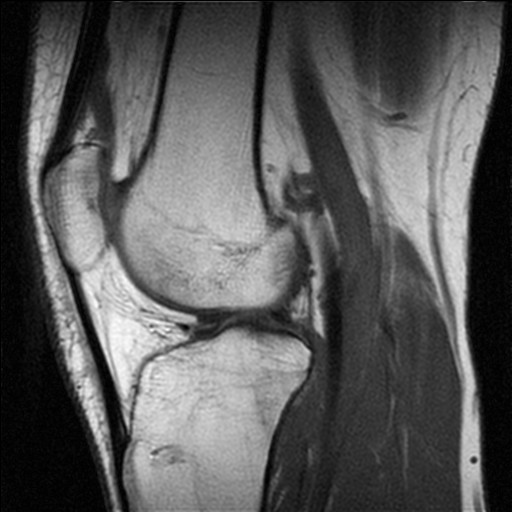
Our most recent post focuses on MRI use during clinical assessment by sports clinicians and asks the question, ‘Do Sports Medicine Clinicians overuse MRI scanning?’ This issue was recently highlighted in an article in the New York Times, with perhaps a premature conclusion being reached that MRI scans are indeed overused by Sports Medicine clinicians. What do you think? Come and let us know, and don’t forget to vote on our home page quick poll.
Just prior to that, the issue of concussion in sport was discussed relating to an incident in the recent Rugby World Cup Final where a player who left the pitch due to what looked to be a concussive injury was allowed back onto the field of play only to go off again shortly afterwards. In the context of the sideline assessment of concussion and return to play guidelines, the question asked was, ‘do we practice what we preach?’
The hype surrounding the use of platelet-rich plasma was highlighted back in august when, in the context of a recently published systematic review article in CJSM, we asked the question ‘Is PRP a magic bullet or a damp squib?’
A little earlier, the controversy surrounding the mandatory use of cycle helmets for recreational cyclists was discussed in a post which generated the most number of comments from our readers so far, some with very strong opinions either for or against mandatory use. Our quick poll on the topic was hugely against legislation and enforcement of cycle helmets, with a massive 81% of 137 responders saying ‘no’ to legislation.
Some of our other discussions have focussed on cardiac screening, pre-game hyper-hydration, ‘home or away’ care for athletes, and pre-participation evaluation. Other posts have highlighted sporting events such as the Women’s Football World Cup, Wimbledon Tennis, Le Tour de France, Boxing, Ice Hockey, Rodeo, and the Olympic preparation events in the UK, with associated information signposted relating to particular injuries in different sports. We’ve also mentioned e-learning apps for anatomy, the Ovid Sports Concussion Webinar, Ramadan and the 2012 Olympics, Abuse and Bullying in Sport and several other topics along the way.
We hope that you’re enjoying the ride. In the meantime, don’t be shy – come and share your thoughts with us on the blog. It’s not too late to add your contributions to any of our posts so far, and we’d love to hear from you. The more discussion we have, the more we’ll learn from each other. This blog belongs to all of us.
CJSM would like to know what issues you would like to see discussed on the blog. Let us know, and we’ll do our best to highlight your preferred topics of discussion related to Sport and Exercise Medicine.

MRI scans in Sports Medicine – use or abuse?

There was an interesting article in the New York Times this week that caught my eye, thanks to an alert from our Publisher at CJSM (thanks, Paul!)

In the article by Gina Kolata, a science journalist for the New York Times, Dr James Andrews, of the Andrews Institute for Orthopaedics and Sports Medicine, was quoted as saying ‘If you want an excuse to operate on a pitcher’s throwing shoulder, just get an MRI.’

The article claims that Dr Andrews was involved in a piece of research where the pitching shoulders of 31 asymptomatic Professional Baseball pitchers were scanned using MRI, with findings of ‘abnormal shoulder cartilage’ in 90% of the shoulders, and ‘abnormal rotator cuff tendons’ in 87% of the shoulders. There was no indication as to whether or not this research was published.

Other clinicians are subsequently quoted, including Professor Bruce Sangeorzan, Vice Chairman of the Department of Orthopaedics and Sports Medicine at the University of Washington saying ‘an MRI is unlike any other imaging tool we use… It is a very sensitive tool, but it is not very specific. That’s the problem.’

In addition, Professor Christopher DiGiovanni, Sports Medicine and Orthopaedic Specialist at Brown University, is quoted as saying ‘It is very rare for an MRI to come back with the words “normal study” … I can’t tell you the last time I’ve seen it.’

Following quotes from these clinicans, the author goes on to make what some might call a leap of faith in then stating that ‘MRIs are not the only scans that are overused in medicine, but in sports medicine where many injuries involve soft tissues like muscles and tendons, they rise to the fore,’ the statement regarding ‘overuse’ having been drawn, presumably, from inferences from some of the clinicians quoted in the article.

Later on in the article, a retrospective study from 2005 by Bradley and colleagues  of 101 patients with chronic atraumatic shoulder pain is mentioned which examined the effect of pre-evaluation MRI on patient treatment and outcome, and concluded that MRI was not helpful as a screening tool for atraumatic shoulder pain before a comprehensive clinical evaluation of the shoulder.

In addition, another retrospective study from 2007 was mentioned by Tocci and colleagues who set out to prove the alternative hypothesis that rising accessibility of MRI may be resulting in it’s overuse by retrospectively reviewing 221 patients seen over a 3 month period for the treatment of a lower extremity problem. The authors concluded that ‘many of the pre-referral foot or ankle MRI scans obtained before evaluation by a foot and ankle specialist are not necessary.’

The New York Times article certainly seems to have sparked a flame of interest spreading amongst other newspaper and website authors and has been widely quoted in the few days since it has been published.

There is no doubt that there are a number of factors that could lead MRI scans to become overused as an investigation in the assessment of patients seen by Sports Medicine clinicians. These could include improved accessibility to MRI scanners, reduced cost for examinations, inadequate clinician history taking and / or examination skills, laziness on the part of clinicians in performing an appropriate assessment, financial incentives, patient pressure for scans, and defensive medical practice.

However, any clinician worth their salt surely recognises the need for an excellent history, targeted clinical examination, formulation of a differential diagnosis and appropriate investigation on the basis of these.

They would also surely realise issues regarding the sensitivity and specificity of MRI scans for detecting lesions, and the fact that the natural history of some lesions detected by MRI scans that have hitherto been undetectable is not well known, limiting the conclusions that can be drawn from some scans relating to treatment and prognosis.

In addition, the limitations of MRI scanning as a screening tool should also be known by responsible clinicians, although there is no doubt in my mind that some colleagues are using MRI scanning in a non-evidence based way for screening and that this may ultimately lead to unnecessary procedures and psychosocial harm.

I don’t agree with the quote from Dr Andrews implying that if one wants to operate on a pitcher’s shoulder then all one needs to do is order an MRI scan – good surgeons operate on patients, not scans, and should surely follow the time-honoured approach I have highlighted above.

The article by Kolata in the New York Times presents little if any evidence that MRI scans are indeed overused in Sports Medicine, and it is my opinion that the views of a few individuals plus a couple of retrospective studies don’t really form a convincing argument to support the inference in the title of author’s article, that MRIs are indeed overused in Sports Medicine.

It’s interesting that our Specialty was targeted in this article.

Is this a thinly-veiled attack on Sports Medicine clinicians?

What do our readers think?

Leave a Comment

Leave a Comment

Sideline assessment of concussion and return to play – are we practising what we preach?

The seventh Rugby Union World Cup competition ended last saturday in a tense final between strong favourites, the famous New Zealand All Blacks, and France, the former holding out for a one-point win 8-7 over Les Bleues.

The game featured a number of injuries, but one caused more of a stir than most – the injury to the French number 10 Morgan Parra.

Parra took what appeared to be an accidental blow to the side of his head from the knee of All Blacks’ Captain Richie McCaw in a ruck, and appeared to be visibly concussed, looking shaky on getting up after receiving lengthy on-field medical attention. The incident can be seen in this video.

He was taken from the field of play and replaced by Trinh-Duc. Surprisingly, however, he re-appeared on the field after around 5 minutes and continued to play on for another 5 minutes until he experienced another knock during a tackle and eventually went off for good.

The circumstances surrounding his departure from the field in the first instance appear to be a little unclear. Parra thought that he had gone off for a blood injury, which would fit with him being allowed back onto the pitch later on in the absence of having suffered a concussive injury. Of course, there is no ‘concussion bin’ to allow time for observation and recovery prior to return to play. However, there is a ‘blood injury bin’ where players are permitted to have blood injuries attended to prior to return to the field as appropriate. To this viewer, it did appear that Parra had indeed suffered a concussive injury following the blow from McCaw’s knee, in which case it is surprising that he was allowed to re-enter the field of play.

Parra mentioned ‘I was bleeding a bit, I took a knock and I was a bit dazed,’ adding ‘I was trying to get out from under the ruck, I took a knee to the face, it wasn’t when (Ma’a) Nonu tackled me, but afterward. Did he (McCaw) mean it? I don’t know. I haven’t seen the footage. But it wasn’t from Nonu.’

Parra went on to mention ‘I wanted to come back on, but my neck and head were hurting, and then I took another kick to it … that’s how it goes. What can you do? I wasn’t targeted any more than last week. I know that when you play No. 10 and you weigh 80 kilos people go looking for you more.’

What is of great concern is that if Parra was indeed allowed back onto the pitch following a concussive injury, then this would been in direct contravention of the IRB’s own Concussion guidelines which clearly state that ‘Players suspected of having concussion must be removed from play and must not resume play in the match, ‘ and this would have occurred during Rugby’s showcase, the World Cup Final which was watched by record figures of TV viewers worldwide this year. The IRB guidelines are in agreement with the Concussion in Sport Group’s guidelines – see point 2.2 ‘On-field or Sideline Evaluation of Acute Concussion – (e) A player with diagnosed concussion should not be allowed to return to play on the day of injury.’

In the Concussion in Sport group’s guidelines, there is a caveat that adult athletes, in some settings, may return to play more rapidly providing certain conditions and a level of support may be met, but that there should still be the same management principles for return to play, starting with complete cognitive and symptom recovery. The issue of the appropriateness of return to play on the same day following an acute concussion is hotly debated, but there is no doubt that it still occurs. However, if Parra was indeed concussed, then return to play in the same match would have been in direct contravention of the IRB’s own Concussion guidelines.

Those of us who manage head injuries and concussion at the pitchside are well aware of the many difficulties of translating concussion guidelines into practice, especially when players get up and run off in the middle of assessments and such, but if Parra was indeed concussed, then surely he should never have been allowed back onto the field of play.

The Rugby Law blog was particularly vociferous on these events.

For those interested in the topic of Concussion in Sport, don’t miss the chance to view the recent Ovid Webcast with Margot Putukian and John D. Corrigan here.

Have you had problems and issues with interpreting and applying concussion guidelines to clinical practice?

CJSM would like to hear your experiences and opinions.

Leave a Comment

Leave a Comment