Patellofemoral pain syndrome – is this a top down or bottom up problem…or both? Guest blog by Simon Lack

Patellofemoral pain syndrome (PFPS) has a high prevalence within the sporting population, with one study of 2159 presentations to sports medicine clinics, reporting 5.4% incidence of PFPS, accounting for 25% of those presenting with knee pain (1).  Despite a more traditional approach to management having been well researched in a high quality RCT (2), the problem has been shown to have a high recurrence.  In a quest to unravel the mystery of long-term successful treatment outcomes, researchers have started looking above and below the knee to potentially identify more effective solutions.

Arguably started by the work of Lee et al (3) that identified that changes in femoral rotation angles have significant consequences for patellofemoral joint loading, in combination with consistently reported weakness of hip musculature in PFPS populations (4), multiple studies have looked to modify top down control through strengthening of the hip rotator muscles.  The outcomes of these studies have shown significant reductions in symptoms and increases in function particularly in weaker individuals.  In addition, better outcomes have been reported if a proximal strengthening programme is started prior to functional strengthening compared with an initial local knee-strengthening programme (5). Thus, a case is emerging in favour of a top-down treatment mechanism.

Distal to the knee a growing body of evidence supporting the use of foot orthoses in PFPS management has started to be established.  A high quality RCT that compared six weeks of physiotherapist intervention with off the shelf foot orthoses, flat inserts, multimodal physiotherapy (patellofemoral joint mobilisation, patellar taping, quadriceps muscle retraining, and education), or foot orthoses plus physiotherapy, demonstrated orthoses to be superior to flat inserts, with their use resulting in comparable outcomes to multimodal physiotherapy (6).

Further more, evidence suggests foot orthoses have the ability to change pain immediately within this population of patients (7), with a further reduction of pain experienced following a 12/52 period of orthotic wear (8).  Interventions that have the capacity to reduce pain symptoms immediately, pose a valuable tool in facilitating normal movement patterns, maximising function and minimising detrimental pain inhibition.  Hence, further emerging evidence for a bottom-up treatment mechanism.

What do you think predicts treatment success in PFPS, and why ?

Simon Lack is a Physiotherapist and current PhD student at Queen Mary University, London, currently studying the interaction of hip and foot biomechanics in the presentation and management of patellofemoral pain.

Leave a Comment

Leave a Comment


References

1.Devereaux MD, Lachmann SM. Patello-femoral arthralgia in athletes attending a Sports Injury Clinic. Br J Sports Med. 1984 Mar;18(1):18-21.

2. Crossley K, Bennell K, Green S, Cowan S, McConnell J. Physical therapy for patellofemoral pain: a randomized, double-blinded, placebo-controlled trial. Am J Sports Med. [Clinical Trial Multicenter Study Randomized Controlled Trial Research Support, Non-U.S. Gov’t]. 2002 Nov-Dec;30(6):857-65.

3. Lee TQ, Morris G, Csintalan RP. The influence of tibial and femoral rotation on patellofemoral contact area and pressure. J Orthop Sports Phys Ther. [Research Support, Non-U.S. Gov’t Research Support, U.S. Gov’t, Non-P.H.S. Review]. 2003 Nov;33(11):686-93.

4. Prins MR, van der Wurff P. Females with patellofemoral pain syndrome have weak hip muscles: a systematic review. Aust J Physiother. 2009;55(1):9-15.

5. Dolak KL, Silkman C, Medina McKeon J, Hosey RG, Lattermann C, Uhl TL. Hip strengthening prior to functional exercises reduces pain sooner than quadriceps strengthening in females with patellofemoral pain syndrome: a randomized clinical trial. J Orthop Sports Phys Ther. 2011 Aug;41(8):560-70.

6. Collins N, Crossley K, Beller E, Darnell R, McPoil T, Vicenzino B. Foot orthoses and physiotherapy in the treatment of patellofemoral pain syndrome: randomised clinical trial. Bmj. [Comparative Study Randomized Controlled Trial Research Support, Non-U.S. Gov’t]. 2008;337:a1735.

7. Barton CJ, Menz HB, Crossley KM. The immediate effects of foot orthoses on functional performance in individuals with patellofemoral pain syndrome. Br J Sports Med. 2010 Jul 20.

8. Barton CJ, Menz HB, Crossley KM. Effects of prefabricated foot orthoses on pain and function in individuals with patellofemoral pain syndrome: a cohort study. Phys Ther Sport. 2011 May;12(2):70-5.

Sport and Exercise Medicine – A Fresh Approach. Guest blog by Dr Richard Weiler

Sport and Exercise Medicine (SEM) has been evolving rapidly around the globe and is gaining mainstream recognition. In the United Kingdom it formally began life in 2005, when the Chief Medical Officer at the time, Liam Donaldson, pledged to develop the specialty as a commitment to the London 2012 Olympics. 2012 has arrived and the specialty of Sport & Exercise Medicine is slowly gaining a foothold in the publicly funded UK National Health Service (NHS).

In the UK, we now have an established Faculty of Sport & Exercise Medicine and a fairly comprehensive and evolving 4-year specialist training programme . There are currently about 50 specialist trainees in training across the country and about 10 doctors have become specialists in SEM in the last couple of years.

Challenging economic climates have resulted in new measures being implemented by the Government. ‘Market forces’ have been suggested as a means to ensure that funds are targeted locally and efficiently for patient needs. This has resulted in an urgent need for the fledgling SEM specialty to justify its existence and demonstrate patient benefit and cost effectiveness in order to establish new SEM services and maintain existing services. This is not easy for a specialty that has existed for only a few years. A major obstacle when speaking to those holding the funds is the lack of understanding about what SEM specialists can offer the NHS. Is it about elite sport, athletes and the Olympics or is it about exercise, gyms and running?

The truth is mostly ‘none of the above’ for the general population, so late in 2011 we published an NHS Information Document explaining what an SEM specialist offers the NHS and NHS patients. This is broadly based on education, research, musculoskeletal, sports medicine, physical activity for prevention of chronic disease and physical activity prescribed in the treatment of chronic disease (exercise medicine).

We hope that this peer reviewed NHS Information Document, endorsed by all the key UK organisations in the SEM field, will be helpful to our colleagues and fellow multidisciplinary team members both in the UK and around the world.

The rest as they say is history, or in the wise words of Master Yoda “Always in motion is the future.”

The publication involved the collaboration of too many people to thank individually, but the co-authors, whom were all SEM trainees at the time of writing, all deserve individual mention (in no particular order). Natasha Jones, Kate Hutchings, Matt Stride, Ademola Adejuwon, Polly Baker, Jo Larkin and Stephen Chew.

Dr Richard Weiler is an Honorary Consultant in Sport and Exercise Medicine based at  University College London Hospitals Foundation Trust, London, UK

Leave a Comment

Leave a Comment

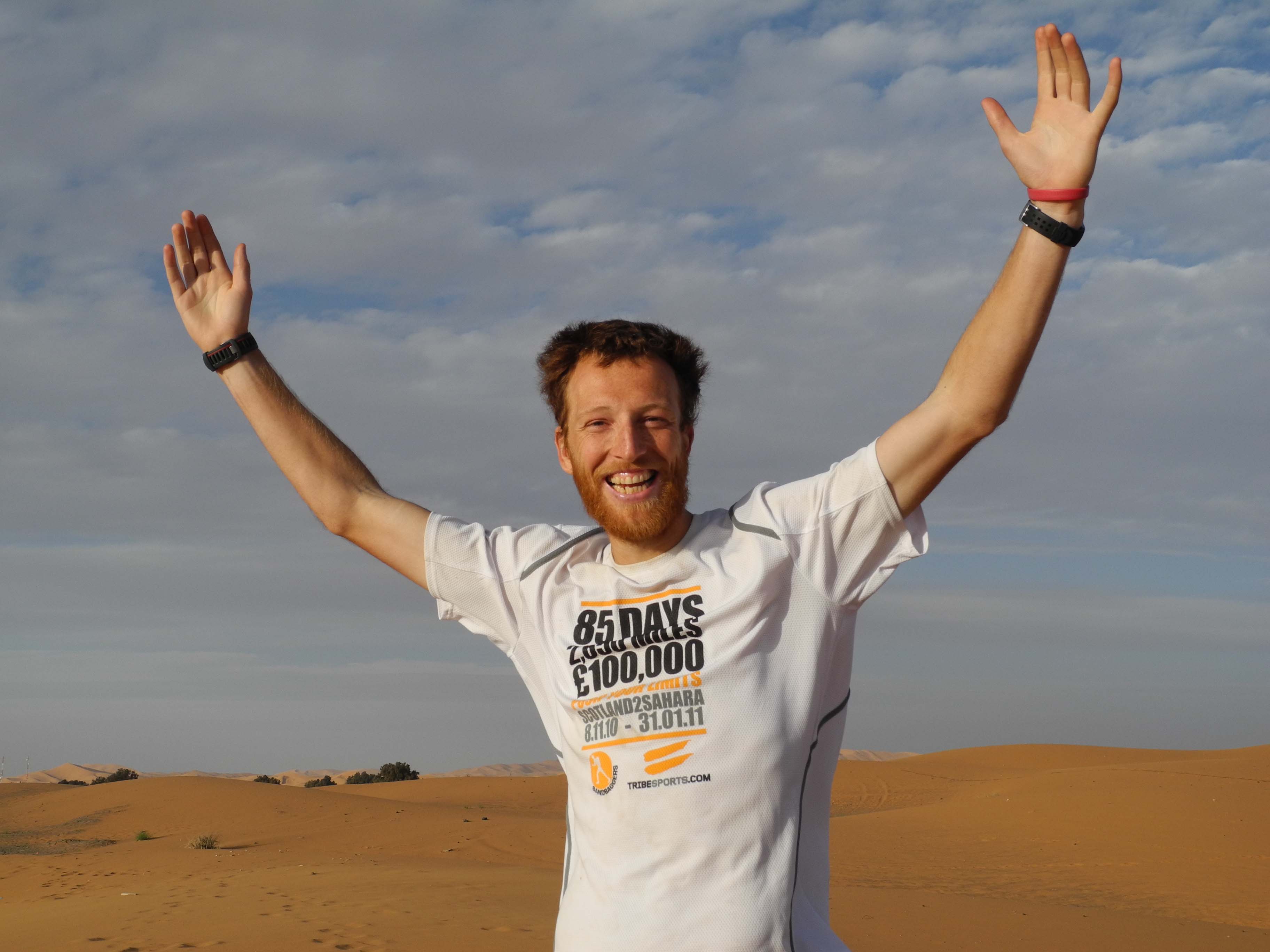
From Scotland to the Sahara – Guest Blog by the new Scottish Government Champion for physical activity, Dr Andrew Murray

What does running 2660 miles from Scotland to the Sahara teach you?

I learned a load of things running to the Sahara. Donkeys have a top speed of 25kms/hr, road signs hurt if you run into them, and the desert is extremely hot. I ate 7000 Kcalories per day, got through 16 pairs of socks, and averaged 34.5 miles per day for 77 days.  I also thought plenty about what I’d do as a General Practitioner and Sports and Exercise Medicine doctor when I got home.

I firmly believe that physical inactivity is the fundamental health challenge of our age.  Dr Mike Evans in his video 23 and a half hours  asks the question- ‘What is the single best thing we can do for our health?’ For its benefits both to physical and mental health, as well as to quality of life he concludes that taking regular physical activity comes out on top. Please do watch this video and forward it on.

One of the most satisfying parts of my journey south was that over 1300 people came and jogged part of the route with me.  My oldest companion was 81, and the youngest (being pushed by his mum) was 5 months, going to show that physical activity is achievable by all.

Steven Blair’s research proves that low fitness is equivalent in risk to smoking, diabetes, and obesity combined. This statistic is all the more frightening given that government figures show that only 39% of Scots hit minimum activity guidelines.This is too big a problem to ignore, and action is required. Many health care professionals recognise the health problems associated with physical inactivity, but feel that the solutions lie with public health rather than with grass roots professionals.

I was delighted to accept a role as Scottish Government Physical Activity Champion working with health professionals, and advocating that “Exercise is Medicine” on the back of a BBC documentary about my run, and my medical background.  A little background to the role is here. This role was created partially as a legacy to the 2014 Commenwealth Games that are coming to Scotland.  The government have stated that raising an awareness of the benefits of activity, and getting the nation on the move is just as important as the medals.

Preventative medicine is great medicine. The benefits are clear. The message is simple.

References

Blair, SN. 2009. Physical inactivity: the biggest public health problem of the 21st century. BJSM 43:1-2

Evans, Mike. Video ’23 and a half hours’

Follow Dr Andrew Murray on Twitter at @docandrewmurray ,  and on Facebook at Sports and Exercise Medicine Scotland.

Leave a Comment

Leave a Comment