Ringette: Who Knew?

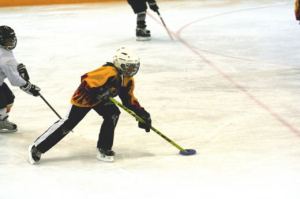
RingettePlayer

Ringette Player in Action!

At CJSM we are already anticipating the start of 2014:  the January 2014 issue is still awaiting publication, but we are already releasing some of this coming year’s studies in our “Published ahead of print” collection.

One I wanted to talk about today, if only because the subject sport is an entirely new one to me: Ringette-related injuries in young female players.

Ringette.  As a middle-aged guy, I know I still have a lot to learn.  That said, I am delighted when I have a day where I acquire some new fact or concept I literally have never encountered in my over 18000 days on the planet.  Ringette.  I had never heard of this sport until I read this epidemiologic study.  Nearly everything I now know about the sport comes courtesy of the authors Glenn Keays, Isabelle Gagnon, and Debbie Friedman.  Thanks to you all!

A team sport played on ice rinks, ringette is similar to ice hockey with these notable exceptions:  1) 6 skaters comprise a team; 2) the skaters advance a doughnut shaped ring, rather than a puck, with a stick that has no blade; 3) the rules governing the sport encourage the development of team play; for instance, a player that might be lionized in hockey for being able to single-handedly advance the puck the length of the rink and score is, in ringette, penalized instead.  Like competitive women’s ice hockey, ringette is a non-collision sport, with all contact between players officially prohibited.  Players are equipped with safety devices such as helmets and visors.

The sport has been around for 50 years, originating in Canada.  It is expanding internationally, with associations in the USA, Finland, Sweden and beyond.  Read more of this post

Avery Faigenbaum y Cinco Preguntas con Revista Clinica de Medicina Deportiva

You read that right.

Like the NBA teams that don a Spanish jersey for an evening, at CJSM we are getting our Spanish on.

Faigenbaum_diRoda (1)

Drs. Avery Faigenbaum and
Provincial Senator Cristina diRado
in Mar del Plata, Argentina

Our good friend and contributor to these blog pages and to the journal, Dr. Avery Faigenbaum, has agreed to sit with us for “5 Questions with CJSM.” We have been trying to catch up with him since his trip to Argentina this summer where he was lecturing on Exercise Deficit Disorder (EDD) and working on his own Spanish skills.  I’m know he’s a lot better in that area than I am.

Dr. Faigenbaum is a professor in the Dept. of Health and Exercise Science at The College of New Jersey.  He has written about EDD in youth (“Thinking Outside the Sandbox”) and about the benefits and safety of resistance training in youth.  He has lectured widely:  I’ve heard him speak in various settings in the United States, and he’s set to speak to the American Academy of Pediatrics in 2014 on EDD. Catch him if you can, you’re sure to learn a lot and be entertained as well: his energy is infectious.

And here’s just a taste of what you’re in for if you do get to see him:

________________________

Avery Faigenbaum: Five Questions with CJSM

1) CJSM: With the recent award of the 2020 Olympic games to Tokyo, can you comment on any evidence out there that such events stimulate activity in young fans/viewers?  Is there a ‘trickle down’ effect for youth athletics/exercise from events like the Olympics?

AF: Last summer James Bond and the “Queen” opened the Olympic Games in London by jumping out of a helicopter. This was followed shortly thereafter by stellar performances from world class athletes including sprinter Usain Bolt, swimmer Michael Phelps, boxer Nicola Adams, and 23 year old Rosannagh MacLennan who started jumping on the trampoline at the age of seven. But in stark contrast to these remarkable feats of athleticism, physical inactivity among the world’s population is now recognized as a pandemic. Read more of this post

EMR In PCSM

What is this alphabet soup I’m offering up today?

EMR

EMR, here to stay.
How does it impact
patient/doctor relations?

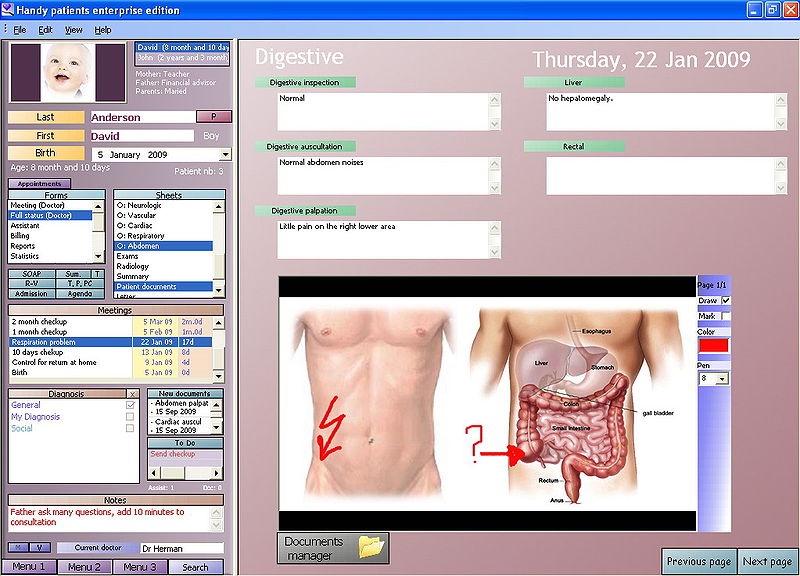
I wanted to discuss “Electronic Medical Records in Primary Care Sports Medicine.”  In other words, “EMR in PCSM!”

I’m just wrapping up a busy Friday clinic and finishing typing up my notes as I transition to typing up these thoughts on the WordPress blog site.   Doctoring these days involves a lot of typing on the computer! Here at Sports Medicine, Nationwide Children’s Hospital, we use the EPIC EMR system.

I was prompted to write about this issue today, and find out who out there in the sports medicine world is using EMR (or perhaps in 2013 the pertinent question may be who out there is NOT yet using EMR), by a  fine article I read in the L.A. Times:   “So much data-gathering, so little doctoring.” 

I began my career in medicine in the early 90’s:  six years after finishing up my undergraduate education, I started medical school in September 1991.  I recall having an email account in medical school, but it wasn’t until my final year in school that I heard about hypertext or the world wide web.  And there certainly was no EMR, at least for me, in the 90’s.  I was writing in charts or, better yet, dictating my notes.  This is how medical documentation remained for me until 2005, when I spent a few months doing locum tenens work in New Zealand.  I recall showing up my first day at the GP clinic in Matamata, on the North Island of NZ, and the clinic doctor whom I would be working next to asked me if I had ever used EMR.  I said no, and was hoping I might have some option to chart on paper.  He smiled and very civilly told me, more or less, to keep a stiff upper lip and just get on with it.  There would be no paper for me, I’d learn on the fly.

As an aside, now having worked in NZ twice in my professional career, may I say that that country is a leader in the field of what EMR implementation can achieve.  NZ continues to work on EMR integration.  I found in my time there that the song and dance of the American medical system–having medical records faxed from the clinic 10 miles down the road; the MRI transferred to a disc that then must be shuttled hand to hand, trying to read an illegibly written note, etc.–was a rare occurrence in NZ.   It was much easier to take care of a patient ‘out of network’ in NZ than it is in the USA.

UCSC_Meadow

The view from the
University of California, Santa Cruz campus.
Yes, it really is that beautiful.

On my return to The States, I discovered my clinic at the University of California, Santa Cruz was ready to implement EMR.  While my colleagues mostly moaned and wanted to drag their feet, I had, I believed, already seen the light.  No more need to track down a missing chart, no more need to decipher a doctor’s handwriting, EMR was the way to go.  And from that point on, for the last 8 years, I have only used EMR in the various positions I have held.

But there is a dark side to EMR.  Getting back to the L.A. Times essay, I found this piece to be, overall, an insightful, provocative and short essay exploring this side.  Many things stood out for me, most especially this paragraph: Read more of this post