Sport and Exercise Medicine – A Fresh Approach. Guest blog by Dr Richard Weiler

Sport and Exercise Medicine (SEM) has been evolving rapidly around the globe and is gaining mainstream recognition. In the United Kingdom it formally began life in 2005, when the Chief Medical Officer at the time, Liam Donaldson, pledged to develop the specialty as a commitment to the London 2012 Olympics. 2012 has arrived and the specialty of Sport & Exercise Medicine is slowly gaining a foothold in the publicly funded UK National Health Service (NHS).

In the UK, we now have an established Faculty of Sport & Exercise Medicine and a fairly comprehensive and evolving 4-year specialist training programme . There are currently about 50 specialist trainees in training across the country and about 10 doctors have become specialists in SEM in the last couple of years.

Challenging economic climates have resulted in new measures being implemented by the Government. ‘Market forces’ have been suggested as a means to ensure that funds are targeted locally and efficiently for patient needs. This has resulted in an urgent need for the fledgling SEM specialty to justify its existence and demonstrate patient benefit and cost effectiveness in order to establish new SEM services and maintain existing services. This is not easy for a specialty that has existed for only a few years. A major obstacle when speaking to those holding the funds is the lack of understanding about what SEM specialists can offer the NHS. Is it about elite sport, athletes and the Olympics or is it about exercise, gyms and running?

The truth is mostly ‘none of the above’ for the general population, so late in 2011 we published an NHS Information Document explaining what an SEM specialist offers the NHS and NHS patients. This is broadly based on education, research, musculoskeletal, sports medicine, physical activity for prevention of chronic disease and physical activity prescribed in the treatment of chronic disease (exercise medicine).

We hope that this peer reviewed NHS Information Document, endorsed by all the key UK organisations in the SEM field, will be helpful to our colleagues and fellow multidisciplinary team members both in the UK and around the world.

The rest as they say is history, or in the wise words of Master Yoda “Always in motion is the future.”

The publication involved the collaboration of too many people to thank individually, but the co-authors, whom were all SEM trainees at the time of writing, all deserve individual mention (in no particular order). Natasha Jones, Kate Hutchings, Matt Stride, Ademola Adejuwon, Polly Baker, Jo Larkin and Stephen Chew.

Dr Richard Weiler is an Honorary Consultant in Sport and Exercise Medicine based at  University College London Hospitals Foundation Trust, London, UK

Leave a Comment
Leave a Comment

From Scotland to the Sahara – Guest Blog by the new Scottish Government Champion for physical activity, Dr Andrew Murray

What does running 2660 miles from Scotland to the Sahara teach you?

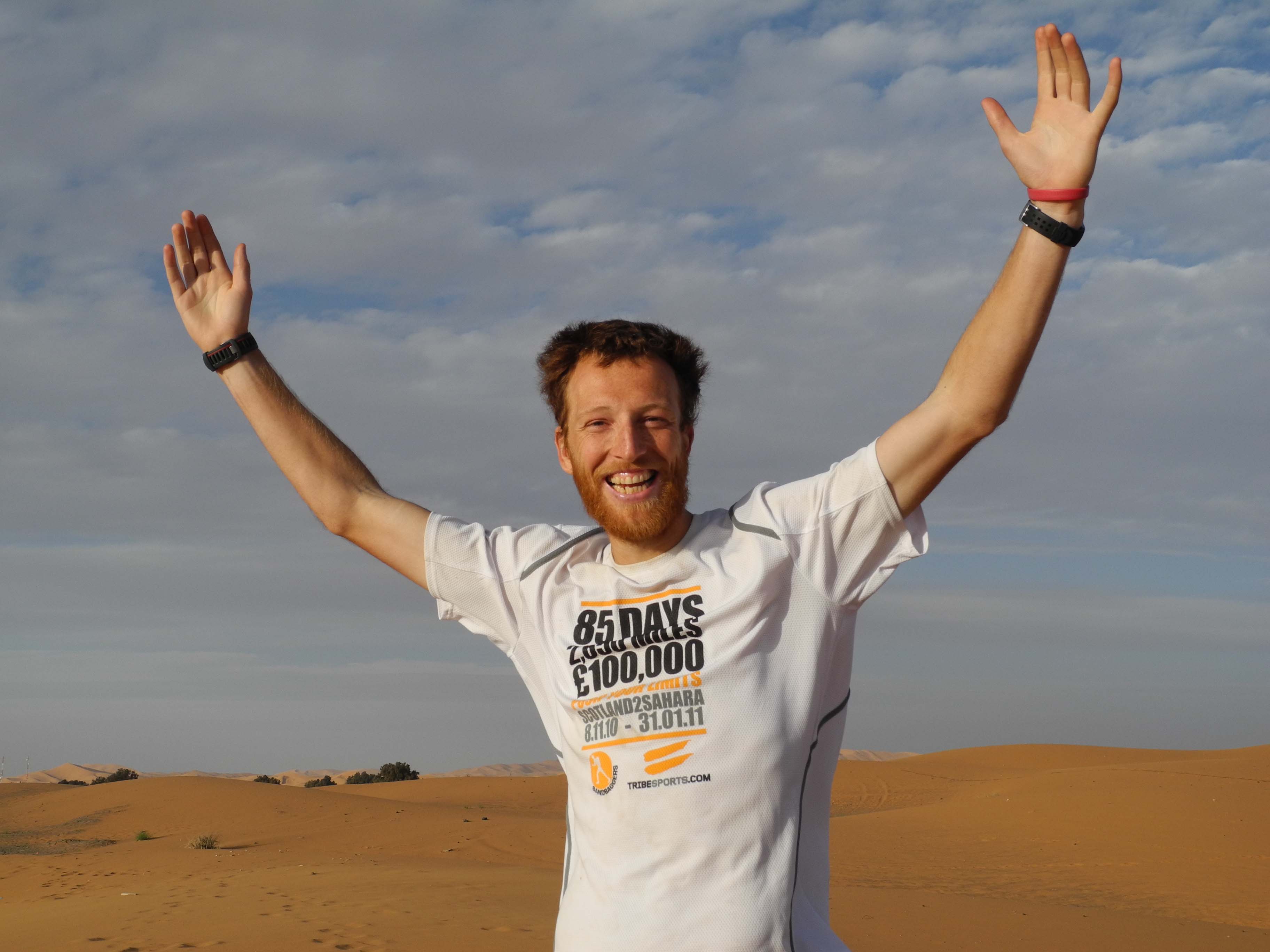
I learned a load of things running to the Sahara. Donkeys have a top speed of 25kms/hr, road signs hurt if you run into them, and the desert is extremely hot. I ate 7000 Kcalories per day, got through 16 pairs of socks, and averaged 34.5 miles per day for 77 days.  I also thought plenty about what I’d do as a General Practitioner and Sports and Exercise Medicine doctor when I got home.

I firmly believe that physical inactivity is the fundamental health challenge of our age.  Dr Mike Evans in his video 23 and a half hours  asks the question- ‘What is the single best thing we can do for our health?’ For its benefits both to physical and mental health, as well as to quality of life he concludes that taking regular physical activity comes out on top. Please do watch this video and forward it on.

One of the most satisfying parts of my journey south was that over 1300 people came and jogged part of the route with me.  My oldest companion was 81, and the youngest (being pushed by his mum) was 5 months, going to show that physical activity is achievable by all.

Steven Blair’s research proves that low fitness is equivalent in risk to smoking, diabetes, and obesity combined. This statistic is all the more frightening given that government figures show that only 39% of Scots hit minimum activity guidelines.This is too big a problem to ignore, and action is required. Many health care professionals recognise the health problems associated with physical inactivity, but feel that the solutions lie with public health rather than with grass roots professionals.

I was delighted to accept a role as Scottish Government Physical Activity Champion working with health professionals, and advocating that “Exercise is Medicine” on the back of a BBC documentary about my run, and my medical background.  A little background to the role is here. This role was created partially as a legacy to the 2014 Commenwealth Games that are coming to Scotland.  The government have stated that raising an awareness of the benefits of activity, and getting the nation on the move is just as important as the medals.

Preventative medicine is great medicine. The benefits are clear. The message is simple.

References

Blair, SN. 2009. Physical inactivity: the biggest public health problem of the 21st century. BJSM 43:1-2

Evans, Mike. Video ’23 and a half hours’

Follow Dr Andrew Murray on Twitter at @docandrewmurray ,  and on Facebook at Sports and Exercise Medicine Scotland.

Leave a Comment

Leave a Comment

Dance Medicine and Science – a developing field. Guest Blog by Dr Manuela Angioi

Dance medicine and science is a relatively young discipline, while the wealth of information available to scientists and all those working in the dance field is expanding and moving ahead rapidly. This is also reflected in the increasing number of dance-related articles now appearing in sports medicine and science journals.

Dance performance depends on a large number of physical and psychological elements, while dancers are expected to be experts in the aesthetic as well as technical side of the art and be free from injuries. On the other hand, dance is a “high risk” activity for musculoskeletal injuries, with a recorded high prevalence and incidence of lower extremity and back injuries, with soft tissue and overuse injuries predominating.

The majority of studies refer to mixed samples of dancers, in terms of levels and styles or techniques. But should we look at dancers as a uniform group of “performing” athletes?

One of the peculiar characteristics of dance is that it is NOT just “one form of performing art or exercise”. Within the “dance box” there are a number of styles (or techniques), including: ballet, contemporary (or modern), jazz, hip hop, theatrical, street dance, aerobic and ballroom dance. These styles differ significantly in terms of, at least, technical requirements, physical prerequisites and training models. It is therefore assumed that different dance styles should have different statistics in terms of injury rate, type and incidence.

It becomes more complicated when looking at levels of dancers. In the dance world there are different “employment scenarios” beyond the “ordinary” classification of professionals versus non professionals. To simplify, dancers can be classified as professionals (these are usually only ballet or contemporary dancers), in training (vocational or non vocational) and then they could be performing for a number of days per year but they also have other occupations or they are without a formal contract (independent dancers). Total hours of training and performing, as such, can vary significantly even within the same “style” according to the “employment status” which, in turn, can affect injury rate and severity. Hence, it is not a surprise discovering the heterogeneity of the dance medicine literature in terms of injury type, rate and incidence.

The majority of published research studies have focused on ballet and contemporary dance, while there is a lack of information about other styles or techniques. Again, majority of studies have looked at either professional or pre-professional dancers, while there is a paucity of data regarding recreational and amateur dancers, even if there is an estimated number of 4.7 million participants at recreational level in UK only.  There a very few published epidemiological studies while majority of reviews are weak. The overall feeling is that there is a need for more data before drawing consistent conclusions about musculoskeletal injuries of dancers. As such, similar approaches as the one recently adopted by Campoy and colleagues, who looked at injuries characteristics in four different dance styles, are needed to broaden the ongoing dance medicine literature.

Reference

Campoy S et al. 2011. Investigation of Risk Factors and Characteristics of Dance Injuries. CJSM 21(6): 493-498

(The author of this article is Dr Manuela Angioi, Research Supervisor and research methods module leader on the MSc in Sport and Exercise Medicine at the Centre for Sport and Exercise Medicine, William Harvey Research Institute, Queen Mary University London)

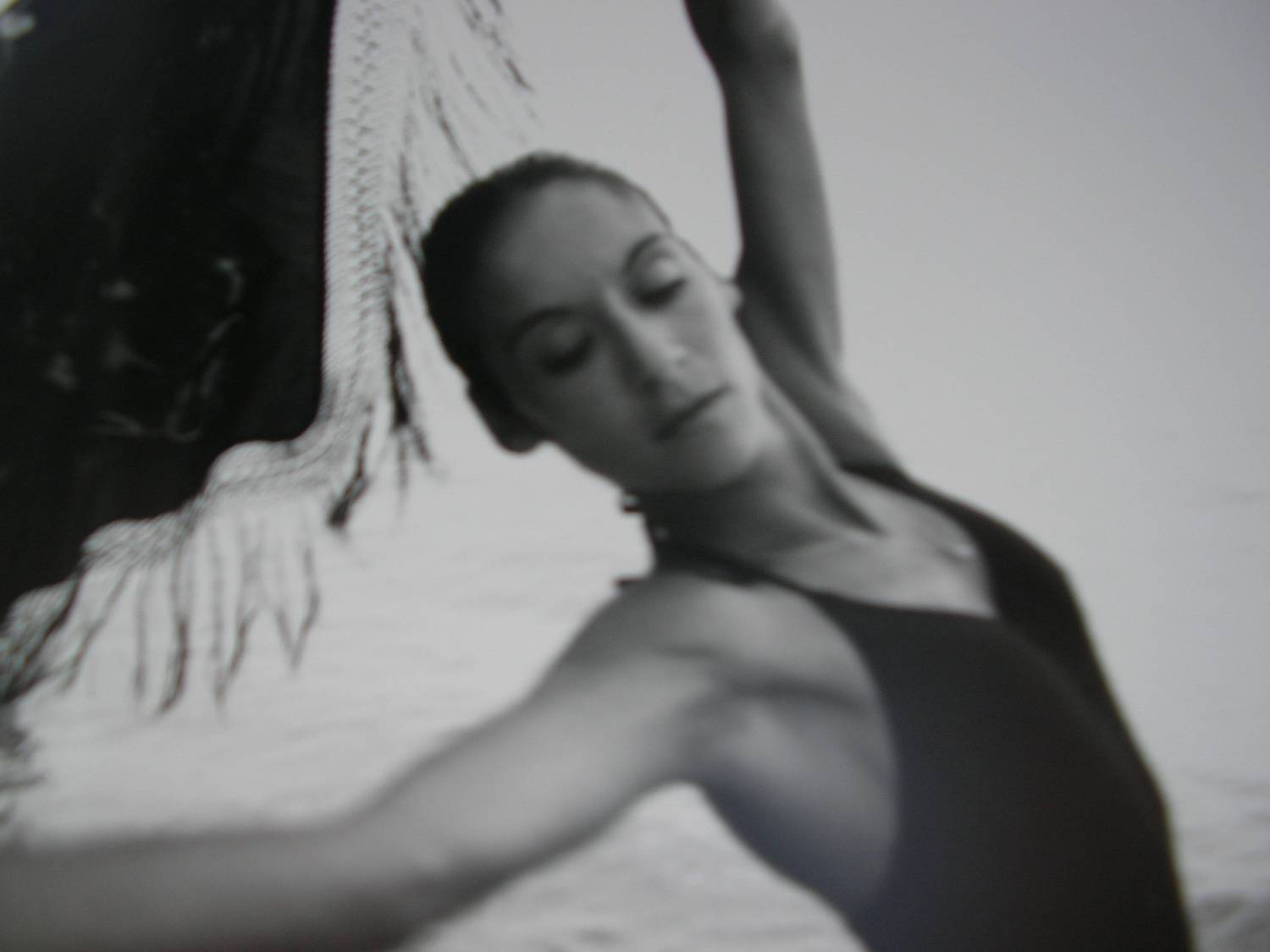
(Photograph, Dr Angioi practising her art)

Leave a Comment

Leave a Comment

Boosting – time to be aware

Most Sports Physicians are well aware of the issue of doping in elite sport and many of the methods used by sports participants. However, some of us may well not have come across a method used by some athletes with a disability called ‘Boosting.’ With the forthcoming Paralympics just around the corner, now is the time to consider this method of doping for those of us who are involved with events later on this year in London 2012.

Some athletes with a high level spinal cord injury (T6 and above) may voluntarily induce an episode of autonomic dysreflexia (AD) prior to, or during, an event in order to enhance their performance. A variety of methods may be used by athletes, including clamping catheters, sitting on sharp objects, and using tight leg straps.

The resulting physiological response leads to a significantly raised blood pressure, with improved blood flow to working muscles. The performance enhancement that may ensue as a result of this response may be significant and lead to an improvement in VO2.

It is not always easy to determine whether or not a deliberate attempt to induce AD has taken place as AD is not uncommonly caused by a number of common triggers including urinary retention due to catheter blockage or misplacement, infections, constipation, or noxious stimuli from other sources such as pain due to a lower limb injury.

My first clinical encounter with a patient with AD was during my registrar training when I was working on a spinal cord injuries unit (SCIU) – the cause on that occasion was a blocked catheter. Recognition was swift due to the awareness of the ward nursing staff to the condition. The patient was treated with nifedipine plus a catheter replacement and bladder washout, and made a swift and uneventful recovery. I was to encounter a few more episodes of AD occurring in in-patients during the next 6 months when I was working on the SCIU.

Whilst not only banned by the International Paralympic Committee as a doping method, boosting is dangerous to the health of athletes and may lead to a hypertensive crisis, stroke and death.

The signs and symptoms of mild-to-moderate AD include piloerection, sweating above the level of the spinal cord lesion, headaches, blurred vision, bradycardia, facial flushing, nasal congestion and anxiety. Systolic blood pressure may rise to over 250mmHg.

Athletes are routinely checked prior to competition for any of these signs and symptoms, and repeated blood pressure measurements are taken if there is any suspicion of boosting or AD. If a systolic blood pressure of 180mm Hg or higher is persistently measured, then the athlete is not allowed to compete in the event and possible causes of AD are searched for.

In this month’s Thematic issue of the Clinical Journal of Sport Medicine on Paralympic Sports Medicine, our featured freely-available article by Krassioukov focuses on blood pressure control and AD in athletes, discussing the physiological mechanisms behind this doping method and what we know about the practice of boosting.

For those who may wish to raise awareness of boosting as a doping method, there is a useful presentation on AD and boosting available on the official website of the Paralympic movement, funded in part by the World Anti Doping Agency (WADA) and the IPC.

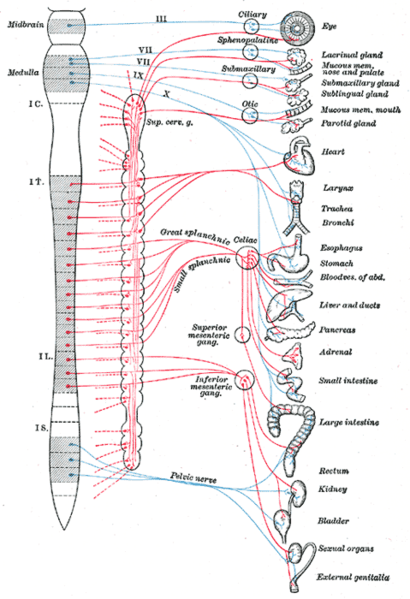
(Image of Iran v South Africa at 2008 Paralympic games available at Wikimedia Commons, and Autonomic Nervous System originally from ‘Gray’s Anatomy’ )

Leave a Comment

Leave a Comment