London Prepares series – 2012 test events in full swing

With less than 300 days to go until the start of the London 2012 Olympics on the 27th of July, and the Paralympics on the 29th of August, London is entering the final stages of its preparation. The City has been hosting the ‘London Prepares’ test event series in advance of the games and these commenced in May this year with the 2011 UK Athletics 20km race walking championships and an invitational marathon. Since then, there have been a number of other events including equestrian, modern pentathlon, sailing, triathlon, badminton and various cycling events.

The latest treat on the calendar was the 2011 London Archery Classic held at Lords Cricket ground from the 3rd to the 10th of October, and I was on hand to view events for myself as a Sports Medicine event doctor last weekend.
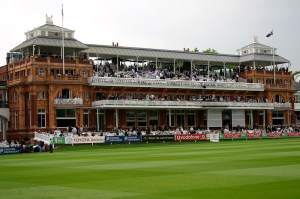
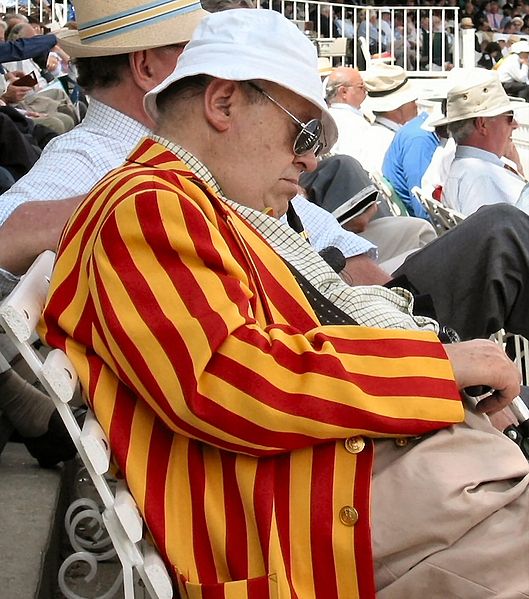
Lords Cricket ground is better known in the UK and worldwide as the home of Cricket, so it was a little strange to see such a different audience in the famous old pavilion, usually occupied by members of the Marylebone Cricket Club (MCC) in their distinctive red and yellow striped jackets and sun hats. Despite the unfamiliar appearance of the spectators, this famous old venue was a wonderful place in which to see the athletes compete in the archery event. Perhaps it was fitting that, in such a prestigious place, the archers rose the occasion by putting in some excellent and memorable performances, including two new world records. Korea’s Im Dong-Hyun managed to break his own  72-arrow world record in the ranking round, scoring 693 and exceeding  his previous record by two points, and followed this up by helping to set a world record in the men’s team competition.
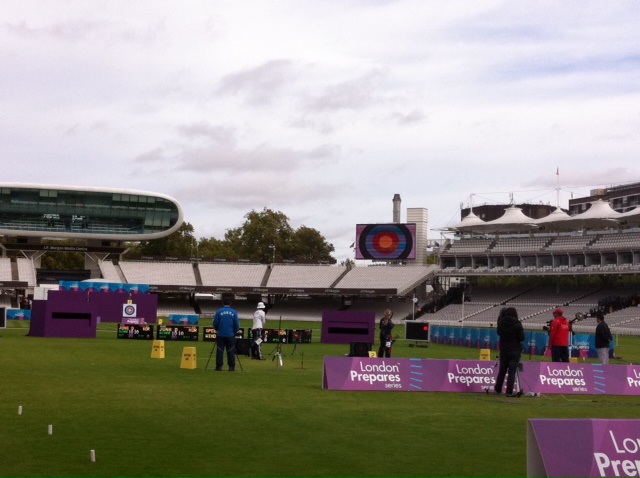
From the medical side of things, everything seemed to go very smoothly with no major problems, the classic representing an ideal opportunity for the medical team to get to grips with things at the venue and to make the fine adjustments necessary to systems and resources prior to the games proper.

As far as test events go, there are many to go this side of Christmas with handball, boxing, table tennis and fencing amongst others to feature. In the new year, spectators can look forward to many more competitions including gymnastics, cycling and aquatics events before some paralympics test events commencing in April.

It is always exciting to be involved in test events prior to the main spectacle to come, and it was a pleasure to be able to watch these world class athletes perform and to talk with the other support and coaching staff. I was even fortunate enough to try my hand at the sport on a much shorter range, managing to hit the target with each of my 3 arrows. Having said that, I don’t think that Im Dong-Hyun and his colleagues have much to fear.
Archery was reintroduced to the Olympic games in the 1972 Munich games following a 52 year hiatus thought to be due to a lack of uniform rules.

Ertan and Tuzun found a prevalence of injury of 56.8% in a questionnaire study of 88 archers at the 2000 Turkish archery championships, although were not specific about their definition of a reported injury. Mann and Littke reported an injury rate of 38.1 injuries per 100 competitors from a retrospective questionnaire of 21 archers who qualified for the Canadian world championship team in 1987. Most injuries are reported to occur in the upper extremities. Ertan and Tuzun found the fingers to be the most frequently reported body part to be injured, followed by the shoulder of the drawing arm. This pattern was further supported by National Electronic Injury Surveillance System findings from the US product safety commission 2007 which included hunting-related archery injuries.

Acute injuries include blisters in the fingers and contusions to the bow forearm caused by string touches, also known as ‘bow slap.’ Most archers wear protection on their bow forearm to prevent this injury. Chronic overuse injuries include tendinopathies (see Rayan G, in Southern Medical Journal) and compression neuropathies in the arm (see Toth C et al, in Sports Medicine). For a comprehensive review of the epidemiology of injury in archery, see Hildenbrand JC (IV) and Rayan GM Chapter 2 in Caine DJ et al ‘Epidemiology of Injury in Olympic Sports’ , Wiley Publishing.

Leave a Comment

Leave a Comment

Concussion to consequence webinar – 12 days to go!

The Ovid Concussion to Consequence Webinar will be live in 12 days’ time, with Margot Putukian, Director of Athletic Medicine at Princeton University, Past President of the American Medical Society for Sports Medicine, and member of the NFL’s Head, Neck and Spine Committee joining John D. Corrigan, Professor in the Department of Physical Medicine and Rehabilitation at Ohio State University and Editor-in-Chief of the Journal of Head Trauma Rehabilitation in a 60 minute discussion on topics related to concussion in sport.

The webinar goes live at 12:00hrs EST on Tuesday the 18th of October, and can be accessed here.

Dr Margot Putukian comments :

‘Concussion is a challenging injury to assess and manage, and the research is evolving at an exponential pace.  The upcoming webinar will be an opportunity to discuss the definition of concussion as well as some of the essentials regarding recognition and management of this injury.  We will discuss a comprehensive approach which includes the pre-season planning as well as sideline and post-injury assessments, return to play considerations, and finally prevention and areas of future research.  We will hope to provide a comprehensive review of a very challenging and important topic.’

In addition to these topics, there will be further discussion on the lifetime risks associated with repeated episodes of concussion, and emerging data on the delayed consequences of early episodes of concussion. Some of the evidence presented will be extrapolated from studies of armed forces veterans and other groups who have a higher incidence of early traumatic brain injuries than the general population.

It’s been over 172 years since Baron Guillaume Dupuytren, perhaps better known for his description of Dupuytren’s Contracture and his treatment of Napoleon Bonapart’s haemorrhoids, described the differences associated with unconsciousness following traumatic brain injury in individuals sustaining brain contusions compared with those without macroscopic evidence of neural damage. Our understanding of the topic of concussion has come a long way since over the years, and we have now have clear guidelines for the assessment and management of concussion in sport which have been produced by the Concussion in Sport group and published widely, including in CJSM here.

Despite this, controversies still exist such as the possibility of the existence of the ‘second impact’ syndrome, differences in return-to-play protocols based on evidence, and the issue of subsequent morbidity and mortality associated with repeated episodes of concussion in earlier life.

The Concussion to Consequence webinar should help to shed light on some of these controversial issues.

Sign up here to join in.

(Illustration – Baron Guillaume Dupuytren October 5, 1777 – February 8, 1835, available here )

Leave a Comment

Leave a Comment

Home or away? Making decisions on the location of medical and surgical care of the elite athlete

I was at the UK Faculty of Sport and Exercise Medicine’s Annual Meeting today, held at the wonderfully-titled ‘Worshipful Society of Apothecaries’ Hall in Blackfriars, London. The Society and the Hall share a very interesting history, the Society itself being the largest of the Livery companies of the City of London with members originating from the Guild of Pepperers, and subsequently members of the Grocers’ company formed back in the Twelth Century. During their history, Society Members challenged the dominance of the Royal College of Physicians, and they can boast a number of previous Licentiates including Elizabeth Garrett Anderson who was the first woman to gain a medical qualification in the UK.

It was in this unique setting that an interesting debate was held during the meeting concerning the question ‘Which is the best location for the medical and surgical care of the elite athlete – home, or away?‘ Should an athlete be sent abroad for treatment, for example, surgical intervention, or should they be kept at home for such treatment?

The cases for and against ‘home’ treatment for athletes were put forward by two Internationally renowned Professors of Orthopaedic Surgery, both well known in the World of Sport Medicine. The arguments were related to issues of practice in the UK, considered to be the ‘home’ Country in this debate. Both arguments focussed on the perceived quality of care that could be provided in different Countries. The ‘home treatment’ case centred around a feeling that UK Orthopaedic surgeons are just as good if not better than their overseas colleagues, well-trained, and working within a strong clinical governance framework. The arguments for the ‘away’ case included the perception that a superior ‘whole package’ of care might be offered overseas, with better provision of rehabilitation. It was also put forward that some overseas surgeons might have a better reputation than their UK counterparts due to stronger marketing and self-promotion, and that perhaps UK surgeons reflect the generally reserved stereotype of the British people, thus making athletes more likely to seek treatment from overseas practitioners.

What struck me during the debate and subsequent questioning was the focus on clinical competence and provision of rehabilitation, and the importance of the perception of the quality of these by clinicians and athletes who are their patients. Whilst these are no doubt very important points for consideration, there are other issues to consider in a decision for ‘home’ versus ‘away’ care.

One such important issue that stands out for me is the provision of psychosocial support during a peri-operative or rehabilitation period. I have previously been involved in the care of several professional sports participants, living outside of their home Countries, who wished to return home for an operative procedure so that they could be near their families during at least the early part of their rehabilitation period. Whilst this may not seem important to some in the decision to provide the best quality of care, perhaps we are sometimes too hasty to forget the importance of such support for some athletes undergoing sometimes invasive and temporarily-debilitating procedures. It is perhaps not as easy to measure the value of immediate support from family and friends to athletes as it is to measure outcomes such as time to return to sport, but should that deter us from taking such support into account in making decisions for ‘home’ versus ‘away’ care?

If we are to entertain the concept of patient choice and a bio-psycho-social model of practice as Sports Medicine Clinicians, then surely the ideal is to form a therapeutic alliance with our patients, making joint decisions about their care not only on the basis of the provision of the perceived best treatment available, but also on the basis of patients’ needs which are often complex in nature. It’s not all about what we might think is ‘best care’ – just ask your patient what else they think is important for them!

CJSM would like to hear your views on the case for  ‘home’ versus ‘away’ care, and your thoughts on shared decision making.

(Picture of Apothecarie’s Hall, Blackfriars, in 1831 at Wikimedia Commons)

Leave a Comment

Leave a Comment

Ramadan and the 2012 Olympics

When it was revealed back in 2006 that the 2012 Olympic Games would take place in London during the period of Ramadan, there were strong criticisms aimed at Olympics organisers from a number of Muslim groups from around the World. Massoud Shadjared, Chairman of the Islamic Human Rights Commission, said ‘This is going to disadvantage the athletes and alienate the Asian communities by saying they don’t matter. It’s not only going to affect the participants, it’s going to affect all the people who want to watch the Games.’

In 2010, the New Statesman published an article posing the question ‘Is Ramadan a threat to Muslim success at London 2012.’ Joanna Manning-Cooper, spokeswoman for the London 2012 Olympic Games, seems to think not, having stated that ‘we have always believed that we could find ways to accommodate it.’

Ramadan is the ninth, and the most holy, month of the Islamic calendar. It is one of the five Pillars of Islam, and during this period Muslims do not eat or drink anything from dawn to dusk. Muslims fast for the sake of Allah, and to teach themselves about patience, spirituality, humility and submissiveness to Allah.

The dates of Ramadan in 2012 are from the 21st of July to August the 20th, which coincides with the Olympic Games which takes place between the 27th of July and the 12th of August. The 2012 Paralympics runs from the 29th of August until the 9th of September. Whilst the dates of the Olympics were designed to fall into the traditional six-week’s summer holidays in the UK in order to make it easier to find the required number of volunteers, the clash with Ramadan is proving a difficult problem for those athletes and support staff who will be directly affected during this period.

Around a quarter of the total number of athletes competing in the 2004 Athens Olympics were from predominantly Muslim countries, and it is estimated that there could be in excess of 3000 athletes observing the period of Ramadan during the 2012 Olympics. Not only are eating and drinking affected, but sleeping and training schedules also have to be fitted around the religious commitments during this period of time.

In their paper in this month’s CJSM, Brisswalter and colleagues assessed the effect of intermittent fasting during Ramadan on 5000m running performance in 18 well-trained middle-distance runners and concluded that their results suggested that Ramadan changes in muscular performance and oxygen kinetics could indeed adversely affect performance during middle-distance events. With many middle and long-distance runners being Muslims from North Africa, the potential for underperformance might seem to be significant amongst those competitors who are observing the period of Ramadan during competition.

The available evidence suggests that performance effects are likely to be variable according to environmental conditions, the length of fasting, and the time of day in which the event is occurring, together with the length and type of event in which the athlete is competing. For example, Chaouachi and colleagues assessed the effect of Ramadan intermittent fasting on aerobic and anaerobic performance and perception of fatigue in male elite judo athletes and concluded that fasting had little adverse effect on these parameters during very short duration sprinting and jumping test performance in this group.

It is likely that the London 2012 organisers have learned from the scheduling during the 2010 Youth Olympic Games which also took place during the period of Ramadan that year.

For those wishing to read more on the subject of Ramadan and issues related to perparation and participation in athletic competition, a series of papers was published in the Youth Olympic Games edition of the British Journal of Sports Medicine, which included some advice on nutritional strategies during the Ramadan period for athletes. In addition, the International Association of Athletics Federations have produced a booklet on eating and exercise during Ramadan written in both French and English which is well worth a read.

CJSM would like to hear of your strategies and planning for Muslim athletes competing during Ramadan in the 2012 Olympics.

(Image of Ramadan lanterns in Egypt by B. Simpson )

Leave a Comment

Leave a Comment