Seasonal influenza vaccination for professional athletes – who’s for the jab?

It’s that time of year for many of us in the Northern hemisphere when colleagues involved in caring for participants in elite sports are being asked, ‘Doc, should I have a flu shot?’

The decision may have already been made by the athlete (or, indeed, the Club or organisation) that they either ‘need’ or ‘don’t need’ influenza vaccination, which may make life easy or hard for clinicians if there is a difference of opinion on the subject.

Whilst our patients might perhaps expect an easy and straightforward ‘yes’ or ‘no’ answer on the question of seasonal influenza vaccination, the reality is that the decision to be made on requirements for seasonal influenza vaccination requires a consideration of a number of complex factors relating to the susceptibility of individuals and populations to the disease, together with the risks of serious complications to particular groups of individuals and their contacts in society.

These can be broadly grouped into extrinsic and intrinsic factors :

1) Extrinsic factors

– Regional projected population prevalence of viral load (based on WHO Health surveillance data)

– Regional variance in delivery policies and availability of vaccines (may include rationing)

– Meteorological forecasts

– Other socioeconomic factors (occupation, housing etc)

2) Intrinsic factors

– Co-morbidities such as asthma, diabetes

– Patient choice

In the United States, seasonal influenza vaccination is recommended for all individuals over the age of 6 months, but local recommendations vary considerably in different countries. In the UK, for example, universal vaccination is not currently recommended, with a more targeted approach being adopted towards vaccinating certain individuals.

When it comes to particular groups such as athletes, all of the considerations mentioned above apply but there is the added question about the effect of moderate-to-high levels of physical activity on immune system function and susceptibility to infection to consider. It may also be important to consider the effect of travel and time-zone adjustment. In addition, when it comes to hard outcomes, it’s important to consider the evidence for the effectiveness of influenza vaccination on disease prevention in individuals, and for prevention of cross-infection of colleagues within a team environment.

There is a whole host of guidance available to clinicians from organisations such as the World Health Organisation, the Centers for Disease Control and Prevention, and the Department for Health in the UK which describe recommendations for vaccination in individual groups related to age and co-morbidities.

However, there is little information in the literature based on good quality evidence to inform clinical practice when it comes to the immunisation of professional athletes based on a consideration of the effect of high levels of physical activity on immune system functioning.

Perhaps as our understanding of exercise immunology improves, the basic science knowledge will better inform clinical practice.

An interesting position statement on immune function and exercise and maintaining immune health, published this year over two articles in Exercise Immunology Review should help us to get there. The articles provide a comprehensive review of topics in exercise immunology, and are available on the web here (Part 1) and (Part 2).

In the meantime, for those of us in the UK and other Countries where universal seasonal influenza vaccination is not currently recommended, the references at the end of this post may prove useful for those of us making decisions with our athletic patients.

CJSM would be interested to hear your thoughts and strategies for seasonal influenza vaccination of athletes, especially from team physicians.

1)  Constantini N et al. 2008. Vaccinations in sports and recommendations for immunization against flu, hepatitis A and hepatitis B.  Harefuah 140(12):1191-5

2) Daly P, & Gustafson R. 2011. Public Health recommendations for athletes attending sporting events. Clin J Sports
Med. 21(1): 67-70

3) Schaffner W. Rehm SJ. File TM Jr. 2010. Keeping our adult patients healthy and active:the role of vaccines across the lifespan. Physician and SportsMed 38(4): 35-47

4) Malm C. 2004. Exercise Immunology : the current state of man and mouse. Sports Medicine 34(9): 555-560

5) Ross DS et al. 2001. Study indicates influenza vaccine beneficial for college athletes. West Virginia Medical Journal 97(5): 235

6) Tarrant M & Challis EB. 1988. Influenza vaccination for athletes? Canadian Medical Association Journal 139(4): 282

Leave a Comment
Leave a Comment

Groin problems keep two prominent 100 meter sprinters out of the World Championships

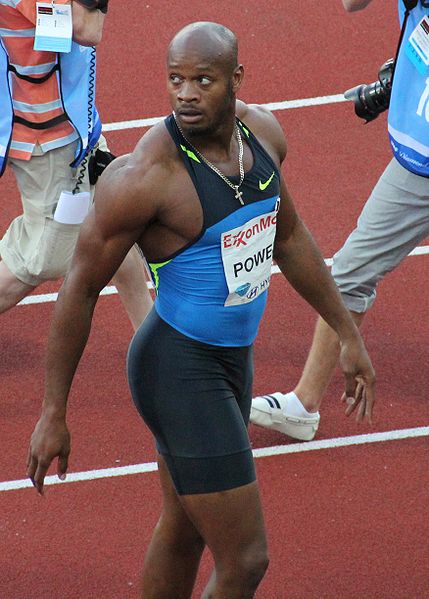
The Jamaican 100 meter sprinter and former twice world record holder at that distance, Asafa Powell, is the latest big name to pull out of a forthcoming event with a groin problem. Powell apparently originally developed symptoms following a race in Budapest in July this year, and later pulled out of the London Grand Prix hoping that things would settle in time for him to be able to compete at the World Championships in Daegu, South Korea later this month. However, he was forced to pull out of the 100 meter heats, although may make himself available for the 4 x 100m relay on the 4th of September.

Powell is the second high profile athlete who is unable to compete at the World Championships at the 100m distance, with Tyson Gay having previously undergone arthroscopic surgery on his hip earlier this year. Gay was reported to have been suffering from hip impingement, according to his surgeon Dr Marc Phillipon.

Groin pain is surely one of the most frustrating conditions suffered by those who participate in sport, and presents one of the trickiest diagnostic challenges for Sports Physicians, especially in its chronic presentation. Acute hip and groin pain often occurs in those sports that require quick changes in direction and kicking such as soccer, and chronic groin pain similarly tends to occur in those who participate in sports in which explosive sprints are combined with twisting and kicking. The diagnostic challenge of chronic groin pain presents due to a combination of factors, including complex regional anatomy, the heterogeneity of sites where pain occurs and tenderness can be elicited, and often the co-existence of a number of different pathologies including some of the more obscure, less well-recognised conditions such as obturator nerve entrapment, described here in CJSM by Bradshaw and McCrory.

In a paper published in BJSM in 2007, Per Hölmich identified 3 primary patterns of longstanding groin pain amongst 207 consecutive athletes involved in a number of different sports using a standardised clinical examination programme, categorising patterns related to adductor-related dysfunction, iliopsoas-related dysfunction, and rectus abdominis-related dysfunction together with combinations of these patterns. This concept of clinical entities was later extended in the 3rd Edition of Clinical Sports Medicine by Brukner and Khan to include pubic bone stress-related dysfunction, but how useful this concept is in Clinical Practice continues to be a subject for debate.

Falvey and colleagues, in a paper in the British Journal of Sports Medicine, more recently attempted to make sense of the so-called ‘groin triangle,’ suggesting a ‘novel educational model based on patho-anatomical concepts’ in order to assist in the diagnosis of chronic groin pain in athletes.

Even more recently, Bizzini described the groin area as the ‘Bermuda triangle’ of sports medicine, and I think that it is fair to say that most clinicans will continue to find themselves lost from time-to-time when assessing their patients with groin pain.

Any tips from our blog readers on the assessment of chronic groin pain? CJSM would love to hear your practice pearls.

(picture by Chell Hill, 2010)

Leave a Comment

Leave a Comment

Brave fighter Scott LeDoux succumbs to Lou Gehrig’s disease

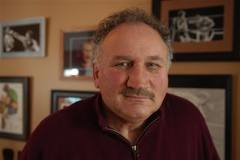
I was saddened to hear of the death of the ‘Fighting Frenchman,’ Alan Scott LeDoux last week. LeDoux died of Amyotrophic Lateral Sclerosis (ALS), also widely known as Lou Gehrig’s disease, which was originally diagnosed in 2008. He had a distinguished and colourful career having fought many famous heavyweight fighters including George Foreman, Larry Holmes, Leon Spinks, Ken Norton, and Gerry Coetzee. He also fought Muhammad Ali in a five round exhibition match, and his final bout was against Britain’s Frank Bruno in 1983 which ended in a technical knock-out. LeDoux ended his career with a record of 33-13-4, with 22 knockouts.

Arguably his best boxing achievements were his draws with Leon Spinks just two months prior to Spinks’ defeat of Ali for the World Heavyweight Championship, and with Ken Norton. During his controversial fight with Norton, he had his opponent on the canvass twice in the tenth round. Following his boxing career, LeDoux entered the world of politics and was a commissioner in Anoka County, Minnesota, until he stepped down from his role due to his declining physical health.

LeDoux and his wife Carol became advocates for research into neurodegenerative diseases, particularly supporting research programmes at the University of Minnesota. The brave fighter can be seen alongside his wife Carol talking about his hardest ever fight, against ALS, and promoting the importance of research into neurodegenerative diseases in this emotive video. LeDoux is survived by his wife Carol, two sisters Denise and Judy, two children from his first marriage, Molly and Joshua, a stepdaughter, Kelly, and four grandchildren.

McCrory discusses the issue of Sports Concussion and the Risk of Chronic Neurological Impairment in this article published in CJSM earlier this year, in which mention is made of the possible association of ALS in association with head injury. McKee and colleagues, in their study published in the Journal of Neuropathology and Experimental Neurology,  recently claimed to be the first authors to have found pathological evidence indicating that repetitive brain trauma may be associated with motor neuron disease, finding abundant TDP-43-positive inclusions in the spinal cords of 3 athletes with chronic traumatic encephalopathies.

Most of our American and Canadian readers will be familiar with New York Yankees’ first baseman Lou Gehrig, whose career was cut tragically short by ALS. Over a 15-season span from 1925 to 1939, Gehrig played in 2,130 consecutive games – a record which stood for 56 years until being finally broken by Cal Ripken Jr in 1995.

Leave a Comment

Leave a Comment


PRP – magic bullet, or damp squib?

I’m guessing that not many of you will have seen the Academy Award-nominated biographical movie ‘Dr Ehrlich’s Magic Bullet’ starring Edward G Robinson. It outlines part of the career of the famous German scientist  Dr Paul Ehrlich, who popularised the concept of the ‘magic bullet’ therapy for the treatment of specific diseases. The film focuses on arsphenamine, ‘compound 606,’ and Ehrlich’s cure for syphylis.

The concept of the ‘magic bullet’ is rather older however, dating back at least to the 1800’s and deriving from the histochemical staining of tissues. It was Ehrlich’s opinion that, if a chemical could be found that targeted a pathogen, then a toxin could be delivered along with that chemical and hence a ‘magic bullet’ would be created that would destroy the pathogen leading to the elimination of a disease state. The concept was later realised following the discovery of monoclonal antibodies for which Köhler, Milstein and Jerne shared a Nobel Prize in 1984.

So-called ‘targeted therapies’ do not necessarily destroy their target as such, but may act to cause some form of modification, for example to a cell membrane via second messenger cascades or within the cell nucleus itself, leading to alterations in cellular genetic expression which then lead to a sequence of events that ultimately results in healing or an improvement in clinical symptoms.

Platelet-rich plasma (PRP) has been perhaps the most widely investigated preparation of late. PRP contains a number of growth factors including PDGF, IL-8, and CTGF, which have a number of different effects on different cells. Many of these actions are poorly understood, despite much basic science research, yet this has not prevented the clinical application of PRP for tendinopathies which is perhaps not surprising given the search for effective therapies for tendinopathies and the drive for ‘cutting-edge’ therapies in Sports Medicine.

However, when one stops to consider the knowledge gaps we have concerning the pathophysiology of tendinopathies, and our lack of understanding of the complex interactions involved in cellular healing mechanisms, then perhaps one may not be surprised to see the heterogeneity of results from clinical trials using PRP in the treatment of these conditions. The three main theories for the genesis of tendinopathy, namely overuse, overload and thermal stress, are still open to debate and there is a very wide range of possible actions of PRP on tendinopathic tendons.

Well-conducted clinical trials such as this one by de Jong et al on PRP for achilles tendinopathy, and systematic reviews such as this one by de Vos and colleagues ,have failed to find a positive clinical effect when using PRP use for the treatment of tendinopathies.

In this month’s systematic review in CJSM on the use of PRP in Sports Medicine as a new treatment for tendon and ligament injuries, Taylor and colleagues concluded that, despite several possible theoretical advantages to the use of PRP, there are very few well-conducted prospective studies and clinical trials available with which to inform clinical practice.

The recent IOC consensus paper on the use of PRP in sports medicine published in BJSM also highlighted the limited amount of basic science research, the paucity of well-conducted clinical studies on PRP, and the heterogeneity of methodological issues between different studies making comparisons of clinical effects difficult to judge. The IOC group’s recommendation was that clinicans should proceed with caution in the clinical use of PRP.

The debate is on as to whether there is a true lack of efficacy of PRP in the treatment of tendinopathies, or whether we simply need more well-designed clinical research.

What do you think? Where do we need to focus our research efforts? Should we forget the idea of ‘targeted therapies’ such as PRP and ‘magic bullets’ for tendinopathies?

CJSM would like to hear your views.

Leave a Comment

Leave a Comment