CJSM Podcast 1

JSM-Podcast-BG (1)We are delighted to bring you our first Clinical Journal of Sport Medicine podcast:

We begin this month with a look at the provocative editorial in our new issue: Time to Re-Think the Zurich Guidelines: a Critique on the Consensus Statement on Concussion in Sport. The article is authored by Drs. Oliver Leslie and Neil Craton, from Legacy Sport Medicine in Winnipeg, Manitoba, Canada.  I caught up with the authors last week for an exciting discussion about their argument that it’s “…time for us to reject (the) diagnostic and therapeutic algorithm” proposed by the Zurich guidelines.

Let us know what you think on the comments section of this page, tweet us @cjsmonline, or go to the CJSM main page and take the Zurich guideline poll we have for you there.  Check out our recent blog post on this same subject.  And be sure to check out the many other offerings we have this month in the journal.  We’ll be writing and talking about them in the coming weeks.

Enjoy the podcast!

(music: Jeff Manning)

Is it Time to Re-think the Zurich Guidelines?

799px-Zürich_-_Waidberg-Zürichsee_2

Zurich: Site of the 2012 Meeting which
developed the current Consensus Statement
on Concussion in Sport

Vienna, Prague, Zurich:  I’ve often wondered why the Consensus Statements on Concussion are made in central European cities.

The ‘International Consensus Conference on Concussion in Sport’ has taken place successively in Vienna (2001), Prague (2004), Zurich (2008) and again in Zurich (2012).  It’s looking like the timing is an Olympiad!  And as for venue, I suggest Budapest should start lobbying for 2016…..

But today we won’t be answering the ‘why’ of venue or timing regarding these conferences.  We’ll be looking at commentary on the output of the last Zurich meeting:  the so-called “Zurich guidelines,”  or the Consensus statement on concussion in sport:  the 4th International Conference on Concussion in Sport held in Zurich, November 2012.

An editorial in our new, March 2014 issue, is entitled:  Time to Re-think the Zurich Guidelines?  A Critique on the Consensus Statement on Concussion in Sport.  Written by Drs. Neil Craton and Oliver Leslie of Legacy Sport Medicine in Winnipeg, Manitoba, Canada, the piece is a provocative deconstruction of the Zurich Guidelines.

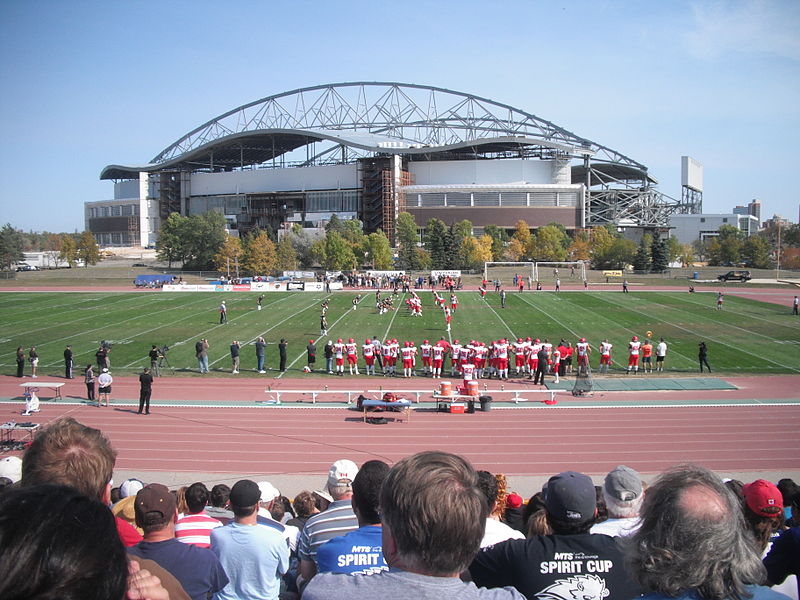
800px-Bisons_vs_Calgary

Investors Group Field, where the team doc
Neil Craton cares for the CFL’s
Winnipeg Blue Bombers

The authors have contributed to CJSM in the past.  Last year, the pair wrote Concussion:  Purely a Brain Injury? and Dr. Craton has contributed several other pieces over the years.  The pair are also educators at the University of Manitoba Primary Care Sports Medicine Fellowship.  They are busy clinicians as well as writers and teachers, and Dr. Craton includes as his clients the players of the Winnipeg Blue Bombers of the Canadian Football League (CFL).

Concussion,  as defined by Zurich, is a subset of traumatic brain injuries. The formal definition, with which many of you will be familiar, is “…a brain injury and is defined as a complex pathophysiological process affecting the brain, induced by biomechanical forces.”

The editorial authors state that the Zurich guidelines, while providing high sensitivity,  lack sufficient specificity.  Consequently, they argue that Zurich opens up the possibility that a host of other pathologies (e.g. cervical strain, cervicogenic headaches, benign positional vertigo, etc.) can be construed as concussions.  And if understood that way, the potential ‘mis-diagnosis’ can lead to iatrogenic harm:  either by initiating a cycle of ineffective treatments, or causing undue worry among patients and families regarding a perceived brain injury.  They go so far as to write, “The inclusion criteria for a diagnosis of concussion as articulated by Zurich are absurd (my itals).” Read more of this post

#SuperBowlXLVIII

800px-NYC_Empire_State_Building

The iconic Empire State Building:
Super Bowl in view.
Photo: Daniel Schwen

After all the talk about Manning’s comeback, Sherman’s rant, the NYC vs. NJ rivalry, and the weather….we have come at last to Super Bowl Sunday. The high holiday of American football.

The collision, not just of two football teams but also of a vast sporting event and the NYC/NJ media megalopolis, has created predictable fireworks.  For example, you can tweet a prediction of who will win the game, with the hashtag #WhosGonnaWin, and determine the lighting color of the  Empire State building itself.

The power of the pen?  No, it’s the power of the tweet!

Getting back to the weather.  It has been frightful, both in North America and Down Under.  The Australian Open almost had player defections over the intense environmental conditions they faced from an uprecedented heat wave.  At the same, a polar vortex swept down over most of Canada and the USA bringing fears of hypothermia, frostbite and other assorted ills to outdoor exercise enthusiasts, sportsmen, and, possibly, spectators.  When all is said and done, however, it appears that Sunday’s Super Bowl game will be played under cold, but tolerable and dry conditions:  the most recent prediction I have seen suggests game time temperature should be just around freezing, and the skies should be clear.

I suspect the NFL commissioner Roger Goodell may have sought some help from Timothy Cardinal Dolan in supplicating the higher powers to ensure the Super Bowl would avoid becoming an Ice Bowl…..like the last time the NFL championship occurred in the NYC area, in 1962. Read more of this post

National Council on Youth Sports Safety

988780_10151971065024581_1620105790_n

Strained metaphor?
Like the Washington Monument,
our approach to concussions is
under revision

I am in Washington D.C. Thursday and Friday as a participant in the National Council on Youth Sports Safety (NCYSS), being put on by the Protecting Athletes and Sports Safety (PASS) Initiative.  Our host and keynote speaker is Dr. David Satcher, the former Surgeon General who has devoted his life to issues of public health, and has recognized that the concussion ‘epidemic’ has become a game changer in the field.

I’ve met a variety of high profile leaders, in addition to Dr. Satcher, in the world of youth sport concussion during my 24+ hours on the ground in D.C.

I don’t suppose it’s surprising,  but I think one of the most important components of these sorts of meetings is the networking:  I am coming out of this conference with at least three rather solid collaborative research ideas, not to mention commitments to work on other projects with several of the conference attendees.

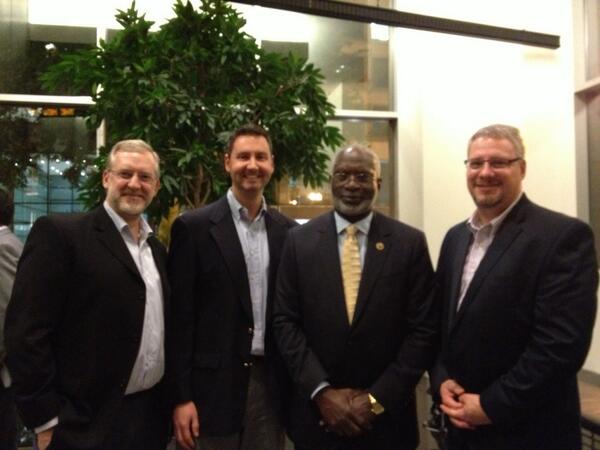
BYhLP9pCEAAWm_P

Physicians from Nationwide Children’s Hospital and
Dr. David Satcher, former United States Surgeon General

On a ‘meta’ level, what I was struck by in this conference was the theme that was consistently struck:  we need more scientific research on youth sport concussion, and the urgency behind this need derives fundamentally from two areas–1) the often undervalued but critical importance of mental health and 2) the risk of children in being inactive.

In other words,  as concerned as we need to be about reducing the risk of concussion, about reducing possible long-term mental health issues consequent to this injury, we need to balance this concern with he equally strong demand that we promote physically active children.

In fact, it’s not simply the effect of sport and exercise on obesity, but also their positive effect on mental health:  for instance, physically active kids are less prone to depression.  And so, if one were concerned solely with mental health, he would need to navigate the twin perils of traumatic brain injury and physical activity.

At CJSM, we are on the frontline in these issues.  We publish original research on concussion in almost every one of our journal editions.  The November issue for  instance has an excellent study on predicting clinical concussion markers at baseline.   In the same issue we published the Canadian Academy of Sports and Exercise Medicine Position Statement on the mandatory use of bicycle helmets:  an issue of keeping youth and others safe while they are physically active.

BYkmR_SCYAA5gMH

@cjsmonline (attached to laptop)
tweeting from #NCYSS before
catching that plane

I am leaving D.C. struck….by the sight of the Washington Monument under scaffolding!  In truth, I am more than ever struck by how big of an issue concussion has become, and how it will remain central to primary care sports medicine research for years to come.  There are lots of questions that need answers.  We’ll be working on this continuously here at CJSM.