A Shout From Across the Pond: the “Lloris Affair”

CJSM is an international sports medicine journal.  We are the official journal of two American sports medicine societies (American Medical Society of Sports Medicine and the American Osteopathic Association of Sports Medicine); as well as the Canadian Academy of Sports and Exercise Medicine and the Australasian College of Sports Physicians.  I regularly liaise with our Executive Editor, Chris Hughes, who lives in London, our publisher in Philadelphia USA, and our managing editor in Calgary, Alberta.

Untitled

A small sampling of the twitter conversation
Our Executive Editor was engaged in
This weekend regarding the Lloris injury

Lots of science and lots of sports to keep track of, all over the globe.   And so it was that this weekend, residing in Columbus, Ohio, I remained blissfully unaware of the events surrounding the injury to Hugo Lloris until I noticed that the @cjsmonline twitter feed exploded with shouts of disbelief, as our executive Editor and others were busy deconstructing what they had just seen.

In short order, Chris let some other ‘tweeters’  know they could reach out to @cjsmonline, and one enterprising individual forwarded me a thoughtful piece on the situation:  voila!  The genesis of today’s guest blog.

@Daniel_Broman (Dr. Broman) is a Core Medical Trainee in London, and is currently based at Barts Health NHS Trust. He is keen to follow a career in Sport & Exercise Medicine and will be applying for specialist training in the coming months.

He shared these thoughts about the incident:

___________________________________

Concussion in Football – The Lack of Consistency in Management and The Need for Guidelines

 By Daniel Broman

The topic of concussion in sport has been placed in the media spotlight again recently, especially in the UK, with articles about the proposed new rules for Pitch-side Concussion Assessment (PSCA) in Rugby Union matches (“Rugby and Concussion:  Are Big Hits Bringing Big Headaches?” and “Rugby Union, Concussion and the Ultimate Need for Responsibility of Care”) and with several incidents in Premier League football, including the cases of:

  • Romelu Lukaku vs. West Ham United (21st September 2013), where the player completed the final 3 minutes of the match and post-match admitted that “I did not even know I had scored, I was out of it and the first thing I asked the doctor was “who scored?” and he said “you did”.”
  • Mathieu Flamini vs. Norwich City (19th October 2013) with the player taken off at the time. Arsene Wenger stated a few days later that “There is a five-day (concussion) rule that we will respect, not to take any chance. It was a concussion and the doctor advised us not to play him.”
  • Robert Snodgrass vs. Manchester United (29th October 2013) where the player was also taken off the field of play and taken to hospital. Chris Hughton stated “I think that (going to hospital) is very much a precaution”.

Clearly all incidents and cases are different and of varying severity, however the lack of consistency in their management is still concerning. Over the weekend, another particular incident, prompted several discussions both on social media and in the media, with ‘Match of The Day 2’ stating there needs to be “uniformity on a rule”. Read more of this post

Rugby and Injury Prevention

As I write, it’s early afternoon in the Midwest of the United States.  I hope wherever you are as you read this you are enjoying yourself.  If you’re reading this over the weekend, you may be taking advantage of the many sporting offerings around the globe that involve one of the football ‘codes.’

It took me a long time, as an American, to learn that the ‘football’ I grew up with was  only one of many games sharing a similar genealogy;  and, what’s more,  in most of the world, the word ‘football’ would be understood to refer to a completely different sort of game than what I saw on an NFL Sunday.

Paul-bunyan-at-msu

The Paul Bunyan trophy,
awarded to the winner of
Michigan v. Michigan State
Football (American!) game

I’m probably ‘preaching to the choir’ if you’re reading this, but today there are many different types of football games being played around the globe.  There are several NCAA American Football games (I have an eye on the Michigan v. Michigan St. (MSU) game, having grown up in Grand Rapids, Michigan); there are of course many ‘Association football’ (soccer) games going on (Arsenal v. Liverpool is one of the highlight matches in the Premiership).  England upset Australia in Rugby Union earlier today; and the Edmonton Eskimos face off against the Saskatchewan Roughriders in the Canadian Football League this evening.

And more out of ignorance than intent, I am probably forgetting to mention any number of fixtures happening in Australian Rules football, Rugby League, or Gaelic football this weekend.

Lots of ‘football.’  Many ‘codes.’

Though most of my current practice in the Northern Hemisphere fall is devoted to caring for injured American football players, I wanted today to look at a different code.  I thought it the proper time to write about a recent news item on rules changes in Rugby Union.

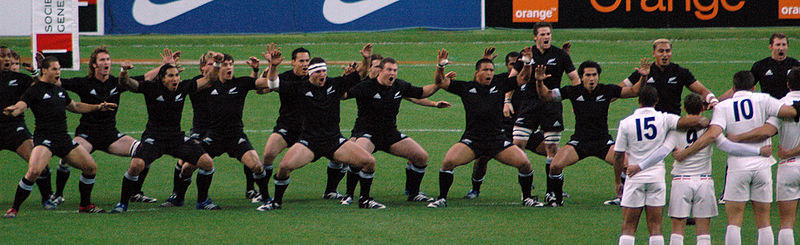
All_Blacks_Haka

The New Zealand All Blacks
performing their famous
Haka before a match with France

What prompted me to tack in this direction was a BBC article I read on line yesterday, “Rugby and Concussion:  Are Big Hits Bringing Big Headaches?”  There is controversy in the world of Rugby Union, according to the BBC, over how to manage game day concussions.

Barry O’Driscoll, a well-regarded member of the International Rugby Board’s (IRB) Medical Committee, has resigned in protest over proposed new rules for Pitchside Concussion Assessment (PSCA) in Rugby Union matches.  The new approach will replace what previously was a mandatory end to a player’s game and week rest period if a suspected concussion had occurred.  PSCA incorporates a functional assessment by a medical provider, which the BBC states includes the following:

  • A Pitch-Side Concussion Assessment can be asked for by a team doctor or referee if they suspect a player is concussed
  • The referee signals a PSCA has been requested via radio link and with three taps to his head
  • A substitute comes on while the PSCA takes place in pre-agreed place, usually a medical room
  • The injured player is assessed for symptoms, asked a series of questions – Where are we? What’s the score? etc – and given a balance test similar to the ones in drink-driving cases
  • One failed question, four balance errors and the presence of one or more symptoms means the player is removed from game*

*PSCA summary taken from BBC article

Read more of this post

League of Denial: A review of the PBS documentary

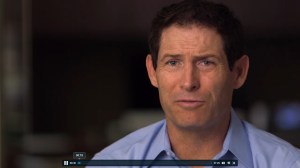
steve young

49ers legend Steve Young
one of the great interviews on the
documentary, “League of Denial”

I watched the PBS Documentary “League of Denial” this week, and I’m sure many of you did as well.

In one word:  Bravo.

I thought the folks at PBS’ Frontline did a fantastic job, touching on many facets of what is arguably the biggest sport public health story of the last two decades.  There were so many dimensions to the nearly two hour documentary, it’s hard to know where to begin my review.  In nearly two hours, PBS (with a ‘redacted assist,’ if that’s the phrase, from ESPN), covered a lot of ground.

I thought I would highlight some of the major personas that showed up, and divide them into the following four categories: “Winners,” “Losers,” “Meh,” and “In Memoriam”

Winners

Bennet Omalu, the neuropathologist who broke the story of chronic traumatic encephalopathy (CTE), is my pick for the most compelling figure in this documentary.  A physician of great training and accomplishment, he had the mixed fortune of conducting the post-mortem examination of Mike Webster, the Pittsburgh Steelers icon who died young and whose brain showed the pathologic changes of CTE, the first case documented in an NFL player and reported in this study.

Dr. Omalu’s story, both personally and professionally, is worthy of its own documentary.  Originally from Nigeria, he knows little about American fooball and nothing about the Steelers icon when he first meets the latter’s corpse and goes about his job.  He reports being thoroughly unimpressed with the gross morphology of the deceased’s brain:  how it looked ‘normal.’  It was only on conducting his histopathologic exam that he made his stunning discovery.

For this and further efforts in investigating CTE in deceased NFL players’ brains, he was smeared by the NFL and its affiliated physicians.  Omalu poignantly states as a result, he wished he had never ‘met Mike Webster.’

As an Associate Editor of a medical journal, I found the calls by some in the NFL medical community (see below) for Omalu to retract his CTE study and their ad hominem attacks to be the more egregious sins (among many) reported in the documentary.  The process of science, spearheaded by peer-reviewed literature, is one of openness; disagreements are cause for further study, not suppression.  Retraction should be reserved for outright fraud.  The calls for retraction in this case are shameful.

Ann McKee, another neuropathologist now with the Boston Center for the Study of Traumatic Encephalopathy, has picked up the baton and is continuing to carry on the research into CTE in former professional football players, despite further pushback from vested interests and more ad hominem attacks that insinuate that, as a woman, what might she know about football?

Steve Young who experienced five or six concussions in his career, is one of the former players interviewed for this documentary.  I remember Steve Young well, as I lived in the Bay Area for many of the seasons of his glorious career with the 49ers, and I remember too when he had his career-ending concussion. Read more of this post

Dr. Keith Yeates guests on “5 Questions with CJSM”

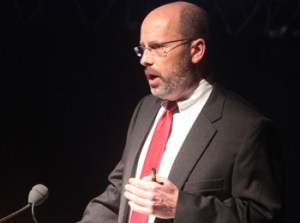
keith

Dr. Keith Yeates revs up the crowd at
the International Brain Injury Association meeting
in Edinburgh, Scotland

I live and work in Columbus, Ohio, United States, and I am privileged to be surrounded by many leaders in the field of sports medicine.  One such figure, who is doing great work advancing the evidence to support the diagnosis and management of sport-related concussions, is Keith Yeates, Ph.D.

Dr. Yeates and I work at the same institution, Nationwide Children’s Hospital; I have found him to be a great resource to turn to for questions regarding the sport-related concussions in kids that I manage as part of my clinical practice.  He is a prolific researcher and writer, who has been a contributor to the pages of CJSM and journals beyond.  He is a lead neuropsychologist for a multi-site study of traumatic brain injury in children and adolescents, funded by the CDC.

I just learned from a press briefing that Dr. Yeates has become a millionaire of sorts:  he has been awarded a prestigious R01 grant to continue his work in the field of traumatic brain injuries.   And so I had to try to catch up with him and have him sit for 5 questions before his various other commitments overwhelmed him!  I got lucky, and here are Dr. Yeates’ thoughts on the state of concussion research.

___________________________________________________________________________

CJSM asks Dr. Keith Yeates 5 questions

1) CJSM: Congratulations!!  We understand you just received a $3M R01 grant for ‘predicting outcomes in children with MTBI.”  What areas of research do you plan on pursuing with this grant?

KY: The grant will fund research to examine how well diagnostic methods commonly used for children with mild TBI can predict persistent postconcussive symptoms (PCS) and functional deficits. Various methods are recommended for the diagnostic evaluation of children with mild TBI, including assessment of presenting signs/symptoms, acute mental status examination and balance testing, neuropsychological testing, and neuroimaging. Although these methods discriminate between children with mild TBI and healthy children, we don’t know whether they predict outcomes such as persistent PCS and functional impairments among children with mild TBI. As a result, decision tools are not available to physicians and other health care providers to guide the disposition and care of children with these very common injuries. This comprehensive study of common diagnostic methods and their incremental utility in predicting outcomes should have a major impact on clinical practice, particularly in acute care settings, by helping improve prognostic determinations, develop decision tools, and focus treatment efforts. The study should also add substantively to the scientific understanding of the outcomes of mild TBI. Read more of this post