The Games We Play: From Open Water Swimming to Croquet

photo (20)

And they’re off:
the start of the 32K Traversee

The swimmers have entered the 19 C water and have begun their 6+ hour journey to Roberval:  the Traversee of Lac St. Jean, a FINA 32km open water swim has begun.
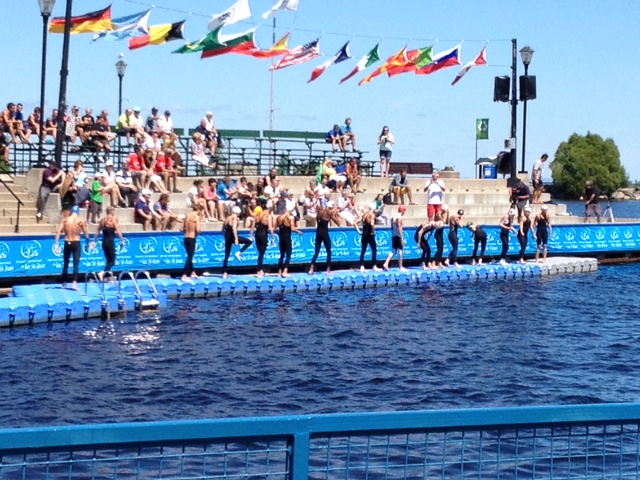
photo (14)

The start of the Lac St. Jean
10 K FINA event

I last wrote a post about the FINA World Cup 10km event that took place two days ago at the same venue.  The organizational structure, medical facilities, and WADA doping control stations are the same for the 32km Traversee.

photo (15)

The infirmary at Traversee Headquarters.


The 10km race was an exciting finish, and more importantly from the viewpoint of a sports medicine clinician, the event was safe.  By that I mean that the facilities and staff were well organized, and there were no major injuries to the athletes.  As expected, given the cold waters of the racing venue, a couple of swimmers were treated for mild hypothermia, but no one required anything more than passive warming and supportive care.
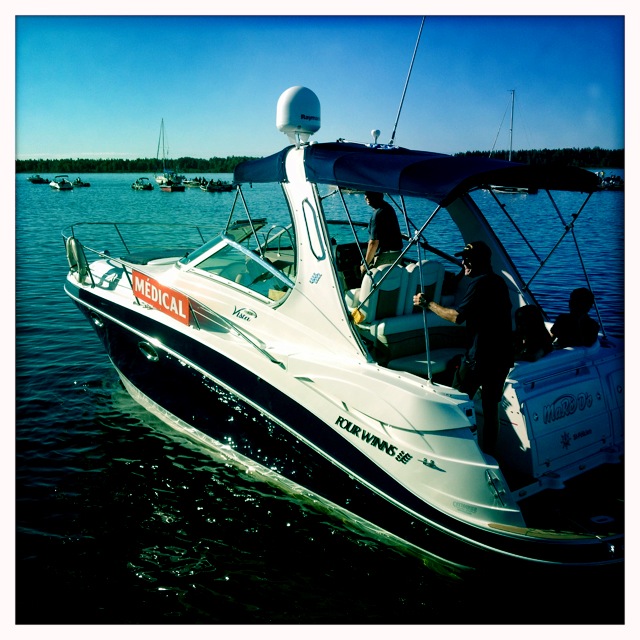
photo (19)

One of the Medical Boats accompanying
the swimmers as they make the 32K crossing

Hypothermia (body temperature < 35 C) can be a concern for any athlete (coach, athletic trainer, or physician) performing in an outdoor venue, but it is a special risk for open water swimmers.  FINA mandates that swims take place on courses with event-day water temperatures in a range from 16 to 31 C.  At the higher end of that range, swimmers may produce more heat than can be easily dissipated through convection and conduction, and may be at risk of hyperthermia.  Exertional Heat Illness is, of course, another environmental hazard sports medicine clinicians must be concerned with.  It is thought to have been one of the contributing causes to the worst outcome one can conceive in the field of sports medicine:  the death of an open water swimmer, Fran Crippen, occurred at a FINA event in the United Arab Emirates in 2010.

At this venue in Lac St. Jean, we have the opposite concern.  The early morning temperature on race day Thursday was 18 C, and I was happy to see the temperature climbed one more degree by race time.  The swimmers’ opinions of those conditions ranged from neutral to notable (cold!), but, as I said, only two swimmers needed attention.  The other 15 emerged from the water with their biggest concerns ranging from 1) washing the lanolin off of their bodies to 2) producing urine for doping control. Read more of this post

The 59th Traversée internationale du lac St-Jean

lac st jeanIt started off a bit rocky, with an impatient Canadian border guard at Jean Lesage international airport in Quebec City questioning why I, an American doctor, would be working and taking care of patients in Canada; but things are decidedly looking up now that I have made it over that speed bump and down the road to Roberval, Quebec.

My biggest problem now is getting WiFi access.  Thank God for Tim Horton’s!!  My hotel can’t get me WiFi, other places in town that proclaim free WiFi don’t deliver.  I grabbed a coffee at Tim’s (avoiding the donuts; on the road, sitting in planes and cars, I don’t need those tasty calories) and, voila!  Internet access.

So, lest anyone think I’ve been remiss in communicating over the blog, on Twitter @cjsmonline, or on the Facebook page (https://www.facebook.com/cjsportmed), I have simply been unable to do so.

And one more thought about Tim Horton’s before I turn to the swimming. Many readers will know this, but some will not:  the donut chain was founded by a revered former NHL player, Mr. Tim Horton himself.

lac st jean water

The obstacle the swimmers face: Lac St. Jean

I’m here as a FINA medical delegate to supervise the medical set-up and the doping control of two swimming events that will take place on Lac St. Jean–next to Roberval, Quebec, Canada (2.5 hours north of Quebec City)–tomorrow and Saturday.

jacques amyot

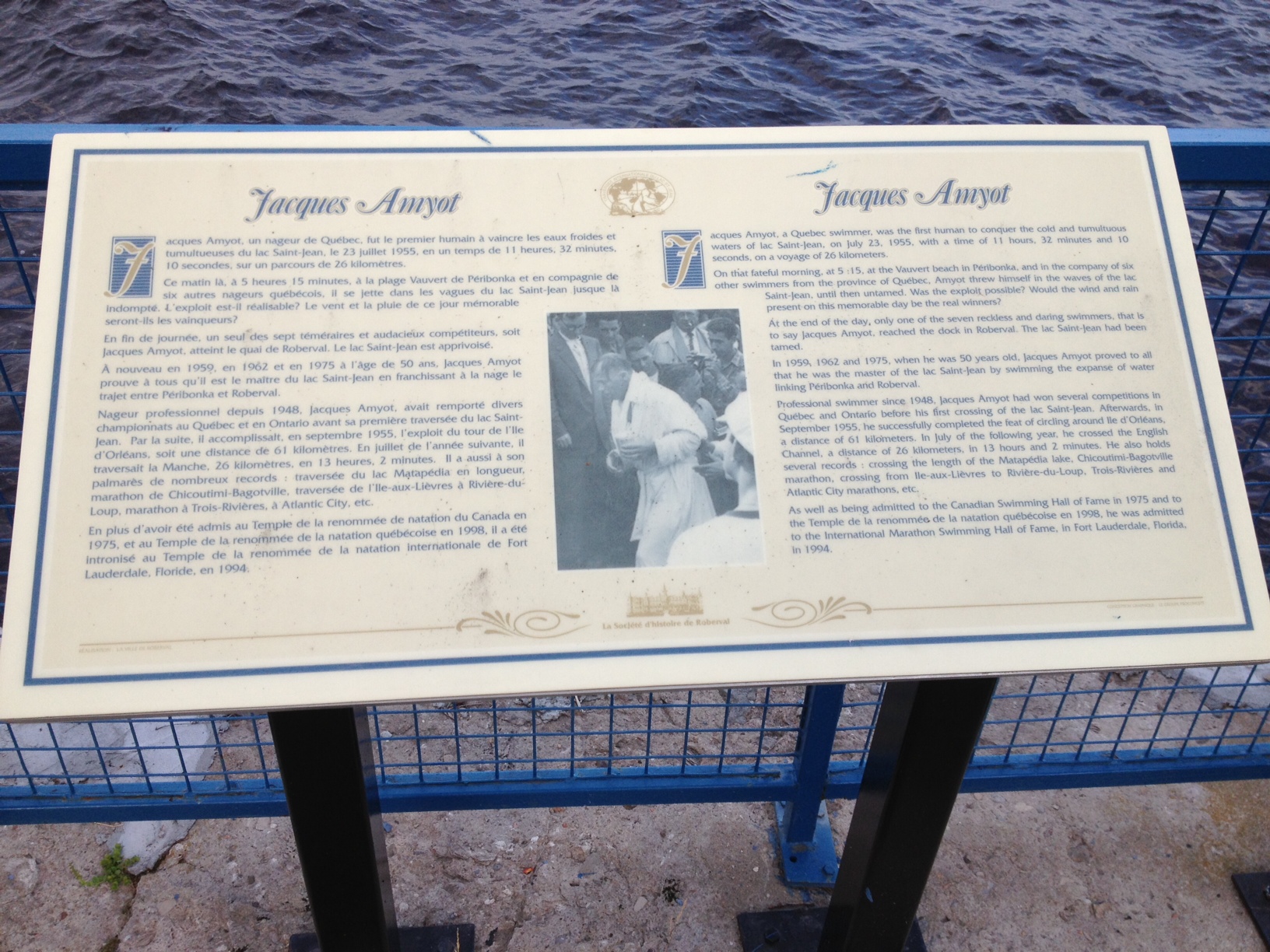
Lakeside plaque commemorating Jacques Amyot, first to make the Lac St. Jean crossing.


The 32 km Traversee, to take place on Saturday, promises to be especially interesting.  To put this in context, the distance is just a bit shorter than the English channel crossing, and the water temperatures in the middle of the lake will drop below 20 degrees C.

The medical tent is set up to deal with hypothermia, I can assure you of that!

I will have more to post (pending access to Tim Horton’s……oops, WiFi) when the events have taken place. In the mean time, if anyone in the blogosphere has interesting experiences or medical literature to share on the coverage of long-distance swimming events, I look forward to hearing from you in the ‘Comments’ here or on Twitter @cjsmonline.

Team Physician Consensus Statement: 2013 Update

DSCF0235

Nationwide Children’s Hospital Staff Physicians and ATCs
in “the Horseshoe” at the Ohio State University, prior to game.

Earlier this week, several sports medicine organizations released a statement with which all sports medicine clinicians should familiarize themselves:  the “Team Physician Consensus Statement:  2013 Update.”

The Statement represents, in its own words, “…an ongoing project-based alliance” of the major professional associations associated with sports medicine  in the United States.  These include the American Academy of FamilyPhysicians (AAFP), the American Academy of Orthopaedic Surgons (AAOS), the American College of Sports Medicine (ACSM), the American Orthopaedic Society for Sports Medicine (AOSSM), the American Osteopathic Academy of Sports Medicine (AOASM), and this journal’s affiliated professional group, the American Medical Society for Sports Medicine (AMSSM).

This is an update of a statement first published in 2000.  It includes sections which define the role of ‘team physician’;  describe the requisite education and qualifications; enumerate the medical and adminstrative duties and responsibilities; and explore the relevant ethical and medicolegal issues.

The entire statement is worth a read, but I find the ‘ethical issues’ section most interesting.  Read more of this post

The Confederations Cup and Estadio do Maracana

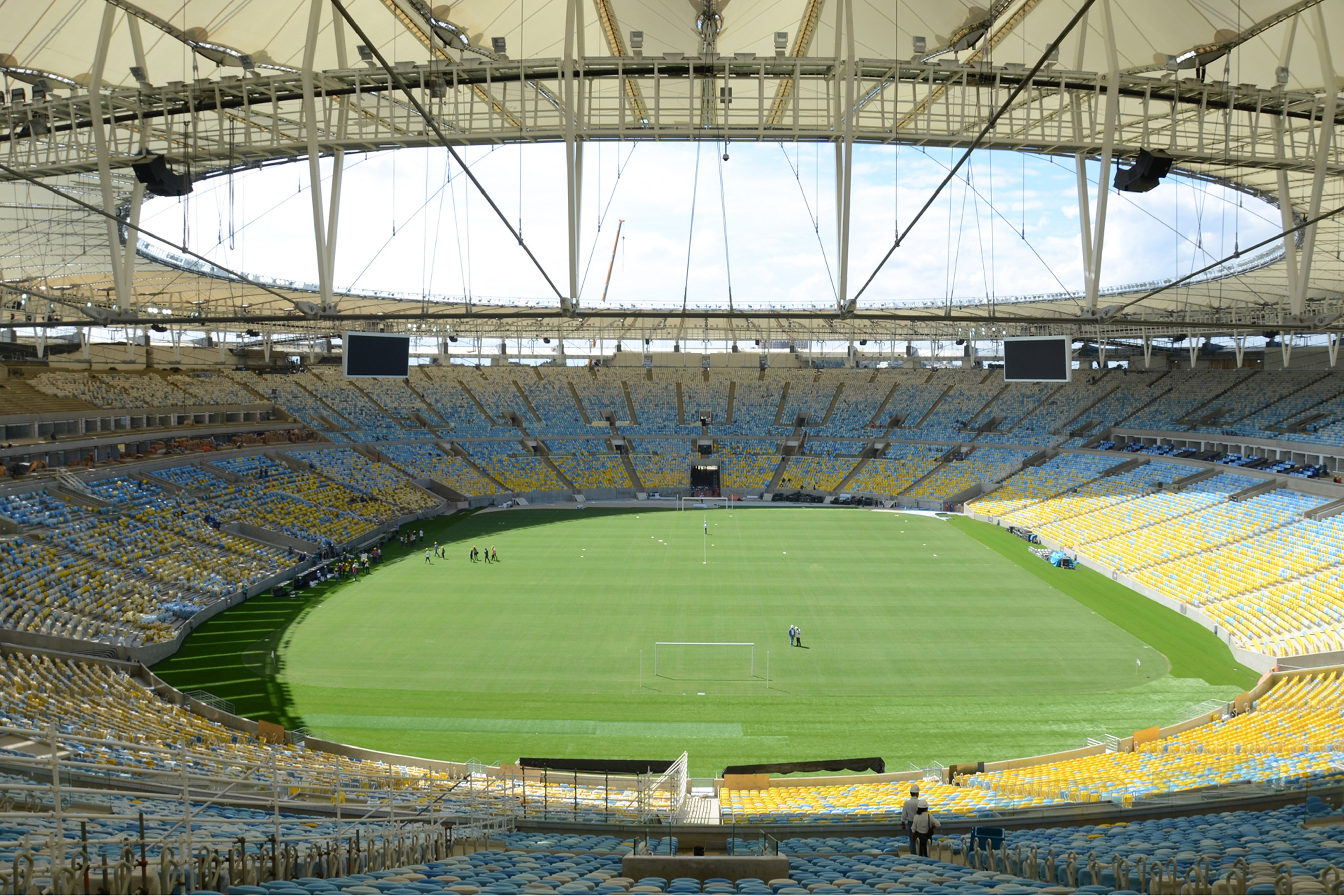
Maracana_internal_view_april_2013

Seleção Brasileira played on the grass of Estadio do Maracana.
Photo courtesy of Erica Ramalho/Wikimedia

Brazil was in epic form last night when they ripped Spain 3 – 0 to win the Confederation’s Cup in Rio’s glittering Estadio do Maracana (Maracana Stadium).

As many of the readers know, there have also been epic clashes throughout the country.  Large crowds have protested several issues, not the least of which is the huge capital investment the country is making in its sporting infrastructure, in lieu of other public works, heading into the 2014 World Cup and 2016 Summer Olympics (in Rio de Janeiro).

I certainly don’t pretend to understand the politics, but last night’s glorious football got me to thinking about a sports medicine controversy:  turf v. grass, which playing surface is safer for football (futbol, soccer) players?

This blog has discussed this issue before, with posts by me and the  previous on line editor, Chris Hughes, which I would recommend to you.

But today, I thought I would put the issue to the readers:  which surface do you think is safer for football/soccer players?  Take the poll below, or at the journal’s main page, and let us know.  I’ll  post the results in a week.  Feel free as well to elaborate on your vote in the comments section below.

If you didn’t get the chance to check out our blog posst on the weekend’s other huge sporting events,  the first stages of The Tour de France and Wimbledon, please do so and let us know what you think.

Is it really already July?!!  Have a good week!