Tip-off: The NBA Season is Set to Begin!

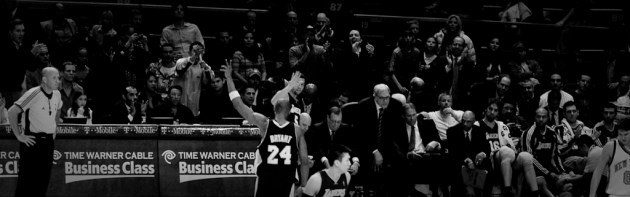
Kobe_Bryant_61_NYK3

“Kobe Bryant 61 NYK3,” by C.J. Iuzer.

The NBA regular season begins in a week, but there has been a lot happening already on the sports medicine front in the league.

From Paul George’s tib/fib fracture  to Kevin Durant’s ‘Jones fracture’  to Anthony Davis’ ‘wrist sprain,’  the athletic trainers, sideline physicians, and orthopaedic surgeons have had a busy ‘off season.’

And then, there is the question of Kobe.  He has been in the press a lot!

The NY Times recently had an interesting chat with the Kobe and Arianna Huffington, a unique friendship to say the least.  It seems Kobe is indeed looking at his future, however many seasons he may have in front of him.  And before he has even taken a shot in the regular season, pundits aplenty have shared their skepticism about his ability to perform on the court:  seems like a lot of folks are betting Kobe will be an albatross around the neck of the Lakers.

As most readers would know, Kobe Bryant ruptured his Achilles tendon at the end of the 2013 season. We blogged about it at the time (I’m reblogging the original post below) and discussed the pros/cons of operative vs. non-operative treatment of such injuries.  The issues of managing Achilles tendon pathology find their way frequently into the pages of CJSM.  Two such articles I would especially commend to the readers as being particularly relevant to the question of Kobe’s ability to recover:   “Complications after surgery or non-operative treatment for acute Achilles tendon rupture,”  and “Does accelerated functional rehabilitation after surgery improve outcomes in patients with acute Achilles tendon ruptures?”

Kobe, of course, went through operative treatment and an accelerated rehab.  His 2014 season was cut short because of a knee injury.  For the brief time he played, it would seem his Achilles held up quite well.  I suspect his knee injury was of the sort we saw after the NBA lockout, where a prolonged layoff from the sport can lead to higher rates of injury; that is, I think his knee injury was more linked to a prolonged absence from high-level running and jumping related to his prolonged recovery from Achilles tendon surgery.  A similar process was involved in Derek Jeter’s case, where a quick return from one injury (ankle fracture) led to a season-ending issue in another body part (quad strain).

I wouldn’t bet against Kobe, no sir.  He is as tough as they come, and throughout his career he has been at the forefront of athletes employing cutting-edge concepts in training and recovery.   I don’t know about the Lakers as a unit.  But I think Kobe can make some headlines that are not related to injury this season.  Draining 61 points at Madison Square Garden one more time in his career?  I think the Black Mamba may just have it in him.

sportingjim's avatarClinical Journal of Sport Medicine Blog

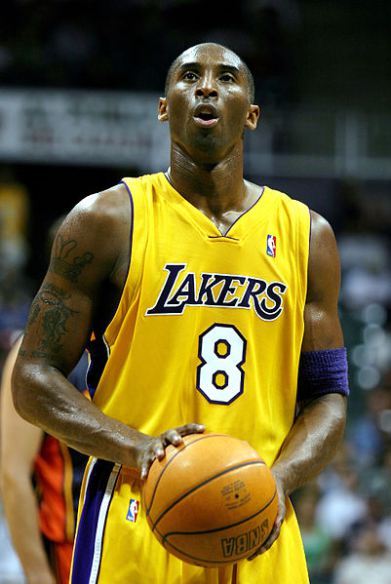
Image Kobe Bryant

I woke up this morning to hear very sad news that occurred in the NBA last night:  Kobe Bryant has ruptured his Achilles tendon.

Kobe, who turns 35 this year, is one of the most recognized athletes in the world (maybe one of the few things that China and the USA can agree on). He had been leading his team to crucial victories as they were making a playoff run when he succumbed to this not uncommon injury in the middle aged athlete. 

As he is quoted saying, he made a move he had executed a ‘million times’ when he felt like someone had kicked him in the leg, and he subsequently crumpled to the ground.  This is the classic history one might obtain when caring for an athlete with such an injury.  If you watch the video, you’ll see Kobe perform a classic…

View original post 380 more words

The Marathon: How low can it go?

640px-Brandenburger_Tor_2005_006

Berlin, where the marathon mark fell this morning.

I woke up to some amazing news this a.m.: just hours before, across the Atlantic in the BMW Berlin Marathon,  Dennis Kimetto of Kenya had set a new World Record for the men’s marathon, a blistering 2:02:57.

Put this in perspective.  Imagine running sub-70 second 400 m intervals, 105 of them in a row, with no rest. That’s what it takes to accomplish this—for any of us who have ever run track, that is simply astounding.

Dennis_Kipruto_Kimetto_2013

Dennis Kipruto Kimetto, the new world record holder in the men’s marathon

The twitter universe was exploding with the news.  @ComradesRace (the home for the Comrades Marathon) effused:  “A sub 2:03 marathon insane!”  (At 90 km, and the world’s largest and oldest ultramarathon, Comrades is, I might say respectfully, ‘insane!’)

“How is it even possible to run at this speed?” @ComradesRace continued.  @VolareSports wrote “Flat. Fast. Unforgettable.”

It’s incredible to think that the 2 hour marathon ‘barrier’ may be breached in our lifetime.  When I was a competitive runner in the late ’70’s and ’80’s, the men’s marathon time was around 2:08, and I remember when Carlos Lopes of Portugal set the mark under that at 2:07:12.  At the time–a smug 20-something–I was amazed that a near 40-year-old like Lopes could have set a track and field world record!!

Now that 40 is in my rear-view mirror, that age has a certain youthful ring to it…..

But to return to the subject at hand!  The marathon!  What remarkable news to wake to this morning.  The men’s mark is now below 2:03. It leaves one wondering whether a sub-2 hour marathon can be run.  “Expert consensus,” apparently, is divided on the issue. I, for one, would not argue against it.  Time and again, it seems the impossible barrier has been achieved by humankind–the notion of the improbability of the sub-4 minute mile comes to mind, a mythic wall that existed for decades until Roger Bannister smashed it.  It happened 60 years ago, and you can watch the iconic race in its entirety on YouTube.

I typically prefer to traffic in evidence rather than speculation.  I wonder if we’ll see a sub-2 marathon any time soon, but I know there is a wealth of medical evidence being used to support the health and welfare of athletes in these endeavors.  The marathon has been a subject of medical research for years, and this journal has published a large number of studies relating to various aspects of running this grueling race. The subjects have ranged from marathon-related cardiac events to many studies on the issues of fluid-replacement and avoiding exercise-induced hyponatremia. Browse through some of those offerings.

And look back, if you’d like, to what I’ve written in these pages about the Boston Marathon (insider scoop:  the Co-Medical Director for Boston, CJSM author, and one of the physicians I trained under–Pierre d’Hemecourt–is running Berlin today.  Hope you’re off the course already buddy!!!)

Enjoy your weekend.  And cheers to Dennis Kimetto for your amazing performance!

Onwards to 1:59:59……….

p.s. Thank you to my good friend and applied mathematics whiz, Professor George Wu of the University of Chicago, for providing me with the ‘napkin analysis’ of Kimetto’s feat.  Dr. Wu and I ran track together in college.  I think we may have once done a workout of 20 400m intervals at 70 seconds each, with a good amount of rest in between……105 of them, in a row, with no rest.  It really is mind blowing.

Gymnastics: A Book Review and Guest Blog Post

Jenks-Level 9beam

Dr. Emily Stuart, then…..

I have the privilege of working with several excellent pediatric sports medicine specialists at  Nationwide Children’s Hospital.  I’ve hit up a couple of them to write guest posts for this blog, including a review of the 2014 Female Athlete Triad Consensus Statement (Dr. Stacy Fischer) and a first-person account of being the medical director of a mass participation event, the Greater Ohio Bike Adventure (GOBA) (Dr. Tom Pommering).

The newest doctor to join our group is Dr. Emily Stuart.  I’ve had her in my sights to provide a blog post for the past few months.

Besides being an excellent clinician, Emily was a level 10 gymnast until she retired at age 16 due to injuries. She coached for 10 years and now judges club and NCAA gymnastics. Although Emily enjoys taking care of athletes from all sports, she has a special interest in providing medical care for gymnasts.  It’s because of her expertise both as a physician and as a gymnast that I asked her to review a book that was recently sent my way, the Handbook of Sports Medicine and Science:  Gymnastics.

________________________________________________________________________

Handbook of Sports Medicine and Science: Gymnastics

A book review, by Emily Stuart, M.D.

It’s been over 2 years since the US Women’s Gymnastics Team dominated the team and individual medals at the London Olympics . And in less than 2 short years, gymnasts from all over the world will converge in Rio de Janeiro for the 2016 Olympics.  The Olympics is definitely the biggest event in gymnastics, but there is much more to the sport than what fans see every 4 years. Gymnasts spend years, if not decades, training to become the best in their sport.

As a former gymnast, coach, and gymnastics judge I was excited to read and review the Handbook of Sports Medicine and Science: Gymnastics by Dennis J Caine, Keith Russell, and Liesbeth Lim. This book is part of a series produced by the International Olympic Committee (IOC) Medical Commission. Multiple specialists both with gymnastics knowledge and medical expertise contributed to the book. Thus, each chapter is very detailed and provides any gymnastics enthusiast with a wealth of knowledge.

The book starts with a thorough history and evolution of the sport. Read more of this post

Dr. Hamish Kerr joins us on “5 Questions with CJSM”

The Commonwealth Games in Glasgow are having their closing ceremony today.  Among the many sports that have been declared a success in these games is Rugby 7’s, which saw South Africa beat the New Zealand All Blacks for rugby gold.

Soon, many of these same athletes will begin tramping around the globe:   the International Rugby Board (IRB) HSBC Sevens World Series begins in Australia in October. As the series circumnavigates the globe, it will make stops from Dubai to Las Vegas, and points in between, before it wraps up in May 2015 in England (which, by the way, will host the Rugby World Cup in 2015).

And by that time, we’ll be just about a year from Rugby 7’s making its debut as an Olympic Sport in Rio.

Yes, I would say, rugby is in ascendancy as a sport right now both globally and domestically.   Here in America, for instance, youth rugby is growing at an astounding rate.  We publish frequently on the sport in our journal, and I have a particular fondness for the sport having spent some of my adult life in southern Africa and in New Zealand, where it is, arguably, religion.

HK at Twickenham

Dr. Hamish Kerr at Twickenham Satidum, home of England Rugby

One of my colleagues whom I hold in great esteem, Dr. Hamish Kerr, is intimately involved with rugby.  I have been after him for a while to a guest post on our “5 Questions with CJSM” format.  It is appropriate that we have him guesting today, as the Glasgow games wrap up……

Dr. Kerr finished medical school in Glasgow in 1998 and moved to Albany, NY in 1999 for his combined Med/Peds residency. He spent another 18 months back in Scotland in 2004 prior to starting his sports fellowship in Boston in 2005, where he worked under Dr. Lyle Micheli, who, among his multiple other lifetime honors, was recently inducted into the USA Rugby Sports Medicine Hall of Fame.

Before I took off for a summer holiday, I asked Dr. Kerr to put pen to paper and answer the following questions.


________________________________


1) CJSM: You wear a lot of hats:  practicing clinician, educator, team physician.  Can you give us a run down of your various commitments.

 HK: I am principally the sports medicine fellowship director for Albany Medical College. We have a fellow, residents and medical students rotating with us year round. I have 5 faculty who see a mix of musculoskeletal medicine and sports concussion patients. I practice in two sites, one with Capital Region Orthopedics and another academic office site where we see most of the sports concussions and have a multidisciplinary clinic. We have MSK ultrasound, ImPACT, and treadmill testing available.

My 2nd role is as head team physician at Siena College. We provide field side cover for men’s and women’s soccer and basketball , plus men’s lacrosse. Siena men’s basketball made the NCAA 3 tournaments in consecutive years 2008-2010 and will host the MAAC tournament in 2015.

USA Rugby I have been working with for 4-5 years. It is a voluntary position, but very enjoyable. I have covered the men’s national team for the 15-game and the 7’s-game as a team physician both on home soil and abroad, including the UK, Mexico (Pan Am Games 2011) and Moscow (IRB Sevens Rugby World Cup 2013). I also Chair the Medical & Risk Committee and serve as a member of the Rugby Committee helping administer the game in the USA from a medical perspective. Read more of this post