The Hits Keep Coming

I hope this blog’s readers are enjoying their Memorial Day weekend if they’re in the U.S., or their Spring Bank Holiday weekend if in the U.K.   And if I’m unaware that there is another three-day weekend being celebrated out there, please forgive my myopia.  I do believe it was last weekend that my friends in Canada were enjoying the Victoria’s Day weekend, but this week brings a standard two days off.  However, if I have confused my holidays, again, I submit my humble apologies!

800px-Wembley_Stadium

Wembley Stadium, London. Site of 2013 Champions League Final.

I suspect a lot of you are watching the all-German Champions League final right now, or perhaps you’re napping and waiting for the start of the French Open tomorrow. Maybe it’s the Indy 500 on Monday you’re waiting for…..or, speaking of Indy, you’re hoping for another Pacers upset of the Heat in the NBA playoffs. Regardless, here’s to a great sporting weekend!

I wanted to look at an interesting article from the most recent edition of CJSM in this weekend’s blog post…..which I learned today is something quite different from a blog.  Apparently there is a blogger posting at Slate about his irritation over the misuses of the word ‘blog’ and the phrase ‘blog post.’  It turns out that right now you are visiting the CJSM ‘blog’ but are reading a ‘blog post’ entitled, “The Hits Keep Coming.”  Please do pass this “blog post” on to your friends, and recommend they visit our “blog,” but do not mix up your phrasing or the Slate editor might make you a focus of one of his future rants.

I suspect his irritation might resemble mine, or some of this blog’s (???) readers, when folks mix up ‘incidence’ and ‘prevalence,’ so I want to grant that his irritation may be righteous and I will try my level best as I work on my posts to use correct blog terminology!

Crestone_peaks_fall

The Rocky Mountains: it’s hard to plug one’s ears to their siren’s call.

On to the article of the weekend: “Epidemiology of U.S. High School Sports-Related Ligamentous Ankle Injuries, 2005/06 – 2010/11,” written by a group including my friends R. Dawn Comstock, PhD.,  the senior author, and Christy Collins, MA., the corresponding author.  This team has been prolific in their publication of sports medicine epidemiology articles, drawing much of their work from the high school injury surveillance project, “Reporting Information on Line” (RIO): “….an internet-based surveillance software developed under the direction of Dr. Dawn Comstock.”  I had the privilege of working with Dawn at my home base, Nationwide Children’s Hospital until recently, when the lure of the Rocky Mountains drew her to the University of Colorado, Denver.

Read more of this post

Risk Factors for Injury in Elite Youth Ice Hockey

I had planned today on writing a sequel to my weekend post on spondylolysis, and I will definitely do so later this week.  But I have hockey on my mind this morning.

Our local team, the Columbus Blue Jackets, fought valiantly this shortened NHL season, and came within a whisker of the playoffs.  The team I grew up with, the Detroit Red Wings, have moved on to the Conference semi-finals, and so if I have any skin left in the game, it is with the Wings.

But I was captivated last night, as I’m sure some of the blog’s readership was, with an extraordinary Game 7 between the Toronto Maple Leafs and the Boston Bruins which brought to mind Jim McKay’s famous line from the “Wide World of Sports”:  “the thrill of victory, and the agony of defeat.

Patrice_Bergeron

Patrice Bergeron scored the goals at end of regulation and in OT to send Bruins to victory

800px-Toronto_Maple_Leafs_bild

The Maple Leafs: deflated at the end of a heartbreaking game.

Somehow, the Maple Leafs went from leading 4-1 to losing 5-4 in overtime, as the Bruins, playing at home in Boston, achieved one of the more memorable comebacks in NHL playoff history.

As this was happening, my Twitter feed exploded with #bruins and #leafs posts, as two cities were collectively either shouting with joy or gnashing their teeth.  If you’ve never ‘watched’ a sporting event via Twitter, I commend the experience to you: it’s a bit like tapping into the collective consciousness of whatever group your following. Read more of this post

Youth Sports Violence

momosoccer

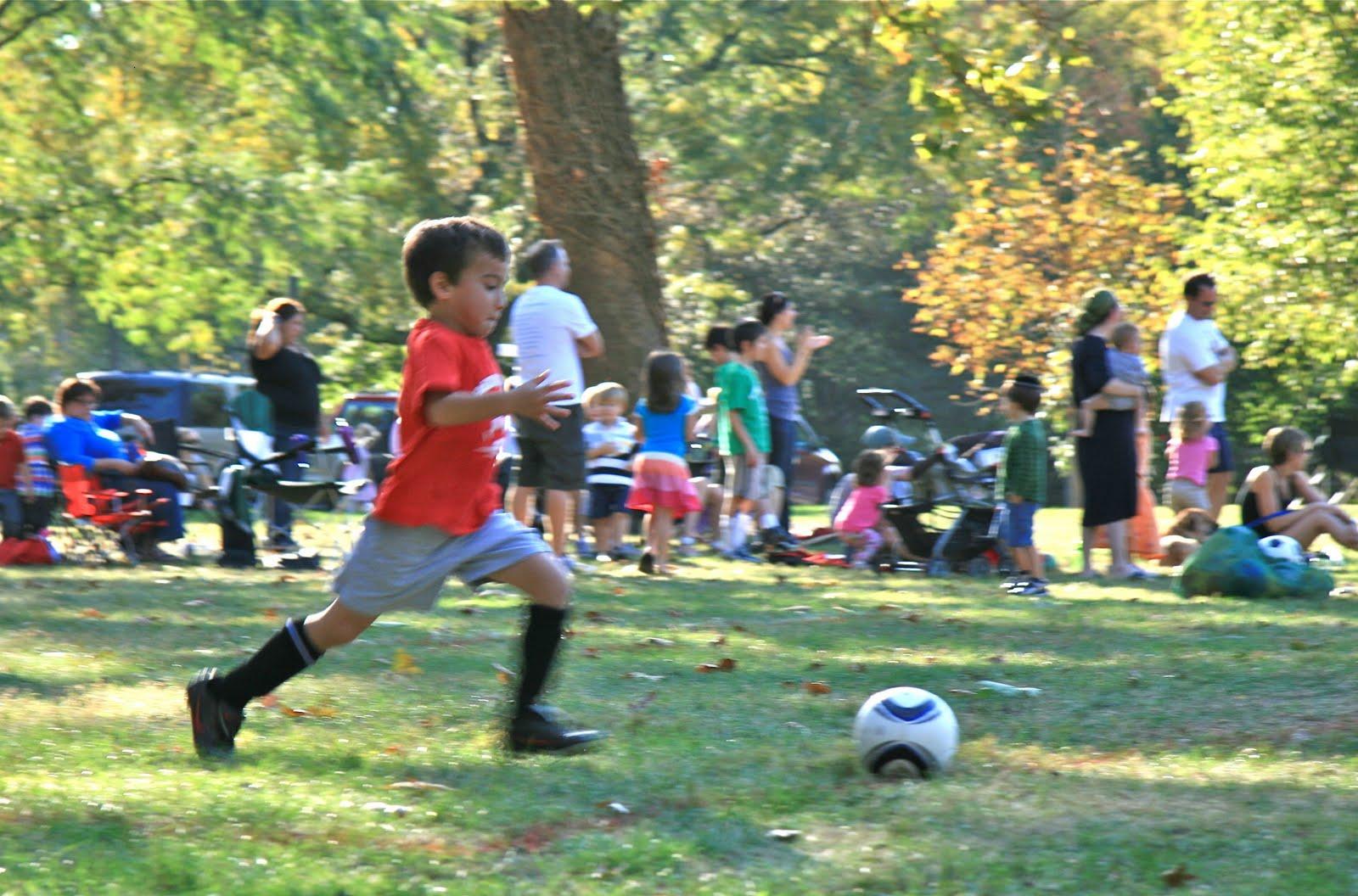
What youth sports should be: sheer joy

I woke up this morning to my usual routine:  coffee and the sports page. Both are necessary for me to get up and going in the morning.   Sport, I think many readers would agree, is usually a source of joy, and so it was with equal measures of sadness and shock that I read about the death yesterday of a soccer referee, Ricardo Portillo.

It’s a heartbreaking story, with a 46-year-old gone, a family fatherless, and a 17-year-old who will soon be tried for murder,  whose life will never be the same and whose own family has been irrevocably changed.

All because of one moment of violence.

Mr. Portillo was working in La Liga Continental de Futbol, a youth soccer organization in Salt Lake City, Utah. Apparently he saw the young man commit a shoving foul after a corner kick; when he cautioned the player and gave him a yellow card, the young man punched the unsuspecting Mr. Portillo in the face.   He immediately fell to the ground and was transported to hospital, where he spent a week in a coma prior to passing away.  The details, including clinical descriptions of the victim after the assault, can be found here.

The article gave me pause and got me to thinking specifically about the incidence of such events in youth sports, which I will discuss subsequently.   The specific issue at hand–how often do referees get assaulted on a playing field–was addressed in the NY Times article: “Reliable data on referee assaults at all levels of all sports does (sic not exist, but there have been several violent events worldwide in recent months (my itals),” and the article goes on to enumerate several of these involving referees.  In truth, however, there seem to be no epidemiological data addressing this issue that the reporter could find.

But for one moment, what of the general issue of violence in sports?

Zinedine_Zidane_2008

Zinedine Zidane in repose

Read more of this post

The Safety of Artificial Turf vs. Grass as a Sport Playing Surface

I was interviewed last week for a newspaper article which looked at the debate over a local school’s intention to transform a grass playing surface to artifical turf.

Among the controversies in sports medicine, the turf vs. grass wars are not the loudest nor the meanest, but they have been among the most persistent ever since 1966, when the Houston Astros first introduced a synthetic turf playing surface in the Astrodome, and dubbed it Astroturf.

Picture_of_Reliant_Astrodome

Reliant Astrodome

The history of the Astrodome makes for interesting reading:  of note, the original intention was for the surface to be natural grass, and the makers of the dome had installed traslucent skylights to allow for grass to grow on the indoor surface.  Alas, not enough light made it to the playing surface, the grass died, and Astroturf was born.

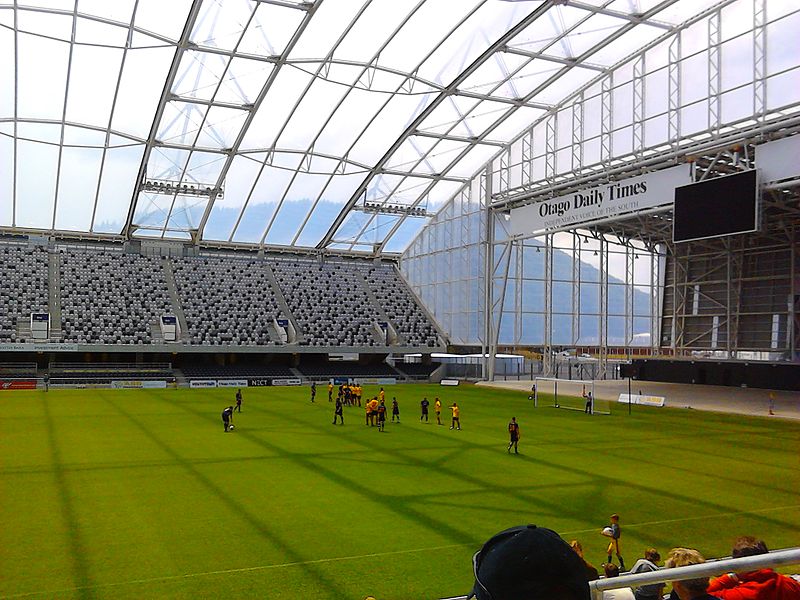
The progress of science and technology have seen Astroturf give way to newer, so-called second-, third-, and even fourth-generation turfs. The  sporting world has even demonstrated that an indoor venue can sustain a natural grass pitch: witness the luminous Forsyth Barr stadium  in Duenedin, NZ, which has hosted matches from the 2011 Rugby World Cup to a recent Aerosmith concert.

800px-Otago_United_v_Waikato_FC_(1)

Natural grass surface on Indoor Forsyth Barr Stadium, Dunedin, NZ

400px-Aerosmith_2

Aerosmith, recent performers on the grass of Forsyth Barr Stadium

So, the question from the interviewer to me essentially reduces to,  ‘Grass:  if its good enough for Steven Tyler and Joe Perry, is it good enough for all of us?’ Read more of this post