May Day

Unisphere-cc

CJSM: bringing you clinical sports and exercise medicine research, from around the globe

Whether you are celebrating today as International Workers’ Day, running around a May pole, or watching Leicester City try to complete the 5000:1 shot of winning the Premiership, we are sure that today, May 1, can only be a good day:  our third issue of the year has just published.  And this May Day CJSM is full of offerings we’re sure will be of  interest to you.

Two of the articles have a special focus on physical activity as an intervention for medical conditions — one is a meta-analysis from Chinese colleagues finding a protective effect for physical activity against lung cancer, and the other is a prospective, single-blinded, randomized clinical trial looking at rock climbing as an intervention in the treatment of low back pain. This study is from Austria, and had positive findings for dependent measures of disability (the Oswestry Disability Index), a physical examination maneuver, and even the extent of disc protrusion on MRI.  We’re proud to publish these high quality studies from across the globe.

We are also proud to contribute to the growing body of literature on the effectiveness of “Exercise is Medicine.” Read more of this post

A Sharapova Moment

The world of sports medicine is never boring, but who knew things could get this interesting?

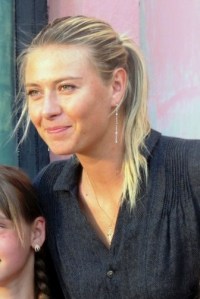
In the first weeks of March, there have been at least two major stories that have transcended the borders of ‘sports medicine’ and become topics of debate for the world at large — I speak of the proposed ban on tackling in schoolboy rugby (and the continued debate on tackling in American football) and Maria Sharapova’s admission that she failed a drug test at the recent Australian Open.  For both stories, the boundaries of the discussion have gone well beyond the lines of the playing fields and the walls of the academy.

Social media has seen these topics trending. The mainstream media have been profiling the issues as well.  The Economist weighed in on the debate about tackling. And this morning I found the New York Times prominently featuring Ms. Sharapova’s story, including articles on the drug meldonium [for which Sharapova tested positive] and on the issue of the World Anti-doping Agency’s (WADA) use of emails to notify individuals about changes on WADA’s banned substance list.

Many people have an opinion on the subjects.   We’ve been running a poll on this blog regarding the issue of tackling, while our friends at the British Journal of Sports Medicine (BJSM) have been running a Twitter poll on the Sharapova issue: who is responsible, the player or her support staff [currently the poll is 74%/26% stating it’s the athlete’s responsibility].

In the New York Times article and in the BBC, former WADA-president Dick Pound has stated his opinion that Sharapova’s failed drug test was ‘reckless beyond description.’

I must say I take issue with this and empathize with Ms. Sharapova, who stated that she received in December the WADA email noting that meldonium was now on the banned substance list, but “…I did not look at that list.”  Meldonium was a PED legal until 2016, when it was placed on the ‘banned substances list.’ As a professional inundated with emails, alerts, pronouncements, and more, I confess to a certain degree of information overload even when it comes even to items vital to my licensure and ability to practice.  Have I ever received an email from the Medical Board that I have deleted?  Have I ever received notification from my hospital staff office of some new change in policy which I glossed over?  Yes and yes.

Regarding the WADA emails, other athletes in the NY Times article have offered this opinion: “Some dismissed the messages as irrelevant to their own regimens or too complicated to be useful.”  That certainly resonates with me and my professional world.

I am not writing this to absolve Ms. Sharapova, and I applaud her for her prompt and open admission of personal responsibility. That stance is right and proper.  But I would hardly deem her action “reckless beyond description.”

In CJSM we have published over the years several studies on banned substances. One of the pieces of original research just published in our March CJSM sheds some further light on this issue, I think: Dietary Supplements: Knowledge and Adverse Event Reporting Among American Medical Society for Sports Medicine Physicians.  Read more of this post

5 ? with Kate Ackerman #RowingDoc #FemaleAthlete15

rowing with Cornell alumni at HOCR.bow seat

Dr. Kate Ackerman (in bow, far right) rowing with Cornell alumni, Head of the Charles Regatta

The 2015 meeting of the American College of Sports Medicine begins in less than a week, and I–like thousands of my colleagues–am getting ready: getting ready for the conference, getting ready for some blogging and tweeting coming to you from San Diego.

I am looking forward to seeing so many friends in the world of sports medicine:  Avery Faigenbaum, Jon Patricios (with whom I’m giving a talk on ‘social media in sports medicine’), Tim Hewett….and Kate Ackerman.

Kathryn Ackerman, M.D., M.P.H. is a friend of mine whom I first met as she was wrapping up her training with Dr. Lyle Micheli, and I was beginning mine.  She is an internist, fellowship trained in endocrinology as well as sports medicine. She is the Medical Director of the Female Athlete Program at Boston Children’s Hospital, the Associate Director of the Sports Endocrine Research Lab at Massachusetts General Hospital, a team physician for US Rowing, and an accomplished rower herself. A renaissance woman.

FIMS2014

Dr. Margo Mountjoy (C); Former Editor in Chief of CJSM, Dr. Gordon Matheson (L); and Current Editor in Chief of CJSM Dr. Chris Hughes (R)

She is also the director of an upcoming conference on the “Female Athlete:  Strategies for Optimal Health and Performance”, taking place  June 19 – 20 2015 in Boston. Among the people speaking there are Margo Mountjoy, an internationally recognized expert on the Female Athlete who is also on our Editorial Board.

I just happen to be collaborating on a paper about dance medicine with other colleagues, and the section I am authoring deals in part with some of the issues to be addressed in the Boston conference.  So it was perfect timing for me to catch up with Kate and ask her about her thoughts on the Female Athlete Triad, ‘Relative Energy Deficiency in Sport,’ and more.

Dr. Ackerman!

_____________________________________________

1) CJSM: Tell us about the upcoming Female Athlete Conference? What are some of the ‘Strategies for Optimal Health and Performance’ you will be discussing in Boston June 19 – 20?

KA: I’m really excited about this conference.  We came up with the idea a few years ago, seeing a need to get good information out to athletes, parents, coaches, and the health providers who treat female athletes.  There really wasn’t anything like this out there- a large conference devoted just to the multiple issues of the female athlete.  So, we held the first 2-day female athlete conference two years ago, and we’ve decided to make it a biennial event. I think it’s a great opportunity to get some great minds together and I’m thrilled that so many people from different parts of the globe have agreed to come speak.  The wealth of information is going to be fantastic and we make sure to provide lots of opportunities to network and mingle.  We have some Brits coming to talk about biomarkers to monitor in endurance female athletes; Swiss Nanna Meyer discussing her experiences applying her sports nutrition research to the diets of US and Swiss Olympians; sports biomechanist Greg Myer speaking about ACL injury prevention; seasoned athletic trainers discussing good training plans for the growing female athlete; eating disorder experts discussing body image and unique issues of female athletes suffering from distorted eating patterns; coaches discussing personality profiling to get the best out of individuals and teams; members of the IOC Medical Commission’s female athlete group discussing RED-S; doctors discussing various sports injury treatments; and star power from Olympic gymnast Aly Raisman and the first woman to enter and win the Boston Marathon, Kathrine Switzer, who has been a great advocate for this conference and women participating in lifelong sports. Read more of this post

The Nutcracker

Angelina_Sansone_dans_Casse-Noisette,_Kansas_City_Ballet,_-4_décembre_2013_a

Angelina Sansone, Kansas City Ballet

With the holiday season come a host of traditions. There are tree trimming and the lighting of the menorah; there are caroling and jingle bell runs. And there’s that new favorite: wearing tacky sweaters.

There is, as well, the Nutcracker.

My family and I will be watching this weekend at Columbus’ BalletMet production.  This will mark our fifth year in attendance, and I’ve been impressed with the dancers’ artistry and skill each time I’ve seen the show.

Truth be told, I never went to any ballet until I was an adult.  My affection for the Nutcracker derives not from my own childhood Christmas memories, but from the work I did as a sports medicine fellow, where I ‘covered’ the Boston Ballet for a year.  What a great experience that was!

‘Dance Medicine,’ as many of you know, is a special niche of sports medicine.  Like any sport, dance has its own language, it’s own mental and physical challenges, its own equipment, and its own injury patterns.  I have not managed too many cases of hallux rigidus, FHL tendonitis or posterolateral ankle impingement outside of the dance world.

I grew very fond of this field during my training, and I continue to seek out opportunities to participate in this world.  And so I took extra pleasure in our September 2014 editions, which offered two new pieces of original research in dance medicine: Body Mass Index, Nutritional Knowledge, and Eating Behaviors in Elite Student and Professional Ballet Dancers and a brief report, Early Signs of Osteoarthritis in Professional Ballet Dancers:  A Preliminary Study.  I commend both of them to you. Read more of this post