PRiSM — An Acronym to Know

IMG_1849

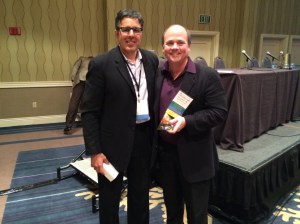
Drs. Min Kocher (L) Boston Children’s Hospital & Hank Chambers (R) Rady Children’s Hospital

I’m just wrapping up a productive, educational, and enjoyable few days in San Diego, where I attended the 3rd Annual Meeting of the Pediatric Research in Sports Medicine (PRISM).unnamed

Don’t know that acronym?  I suspect you’ll be hearing it more frequently over the next several years.

The brainchild of Hank Chambers, pediatric orthopedic surgeon at Rady Children’s Hospital, San Diego, PRISM aspires to join the forces of several stakeholders and raise the bar in terms of research in pediatric sports medicine.  It brings together primary care sports medicine physicians, orthopaedic surgeons, athletic trainers, physical therapists and musculoskeletal radiolgists.
IMG_1847

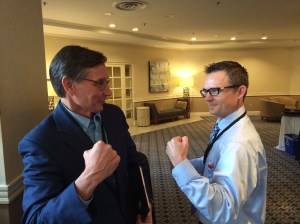
Things got heated up between some of the presenters at PRISM: ‘in the ring’ were Drs. d’Hemecourt (L) and Minor (R)–debating the relative merits of bracing in spondylolysis

Dr. Chambers just turned over the president’s reins to Mininder Kocher, a pediatric orthopedic surgeon at Boston Children’s Hospital.  Dr. Kocher must have called in the chips on the folks he knows from Boston Children’s, as a great number of the speakers at PRISM have had (past/present) some affiliation with that institution.  A short list of these presenters, all of whom have been authors at some time in the pages of CJSM, include:  Andrea Stracciolini, Lyle Micheli, Pierre d’Hemecourt, Kate Ackerman, Anthony Luke and Dai Sugimoto.  And Benton Heyworth presided over all as the head of the programming committee.

It was a pleasure seeing these folks, as they are like family (I trained at Boston Children’s too).  And it was great seeing other friends as well, like Andrew Gregory (Nashville), Greg Canty (Kansas City) and Greg Myer (Cincinnati).  But it was a special pleasure, and a unique feature of these sorts of meetings, to make the acquaintance of folks whose names I have heard on several different occasions but had heretofore never met.  Christina Master of Children’s Hospital, Philadelphia for instance.  She gave a great talk on clinical tools in the evaluation of pediatric sports related concussions and was tweeting up a storm during the entire conference.

10003205_10153897438809581_4796803283347029354_n

Greg Myer of Cincinnati Children’s, fielding questions after his talk on return to play post ACL reconstruction.

I found it particularly inspiring to hear the updates from orthopedic colleagues on multi-center trials looking at important injuries in the pediatric athlete:  ranging from knee OCD (the ‘ROCK’ study) to ACL reconstructions (the ‘PLUTO’ study)–I am really looking forward to the results coming from these studies, as they are sure to affect the clinical management of so many patients I serve in the future.

Finally, there was San Diego–a bit of sun and warmth in the middle of winter!  I swam in an outdoor pool three days in a row–I haven’t enjoyed that pleasure in four months.

I lacked for nothing here at PRISM–I gained in knowledge, friendship, and Vitamin D.  Who could ask for more?  I’ve already got the meeting in 2017 (to take place in Dallas) on my calendar–I hope to see you there too!
 

5 ? With Primrose Pisares, ATC of the UCSC Banana Slugs

image4

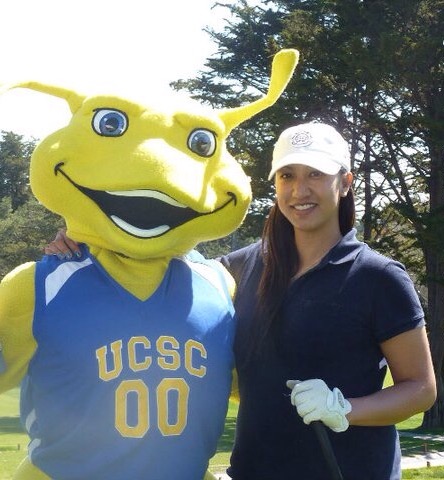
Primrose Pisares, ATC, and Sammy the Slug of UCSC

I’ve written recently about the dreams I’m having of the upcoming Australasian College of Sports Physicians (ACSP) 2016 conference–dreams of the warmth and sun of ‘Surfer’s Paradise,’ Australia.

Well, these mid-winter dreams have also included other surf spots I’ve been to before, including my home of 10 years in Santa Cruz, California (aka ‘Surf City’).

Before coming to Nationwide Children’s Hospital’s Division of Sports Medicine in Columbus, Ohio, I was a Team Physician and doctor of collegiate student health at the University of California, Santa Cruz (UCSC).  If you have never heard much about the place, I’d wager you have heard about their sporting team’s mascot, rated one of the best in the USA:  the fighting banana slugs.

Dreams mixing with memory, I turn today to an interview with an esteemed colleague with whom I once worked while at UCSC:  Primrose Pisares, the head, certified athletic trainer (ATC) for those fighting banana slugs.  She shares her thoughts on her profession, on her athletes, and on her beautiful community in our ‘5 Questions’ series.

_________________________________________________________________________

1) CJSM:  How long have you been the head ATC for UCSC? What was your training and/or ATC working history prior to coming to UCSC?

PR:  My path to becoming an athletic trainer was not direct, as it is for many of today’s ATCs. I started as an undergraduate majoring in Physiology at UC Santa Barbara and had intended to be a physical therapist. Athletic training was something that I had discovered as I progressed in my pre-physical therapy studies. From the extracurricular athletic training classes I took, I found that I liked working with active patients more than working with the general population. I’ve always wanted to go into a profession that helps people, and the challenge of rehabilitating an athlete from an injury and getting them back to full athletic performance was intriguing and satisfying. After I completed all the requirements and sat for the certifying exam, I attended the Arizona School of Health Sciences at A.T. Still University, which is where I received my Master’s degree in Sports Health Care.

image1

Primrose hard at work with one of her athletes.

I am going into my tenth year as the head ATC for Intercollegiate Athletics at UCSC. Now that I am saying it out loud, I am kind of amazed at being in one place for that long! I have had prior experience working in high schools, physician’s clinics, and with semi-pro athletic teams. Right before I started at UCSC, I was employed at a few community colleges in the area and my intention was always to work in the community college setting. The opportunity to work at UC Santa Cruz just kind of fell in my lap as I had never considered DIII athletics. I have come to really enjoy working with student-athletes at this level and getting to know them as more than just an athlete but as a person with academic goals and interests. I love it when my student-athletes achieve what they have worked hard for.

2) CJSM: As you’ve pointed out, UCSC is a DIII Athletic School, the only one of its type in the UC system. Based on your experience with UCSC athletics, what are the special opportunities or challenges for managing athletes’ health care in DIII NCAA sports?

PR:  I think the DIII level offers up a different type of student-athlete as opposed to DI & DII. Read more of this post

Shedding light on the dark

It’s January and winter has at last arrived in North America. It officially started several weeks ago, but it took a while to really get going.  After a balmy December (for most of the country, anyway), the first month of 2016 has given us, as expected, single digit temperatures and snow:  the Minnesota vs. Seattle playoff game earlier this month was the third coldest NFL game in history. This month is also giving us the shortest days of our year north of the equator.

ACSP 2016

ACSP meeting coming up — Come to Surfers’ Paradise if you can!

[sidebar and shout out to our colleagues in the Australasian College of Sports Physicians (ACSP)–I am so looking forward to the warmth and long, sunny days of Surfers’ Paradise, in a mere 4 weeks!!!]

But the days are lengthening, and the sun will get stronger each day, of course. And metaphorically, at least, I can find light in this darkness by sitting down with this month’s edition of CJSM.  You can, too.

Yes, ‘shedding light in the dark,’ that’s the image I hold as I enjoy this privilege of being one of a group of editors managing one of sports medicine’s premier journals.  The on-going process of scientific investigation continues to expose the dark corners of our knowledge base, and journals like ours–disseminating this knowledge via print, internet, and other media vehicles–help practicing sports medicine clinicians bring the latest evidence-based research to the sidelines, training rooms and clinics.

In truth, I recently wrote about being ‘in the dark’ (literally and figuratively) as I watched the movie ‘Concussion’ and reflected on how much we still lack in our understanding of this clinical entity, in almost all aspects:  diagnosis, management, treatment, prognosis.  I am reading now with pleasure three pieces of original research about concussion just in our January issue, bringing their light to bear on the issue:

And as I have begun to prepare my talk for the upcoming ACSP conference (“School sports and youth injury: the promise and the peril”), I find myself leaning heavily on research published in CJSM. To wit: Read more of this post

Concussion: “The Movie”

in the dark

In the dark (not for long, I hope): Concussion has hit the theaters.

I was witness to two big events in the world of professional American Football this weekend:  I watched the movie Concussion and I saw the ugly contest which was the Pittsburgh vs. Cincinnati NFL playoff game.

Of the two events, the more damning, the more worrisome for the league, was the playoff game.

First, let me start with the movie, as I had intended on focusing on that in this blog post….until the playoff game happened.

The movie was well done overall, I thought.  I am no movie critic (I hope that goes without saying) and I rarely see things on the ‘Big Screen’ any more–I think the great movies came and went in the 60’s and 70’s, when I was growing up (Easy Rider, The Deerhunter, Apocalypse Now….).  Concussion (the movie) is largely a heroic story about one man’s personal struggle and vindication:  Dr. Bennet Omalu vs. the NFL, David vs. Goliath.  There are some typical Hollywood moments (e.g. the romancing of his future wife), but largely the film stays on track regarding the story of pathologist Dr. Omalu and his reintroduction of the term ‘chronic traumatic encephalopathy (CTE)’ into the medical lexicon after his autopsy on the brain of the deceased football player, ‘Iron’ Mike Webster.

And Will Smith does an excellent job, I think, with his portrayal of Omalu.

I approached this movie not so much looking for entertainment, but to see if there were anything new in this story I might learn, and to see how the movie might present the science to the general viewing public.  I don’t think I learned anything new regarding the basic story.  This is not so much a criticism of the movie as an endorsement of the PBS documentary, ‘League of Denial,’ which came out two years ago and went into much more depth than a dramatization ever could.  And as for the science?  Once again, you’re better served viewing the documentary.  You won’t have to hear a clunker of a line like this: “Three cases is the scientific burden of evidence.  We have four.”

Now, on to the playoff game.

I don’t think the NFL will be able to survive if the sorts of hits occurring in this game, regardless of their ‘legality,’ continue. Read more of this post