High Altitude Medicine

I was thinking about Mt. Everest the other day.

Mount_Everest_by_Kerem_Barut

Mount Everest. Photo by Kerem Barut.

No, I will NOT be attempting the mountain myself!  In my youth I had such dreams……the story of Sir Edmund Hilary and Sherpa Tenzing Norgay thrilled and inspired me.

I think one of the defining experiences of middle age is to be certain that some dreams will never be fulfilled; to be content with that realization; and also, to know that there are other dreams, other challenges that can excite.

Yes, I am middle aged!

What got me to thinking about the mountain?  I am sure you have read, there was a terrible accident taking the lives of at least thirteen Sherpas which occurred last week. In reading the reports of that event, I realized that the spring summit period for the mountain had begun:  a narrow window in May  represents a period during which a huge number of ascents are attempted.  For instance, it was May 1996 when the climbing expeditions described by John Krakauer in ‘Into Thin Air’ took place.  This book introduced me to the reality of commercial climbing on the mountain.

If anything, it would seem that ever-greater numbers of people with perhaps limited technical climbing skills are attempting Everest:  an article in today’s New York Times notes that there are 334 expeditions planned for the 2014 climbing season!  This same article also notes in the wake of this most recent climbing disaster involving the Sherpas that this group of expert climbers–so vital to the performance of expeditions on the mountain–is planning a ‘work stoppage.’  I do not know all their demands, but the Times article notes that the stoppage was proposed in the wake of the Nepali government’s offer of a mere $400+ dollars as compensation for the families of the dead climbers.

On a more quotidian front, May represents for us here at CJSM our own challenge:  bringing out the third issue of the journal for 2014!  It’s too soon to say goodbye, however, to the March 2014 issue, and in light of the events on Everest I did want to commend to you an excellent piece in that issue:  The Canadian Academy of Sport and Exercise Medicine Position Statement:  Athletes at High Altitude.

As I’ve said, I, at least, may never make any Himalayan summits….but I fully expect as a sports medicine physician to care for people who succumb to one of the variety of altitude illnesses described in this article.  As the position statement emphasizes, injuries and illnesses associated with high altitude are no longer seen only in mountaineering: athletes, including many from the endurance disciplines, will train at altitude; and many athletes, of all types, will compete at altitude (think Mexico City Olympics, or even coastal Californian on a long-weekend’s ski trip to Aspen).  Staying ‘on top’ of the current thinking regarding this issue would be de rigueur for any of us clinicians caring for athletes. Read more of this post

The Marathon

It’s Patriots Day, a very special holiday celebrated in New England but revered throughout the world as Marathon Monday:  the running of the Boston Marathon.

B_Strong_badge

The 2014 Boston Marathon is happening…..now!

There are few people today who won’t be remembering the events of the 2013 running. My hope, and strong sense, is that the 2014 version of the BAA Marathon will be known for great competition only, with Lelisa Desisa hoping to defend his title in the men’s event and Rita Jeptoo hoping for the same thing on the women’s side.  Right now, it looks to be a near perfect day for both the runners and spectators, with the only worry that afternoon temperatures may trend a little on the warm side.

We are, as sports medicine providers, used to dealing with the possibility of hypo- or hyperthermia in such events, dealing with hyponatremia and exercise-associated collapse….I commend to you a number of excellent studies we have published over the last decade about such medical events.  The illustrious Tim Noakes has written about fluid replacement in marathon running, Bill Roberts has published original research on risk factors for developing hyponatremia during marathon running, and last year Lawrence Hart wrote about marathon-related cardiac arrest. We all need to be up-to-date about such issues; they represent the typical challenges we will face in the medical tent at such events.

Last year the running of the Boston Marathon reminded us that we must also be prepared for mass casualty at such events.  The New England Journal of Medicine published a short piece by the medical providers on the scene, The Boston Marathon and Mass Casualty Events, which I encourage you to read.  Preparing for the worst, hoping for the best:  a mantra that can serve us well in medical coverage as well as life in general.

I know several of the doctors who are on the course and at the finish line this morning, and I know they are prepared for all eventualities.  But I hope the only trauma they have to deal with might be from a fall on the course, a twisted ankle…….

Here’s to the safety of the runners, the spectators, and the staff of today’s great sporting event!!!!!!!

NOT Sports Medicine

The 2014 Boston Marathon will be run in a little more than a week (Monday April 21). We look back on the events of last year while we look forward to a safe running in 2014. Good luck to all the clinicians and staff who will be taking care of a record number of runners!

B_Strong_badge

Boston Strong!

sportingjim's avatarClinical Journal of Sport Medicine Blog

I don’t think any of us in sports medicine got into the field expecting to be involved in an event like that which transpired in Boston yesterday.

Image Map of Boston Bombings

Like many people around the world, I became riveted to TV, internet newsfeeds, and Social Media yesterday as I tried to make sense of what was occurring in Boston:  at 2:50 p.m., a little over four hours after the start of the Boston Marathon, two bombs exploded near the finish line, creating a chaotic scene resulting at this moment in three deaths and over 100 casualties.  A scene of sporting joy and celebration had been turned into mayhem.

In the days ahead and as the investigation into this event unfolds, we will likely learn ‘who’ was behind this and for what supposed purpose.   It is my hope that ‘they’ become a footnote in history, and that instead…

View original post 570 more words

#AMSSM14

#AMSSM14 is the tag to follow on Twitter the next few days if you want to stay on top of what is topical in the world of sports medicine.  The American Medical Society for Sports Medicine (AMSSM) is having its 2014 annual meeting in New Orleans these next several days.  #AMSSM14 began Friday and is continuing through Wednesday.  It’s already been a rich experience, one we’ve been looking forward to for a while.

BkkghuLCQAANS53

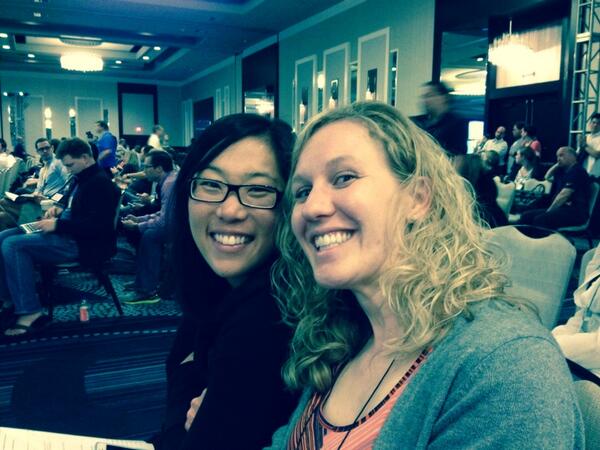
Happy conference attendees, Drs. Jane Sando and Natalie Stork.

Among the speakers who have already graced the podium:  David Epstein, a journalist and author of The Sports Gene, gave a great keynote speech Sunday on some of the factors that go into the ‘making’ of an elite athlete.  He presented a compelling argument for avoiding early sport specialization, allowing the youth athlete to sample and perhaps find the sport that ‘fits’ his or her unique physical attributes.  The talk was the perfect prelude to the afternoon’s sessions, ‘From Best Practices to Burnout,’ a series of lectures on how sports medicine clinicians might best guide youth athletes and families as they work their way through the North American sport system.

Dr. John DiFiori, the outgoing AMSSM president and lead author on the statement on youth sport specialization and burnout we published in January, spoke at length about the findings of that systematic review.  In case you missed the lecture and/or are elsewhere than New Orleans this weekend, take a look at our ‘5 Questions with CJSM’ interview with Dr. DiFiori.  Dr. Tracy Ray discussed ‘Patient Centered Care’ of the collegiate athlete that I particularly enjoyed.   The focus was the InterAssociation Consensus Statement on Best Practices for Sports Medicine Management for Secondary Schools and Colleges.

I already have my eye on a series of ‘point/counterpoint’ discussions tomorrow morning:  contact sport: should it be embraced or avoided? Spondylolysis:  to brace or not to brace? And vitamin D:  to screen and treat or not?  I’ll be there and I’ll be sure to be tweeting the high points of those sessions.

I think it’s a testament to the quality of the sessions that I am sitting in a large auditorium at 5 pm on a weekend day here in New Orleans…..and it’s nearly full!  Great to see folks want to hear about positive and negative likelihood ratios rather than enjoying the temptations of Bourbon street…..well, at least for an hour more perhaps!

Follow us on @cjsmonline, follow the AMSSM on @TheAMSSM, and follow the hashtag #AMSSM14 for all the info coming hot off the press from this conference!!