Overuse Injuries and Burnout in Youth Sports

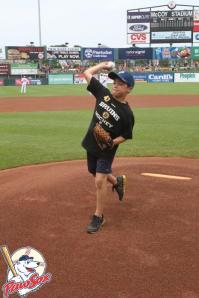
Pawsox_17937_2013-06-30

10,000 hours of practice, and
he might make the Red Sox?*

We’re very pleased at CJSM to open the New Year with a shout:  a fantastic systematic review and position statement on the subject of youth sport, from the American Medical Society for Sports Medicine (AMSSM).

The focus of the paper–in the January 2014 issue, which has just published–is on overuse injuries, which are thought to represent roughly half of all the injuries youth athletes sustain.

All readers of the journal, and of this blog, will find this a worthwhile read.  I have a selfish interest in the subject, as I am currently practicing pediatric sports medicine, and in my professional life I live and breathe the issues discussed in the paper. Moreover, I know several of the authors of this paper, and I think highly of them all.

But this is not about ’eminence based’ medicine.  No, it’s evidence-based all the way.  The paper is both a systematic review and the AMSSM position statement on the subject of “Overuse Injuries and Burnout in Youth Sports”.  The authors conducted a thorough review of the literature, identifying 953 papers and citing 208 unique references in their comprehensive analysis of this broad subject.  They go on to review what is known, and then make recommendations, classified using the Strength of Recommendation Taxonomy (SORT) grading system.

The paper is broadly organized into the following subsections:  epidemiology; risk factors (intrinsic and extrinsic); discussion of high-risk overuse injuries;  discussion of several concepts mentioned frequently in the literature of youth sports (readiness for sport; sport specialization; burnout); and prevention.

The study is so very comprehensive, I cannot do better justice to it than encourage you to read it yourself.  I thought I might here mention some of what stood out for me. Read more of this post

The Holidays and the New Year

734156_4543971430924_332587260_n

Two elves wishing you all the best these holidays!

Happy Holidays from all of us at the Clinical Journal of Sports Medicine!

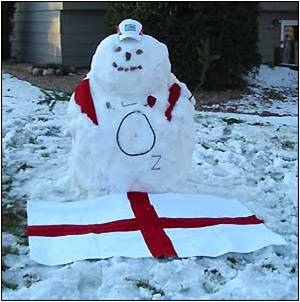
If you celebrate Christmas, I hope your day yesterday was restful.  And who in the sporting world, if given the chance, doesn’t celebrate Boxing Day?!!!  I wish I were in the UK right now watching Man City v. Liverpool.  That should be a great match!

This is a time of year for reflection for us all, as 2013 winds down and 2014 is set to start.  Reflection:  I thought I would do just that in this brief holiday posting.

We published many important studies in the six issues of CJSM in 2013.  Several studies looked at the subject of concussion, one of the ‘hot topics’  in primary care sports medicine.  Among the highlights of the year were the publication in our pages of two important consensus statements on concussion:  in January we published the American Medical Society for Sports Medicine position statement, and in March we offered up the Zurich 2012 Consensus Statement on Concussion in Sport.

I hope you were able to catch the July study on the changes in BESS performance over the course of a 90 day season,a critical look at one of the instruments used in the assessment of concussions.   We had three studies that focused on the injury in the September issue: i)  “The Prevalence of Undiagnosed Concussions in Athletes;”  ii) a study on the effects of sleep quality and quantity on baseline concussion assessments; and iii) one on the impact of an educational intervention on college athletes’ knowledge about concussions.

In the virtual pages of this blog, we highlighted three rising research stars in the field of sport-related concussion in our ‘5 Questions with CJSM’ format:  Drs. Jason Mihalik, William Meehan, and Keith Yeates.  Click on those links to see these researchers’ candid commentaries.

And to top it all off, the CJSM editorial staff made available in August a collection of 10 published papers and studies on the issue of concussion.  Check it out if you haven’t already.

There’s more to primary care sports medicine than concussion, of course.  Some of my personal favorites among the varied collection of studies published this year include one that identified a possible genetic marker for exercise-associated muscle cramping; one that found no effect on muscle strength in female athletes who were taking oral contraceptives; and a case report on a cluster of exertional rhabdomyolysis in collegiate American football players, which I reviewed in a blog post.

I love the variety of sports we profile in CJSM.  We published studies in 2013 that looked at ballet, aussie football, snowboarding, flag football, and ringette, to name a smattering!  And there was the sadness of the 2013 Boston Marathon, which I profiled in an April blog post.  #BostonStrong: I’m closing out the year still thinking of my sports medicine colleagues who were at the finish line of that event, stepping up to the plate in a way one would never expect in that setting.

800px-Fireworks_over_Ponte_Vecchio

Reflections
(Photo of the Ponte Vecchio
Courtesy of Wikimedia and Martin Falbisoner)

I could go on, but that would violate the spirit of the season I think.  Better yet to put the laptop aside…..and sit back……reflecting on the work accomplished in 2013, and anticipating that to come in 2014.

Happy Holidays, Happy New Year to you all!

Time for a break? Competition over the Christmas and New Year period

We’ll be posting our 2013 Holiday thoughts soon. In the meantime, as we all prepare for College Bowl games and Soccer matches–and stock up on the egg nog and goodies–we share our 2011 Holiday Sporting thoughts from CJSM Chief Editor Chris Hughes.

Chris Hughes's avatarClinical Journal of Sport Medicine Blog

And so we have reached the Christmas and New Year break, with good-will on offer to one and all. For many of us, this is a time to get away from work – to spend quality time with our family and friends, and to take a breather from the every-day grind of the nine-’til-five. Perhaps some of us will be indulging a little more than usual by way of food, drink and merry-making.

This is, however, not the case for many of those involved in Sport including the athletes themselves and their numerous support staff. In fact, this is often one of the busiest times of the year for those involved in Professional sport, and the fixture calendar can be particularly crowded as the National sporting bodies and Leagues cram in the fixtures, perhaps in order to secure large crowds of seasonal fans and lucrative television rights.

Some sports participants enjoy a break…

View original post 730 more words

Ringette: Who Knew?

RingettePlayer

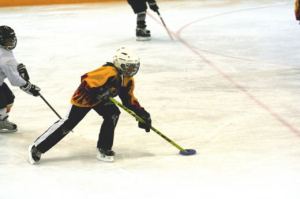
Ringette Player in Action!

At CJSM we are already anticipating the start of 2014:  the January 2014 issue is still awaiting publication, but we are already releasing some of this coming year’s studies in our “Published ahead of print” collection.

One I wanted to talk about today, if only because the subject sport is an entirely new one to me: Ringette-related injuries in young female players.

Ringette.  As a middle-aged guy, I know I still have a lot to learn.  That said, I am delighted when I have a day where I acquire some new fact or concept I literally have never encountered in my over 18000 days on the planet.  Ringette.  I had never heard of this sport until I read this epidemiologic study.  Nearly everything I now know about the sport comes courtesy of the authors Glenn Keays, Isabelle Gagnon, and Debbie Friedman.  Thanks to you all!

A team sport played on ice rinks, ringette is similar to ice hockey with these notable exceptions:  1) 6 skaters comprise a team; 2) the skaters advance a doughnut shaped ring, rather than a puck, with a stick that has no blade; 3) the rules governing the sport encourage the development of team play; for instance, a player that might be lionized in hockey for being able to single-handedly advance the puck the length of the rink and score is, in ringette, penalized instead.  Like competitive women’s ice hockey, ringette is a non-collision sport, with all contact between players officially prohibited.  Players are equipped with safety devices such as helmets and visors.

The sport has been around for 50 years, originating in Canada.  It is expanding internationally, with associations in the USA, Finland, Sweden and beyond.  Read more of this post