Avery Faigenbaum y Cinco Preguntas con Revista Clinica de Medicina Deportiva

You read that right.

Like the NBA teams that don a Spanish jersey for an evening, at CJSM we are getting our Spanish on.

Faigenbaum_diRoda (1)

Drs. Avery Faigenbaum and
Provincial Senator Cristina diRado
in Mar del Plata, Argentina

Our good friend and contributor to these blog pages and to the journal, Dr. Avery Faigenbaum, has agreed to sit with us for “5 Questions with CJSM.” We have been trying to catch up with him since his trip to Argentina this summer where he was lecturing on Exercise Deficit Disorder (EDD) and working on his own Spanish skills.  I’m know he’s a lot better in that area than I am.

Dr. Faigenbaum is a professor in the Dept. of Health and Exercise Science at The College of New Jersey.  He has written about EDD in youth (“Thinking Outside the Sandbox”) and about the benefits and safety of resistance training in youth.  He has lectured widely:  I’ve heard him speak in various settings in the United States, and he’s set to speak to the American Academy of Pediatrics in 2014 on EDD. Catch him if you can, you’re sure to learn a lot and be entertained as well: his energy is infectious.

And here’s just a taste of what you’re in for if you do get to see him:

________________________

Avery Faigenbaum: Five Questions with CJSM

1) CJSM: With the recent award of the 2020 Olympic games to Tokyo, can you comment on any evidence out there that such events stimulate activity in young fans/viewers?  Is there a ‘trickle down’ effect for youth athletics/exercise from events like the Olympics?

AF: Last summer James Bond and the “Queen” opened the Olympic Games in London by jumping out of a helicopter. This was followed shortly thereafter by stellar performances from world class athletes including sprinter Usain Bolt, swimmer Michael Phelps, boxer Nicola Adams, and 23 year old Rosannagh MacLennan who started jumping on the trampoline at the age of seven. But in stark contrast to these remarkable feats of athleticism, physical inactivity among the world’s population is now recognized as a pandemic. Read more of this post
EMR In PCSM

What is this alphabet soup I’m offering up today?

EMR

EMR, here to stay.
How does it impact
patient/doctor relations?

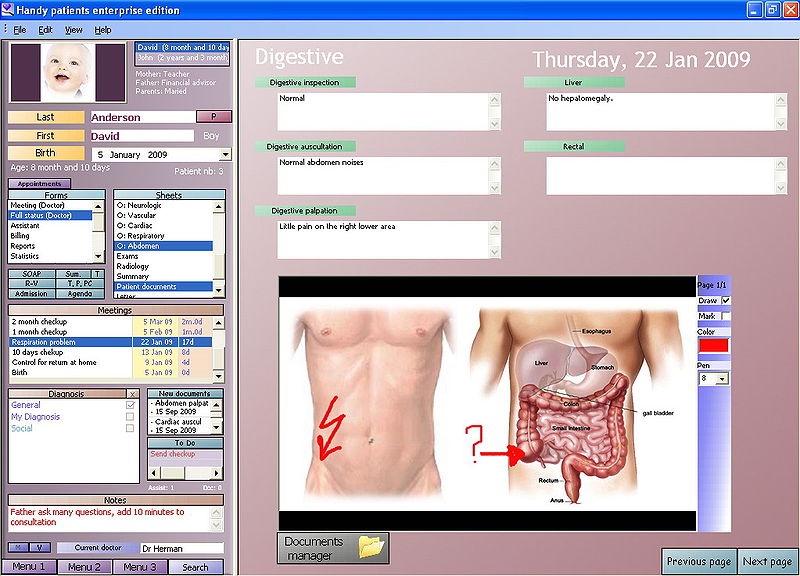
I wanted to discuss “Electronic Medical Records in Primary Care Sports Medicine.”  In other words, “EMR in PCSM!”

I’m just wrapping up a busy Friday clinic and finishing typing up my notes as I transition to typing up these thoughts on the WordPress blog site.   Doctoring these days involves a lot of typing on the computer! Here at Sports Medicine, Nationwide Children’s Hospital, we use the EPIC EMR system.

I was prompted to write about this issue today, and find out who out there in the sports medicine world is using EMR (or perhaps in 2013 the pertinent question may be who out there is NOT yet using EMR), by a  fine article I read in the L.A. Times:   “So much data-gathering, so little doctoring.” 

I began my career in medicine in the early 90’s:  six years after finishing up my undergraduate education, I started medical school in September 1991.  I recall having an email account in medical school, but it wasn’t until my final year in school that I heard about hypertext or the world wide web.  And there certainly was no EMR, at least for me, in the 90’s.  I was writing in charts or, better yet, dictating my notes.  This is how medical documentation remained for me until 2005, when I spent a few months doing locum tenens work in New Zealand.  I recall showing up my first day at the GP clinic in Matamata, on the North Island of NZ, and the clinic doctor whom I would be working next to asked me if I had ever used EMR.  I said no, and was hoping I might have some option to chart on paper.  He smiled and very civilly told me, more or less, to keep a stiff upper lip and just get on with it.  There would be no paper for me, I’d learn on the fly.

As an aside, now having worked in NZ twice in my professional career, may I say that that country is a leader in the field of what EMR implementation can achieve.  NZ continues to work on EMR integration.  I found in my time there that the song and dance of the American medical system–having medical records faxed from the clinic 10 miles down the road; the MRI transferred to a disc that then must be shuttled hand to hand, trying to read an illegibly written note, etc.–was a rare occurrence in NZ.   It was much easier to take care of a patient ‘out of network’ in NZ than it is in the USA.

UCSC_Meadow

The view from the
University of California, Santa Cruz campus.
Yes, it really is that beautiful.

On my return to The States, I discovered my clinic at the University of California, Santa Cruz was ready to implement EMR.  While my colleagues mostly moaned and wanted to drag their feet, I had, I believed, already seen the light.  No more need to track down a missing chart, no more need to decipher a doctor’s handwriting, EMR was the way to go.  And from that point on, for the last 8 years, I have only used EMR in the various positions I have held.

But there is a dark side to EMR.  Getting back to the L.A. Times essay, I found this piece to be, overall, an insightful, provocative and short essay exploring this side.  Many things stood out for me, most especially this paragraph: Read more of this post

Bruce S. Miller M.D., M.S. guests on “5 questions with CJSM”

800px-Michigan_Stadium,_17_September_2012

“The Big House”: the stadium
where Michigan plays, site of
this week’s game with OSU

Thanksgiving Day is near and, on a personal note, my twin children celebrate their tenth birthday this week. But here in Columbus, all celebrations fade in the face of “Hate Week.”

No it’s not something out of Orwell’s 1984.  It’s what my fellow citizens of this fair city call this week when their beloved Ohio State Buckeyes (OSU) play their northern rivals, the Michigan Wolverines (U of M), in their annual college football game.  It’s one of the oldest rivalries in the sport.

Having grown up in Grand Rapids, Michigan, with family members and multiple friends all attending the University of Michigan, I’m something of a Judas here in Columbus.  My paycheck comes from OSU and I even received my MPH from the school, but in the words of the Beatles, those things “Can’t Buy Me Love.” My sporting allegiances will stay maize and blue regardless of the fact that I will surrounded by a sea of scarlet and grey (and hatred) this week.

I thought it high time then to track down one of my dearest friends and have him answer ‘5 questions with CJSM.’  I need help from a fellow supporter of the Wolverines.

577494_10201377672658571_674303412_n

Dr. Bruce Miller with son Cameron at
youth hockey game.
Sporting the Maize and Blue!

Dr. Bruce Miller is an Associate Professor in the Department of Orthopaedics at the University of Michigan, and is a Team Physician for the U of M football team as well as USA Rugby. He publishes regularly, with a particular focus on rotator cuff pathology.  His accomplishments are legion (including being an All-American in rugby when he was in college), but I know him best as the man with whom I studied helminths back in medical school.  From worms to one of the premier positions in sports medicine, my how far he has come.

Here is what he had to say in answer to the questions we posed him:

_________________________

1) CJSM:  You are a busy orthopaedic surgeon and team physician, how did you get involved in clinical research?

At the beginning of my academic career, I was doing more basic science research, primarily focusing on articular cartilage and some biomechanical interests. However, I soon learned that the world of basic science can be quite “competitive”, especially in terms of securing funding. I recognized that as a busy clinician, I was at a competitive disadvantage in competing with full-time scientists. In addition, I enjoyed following my patients functional outcomes after surgery. I eventually came to the realization that I could be more successful in pursuing clinical research in the sense that my established clinical practice could serve as my “laboratory” . . . I simply needed to acquire some new research skills. I was fortunate that the University of Michigan School of Public Health offered a Masters program for clinicians, which allowed me to gain a new skill set while allowing me to continue with my clinical practice. I attended classes four days every month for roughly 18 months, and ultimately earned a Masters Degree in Clinical Research Design and Statistical Analysis. Through this program I gained a valuable skill set that allowed me to launch a successful clinical research program. Read more of this post

Aussie Rules Football

I was planning on writing this post as soon as the November CJSM was published.  One of this journal’s valued, affiliated societies is the Australasian College of Sports Physicians.  I began the month looking at New Zealand’s beloved rugby, I thought it time to look at the different football code played in Australia.

Little did I know I would be communicating so much with Australian readers before I even wrote directly about one of their beloved sports.   The posts I wrote on November 12, 14 and 16, all dealing with a recent Canadian statement on bicycle helmet policy in their country, stirred up a huge response from antipodean friends where mandatory helmet legislation (MHL) has been around since the early 90’s.  If you visit this blog and have yet to experience the ‘thunder from down under’ about MHL, please check those posts and the associated comments.  There is still time to take the polls exploring the matter of MHL, and if you want to comment on MHL, write a letter to the editor, as the journal articles’ authors would want to hear from you.

Aussie_rules_kicking

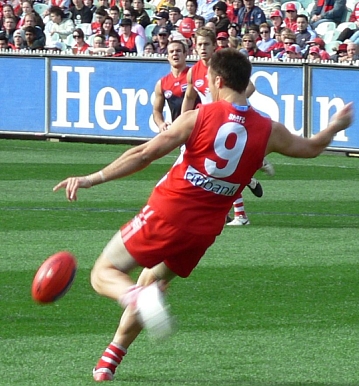
Australian Rules Football

There is another gem in the November issue besides the bicycle helmet entries, and this too has to do with injury prevention, but in the sport of Australian Rules Football: “Priorities for Investment in Injury Prevention in Community Australian Football,” by Dr. Caroline Finch et al.  I have recently written a blog post about the different football codes from around the world and so I was primed to read about a type of football about which I know so little.  In fact, most of what I do know about Aussie Rules comes from my familiarity with Brad Wing, the Melburnian who rocked the American football world with his punting prowess when playing for Louisiana State  a couple of seasons ago.

Dr. Finch herself I can’t, in truth, say I know; but because of the magic of social media, I have learned a lot by following her on Twitter.  A Professor from the University of Ballarat in Australia, Dr. Finch is well published in the world of injury prevention.  And so it was with genuine interest in her and in Aussie rules football (AF) that I turned my attention to this study.

Dr. Finch’s team performed a systematic search to identify peer-reviewed, original research articles describing injuries in community AF published before 2012.  The team identified 17 such articles, and then further narrowed their scope to a remaining 6 which contained details on the nature of injury and the body region injured.  The team further incorporated unpublished community AF data from the “Preventing Australian Football Injuries through eXercise (PAFIX) study.” Read more of this post