League of Denial: A review of the PBS documentary

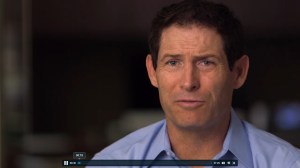
steve young

49ers legend Steve Young
one of the great interviews on the
documentary, “League of Denial”

I watched the PBS Documentary “League of Denial” this week, and I’m sure many of you did as well.

In one word:  Bravo.

I thought the folks at PBS’ Frontline did a fantastic job, touching on many facets of what is arguably the biggest sport public health story of the last two decades.  There were so many dimensions to the nearly two hour documentary, it’s hard to know where to begin my review.  In nearly two hours, PBS (with a ‘redacted assist,’ if that’s the phrase, from ESPN), covered a lot of ground.

I thought I would highlight some of the major personas that showed up, and divide them into the following four categories: “Winners,” “Losers,” “Meh,” and “In Memoriam”

Winners

Bennet Omalu, the neuropathologist who broke the story of chronic traumatic encephalopathy (CTE), is my pick for the most compelling figure in this documentary.  A physician of great training and accomplishment, he had the mixed fortune of conducting the post-mortem examination of Mike Webster, the Pittsburgh Steelers icon who died young and whose brain showed the pathologic changes of CTE, the first case documented in an NFL player and reported in this study.

Dr. Omalu’s story, both personally and professionally, is worthy of its own documentary.  Originally from Nigeria, he knows little about American fooball and nothing about the Steelers icon when he first meets the latter’s corpse and goes about his job.  He reports being thoroughly unimpressed with the gross morphology of the deceased’s brain:  how it looked ‘normal.’  It was only on conducting his histopathologic exam that he made his stunning discovery.

For this and further efforts in investigating CTE in deceased NFL players’ brains, he was smeared by the NFL and its affiliated physicians.  Omalu poignantly states as a result, he wished he had never ‘met Mike Webster.’

As an Associate Editor of a medical journal, I found the calls by some in the NFL medical community (see below) for Omalu to retract his CTE study and their ad hominem attacks to be the more egregious sins (among many) reported in the documentary.  The process of science, spearheaded by peer-reviewed literature, is one of openness; disagreements are cause for further study, not suppression.  Retraction should be reserved for outright fraud.  The calls for retraction in this case are shameful.

Ann McKee, another neuropathologist now with the Boston Center for the Study of Traumatic Encephalopathy, has picked up the baton and is continuing to carry on the research into CTE in former professional football players, despite further pushback from vested interests and more ad hominem attacks that insinuate that, as a woman, what might she know about football?

Steve Young who experienced five or six concussions in his career, is one of the former players interviewed for this documentary.  I remember Steve Young well, as I lived in the Bay Area for many of the seasons of his glorious career with the 49ers, and I remember too when he had his career-ending concussion. Read more of this post
Dr. Keith Yeates guests on “5 Questions with CJSM”

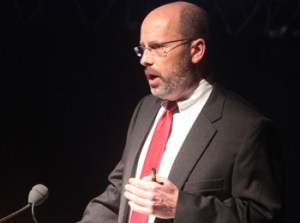
keith

Dr. Keith Yeates revs up the crowd at
the International Brain Injury Association meeting
in Edinburgh, Scotland

I live and work in Columbus, Ohio, United States, and I am privileged to be surrounded by many leaders in the field of sports medicine.  One such figure, who is doing great work advancing the evidence to support the diagnosis and management of sport-related concussions, is Keith Yeates, Ph.D.

Dr. Yeates and I work at the same institution, Nationwide Children’s Hospital; I have found him to be a great resource to turn to for questions regarding the sport-related concussions in kids that I manage as part of my clinical practice.  He is a prolific researcher and writer, who has been a contributor to the pages of CJSM and journals beyond.  He is a lead neuropsychologist for a multi-site study of traumatic brain injury in children and adolescents, funded by the CDC.

I just learned from a press briefing that Dr. Yeates has become a millionaire of sorts:  he has been awarded a prestigious R01 grant to continue his work in the field of traumatic brain injuries.   And so I had to try to catch up with him and have him sit for 5 questions before his various other commitments overwhelmed him!  I got lucky, and here are Dr. Yeates’ thoughts on the state of concussion research.

___________________________________________________________________________

CJSM asks Dr. Keith Yeates 5 questions

1) CJSM: Congratulations!!  We understand you just received a $3M R01 grant for ‘predicting outcomes in children with MTBI.”  What areas of research do you plan on pursuing with this grant?

KY: The grant will fund research to examine how well diagnostic methods commonly used for children with mild TBI can predict persistent postconcussive symptoms (PCS) and functional deficits. Various methods are recommended for the diagnostic evaluation of children with mild TBI, including assessment of presenting signs/symptoms, acute mental status examination and balance testing, neuropsychological testing, and neuroimaging. Although these methods discriminate between children with mild TBI and healthy children, we don’t know whether they predict outcomes such as persistent PCS and functional impairments among children with mild TBI. As a result, decision tools are not available to physicians and other health care providers to guide the disposition and care of children with these very common injuries. This comprehensive study of common diagnostic methods and their incremental utility in predicting outcomes should have a major impact on clinical practice, particularly in acute care settings, by helping improve prognostic determinations, develop decision tools, and focus treatment efforts. The study should also add substantively to the scientific understanding of the outcomes of mild TBI. Read more of this post

Osteoarthritis: Part I

I’ve been an Associate Editor for CJSM now for six months, and so some of you in the blog world may already know a little bit of my background as it has come out over time in my various posts.

For those of you who may be new readers of this blog, I thought for today’s post it was important for me to let you know that I work at Nationwide Children’s Hospital, the pediatric hospital affiliate of Ohio State University, and my specialty is pediatric sports medicine.

So……I don’t manage a lot of osteoarthritis (OA) in my current practice.

ocd of knee jpeg

Adult OCD of the knee,
unstable lesion: destined for osteoarthritis?

However, I didn’t narrow my clinical scope of practice to the younger crowd until 2010, and I have managed my fair share of OA in my career, injecting plenty of knees with hyaluronic acid derivatives, encouraging weight management and low impact exercise…….Now, I suppose I’m more on the end of the spectrum of primary prevention of the disease: if I manage my young patients’ knee osteochondritis dissecans properly, perhaps I can spare them from degenerative joint disease later in life.

I’m not telling anyone reading this something they don’t know already when I write that career paths are varied in modern medicine.  There’ s no telling if I’ll be taking care of kids exclusively in 10 years.  We all have mandates from Certification Boards requiring us to stay abreast of the current medical literature; we’re tested on it every few years now, as Maintenance of Certification is a phenomenon here to stay.  Forces like these make it incumbent that I read and ‘stay on top of’ developments in the world of OA diagnosis and management, even if I am not seeing much of this disease in my current practice.

After all, OA is the leading cause of chronic disability among older adults in the United States.  That’s a disease worth knowing about.

I thought, therefore, that I would share with you a couple of interesting studies that have come out recently on major issues in the world of osteoarthritis.  Both studies were just published within the last month:  the first, “Shared Decision Making in Patients with Osteoarthritis of the Hip and Knee,”  published in the Journal of Bone and Joint Surgery (JBJS), I will discuss in my next blog post.  And the second, “Effects of Intensive Diet and Exercise on Knee Joint Loads, Inflammation, and Clinical Outcomes Among Overweight and Obese Adults with Knee Osteoarthritis,” published in the Journal of the American Medical Association (JAMA), I will review now.   They are both large, high quality evidence (Level 1) studies which focus on low tech, low cost interventions that have the potential of having major clinical impact.  They are both studies primary care sports/MSK clinicians like myself might be expected to be aware of. Read more of this post

Philly

Benjamin_Franklin_Parkway_from_Rocky_Steps_(6308164452)

The view of the city
from the famous “Rocky Steps”

I am in Philadelphia for the Lippincott Williams & Wilkins Journal Symposium, where I am mingling with dozens of editors from a variety of health care journals.  I’ve already attended a couple of productive sessions, one topic of which I’ll describe shortly.

Philly,  home of cheesesteak, scrapple, and legendary sporting teams:  the NFL’s Eagles, the NBA’s 76ers, MLB’s Phillies, and the NHL’s Flyers.

I think if you’re an American of a certain age (50 and counting), Philadelphia conjures up some famous sporting memories:  Dr. J and the ’82 – ’83 76ers beating the Lakers in the NBA finals; Mike Schmidt and the Phillies winning their first World Series; and the city’s most famous ‘athlete,’ Rocky Balboa, bravely battling in an epic loss to Apollo Creed in the first “Rocky”!!

Is there an American my age who likes sports who didn’t try once to drink raw eggs or do one arm pushups like Rocky?  I won’t have time this visit, but on my last trip to Philly I made the pilgrimage to the Art Museum to run the famous “Rocky Steps,” which have become one of the city’s most famous tourist attractions.

Well, the sessions at the Symposium may not be quite as thrilling as these sporting memories, but I’ve been inspired nonetheless.  A session I particularly enjoyed was hosted by the Publisher of the CJSM, Kivmars Bowling, entitled “Engaging Authors as Advocates:  Simple Digital Solutions.”

For all you prospective authors wanting to see your published studies rise to the top of Google search engines, here are a couple of tips  1) your title should ideally be seven words or less; 2) you should have at least one keyword in your title; 3) you should have three to five keywords in the first 100 words of your abstract.  These sorts of simple techniques lead to “SEO,” or “Search Engine Optimization”:  getting your studies to the top of searches, so your work can be found, used and cited.

A good example of this technique can be found in a paper I just blogged about, one which is included in the most recent CJSM:  “The Prevalence of Undiagnosed Concussions in Athletes.”  Seven words; one big keyword in the title: ‘concussions’; and I’ll let you review the abstract to determine if the authors enriched their abstract in an “SEO-friendly” way!

I wish I could get to those steps on this visit!!!!  But it’s time to head to some more meetings, and scrapple.  We’re working harder than ever to improve the CJSM.  Let us know how we’re doing!