Ramadan

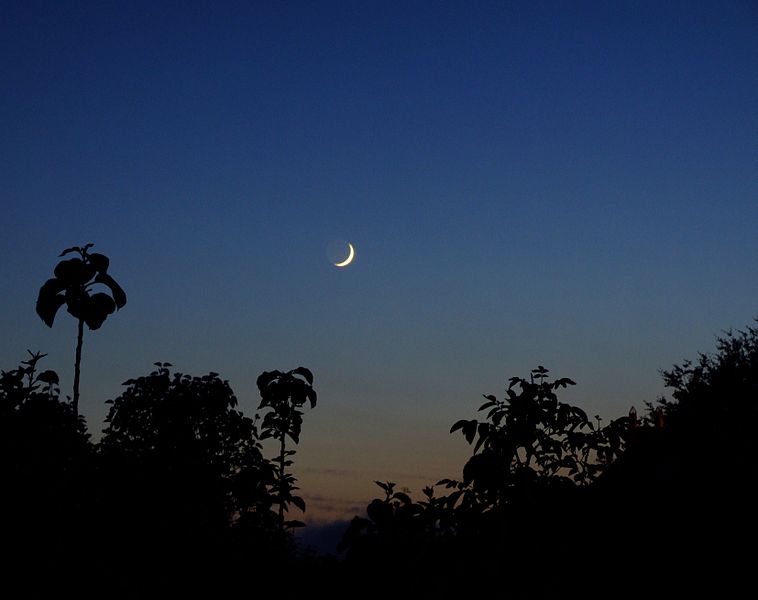
Crescent_Moon_(2558144570)

The Crescent Moon rising at sunset, marking the start of the month of Ramadan

The month of Ramadan begins tomorrow, July 9, and lasts until August 7.  As many of this blog’s readers will know, observant Muslims will fast from dawn until sunset:  no food, no liquids…..no sports drinks or power bars.  The questions of ‘carb loading’ or ‘gluten free’, (‘should i drink some chocolate milk after my workout?‘) can all be put on the table until the evening.  The diet is one of pure abstinence, morning until night.

Muslim athletes are not unique in observing a fast: Catholic Christians will consume much less than usual if observing the prescribed tenets of Lent on Ash Wednesday and Good Friday, and Jewish athletes will go a full 24 hours consuming nothing on Yom Kippur: friends have told me they will be loath to brush their teeth or even shower, lest anything whatsoever pass into their mouths on that, the holiest day in the Jewish calendar.

And, of course, there are athletes who experiment with fasts, juices and cleanses that have nothing to do with religious observance (I’ve tried the “Master Cleanse” myself once).

What may be unique, however, to Islam  is the duration of the practice:  a full 30 days, where an observant Muslim will forego all food and drink from dawn (Sahur) to dusk (Iftar).

I admire the discipline the act of fasting requires.  As a sports medicine clinician, I have often wondered how athletes observing such fasts might be impacted.  Of course, I am  not alone in this, as the subject of the Ramadan fast and its effect on athletes was, for instance, a subject of considerable interest in the 2012 London Olympics, which took place during Ramadan.  The effects of Ramadan on sports performance have even been discussed in this blog in a 2011 post.  And now  the most recent issue of the CJSM, which rolls out today, highlights a study looking at this very practice of fasting and its impact on footballers:  “Does Ramadan Affect the Risk of Injury in Professional Football.” Read more of this post
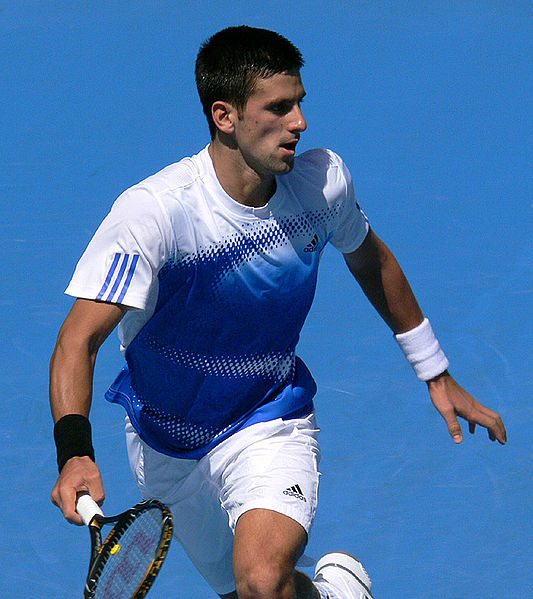
Novak Djokovic: Gluten-free and Gumbyesque

djokovic aussie open

Novak Djokovic at the Aussie Open

The Wimbledon Championships end tomorrow, with the Gentleman’s Singles Final pairing now set:  either Novak Djokovic or Andy Murray will raise the Championship Silver Cup by day’s end, barring rain delay or marathon tennis match…..

It has been another great fortnight of tennis, highlighted by Djokovic’s historic semi-final win over Juan Martin del Portro yesterday.  Djokovic seems to get involved in these epic five-set Grand Slam matches, having just been on the losing end of such a match at the French Open.  His opponent that day, Rafael Nadal, was quoted as saying:  “‘I learnt during all my career to enjoy suffering, and these kind of matches are very special….I really enjoy suffering.” This statement was given, mind you, by the victor!

I remain impressed with Djokovic’s supreme athleticism and his ability to inflict suffering on others on the tennis court!  It got me to thinking yesterday:  what are the sources of his talents?

There have been interesting discussions of at least two of his singular attributes:   his flexibility and his devotion to his gluten-free diet. Read more of this post

The Confederations Cup and Estadio do Maracana

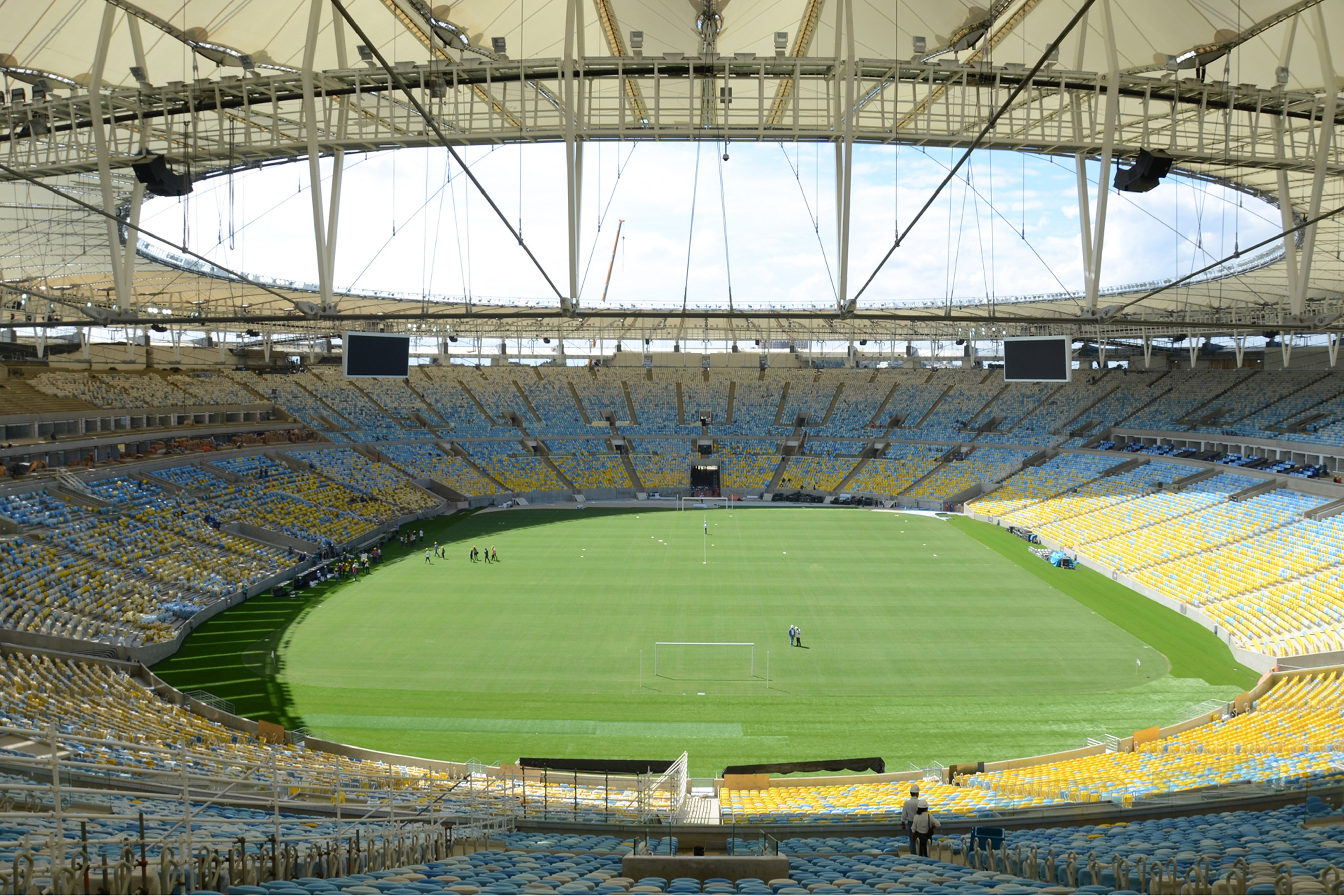
Maracana_internal_view_april_2013

Seleção Brasileira played on the grass of Estadio do Maracana.
Photo courtesy of Erica Ramalho/Wikimedia

Brazil was in epic form last night when they ripped Spain 3 – 0 to win the Confederation’s Cup in Rio’s glittering Estadio do Maracana (Maracana Stadium).

As many of the readers know, there have also been epic clashes throughout the country.  Large crowds have protested several issues, not the least of which is the huge capital investment the country is making in its sporting infrastructure, in lieu of other public works, heading into the 2014 World Cup and 2016 Summer Olympics (in Rio de Janeiro).

I certainly don’t pretend to understand the politics, but last night’s glorious football got me to thinking about a sports medicine controversy:  turf v. grass, which playing surface is safer for football (futbol, soccer) players?

This blog has discussed this issue before, with posts by me and the  previous on line editor, Chris Hughes, which I would recommend to you.

But today, I thought I would put the issue to the readers:  which surface do you think is safer for football/soccer players?  Take the poll below, or at the journal’s main page, and let us know.  I’ll  post the results in a week.  Feel free as well to elaborate on your vote in the comments section below.

If you didn’t get the chance to check out our blog posst on the weekend’s other huge sporting events,  the first stages of The Tour de France and Wimbledon, please do so and let us know what you think.

Is it really already July?!!  Have a good week!

Le Tour et La Corse

800px-Panorama_view_mountains_in_Corsica

Les montagnes de L’Île de Beauté: La Corse

…et La Centieme:  The 100th edition of Le Tour, the Tour de France, begins today, with the Grand Start in Corsica for the first time in the race’s history.

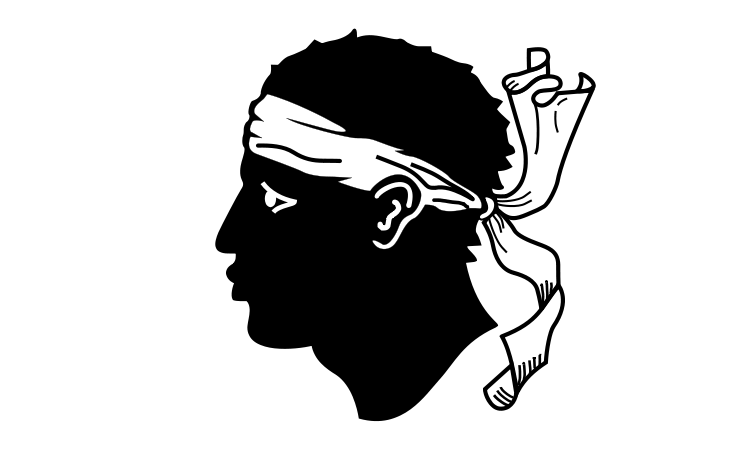
750px-Flag_of_Corsica_svg

Who needs the Tricolor? The Flag of Corsica: once an independent republic, now part of France, still with its own language and distinct customs.

What a way to celebrate the centennial of the Tour!

Corsica, or La Corse, is a French island in the Mediterranean, and is comprised of two of that nation’s departments: Haute-Corse and Corse-du-Sud.  It is the only region of France which has not previously hosted a stage of Le Tour.

The island has a long history, perhaps best told in one of the finer travel books I have ever read, The Granite Island, by Dorothy Carrington.  The island has passed through many hands over its history:  the Carthaginians, Romans, Genoans and others have all claimed the island for their own.  The island even enjoyed an independent existence for some years:  the Corsican Republic was formed in 1755 under the leadership of Pasquale Paoli.  Corsica’s most famous son, Napoleon, was born there in 1769.  And it was during the time of the “Napoleonic wars” that he set loose on Europe that the island became part of France.  It has remained a part of that country ever since.

I have a special fondness for this land, known by the French as  L’Île de Beauté:  the Isle of Beauty.  I have visited Corsica twice, and was smitten with the island from the first my eyes lay sight on the port of Calvi. (Some readers may recognize Calvi as the site of the 2011 IOC Advanced Team Physician course.)

Corsica is quite simply arresting:  from its mountains and trails, to its beaches, to the very smell of the island (its vegetation, known as the ‘maquis’, has a distinctively lovely fragrance), it can put anyone under its spell.

That said, I suspect the cyclists in Le Tour this year may be smitten in a different way than I was on my visits.  Like any beauty, Corsica has its caprices.  The mountains I found lovely will almost certainly pose extraordinary challenges to the competitors.

GR_20_Cirque_de_la_solitude

Cirque de la solitude: in the mountains of central Corsica

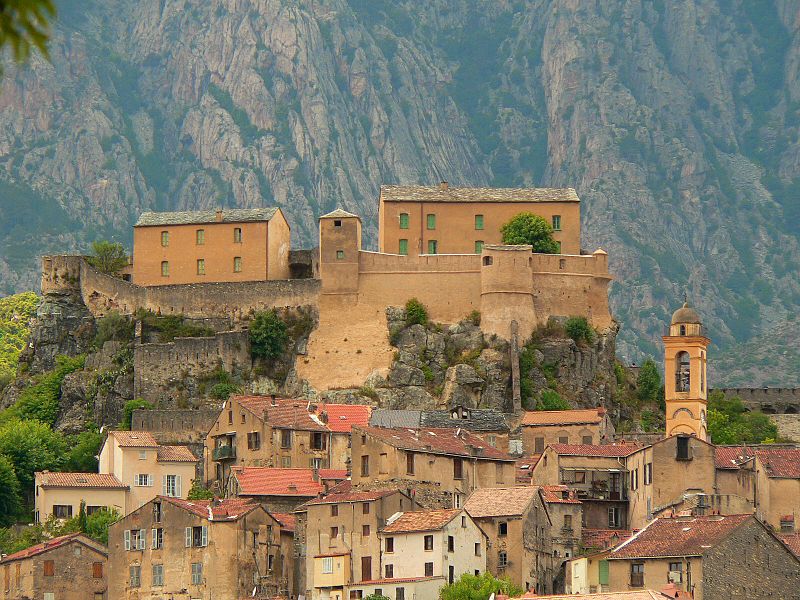
corte

The capital of Corsica: Corte, through which the 2nd stage of the Tour will pass


The second stage of the Tour this year will traverse the mountains that form a spine through the center of the Island, heading from Bastia on the east coast, through the mountainous capital of Corte, and ending on the west coast in Ajaccio, the birthplace of Napoleon.  The Tour’s website describes the ride as a rollercoaster; “Expect some real damage,” the site boasts menacingly!    Let’s hope no one meets his ‘Waterloo’!

Read more of this post