Spondylolysis Part II: Imaging and Radiation Safety

I’ve wanted to return to the issue I wrote about in a blog post a week ago, “Spondylolysis:  Issues of Incidence and Imaging, Part I.”   In that post and this one, I have been primarily looking at a provocative new study published in the Journal of Pediatric Orthopaedics, “Imaging Modalities for Low Back Pain in Children:  a Review of Spondylolysis and Undiagnosed Mechanical Back pain.”

spectSingle Photon Emission Computerized Tomography, or SPECT scans, like the image to the left showing bilateral L5 spondylolyses, are highly sensitive for detecting spondylolysis but expose the patient to radiation.  This is something I have known, of course, since training.  In my current practice at Nationwide Children’s Hospital Division of Sports Medicine I and my group of fellow clinicians focus on youth athletes, and so we see large numbers of potential ‘spondys’ and, correspondingly, order a large number of diagnostic images.  In 2012 we saw 548 new patients whose chief complaint was back pain; we ordered 227 SPECT images for ‘back pain’  in that same year.

Read more of this post

Risk Factors for Injury in Elite Youth Ice Hockey

I had planned today on writing a sequel to my weekend post on spondylolysis, and I will definitely do so later this week.  But I have hockey on my mind this morning.

Our local team, the Columbus Blue Jackets, fought valiantly this shortened NHL season, and came within a whisker of the playoffs.  The team I grew up with, the Detroit Red Wings, have moved on to the Conference semi-finals, and so if I have any skin left in the game, it is with the Wings.

But I was captivated last night, as I’m sure some of the blog’s readership was, with an extraordinary Game 7 between the Toronto Maple Leafs and the Boston Bruins which brought to mind Jim McKay’s famous line from the “Wide World of Sports”:  “the thrill of victory, and the agony of defeat.

Patrice_Bergeron

Patrice Bergeron scored the goals at end of regulation and in OT to send Bruins to victory

800px-Toronto_Maple_Leafs_bild

The Maple Leafs: deflated at the end of a heartbreaking game.

Somehow, the Maple Leafs went from leading 4-1 to losing 5-4 in overtime, as the Bruins, playing at home in Boston, achieved one of the more memorable comebacks in NHL playoff history.

As this was happening, my Twitter feed exploded with #bruins and #leafs posts, as two cities were collectively either shouting with joy or gnashing their teeth.  If you’ve never ‘watched’ a sporting event via Twitter, I commend the experience to you: it’s a bit like tapping into the collective consciousness of whatever group your following. Read more of this post

Spondylolysis: Issues of Incidence and Imaging Part I

I am looking forward to engaging with the readership in discussion on articles contained in our most recent edition of CJSM that came out on May 8.  If you haven’t had the chance to check that issue out, please do so.  The focus in this edition is on “Injury Surveillance in Sports Medicine.”   We have a lineup of articles highlighting research on this issue in an array of sports, ranging from snowboarding to ice hockey to baseball, and from high school to Olympic levels of sport.  I plan to post thoughts about a couple of articles I find particularly interesting, so make sure to visit this site and the CJSM journal site over the next week.

But first, my interest was piqued last week by an article in a Lippincott Williams & Wilkins sister journal, the Journal of Pediatric Orthopaedics, and I wanted to write about that on this Sunday morning, Mother’s Day here in the U.S. (“Mom” has already had her breakfast in bed and is off for a massage, the kids are outside playing, and so I’ve got a couple of hours to get on-line).

My topic for the day is the article, “Imaging Modalities for Low Back Pain in Children:  A Review of Spondylolysis and Undiagnosed Mechanical Back Pain,” found in the April/May 2013 issue of the Journal of Pediatric Orthopaedics.

spondy

Bilateral L5 spondylolysis, CT scan

We see a ton of visits for back pain in our clinic at the Nationwide Children’s Hospital Division of Sports Medicine in Columbus, Ohio.  Our Department of Orthopaedics does as well, but I can only speak directly to the experience of our Division of Sports Medicine, where nine primary care sports medicine physicians (including our fellow) do full time sports medicine. In 2012 we saw 548 unique, new back pain visits in the Division, with a median age on presentation of 14.2 years and a gender breakdown of 55% female visits to 45% male.  Back pain represents 9.2% of our Division’s total new patient visits and is the third most common ‘body part’ we see on presentation (knee is number one, ‘head’–mostly concussion–is number two) with approximately 1700 of 13,000 total patient visits in 2012 having their principal diagnosis fall in some diagnostic category of back pain. Read more of this post

Youth Sports Violence

momosoccer

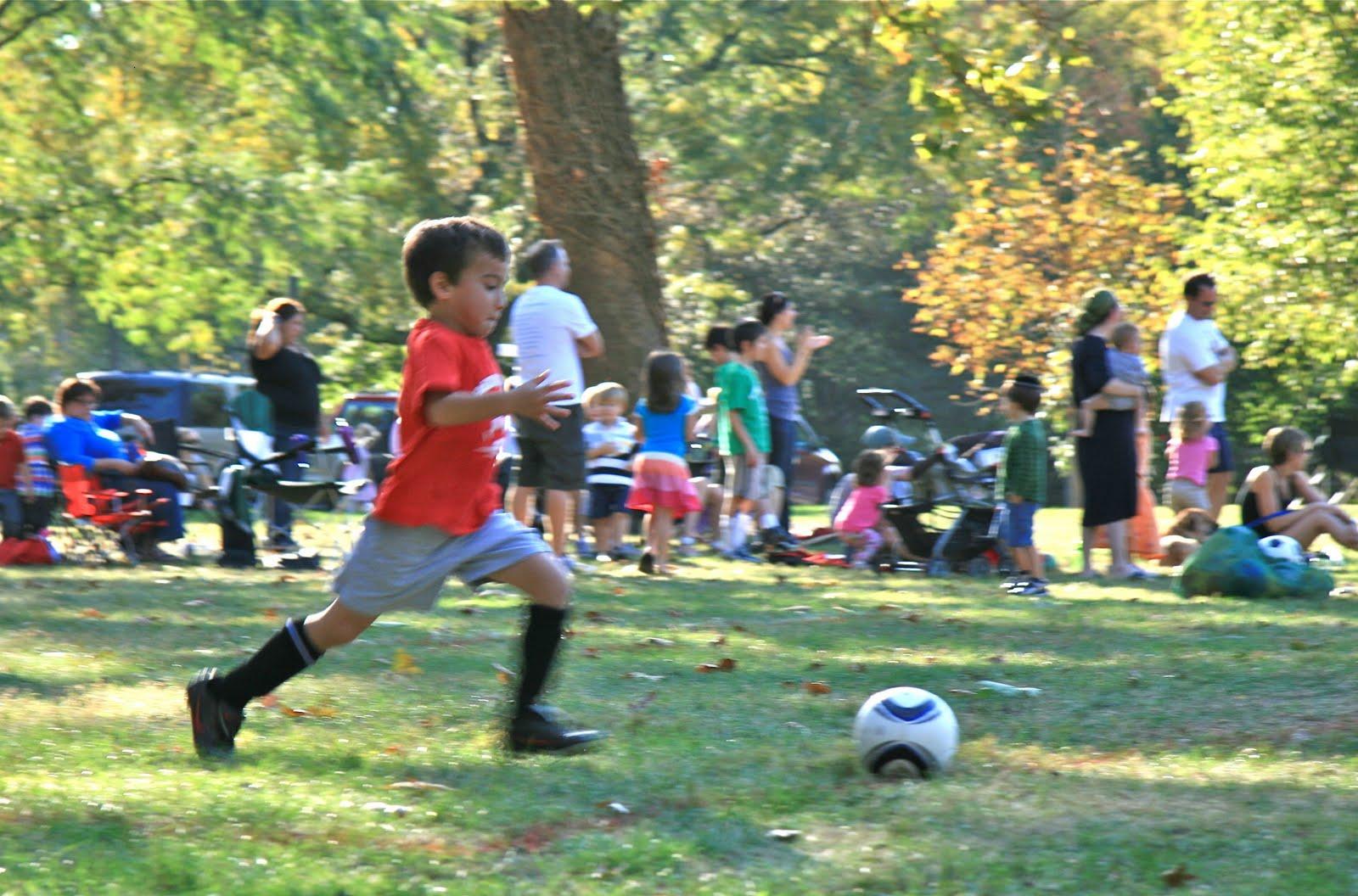
What youth sports should be: sheer joy

I woke up this morning to my usual routine:  coffee and the sports page. Both are necessary for me to get up and going in the morning.   Sport, I think many readers would agree, is usually a source of joy, and so it was with equal measures of sadness and shock that I read about the death yesterday of a soccer referee, Ricardo Portillo.

It’s a heartbreaking story, with a 46-year-old gone, a family fatherless, and a 17-year-old who will soon be tried for murder,  whose life will never be the same and whose own family has been irrevocably changed.

All because of one moment of violence.

Mr. Portillo was working in La Liga Continental de Futbol, a youth soccer organization in Salt Lake City, Utah. Apparently he saw the young man commit a shoving foul after a corner kick; when he cautioned the player and gave him a yellow card, the young man punched the unsuspecting Mr. Portillo in the face.   He immediately fell to the ground and was transported to hospital, where he spent a week in a coma prior to passing away.  The details, including clinical descriptions of the victim after the assault, can be found here.

The article gave me pause and got me to thinking specifically about the incidence of such events in youth sports, which I will discuss subsequently.   The specific issue at hand–how often do referees get assaulted on a playing field–was addressed in the NY Times article: “Reliable data on referee assaults at all levels of all sports does (sic not exist, but there have been several violent events worldwide in recent months (my itals),” and the article goes on to enumerate several of these involving referees.  In truth, however, there seem to be no epidemiological data addressing this issue that the reporter could find.

But for one moment, what of the general issue of violence in sports?

Zinedine_Zidane_2008

Zinedine Zidane in repose

Read more of this post