The Safety of Artificial Turf vs. Grass as a Sport Playing Surface

I was interviewed last week for a newspaper article which looked at the debate over a local school’s intention to transform a grass playing surface to artifical turf.

Among the controversies in sports medicine, the turf vs. grass wars are not the loudest nor the meanest, but they have been among the most persistent ever since 1966, when the Houston Astros first introduced a synthetic turf playing surface in the Astrodome, and dubbed it Astroturf.

Picture_of_Reliant_Astrodome

Reliant Astrodome

The history of the Astrodome makes for interesting reading:  of note, the original intention was for the surface to be natural grass, and the makers of the dome had installed traslucent skylights to allow for grass to grow on the indoor surface.  Alas, not enough light made it to the playing surface, the grass died, and Astroturf was born.

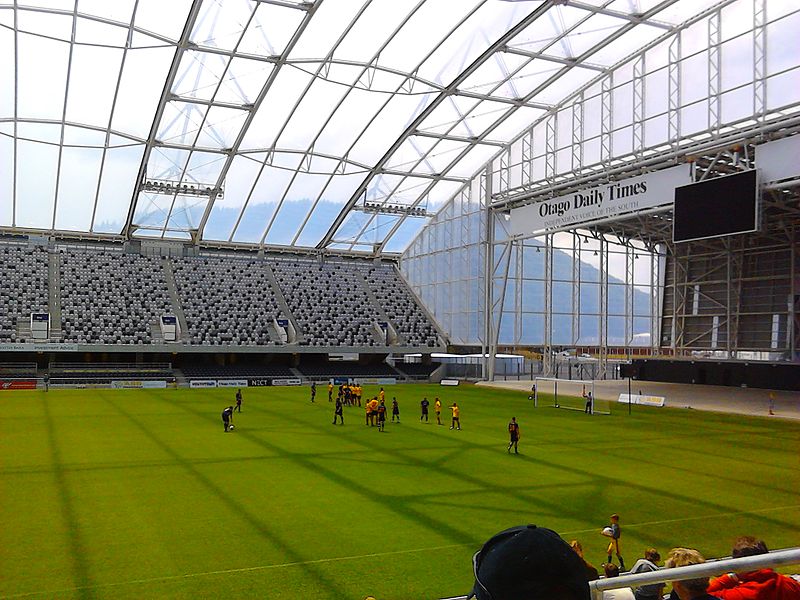
The progress of science and technology have seen Astroturf give way to newer, so-called second-, third-, and even fourth-generation turfs. The  sporting world has even demonstrated that an indoor venue can sustain a natural grass pitch: witness the luminous Forsyth Barr stadium  in Duenedin, NZ, which has hosted matches from the 2011 Rugby World Cup to a recent Aerosmith concert.
800px-Otago_United_v_Waikato_FC_(1)

Natural grass surface on Indoor Forsyth Barr Stadium, Dunedin, NZ

400px-Aerosmith_2

Aerosmith, recent performers on the grass of Forsyth Barr Stadium

So, the question from the interviewer to me essentially reduces to,  ‘Grass:  if its good enough for Steven Tyler and Joe Perry, is it good enough for all of us?’ Read more of this post

Return-To-Play Concussion Legislation in American States

I woke up yesterday morning and the sun was shining, the earth still turned………

In the grand scheme of things, the event that occurred on Friday was minor, so all was to be expected with the world at large.  But in my little corner of the world—the world of youth sports medicine in Ohio—things may be changing considerably, and soon.

Friday, April 26 marked the day that Ohio House Bill 143, Ohio’s “Return-To-Play” legislation that addresses how youth sports concussions are managed, went into effect.  And some people predict a flood of sorts is coming.

As many American readers of this blog might know, the legislators of Washington State signed into law the “Zachary Lystedt Law” in 2009.  This law, the first of its type, has become a model for other states to follow.  The legislation came into being in response to an event which occurred in 2006, when a middle-school student-athlete named Zachary Lystedt sustained a severe head injury while playing American Gridiron football.  The injury was found to be due, at least in part, to a concussion the young man had sustained earlier in the same game.  His injuries were catastrophic: Lystedt did not die, but he will be disabled the remainder of his life.

Image

In 2011, Minnesota Governor signing his state’s concussion bill into law.

The Washington State law contained several provisions addressing issues of education and informed consent, but its centerpiece is a requirement that any athlete playing at any level of youth sport who is suspected of having a concussion cannot return to play without an evaluation by a health care professional and a written, signed statement releasing the individual back to his/her sport.  Over the subsequent four years, 42 states, and the District of Columbia, have established similar laws.

Effective Friday, Ohio has become the 43rd state with such a law in place. Read more of this post

Canadian Academy of Sports and Exercise Medicine, Team Physician Development Course

whistler

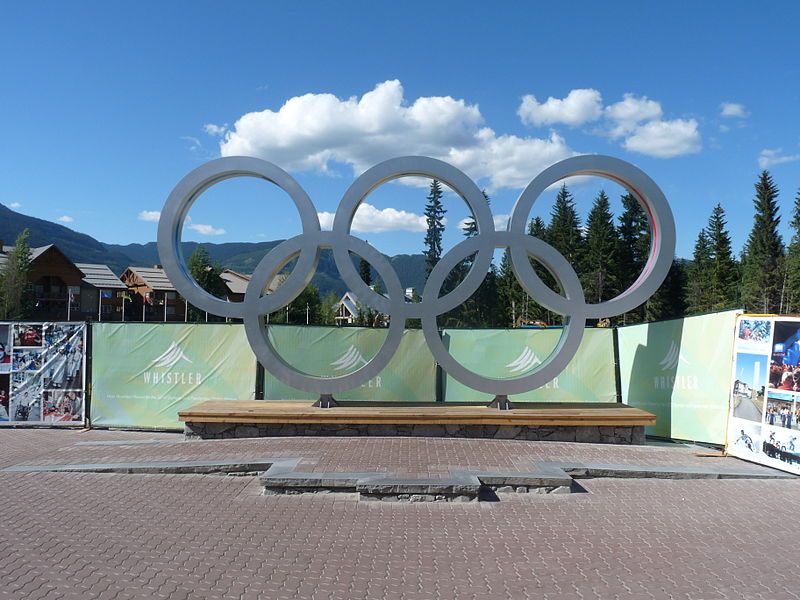
Olympic Rings, Whislter, B.C.

The Canadian Academy of Sports and Exercise Medicine (CASEM) begins its annual meeting in beautiful Whistler, B.C. tomorrow.  Events have already begun, with the pre-conference Team Physician Development Course, and my good friend and fellow sports medicine colleague, Kate Wiley, M.D. from Calgary has been in attendance.  She provides us with a guest blog entry from Day 1 of the Team Physician course.  Thanks Kate!

Day 1- Team Physician Development Course, Guest Blog, Kate Wiley, M.D.

The sun is going down here in beautiful Whistler BC where I am attending the annual Canadian
Academy of Sports Medicine Meeting. What a gorgeous place to have a sportsmedicine
conference – awe inspiring mountains, alluring wilderness and a playground for the active
individual.

lost lake

Lost Lake, B.C.

I have returned from a run along the trails of Lost Lake, and I have been able to reflect upon the day’s lectures.  I am lucky to have some extra time in the day to get in some personal training for the summer’s upcoming triathlon series.  Despite being a “mature” athlete, a “master”, I am always looking to learn how to be more competitive.  I listen to the lectures with my patients foremost in my mind, but, selfishly, I also think about what I can take for my own use.  How can I get a little faster, recover more quickly, stay injury free?

Read more of this post

AMSSM Meeting In San Diego

Image

Drs. Julie Wilson, William Meehan and Naomi Brown

I am in the San Diego airport on my way back home to Columbus, Ohio, reflecting on my whirlwind trip to #AMSSM13, the 2013 American Medical Society of Sports Medicine Conference that will wrap up tomorrow.

I spent my 24 hours on the ground connecting with colleagues, attending an Editorial Board Meeting of the Clinical Journal of Sports Medicine, and catching some great talks this morning, three of which I’d like to profile in this post.

Dr. Julie Wilson, from Nationwide Children’s Hospital, and Drs. William Meehan and Naomi Brown, from Boston Children’s Hospital, all presented very interesting research on different aspects of concussion. Their research abstracts are among the collected abstracts of the AMSSM Research Presentations that can be found in the March 2013 edition of CJSM.

Image

Reaction Time Device

Read more of this post