Revisiting Bicycle Helmets: Injury Prevention for Kids and More

A year ago I wrote the blog post below, which I am re-posting today.  I wrote the post to coincide with the publication in the November 2013 CJSM of the Canadian Academy of Sports and Exercise Medicine (CASEM) position statement on mandated bicycle helmet use in Canada.

I was reminded of the statement–and the blog post–today as I came across an article posted on the Facebook page of CASEM related to a recent study published in the New England Journal of Medicine looking at the the causes of head injuries in children.  For those under high school age, falls–including those from bicycles–are an exceedingly common cause of head injury.  One striking statistic from the study, quoted in the article:  for children presenting to the ED with a head injury resulting from a bicycle accident, only 18% were wearing a helmet.

The post I wrote last year generated more responses I think than any other post I have written on this blog, and it warranted several follow up posts .  I was struck by the passion–and quite often, vitriol–of many people writing in.  It wasn’t my first introduction to troll-like behavior on social media, but it was possibly the loudest and most ‘international’ I have experienced to date.

I hope you have a chance to look at the articles contained in the links on this post and the ‘reblog’ below.  I think the approach to injury prevention, specifically relating to bikes and most specifically relating to ‘kids on bikes,’ should be multifactorial:  yes to improved road safety, yes to a different relationship between cars and bikes, yes to a built environment that is more accommodating to bikes and pedestrians–but yes as well to personal protective equipment, like helmets.

As ever, we are interested in your thoughts.  But I say with the utmost politeness:  please note that any post that I find does not contribute to a civilized discussion will not be posted on the discussion board.

All the best.

sportingjim's avatarClinical Journal of Sport Medicine Blog

The November issue of CJSM has been out for a week, and I hope you’ve had a chance to look at our latest offering.  It is also our last offering for 2013 (CJSM is a bimonthly, publishing 6 times a year).  The next time the journal will hit your mailboxes and inboxes will be January 2014.

FIMS 2014 Quebec City, site of the XXXIII FIMS
World Congress of Sports Medicine
CJSM will be there: will you?

2014 promises to be a big year in sports and sports medicine.  The Winter Olympics take place in Sochi, Russia; the FIFA World Cup is in Brazil; and the Commonwealth Games are in Glasgow, Scotland.   On the sports medicine front, the Canadian Academy of Sports and Exercise Medicine (CASEM) hosts the FIMS 2014 World Congress of Sports Medicine in Quebec City, and earlier in the spring the AMSSM annual meeting takes place in…

View original post 1,260 more words

ACL Injury Prevention

photo (30)

Dr. Timothy Hewett, in action

I had the good fortune (and space in my clinic schedule) to attend a lecture given earlier this month by Tim Hewett, PhD, FACSM.  Dr. Hewett is a man of many titles.  I know him best as the Director of Research and Director of the Sports Health & Performance Institute at Ohio State University Sports Medicine, and his talk was on “Understanding and Preventing First and Second ACL Injuries.”

If you have never heard Tim speak, you are missing out on a treat.  I learn so much from his talks: ranging from the ones I catch at the annual American College of Sports Medicine (ACSM) gatherings to the ones I occasionally can attend here in Columbus, Ohio, the city we both call home.

It stands to reason: the man has authored over 248 peer reviewed articles and has been awarded millions of dollars of grant money.  We have had the fortune here at CJSM to have published a number of his manuscripts, including one in the most recent September 2014 journal (on gender differences in hip abduction/adduction) and one in 2012 on  the incidence of ACL re-injury after primary reconstruction.

acl rupture post reconstruction deidentified

Oh, my reconstructed ACL: Where have you gone?

The issue of primary- and secondary-prevention of ACL injury is huge. We’ve lived, for instance,  through a virtual epidemic of ACL ruptures in the NBA over the past couple years.  Derrick Rose is returning (yet again) to the hardcourt after his terrible injury in the 2012 playoffs, and that’s great news for the Bulls and fans of great basketball in general.   In his talk Dr. Hewett suggested that at least part of this statistical uptick  in ACL injuries was likely due to the NBA lockout, resulting in an abbreviated 2011 – 2012 season preceded by an ‘abnormal’ preseason.  “These teams have a very structured offseason training program where they do a lot of injury prevention-type neuromuscular training”  (NMT), Hewett has been quoted in interviews.  The absence of such pre-season NMT work, he thinks, is associated with the litany of ACL injuries seen that season, capped off by Derrick Rose’s.

ACL injury prevention is both needed and achievable.  In his lecture, Dr. Hewett stated that there is evidence to suggest that anywhere from 50% to 100% of patients who sustain an ACL rupture go on to develop osteoarthritis (OA) of the knee, even in those who go on to have an ACL reconstruction (ACLR) Read more of this post

The Safety of Artificial Turf vs. Grass as a Sport Playing Surface

Mo soccer

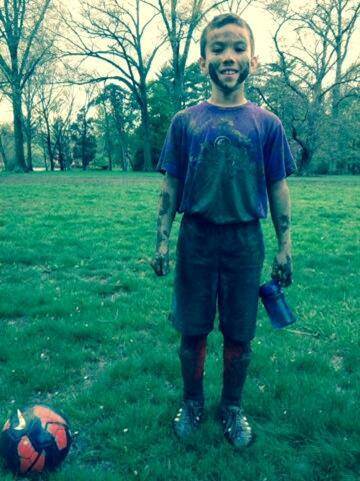
Safety aside, soccer and a muddy, grass field: a boy’s idea of heaven!

The World Cup has arrived, at last, and brought with it already the first controversy of the tournament: did Fred flop?
But in the world of football/soccer, there is another, older controversy: turf vs. grass. We revisit this issue by looking at a previous blog post (it is very difficult to write while watching Mexico vs. Cameroon!).
Turf vs. grass: which is safer? Take a read, and let us know what you think.

sportingjim's avatarClinical Journal of Sport Medicine Blog

I was interviewed last week for a newspaper article which looked at the debate over a local school’s intention to transform a grass playing surface to artifical turf.

Among the controversies in sports medicine, the turf vs. grass wars are not the loudest nor the meanest, but they have been among the most persistent ever since 1966, when the Houston Astros first introduced a synthetic turf playing surface in the Astrodome, and dubbed it Astroturf.

Picture_of_Reliant_Astrodome Reliant Astrodome

The history of the Astrodome makes for interesting reading:  of note, the original intention was for the surface to be natural grass, and the makers of the dome had installed traslucent skylights to allow for grass to grow on the indoor surface.  Alas, not enough light made it to the playing surface, the grass died, and Astroturf was born.

The progress of science and technology have seen Astroturf give way to…

View original post 1,378 more words

CJSM Podcast 2

JSM-Podcast-BG (1)The May CJSM has been out for a little more than a week, and we hope you have been able to begin looking it over.

I had a chance to talk with Dr. James Carson of Canada, one of the authors of the new Canadian Academy of Sports and Exercise Medicine (CASEM) position statement highlighted in the new journal:  Neuromuscular Training Programs can Decrease Anterior Cruciate Ligament Injuries in Youth Soccer Players.

Neuromuscular training programs are gaining favor as cost-effective interventions for ACL injury; witness a recent article profiling their impact at a cost of only $1.25 per player!

It’s a wonderful paper, and I hope you get both a chance to read it and listen to the new podcast. Let us know what you think, by commenting here or tweeting us @cjsmonline.


(music:  Jeff Manning)