Overuse Injuries and Burnout in Youth Sports

Pawsox_17937_2013-06-30

10,000 hours of practice, and
he might make the Red Sox?*

We’re very pleased at CJSM to open the New Year with a shout:  a fantastic systematic review and position statement on the subject of youth sport, from the American Medical Society for Sports Medicine (AMSSM).

The focus of the paper–in the January 2014 issue, which has just published–is on overuse injuries, which are thought to represent roughly half of all the injuries youth athletes sustain.

All readers of the journal, and of this blog, will find this a worthwhile read.  I have a selfish interest in the subject, as I am currently practicing pediatric sports medicine, and in my professional life I live and breathe the issues discussed in the paper. Moreover, I know several of the authors of this paper, and I think highly of them all.

But this is not about ’eminence based’ medicine.  No, it’s evidence-based all the way.  The paper is both a systematic review and the AMSSM position statement on the subject of “Overuse Injuries and Burnout in Youth Sports”.  The authors conducted a thorough review of the literature, identifying 953 papers and citing 208 unique references in their comprehensive analysis of this broad subject.  They go on to review what is known, and then make recommendations, classified using the Strength of Recommendation Taxonomy (SORT) grading system.

The paper is broadly organized into the following subsections:  epidemiology; risk factors (intrinsic and extrinsic); discussion of high-risk overuse injuries;  discussion of several concepts mentioned frequently in the literature of youth sports (readiness for sport; sport specialization; burnout); and prevention.

The study is so very comprehensive, I cannot do better justice to it than encourage you to read it yourself.  I thought I might here mention some of what stood out for me. Read more of this post

Ringette: Who Knew?

RingettePlayer

Ringette Player in Action!

At CJSM we are already anticipating the start of 2014:  the January 2014 issue is still awaiting publication, but we are already releasing some of this coming year’s studies in our “Published ahead of print” collection.

One I wanted to talk about today, if only because the subject sport is an entirely new one to me: Ringette-related injuries in young female players.

Ringette.  As a middle-aged guy, I know I still have a lot to learn.  That said, I am delighted when I have a day where I acquire some new fact or concept I literally have never encountered in my over 18000 days on the planet.  Ringette.  I had never heard of this sport until I read this epidemiologic study.  Nearly everything I now know about the sport comes courtesy of the authors Glenn Keays, Isabelle Gagnon, and Debbie Friedman.  Thanks to you all!

A team sport played on ice rinks, ringette is similar to ice hockey with these notable exceptions:  1) 6 skaters comprise a team; 2) the skaters advance a doughnut shaped ring, rather than a puck, with a stick that has no blade; 3) the rules governing the sport encourage the development of team play; for instance, a player that might be lionized in hockey for being able to single-handedly advance the puck the length of the rink and score is, in ringette, penalized instead.  Like competitive women’s ice hockey, ringette is a non-collision sport, with all contact between players officially prohibited.  Players are equipped with safety devices such as helmets and visors.

The sport has been around for 50 years, originating in Canada.  It is expanding internationally, with associations in the USA, Finland, Sweden and beyond.  Read more of this post

Once More Unto the Breach

henry v

Shakespeare and sports medicine:
A perfect mix

I’ll bookend this post with two heavyweights of Western Civilization: Shakespeare and Paul of Tarsus (a.k.a. St. Paul).   This must be an important issue!

Once more unto the breach dear friends!  Like Shakespeare’s Harry, I’ll head into the fray and pick up the thread of a conversation that dominated this blog a week ago, when we were discussing a position statement on Mandatory Bicycle Helmet Legislation (MHL).  Take a chance to look back at the entire blog, there have been several posts and over a hundred comments on the issue.

You’ll find two different polls in that series of posts.  I tallied up the votes on November 20 (the ‘polls are still open,’ and so the numbers will keep adding up) and wanted to share them with you.

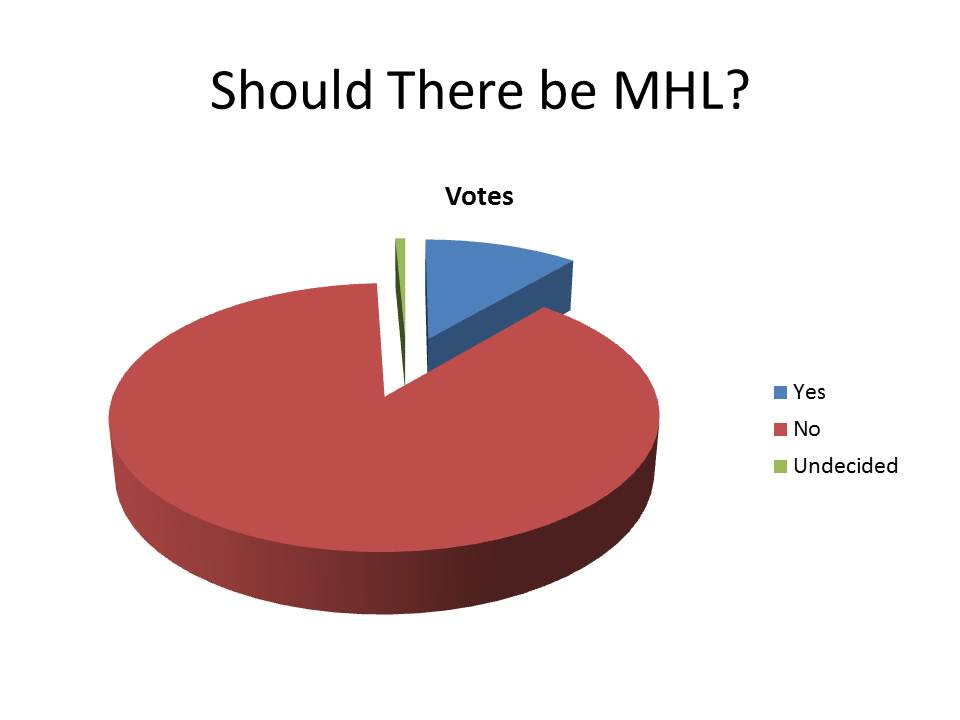
On the question of whether there should be mandatory bicycle helmet legislation, the respondents voted so: 245 no, 31 yes, 2 undecided.

The next poll asked the question:  if you are opposed to MHL, what single issue most informs your opinion.  The choices (and votes for) are:

73 voters thought that MHL put the focus on the wrong group for an intervention; bike safety begins with road and car driver safety.

48 thought that MHL sent an inappropriate message:  that MHL indicated biking is risky behavior, when it is inherently safe.

29 were concerned that MHL negatively affected bicycle ridership (decreased rates of biking).

9 thought that MHL was an unjustified restriction of their civil liberties.

And 9 thought that MHL weren’t helpful in reducing what they are purported to do:  reduce bicyle-related head trauma.

I put these vote results, from a decidedly non-scientific poll, in graphical form below.  The vast majority of poll respondents oppose MHL, and a plurality are concerned that the focus on bike safety needs to be placed not on personal protective equipment for bicyclists, but on making roads safer and car drivers’ more cognizant of their responsibility to share the road.

MHL reformattedreason for opposition

Read more of this post

The November CJSM: A Discussion on the Mandatory Use of Bicycle Helmets

The November issue of CJSM has been out for a week, and I hope you’ve had a chance to look at our latest offering.  It is also our last offering for 2013 (CJSM is a bimonthly, publishing 6 times a year).  The next time the journal will hit your mailboxes and inboxes will be January 2014.

FIMS 2014

Quebec City, site of the XXXIII FIMS
World Congress of Sports Medicine
CJSM will be there: will you?

2014 promises to be a big year in sports and sports medicine.  The Winter Olympics take place in Sochi, Russia; the FIFA World Cup is in Brazil; and the Commonwealth Games are in Glasgow, Scotland.   On the sports medicine front, the Canadian Academy of Sports and Exercise Medicine (CASEM) hosts the FIMS 2014 World Congress of Sports Medicine in Quebec City, and earlier in the spring the AMSSM annual meeting takes place in the Big Easy.  And this brief listing, of course, merely scratches the surface of what is to come.

But before I get ahead of myself, best to hold on to the mantra, “Be Here Now,” and share with you a little of what’s in store when you delve into this month’s CJSM.

Headlining the November issue is CASEM’s position statement on the mandatory use of bicycle helmets.  This document is a revision of a previous statement made in 2002, and incorporates the medical evidence in support of such use that has accumulated over the last 10+ years.  There is an associated lead editorial by Murray Maitland, PhD that is definitely worth a read as well.

I was particularly interested in the CASEM offering at least in part because I am a regular bicycle commuter here in Columbus, Ohio who recently had his interest in such matters piqued after reading a provocative article in the NY Times:  “Is it OK to Kill Cyclists?”

That’s a rhetorical question mind you!

First having ensured the life insurance policy had been paid up, I then read through the CASEM statement, which packs a lot in two pages.  The statement surveys the field of what is known about the use of bicycle helmets and injury prevention, and then makes recommendations.  Some of the salient points I walked away with: 1) wearing a properly fitted helmet decreases head injuries by 63% to 88% in all ages of bicyclists; 2) introduction of legislation (i.e. not merely relying on education campaigns) is associated with a decreased injury rate and has not been shown to decrease ridership (importantly, as we seek to increase physical activity in our sedentary population); 3) youth populations are more likely to wear helmets where there is legislation that applies to riders of all ages as opposed to only 18 years and younger; 4) youth are more likely to wear helmets when cycling with an adult wearing a helmet (95%) than when cycling with an adult not wearing a helmet (41%).

The CASEM statement draws several conclusions from these data, but most importantly recommends “That all Provincial and Territorial governments should enact comprehensive legislation mandating that bicyclists of all ages wear helmets.”

I would concur with those recommendations, and I would love to hear your thoughts after reading the CASEM statement, either here in the comments section or on twitter @cjsmonline.  The CJSM executive editor, Chris Hughes, has written about this subject in a 2011 blog post, and notes that the associated poll of the readership taken at that time got more traffic than any other.  I’m hoping this month’s articles on the subject, and this blog post, encourages that same sort of commentary.

923380_10151585476514581_1263666389_n

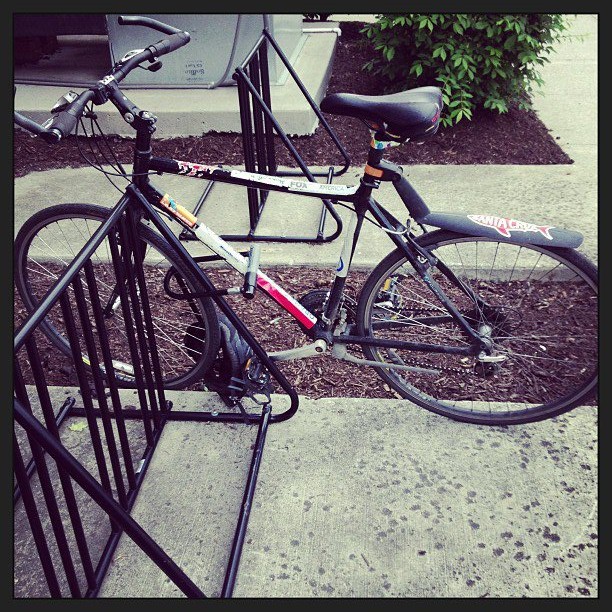
My trusty steed has been known to fail me;
I’m happy to have a helmet on when riding it

My position on the matter (pro) is uncomplicated.  I think the data are clear and in favor of mandatory use of bicycle helmets:  mandatory legislation reduces serious injury; it encourages the most vulnerable (children) in the use of an injury prevention device; and it has not been shown to decrease ridership. Read more of this post