November…….already

10665120_10206556329240539_8534250178254214982_n

Transitions: November in the USA.

Really?  Can it be that November is here?

I just covered my last high school football game of the fall, a loss in the playoffs. A season which began in the heat and humidity of August [with its attendant muscle cramps and concerns of exertional heat illness & exercise-associated hyponatremia] is now over, and injuries sustained on wrestling mats and in basketball gymnasia are beginning to show up in my clinic.  Before you know it, the skiiers and snowboarders will be filling out the waiting room.

November also brings with it the publication of our last CJSM of 2015, and it is a good one.  We have profiled two offerings in particular, both of which currently are freely available on line:  original research looking at potential limitations of American Heart Association recommendations for pre-participation cardiac screening in youth athletes; and a provocative editorial [and just right for the change of seasons] arguing for adult autonomy in deciding whether or not to wear helmets when skiing.

Both subjects are among the more controversial in sports medicine.  Whether or not to consider pre-participation screening with ECG when taking care of our younger athletes–well, that’s a question whose answer can vary depending on what side of the Atlantic one is on, or what part of the United States you may live in.  It’s a question whose answers may lie in much of the research we publish in our journal, with luminaries such as Jonathan Drezner and William Roberts weighing in.

Whenever we publish research or commentary on the question of mandatory personal protective equipment, I sometimes feel as if we have entered the ‘blood sport’ arena of sports medicine.  This issue’s editorial  on the ‘Ethics of Head Protection While Skiing’ has already generated some buzz on our twitter feed. Two years ago, we published the Canadian Academy of Sport and Exercise Medicine (CASEM) Position Statement on the Mandatory Use of Bicycle Helmets, and our social media feeds erupted.  I have never seen so much discussion on the blog site.

There is much more to be read carefully in this November 2015 issue.  A very interesting piece of original research, from one of our more prolific authors (Dr. Irfan Asif), looks at the potential psychological stressors of undergoing pre-participation cardiovascular screening.  As a pediatric sports medicine specialist, I’ll be reading with great interest a study on the potential prognostic implications of post-injury amnesia in pediatric and adolescent concussed athletes–lead author Johna Register-Mihalik continues to make major contributions to our understanding of that injury in that population.

So, enjoy this issue.  And brace yourself–2016 is on its way.  It will be here before you know it!
‘Energy Balance’ in the news

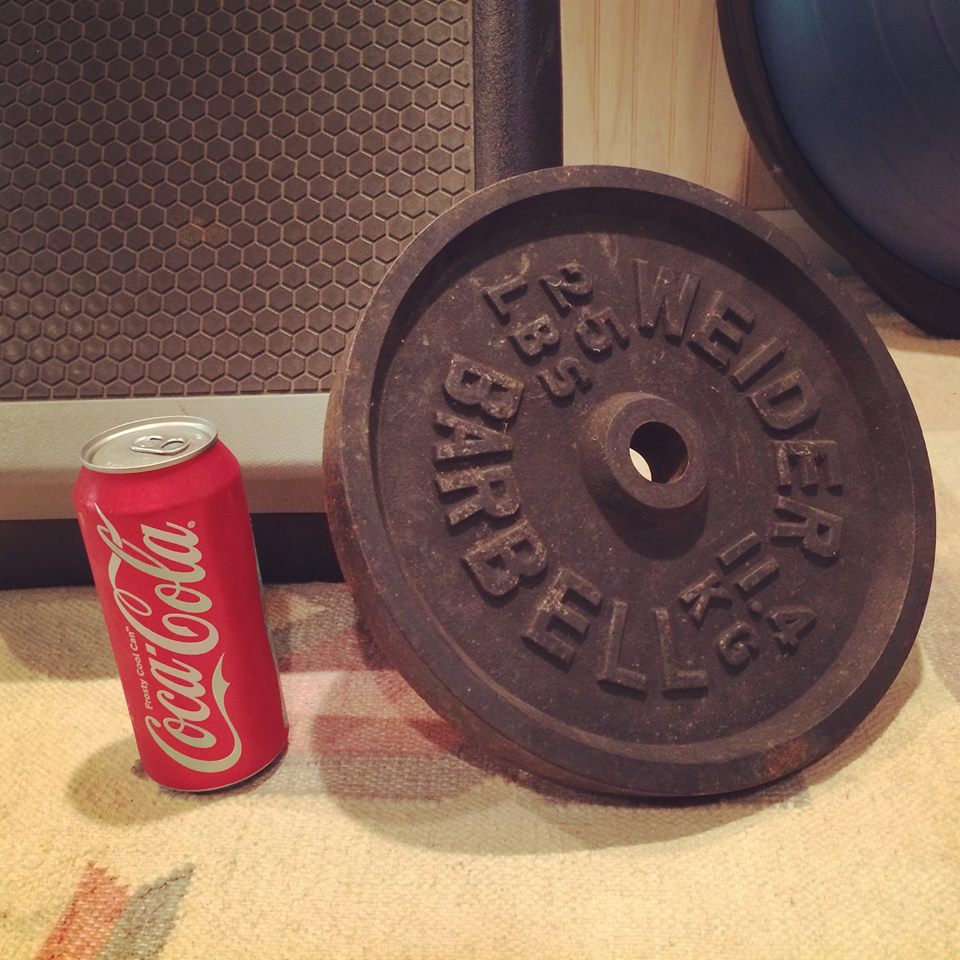
coke workout

He ain’t heavy, he’s my brother…..

The ‘Coke Wars’ have been raging for a week.

I read with great interest a recent piece in the New York Times – “Coca Cola Funds Scientists Who Shift Blame for Obesity Away From Bad Diets.”  It’s been making the rounds on mainstream and social media–there has been a vigorous back and forth on Twitter.  You may already be very familiar with the story.  The ‘Letters to the NY Times Editor’ were overwhelmingly negative, suggesting that the researchers in the article were in the pockets of industry.

There were several dimensions to this story that intrigued me, and so I thought it would be a good piece to discuss here on the blog.  Reading Brian McFadden’s Strip in the Sunday’s NY Times, the ‘Sugar Water Workout,‘ finally got me on the laptop.  I’m a big fan of McFadden’s irreverent strips, though in this case I think– as i do about several of the discussions I’ve seen regarding this issue in the media–he has over-simplified a contentious issue to get some laughs.

Up front, let me share with you my opinions about this matter.  Then I’ll wend my way back to some of these comments to touch on what I think is a valid point the article makes and some thoughts about transparency in health care research.

My thoughts on reading the NY Times story:

  1. To achieve weight loss, an individual must restrict caloric intake.  There is a great deal of discussion about the ‘ideal diet,’ but the key is reducing calories–vegan, paleo, low carb, however one does it, reduce the ‘calories in’.   The history of dietary fads is a long one, but the most important principles are not the choice of diet as much as i)reducing intake and ii) maintaining these new habits over time.  To the extent my patients may consume a lot of carbonated soda, I have them identify that as the source of their unessential ‘extra’ calories and eliminate that from their diet while they work on other lifestyle changes as well.
  2. That said, there is an overwhelming body of evidence that ‘Exercise is Medicine.’*  Put another way, achieving weight loss is many people’s goal.  But it is usually not their only health goal, nor should it be the sole goal we clinicians in sports and exercise medicine will be working on with our patients.  Increasing physical activity and exercise has a host of benefits that cannot be achieved by diet alone.  For instance, improvements in knee osteoarthritis are seen more with diet change and weight loss than exercise; but the combination of exercise and dietary changes provides the most benefit to these patients.  And to pick one more of several studies I could point out, our ‘fellow travelers’ at BJSM recently published a meta-analysis on HIIT in adolescents and found these exercise interventions (not accompanied with dietary changes) can achieve significant improvements not only in cardiorespiratory fitness but also body composition (BMI and body fat).
  3. Therefore, I think it is something of a ‘Hobson’s choice’ to ask which is more important:  diet or exercise?  It’s not a ‘zero sum’ game. Diet & Exercise go hand in glove, they are complementary.  Most of us, and most of the patients we care for, need to address both parts of the equation.  The sedentary lifestyles we increasingly lead are one of the great public health crises of our time. With some irony, I think a debate that pits diet vs. exercise is a bit like the fanciful argument Lite beer used to have with itself:tastes great….no, less filling!  Tastes great!  Less Filling!!!!

    NATA NEPA

    The stairs can be lonely in the modern world.

  4. The biggest misstep the scientists made as described in the article was an initial lack of transparency.  The Global Energy Balance Network (GEBN) with which the researchers are affiliated gets substantial funding from Coca Cola. There is clear potential for bias.  Scientists affiliated with this Network must be as transparent as possible.  On the GEBN website, this at first, apparently, was not the case.
  5. Finally, Social media can ramp things up to a fever pitch–it births viral memes and creates chatter that can overwhelm rational discussion.  Some of the criticism of the scientists and the science in the NY Times article is valid; much of it has descended to ad hominem attacks and is not constructive.  As someone who is involved both in the research and social media ends of clinical sports medicine, I would say the social media aspects of this story have overwhelmed rational discussion.

Read more of this post

CJSM Podcast 10: Exercise-associated Hyponatremia, the 2015 Consensus Statement

jsm-podcast-bg-1#DrinkToThirst is the hashtag that needs to trend in the sports medicine world!

Exercise-associated hyponatremia (EAH), a preventable and treatable but potentially life-threatening condition that can affect athletes under our care, is the topic of our tenth podcast.  And #DrinkToThirst is one of the chief themes to be found therein.

We’re proud to publish the 3rd international consensus statement on EAH in our July 2015 CJSM, and we’re delighted to have the lead author as our guest on the associated podcast.

tami%20and%20snow%20bear[1]

Dr. Hew-Butler and friend.

Dr Tamara Hew-Butler is an associate professor of Exercise Science at Oakland University in Rochester, MI. She obtained her: BS in Kinesiology at the University of California at Los Angeles, CA; Doctor of Podiatric Medicine (DPM) at Temple University in Philadelphia, PA; Residency and Fellowship at the Harris County Podiatric Surgical Residency Program, Houston, TX; and Philosophy Doctor (PhD) at the University of Cape Town, South Africa. Dr Hew-Butler is a Fellow of the American College of Sports Medicine (FACSM) and specializes in both sports medicine and exercise physiology. Her expertise is in exercise-associated hyponatremia and the endocrine regulation of fluid balance during exercise. She trained under Timothy D. Noakes MD, DSc and Joseph G. Verbalis MD and has published ~50 papers on the topic.

Join us in the rousing conversation, and learn i) why athletes should #DrinkToThirst; ii) why sidelines should have hypertonic saline as well as AEDs and access to cold-water immersion therapies; iii) and so much more.

FootyFirst: 5 Questions with Dr. Alexander Donaldson

Dr Alexander Donaldson

Dr. Alexander Donaldson, lead author of new research in CJSM

One of the studies in our May CJSM issue that has already made a big splash is injury prevention work coming to us from researchers in Australia:  “Bridging the Gap Between Content and Context: Establishing Expert Consensus on the Content of an Exercise Training Program to Prevent Lower-Limb Injuries.”  This is work looking at prevention of some very common injuries seen in Australian Rules Football, or “Footy.”

As an American who has yet to visit Australia (for shame!), I have only a dim appreciation of the sport.  I have previously written about Footy in a blog post and I read eagerly the occasional article on the sport that make it into the U.S. press; the New York Times, for instance, had a recent article on the search for American talent that may cross-over to Australian rules football.  Who knew that basketball players may make great ruckmen?  Well, plenty of Australians apparently!!!!

The Twitter chatter about the study has been substantial, and it has hit the mainstream press as well.   Our Editor-in-Chief Chris Hughes has made it one of the ‘Editor’s Picks’ this month–it is freely available for a short time.  And now we have the pleasure of having the lead author, Dr. Alexander Donaldson, join us for “5 Questions with CJSM” to talk about Footy and FootyFirst, the exercise intervention which is the subject of the study.

_________________________________________________________

1) CJSM:  Asking as an ignorant American:  What are some of the significant differences between Australian football and American gridiron football?  Or for that matter, between Australian football and rugby, a sport with which I do have some familiarity?

AD:  Where do I start to answer this question? Firstly, unlike American gridiron football or rugby, Australian football does actually involve a lot of kicking a ball to gain ground rather than throwing or running with the ball. In fact, to score a goal in Australian football the ball has to be kicked between the goal post, not caught in or carried into an end zone. Another key difference is that unlike any other form of football, Australian football does not have ‘line of play’ or any sort of off-side rule. It is more like basketball or ice hockey in that players can position themselves anywhere on the field at any time and can enter a contest for the ball from any angle or direction. Like American football and rugby, Australian football is a full contact collision sport However, the only protective equipment commonly worn by Australian football players is a mouth guard to prevent dental injuries – no shoulder pads, and only the occasional soft-shell helmet and body padding, usually only worn to protect an existing injury. At the elite level there are some similarities between the way the American football and Australian football are administered with both having a salary cap and a draft system to embed a certain degree of equalization of the competition over time.

2) CJSM:  What is “FootyFirst”? At the risk of conflating two dissimilar interventions:  how may it resemble (or differ from) the FIFA 11+ warmups that have been used in football (soccer)?  As an injury prevention intervention—how much time is required to perform FootyFirst for the teams adopting the program?

AD:  A very good question. Read more of this post