National Council on Youth Sports Safety

988780_10151971065024581_1620105790_n

Strained metaphor?
Like the Washington Monument,
our approach to concussions is
under revision

I am in Washington D.C. Thursday and Friday as a participant in the National Council on Youth Sports Safety (NCYSS), being put on by the Protecting Athletes and Sports Safety (PASS) Initiative.  Our host and keynote speaker is Dr. David Satcher, the former Surgeon General who has devoted his life to issues of public health, and has recognized that the concussion ‘epidemic’ has become a game changer in the field.

I’ve met a variety of high profile leaders, in addition to Dr. Satcher, in the world of youth sport concussion during my 24+ hours on the ground in D.C.

I don’t suppose it’s surprising,  but I think one of the most important components of these sorts of meetings is the networking:  I am coming out of this conference with at least three rather solid collaborative research ideas, not to mention commitments to work on other projects with several of the conference attendees.
BYhLP9pCEAAWm_P

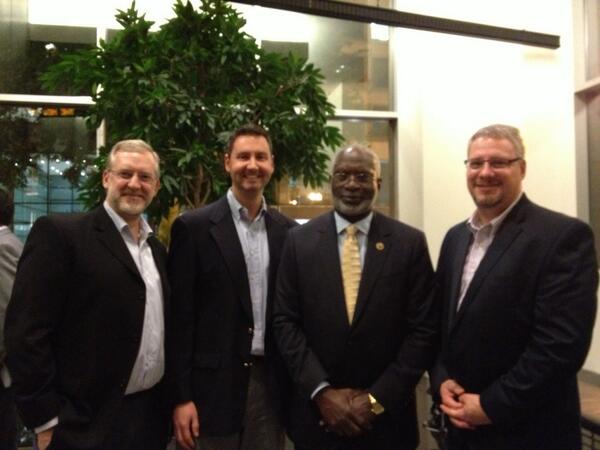
Physicians from Nationwide Children’s Hospital and
Dr. David Satcher, former United States Surgeon General

On a ‘meta’ level, what I was struck by in this conference was the theme that was consistently struck:  we need more scientific research on youth sport concussion, and the urgency behind this need derives fundamentally from two areas–1) the often undervalued but critical importance of mental health and 2) the risk of children in being inactive.

In other words,  as concerned as we need to be about reducing the risk of concussion, about reducing possible long-term mental health issues consequent to this injury, we need to balance this concern with he equally strong demand that we promote physically active children.

In fact, it’s not simply the effect of sport and exercise on obesity, but also their positive effect on mental health:  for instance, physically active kids are less prone to depression.  And so, if one were concerned solely with mental health, he would need to navigate the twin perils of traumatic brain injury and physical activity.

At CJSM, we are on the frontline in these issues.  We publish original research on concussion in almost every one of our journal editions.  The November issue for  instance has an excellent study on predicting clinical concussion markers at baseline.   In the same issue we published the Canadian Academy of Sports and Exercise Medicine Position Statement on the mandatory use of bicycle helmets:  an issue of keeping youth and others safe while they are physically active.

BYkmR_SCYAA5gMH

@cjsmonline (attached to laptop)
tweeting from #NCYSS before
catching that plane

I am leaving D.C. struck….by the sight of the Washington Monument under scaffolding!  In truth, I am more than ever struck by how big of an issue concussion has become, and how it will remain central to primary care sports medicine research for years to come.  There are lots of questions that need answers.  We’ll be working on this continuously here at CJSM.
League of Denial: A review of the PBS documentary

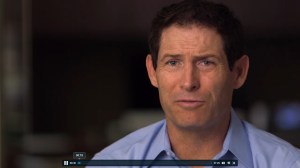
steve young

49ers legend Steve Young
one of the great interviews on the
documentary, “League of Denial”

I watched the PBS Documentary “League of Denial” this week, and I’m sure many of you did as well.

In one word:  Bravo.

I thought the folks at PBS’ Frontline did a fantastic job, touching on many facets of what is arguably the biggest sport public health story of the last two decades.  There were so many dimensions to the nearly two hour documentary, it’s hard to know where to begin my review.  In nearly two hours, PBS (with a ‘redacted assist,’ if that’s the phrase, from ESPN), covered a lot of ground.

I thought I would highlight some of the major personas that showed up, and divide them into the following four categories: “Winners,” “Losers,” “Meh,” and “In Memoriam”

Winners

Bennet Omalu, the neuropathologist who broke the story of chronic traumatic encephalopathy (CTE), is my pick for the most compelling figure in this documentary.  A physician of great training and accomplishment, he had the mixed fortune of conducting the post-mortem examination of Mike Webster, the Pittsburgh Steelers icon who died young and whose brain showed the pathologic changes of CTE, the first case documented in an NFL player and reported in this study.

Dr. Omalu’s story, both personally and professionally, is worthy of its own documentary.  Originally from Nigeria, he knows little about American fooball and nothing about the Steelers icon when he first meets the latter’s corpse and goes about his job.  He reports being thoroughly unimpressed with the gross morphology of the deceased’s brain:  how it looked ‘normal.’  It was only on conducting his histopathologic exam that he made his stunning discovery.

For this and further efforts in investigating CTE in deceased NFL players’ brains, he was smeared by the NFL and its affiliated physicians.  Omalu poignantly states as a result, he wished he had never ‘met Mike Webster.’

As an Associate Editor of a medical journal, I found the calls by some in the NFL medical community (see below) for Omalu to retract his CTE study and their ad hominem attacks to be the more egregious sins (among many) reported in the documentary.  The process of science, spearheaded by peer-reviewed literature, is one of openness; disagreements are cause for further study, not suppression.  Retraction should be reserved for outright fraud.  The calls for retraction in this case are shameful.

Ann McKee, another neuropathologist now with the Boston Center for the Study of Traumatic Encephalopathy, has picked up the baton and is continuing to carry on the research into CTE in former professional football players, despite further pushback from vested interests and more ad hominem attacks that insinuate that, as a woman, what might she know about football?

Steve Young who experienced five or six concussions in his career, is one of the former players interviewed for this documentary.  I remember Steve Young well, as I lived in the Bay Area for many of the seasons of his glorious career with the 49ers, and I remember too when he had his career-ending concussion. Read more of this post

Osteoarthritis: Part I

I’ve been an Associate Editor for CJSM now for six months, and so some of you in the blog world may already know a little bit of my background as it has come out over time in my various posts.

For those of you who may be new readers of this blog, I thought for today’s post it was important for me to let you know that I work at Nationwide Children’s Hospital, the pediatric hospital affiliate of Ohio State University, and my specialty is pediatric sports medicine.

So……I don’t manage a lot of osteoarthritis (OA) in my current practice.

ocd of knee jpeg

Adult OCD of the knee,
unstable lesion: destined for osteoarthritis?

However, I didn’t narrow my clinical scope of practice to the younger crowd until 2010, and I have managed my fair share of OA in my career, injecting plenty of knees with hyaluronic acid derivatives, encouraging weight management and low impact exercise…….Now, I suppose I’m more on the end of the spectrum of primary prevention of the disease: if I manage my young patients’ knee osteochondritis dissecans properly, perhaps I can spare them from degenerative joint disease later in life.

I’m not telling anyone reading this something they don’t know already when I write that career paths are varied in modern medicine.  There’ s no telling if I’ll be taking care of kids exclusively in 10 years.  We all have mandates from Certification Boards requiring us to stay abreast of the current medical literature; we’re tested on it every few years now, as Maintenance of Certification is a phenomenon here to stay.  Forces like these make it incumbent that I read and ‘stay on top of’ developments in the world of OA diagnosis and management, even if I am not seeing much of this disease in my current practice.

After all, OA is the leading cause of chronic disability among older adults in the United States.  That’s a disease worth knowing about.

I thought, therefore, that I would share with you a couple of interesting studies that have come out recently on major issues in the world of osteoarthritis.  Both studies were just published within the last month:  the first, “Shared Decision Making in Patients with Osteoarthritis of the Hip and Knee,”  published in the Journal of Bone and Joint Surgery (JBJS), I will discuss in my next blog post.  And the second, “Effects of Intensive Diet and Exercise on Knee Joint Loads, Inflammation, and Clinical Outcomes Among Overweight and Obese Adults with Knee Osteoarthritis,” published in the Journal of the American Medical Association (JAMA), I will review now.   They are both large, high quality evidence (Level 1) studies which focus on low tech, low cost interventions that have the potential of having major clinical impact.  They are both studies primary care sports/MSK clinicians like myself might be expected to be aware of. Read more of this post

An NFL Owner Wants to Know What YOU Think!

625578_10151958944664581_391510612_n

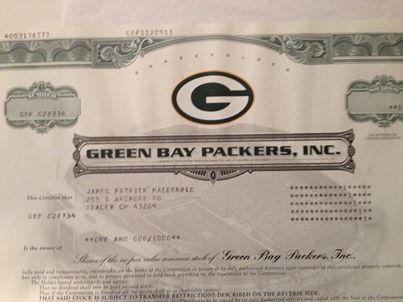
My wife suspects I’m more proud of this piece of paper
than I am of my M.D. diploma…….

I had an enjoyable weekend, and I hope you all did as well.  Friday night I was on the sidelines covering an American football game which extended into the late hours because of an extended lightning delay, but after that I had my first relatively free weekend in a while.

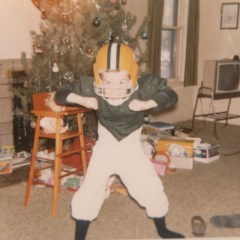
jimpackers

The author, circa 1968,
in vintage Packers gear.
There’s a reason he went
into sports medicine rather
than football.


I don’t think I’ve ever shared my bona fides with the readership, but besides being a licensed physician I am, ahem, an owner of a professional sport team*:  the Green Bay Packers,   It was with pride that I attended their game on Sunday…..but it was with sadness that I drove away from the stadium, ‘my’ team having snatched defeat from the jaws of victory.

Humor aside, it was with real sadness that I wrapped up my weekend, as I caught up with the Sunday newspaper late last night on my return from the game.  I came across this headline:  ‘Auto Accident Claims Life of Football Student-Athlete, Three Others Injured.’

I had just blogged about the new study published ahead of print in CJSM on the subject of motor vehicle accidents in collegiate athletes:  they are the number one cause of death in this population.

I haven’t posted a poll in the blog or on the CJSM main website in a while, and so I thought it was time to do so using this blog post and the study, ‘Motor Vehicle Accidents, the Leading Cause of Death in Collegiate Athletes.’

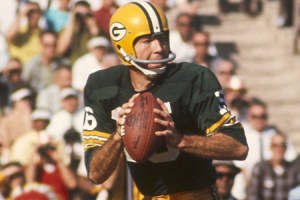
Bart_Starr_-_Green_Bay_Packers

Here’s what a REAL Packer looks like:
the Hall of Famer, Bart Starr

Without further adieu, then, take a moment now and test your knowledge (hint:  answer is both in the blog post and the study itself; but I’ll also post the answer with in my next blog piece).

*one of 364, 122 shareholders of the Packers as of this writing! Roman Abramovich I am not!