The Nutcracker

Angelina_Sansone_dans_Casse-Noisette,_Kansas_City_Ballet,_-4_décembre_2013_a

Angelina Sansone, Kansas City Ballet

With the holiday season come a host of traditions. There are tree trimming and the lighting of the menorah; there are caroling and jingle bell runs. And there’s that new favorite: wearing tacky sweaters.

There is, as well, the Nutcracker.

My family and I will be watching this weekend at Columbus’ BalletMet production.  This will mark our fifth year in attendance, and I’ve been impressed with the dancers’ artistry and skill each time I’ve seen the show.

Truth be told, I never went to any ballet until I was an adult.  My affection for the Nutcracker derives not from my own childhood Christmas memories, but from the work I did as a sports medicine fellow, where I ‘covered’ the Boston Ballet for a year.  What a great experience that was!

‘Dance Medicine,’ as many of you know, is a special niche of sports medicine.  Like any sport, dance has its own language, it’s own mental and physical challenges, its own equipment, and its own injury patterns.  I have not managed too many cases of hallux rigidus, FHL tendonitis or posterolateral ankle impingement outside of the dance world.

I grew very fond of this field during my training, and I continue to seek out opportunities to participate in this world.  And so I took extra pleasure in our September 2014 editions, which offered two new pieces of original research in dance medicine: Body Mass Index, Nutritional Knowledge, and Eating Behaviors in Elite Student and Professional Ballet Dancers and a brief report, Early Signs of Osteoarthritis in Professional Ballet Dancers:  A Preliminary Study.  I commend both of them to you. Read more of this post

Gender Issues in Sport: the case of Dutee Chand

800px-Berliner_Olympiastadion_night

Berlin Olympia Stadium: site of the 12th IAAF Athletics Championship

It’s time for a poll.

Issues of gender in sport are a regular feature in the pages of the CJSM journal and this blog.

I wanted to share with you, again, a poll that got a lot of traffic earlier this year when I wrote about the IAAF policy on gender testing in sport. The issue continues to be relevant:  just this week, the New York Times published an excellent article on the subject of the Indian sprinter Dutee Chand.  She is the Indian 100m women’s U18 champion, and she cannot currently compete for her country because of her naturally high testosterone levels.  She faces the decision, as several female athletes have before her, of whether to retire or compete…..but the latter option is contingent on medical interventions aimed at lowering her testosterone.

The issue is highly charged, and I think both the pro and the con side of such testing and intervention make some sense in the field of competitive athletics.  At the end of the day, however, I find the IAAF policy to be highly flawed.  I think it is largely discriminatory, sexist, and reductionist:  too high of testosterone = you cannot compete as a woman. 

Read the rest of this post and take the poll.  At CJSM, we’re interested to know what you think!

Take Our Poll

sportingjim's avatarClinical Journal of Sport Medicine Blog

I was taken by an editorial that I read in the New York Times this weekend:  The Trouble With Too Much T.  If you didn’t have the chance to see it yourself already, by all means click on the link and read this piece.

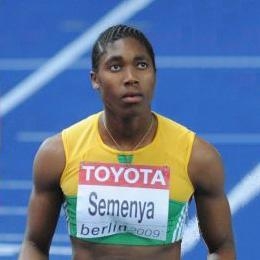
20090819_Caster_Semenya_polished Caster Semanya, South African Olympian

The authors, Katrina Karkazis and Rebecca Jordan-Young, give a broad overview of how current sports governing bodies determine if an athlete is ‘really’ female.  Of note, Karkazis and Jordan-Young are also the principal authors of  The American Journal of Bioethics critique of the current gender-testing policies of the IOC, IAAF and other governing  bodies.

They lead with the well-known story of Caster Semanya, the South African woman who, in 2009, was barred from international competition and was compelled to undergo testing after the Berlin World Championships (she has subsequently been reinstated, and in the 2012 London Olympics was…

View original post 602 more words

Gymnastics: A Book Review and Guest Blog Post

Jenks-Level 9beam

Dr. Emily Stuart, then…..

I have the privilege of working with several excellent pediatric sports medicine specialists at  Nationwide Children’s Hospital.  I’ve hit up a couple of them to write guest posts for this blog, including a review of the 2014 Female Athlete Triad Consensus Statement (Dr. Stacy Fischer) and a first-person account of being the medical director of a mass participation event, the Greater Ohio Bike Adventure (GOBA) (Dr. Tom Pommering).

The newest doctor to join our group is Dr. Emily Stuart.  I’ve had her in my sights to provide a blog post for the past few months.

Besides being an excellent clinician, Emily was a level 10 gymnast until she retired at age 16 due to injuries. She coached for 10 years and now judges club and NCAA gymnastics. Although Emily enjoys taking care of athletes from all sports, she has a special interest in providing medical care for gymnasts.  It’s because of her expertise both as a physician and as a gymnast that I asked her to review a book that was recently sent my way, the Handbook of Sports Medicine and Science:  Gymnastics.

________________________________________________________________________

Handbook of Sports Medicine and Science: Gymnastics

A book review, by Emily Stuart, M.D.

It’s been over 2 years since the US Women’s Gymnastics Team dominated the team and individual medals at the London Olympics . And in less than 2 short years, gymnasts from all over the world will converge in Rio de Janeiro for the 2016 Olympics.  The Olympics is definitely the biggest event in gymnastics, but there is much more to the sport than what fans see every 4 years. Gymnasts spend years, if not decades, training to become the best in their sport.

As a former gymnast, coach, and gymnastics judge I was excited to read and review the Handbook of Sports Medicine and Science: Gymnastics by Dennis J Caine, Keith Russell, and Liesbeth Lim. This book is part of a series produced by the International Olympic Committee (IOC) Medical Commission. Multiple specialists both with gymnastics knowledge and medical expertise contributed to the book. Thus, each chapter is very detailed and provides any gymnastics enthusiast with a wealth of knowledge.

The book starts with a thorough history and evolution of the sport. Read more of this post

Gender Issues in Sport

I was taken by an editorial that I read in the New York Times this weekend:  The Trouble With Too Much T.  If you didn’t have the chance to see it yourself already, by all means click on the link and read this piece.

20090819_Caster_Semenya_polished

Caster Semenya, South African Olympian

The authors, Katrina Karkazis and Rebecca Jordan-Young, give a broad overview of how current sports governing bodies determine if an athlete is ‘really’ female.  Of note, Karkazis and Jordan-Young are also the principal authors of  The American Journal of Bioethics critique of the current gender-testing policies of the IOC, IAAF and other governing  bodies.

They lead with the well-known story of Caster Semenya, the South African woman who, in 2009, was barred from international competition and was compelled to undergo testing after the Berlin World Championships (she has subsequently been reinstated, and in the 2012 London Olympics was the flag-bearer for the S. African team and earned a silver medal in the 800m).  After the uproar that ensued over the Semanya case, the previously mentioned sports governing bodies instituted new gender-testing policies and interventions to redress the ‘problem.’

The new policies, as described in the editorial, are arguably no improvement and, it seems, a step in the wrong direction.

In the editorial, the authors tell the story of four female athletes with endogenously high levels of testosterone (‘T’) who all went through a battery of tests: physical examination (including genital inspections), blood tests, MRI, and psychosexual histories.  They then underwent surgery:  gonadectomy and (inexplicably) clitoral surgery.  They were required to do this to lower their levels of T, and they all subsequently were allowed to return to competition.

The essence of the current gender policies is 1) an identification of abnormally high levels of endogenous T; 2) a ‘therapeutic proposal’ which would be offered to athletes who test ‘too high’ and which include medications and/or surgery; 3) a disqualification from elite sport for women who elect not to have their T altered with said ‘therapeutic proposal.’

We’ve discussed some aspects of this issue in a previous blog post, our review of David Epstein’s sublime book ‘The Sports Gene.’ Epstein devotes an entire chapter (‘Why Men Have Nipples’) to female athleticism, and the powerful role that testosterone can often play in elite performance.  After reading this editorial, I thought it was time to write another post and poll the readership about aspects of this issue.

I can sympathize with the need to screen for use of exogenous testosterone, the systemic abuse of which led to most of the superior performances produced by East German athletes in the 1970’s.   Read more of this post