The Sports Gene: How Olympians are made (or born)

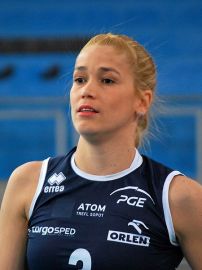
450px-Erika_Coimbra_2013

Erika Coimbra,
Brazilian Summer Olympian,
and one of the subjects of
“The Sports Gene”

The venues at Sochi are still, it seems, a work in progress.  Nevertheless, before the week’s end, we will (should?) see the Winter Olympic games start up.  Soon, we’ll get to watch some of the finest athletes in the world compete at their sport.

There has been a lot of talk about the on-going construction at the most expensive games in Olympic history, as well as the issue of gay rights and cultural sensibilities in Russia;  and there have been worries about the potential for terrorism.  But soon, when the competitions begin, I hope the focus will justifiably be on the athletes on the snow and ice.

Or in Tweet speak: #LetGamesBegin

I’ve not been consciously preparing for this elite sporting event, but rather coincidentally recently picked up a book that highlights elite athletes and has received a great deal of positive ‘buzz’:  The Sports Gene, by David Epstein.

You likely have heard of the book.  It has been receiving excellent reviews and is generating a lot of chatter in print, visual and social media.  On Monday, for instance, The Guardian hosted a live chat online with the author.  Subtitled, “Inside the Science of Extraordinary Athletic Performance,” the book delves into one of the ‘ultimate’ questions in sport:  nature or nurture, which is more important?  And, specifically, which is more important in the realm of elite sport?

Like many ‘ultimate’ questions, the real answer is not a clean, binary one.  That said, I walk away from reading this book thinking the bulk of the evidence is in favor of nature:  genetic endowments favor the production of elite athletes. Read more of this post
Ringette: Who Knew?

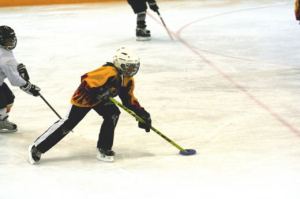
RingettePlayer

Ringette Player in Action!

At CJSM we are already anticipating the start of 2014:  the January 2014 issue is still awaiting publication, but we are already releasing some of this coming year’s studies in our “Published ahead of print” collection.

One I wanted to talk about today, if only because the subject sport is an entirely new one to me: Ringette-related injuries in young female players.

Ringette.  As a middle-aged guy, I know I still have a lot to learn.  That said, I am delighted when I have a day where I acquire some new fact or concept I literally have never encountered in my over 18000 days on the planet.  Ringette.  I had never heard of this sport until I read this epidemiologic study.  Nearly everything I now know about the sport comes courtesy of the authors Glenn Keays, Isabelle Gagnon, and Debbie Friedman.  Thanks to you all!

A team sport played on ice rinks, ringette is similar to ice hockey with these notable exceptions:  1) 6 skaters comprise a team; 2) the skaters advance a doughnut shaped ring, rather than a puck, with a stick that has no blade; 3) the rules governing the sport encourage the development of team play; for instance, a player that might be lionized in hockey for being able to single-handedly advance the puck the length of the rink and score is, in ringette, penalized instead.  Like competitive women’s ice hockey, ringette is a non-collision sport, with all contact between players officially prohibited.  Players are equipped with safety devices such as helmets and visors.

The sport has been around for 50 years, originating in Canada.  It is expanding internationally, with associations in the USA, Finland, Sweden and beyond.  Read more of this post

The Hits Keep Coming

I hope this blog’s readers are enjoying their Memorial Day weekend if they’re in the U.S., or their Spring Bank Holiday weekend if in the U.K.   And if I’m unaware that there is another three-day weekend being celebrated out there, please forgive my myopia.  I do believe it was last weekend that my friends in Canada were enjoying the Victoria’s Day weekend, but this week brings a standard two days off.  However, if I have confused my holidays, again, I submit my humble apologies!

800px-Wembley_Stadium

Wembley Stadium, London. Site of 2013 Champions League Final.

I suspect a lot of you are watching the all-German Champions League final right now, or perhaps you’re napping and waiting for the start of the French Open tomorrow. Maybe it’s the Indy 500 on Monday you’re waiting for…..or, speaking of Indy, you’re hoping for another Pacers upset of the Heat in the NBA playoffs. Regardless, here’s to a great sporting weekend!

I wanted to look at an interesting article from the most recent edition of CJSM in this weekend’s blog post…..which I learned today is something quite different from a blog.  Apparently there is a blogger posting at Slate about his irritation over the misuses of the word ‘blog’ and the phrase ‘blog post.’  It turns out that right now you are visiting the CJSM ‘blog’ but are reading a ‘blog post’ entitled, “The Hits Keep Coming.”  Please do pass this “blog post” on to your friends, and recommend they visit our “blog,” but do not mix up your phrasing or the Slate editor might make you a focus of one of his future rants.

I suspect his irritation might resemble mine, or some of this blog’s (???) readers, when folks mix up ‘incidence’ and ‘prevalence,’ so I want to grant that his irritation may be righteous and I will try my level best as I work on my posts to use correct blog terminology!

Crestone_peaks_fall

The Rocky Mountains: it’s hard to plug one’s ears to their siren’s call.

On to the article of the weekend: “Epidemiology of U.S. High School Sports-Related Ligamentous Ankle Injuries, 2005/06 – 2010/11,” written by a group including my friends R. Dawn Comstock, PhD.,  the senior author, and Christy Collins, MA., the corresponding author.  This team has been prolific in their publication of sports medicine epidemiology articles, drawing much of their work from the high school injury surveillance project, “Reporting Information on Line” (RIO): “….an internet-based surveillance software developed under the direction of Dr. Dawn Comstock.”  I had the privilege of working with Dawn at my home base, Nationwide Children’s Hospital until recently, when the lure of the Rocky Mountains drew her to the University of Colorado, Denver.

Read more of this post