Spondylolysis — when to begin PT?

SNL’s Jane Curtain and Dan Ackroyd may have found spondylolysis an interesting subject for debate!

One of the perennial ‘hot topics’ in pediatric sports medicine has to do with the diagnosis of spondylolysis — specifically, adolescent isthmic spondylolysis [an acquired stress injury of the pars interarticularis].  As with many controversies, people who treat this condition are often passionate about the specific issues under debate.

Among the more burning issues are to brace or not; what imaging modality to use (plain film, CT scan, SPECT scan, MRI); how long to ‘rest’ a patient before re-introducing a level of physical activity or instituting physical therapy (PT); and how to determine treatment success (clinical measures such as PROMs, or imaging to verify bony union of the pars interarticularis).

We recently published an original research article on the subject of when to begin PT in these athletes:  The Timing of Physical Therapy in Adolescent Athletes with Acute Spondylolysis

I am happy to report I was part of the team that conducted this study, and we found that in patients who began PT early, recovery to sport was faster:  ‘early PT’ athletes returned to their sport a mean of 25 days earlier than their counterparts who initially rested from all activity.  Moreover, there were significant differences in adverse reactions between the groups studied.

How do you approach the initiation of PT in your adolescent athletes with spondylolysis?  Take the poll and share your thoughts! 

It’s a New Year!

Lots to learn about running a better sports medicine fellowship from Dr. Irfan Asif

What’s that you say?  A ‘new year’?  But we’re months away from January 1! It’s hardly time to sing Auld Lang Syne….

However, if you are a physician in North America, a new year most definitely has begun — whether it is July 1 for most, or August 1 for the remainder, pretty much all post-graduate medical education programs begin at this time of year.  And so, if you are involved in a sports medicine fellowship in Canada or the USA, it’s time to make some New Year’s resolutions……..

Such as.  How can I make my sports medicine fellowship better?  How might I structure a regular educational feature such as journal club in such a way as to improve the educational outcomes of the people under my charge? Read more of this post

Wimbledon 2017

Roger Federer, Photo By Tatiana from Moscow, Russia (WikiCommons)

I, like many of you in the world of sports medicine, am a sports fan.  I grew up loving all sorts of sport — as an American, I of course have a special affection for football (gridiron), baseball and basketball.  The sport I pursued myself until early adulthood was athletics: cross-country and track and field. In my adult life, largely because of my sports medicine training at Boston Children’s Hospital, I have come to enjoy rugby and classical dance.

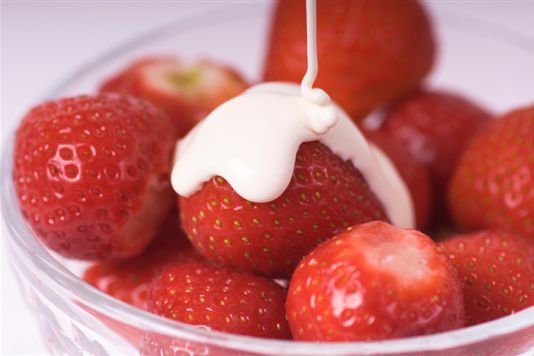
A favored breakfast this time of year!!!

I am also a big fan of tennis. In the late 70’s I have the fondest memories of ‘breakfasts at Wimbledon,’ where, at this time of year, I would watch McEnroe, Borg, Edberg, Becker, Wilander, Navratilova and Evert do battle with each other at so many fabulous matches. After the matches, my friend and I would run out with our wooden racquets and try to duplicate the serve and volley techniques favored in that era.

This year’s Wimbledon has been special, I think.  As I write, veterans Venus Williams and Roger Federer are still in the hunt for the Championship.  I will be enjoying the upcoming semi-final and final breakfasts my schedule may allow me to watch.

At CJSM, we don’t ‘play favorites’ with any sports, and have a long publication history of studies looking into sports ranging from some of the world’s most popular (soccer, cricket) to some of the least known (rodeo, ringette).

It so happens that tennis is one of the sports researchers who submit to CJSM investigate on a regular basis.   Read more of this post

Mile High at #ACSM17

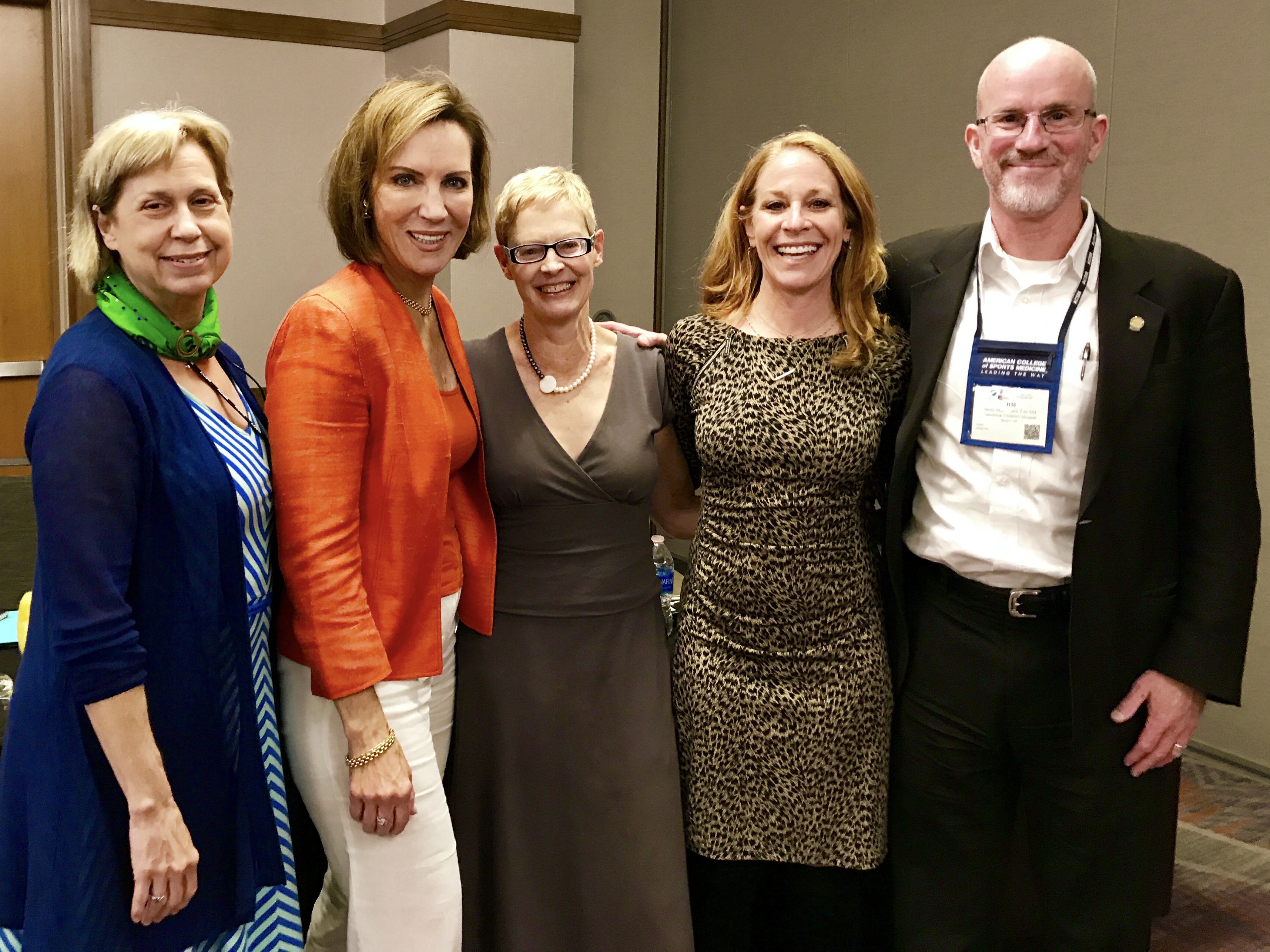
Speakers at the ACSM Social Media Session (L to R): Angela Smith, Pamela Peeke, Gretchen Reynolds, Felica Stoler, yours truly

I’m curious about how others perceive the cycle of the sports medicine year.  I have my own peculiar calendar, dictated by contingencies such as geography (American) and specialty (academic medicine, pediatric sports medicine specialist).

Summer, soon to be upon us, is the time to enjoy not only a bit of vacation but also ‘catch up’ on research projects and writing assignments that have piled up on my desk.  Fall?  That’s the tsunami season: sports such as football and soccer keep me very busy from August 1 through Thanksgiving.  After a holiday breather, I seem to roll into conference season and various speaking engagements extending through the late spring– PRISM (Dallas) to Rugby Medicine (Las Vegas) to IOC Prevention (Monaco) to AMSSM (San Diego) to, now, ACSM.

To be sure, I’m certainly in the place where I could conduct a survey getting the ‘seasonal perspective’ of hundreds of people from around the globe and of various specialties: the 64th ACSM Annual Meeting (and 8th World Congress on Exercise is Medicine) is a huge affair, renowned for its depth and breadth.  This is the place where I can connect with folks from South Africa to Down Under, and posit collaborative ideas to professionals from athletic trainers to exercise physiologists. I am always blown away by the size of the affair.

These conferences are the places to make new friends, re-connect with established colleagues; they are the places to share a handshake or a hug, share a meal — make the physical connections upon which all true relationships are based.  I celebrate the power of social media, as many of you know, but I see it primarily as the way to facilitate deeper connections–not in the virtual world, but in real life.

And so I felt privileged to kick off #ACSM17 with a session on social media, one shared with both established and new friends: Pamela Peeke, Angela Smith, Felicia Stoler, Gretchen Reynolds.  If you don’t know them, follow them on Twitter, and then introduce yourself if you see them on the ground here in Denver. I felt privileged, as well, to interact with so many in the audience, who asked probing questions and ‘hung around’ for an hour or so after the session.

I landed 24 hours ago. I haven’t hiked the Rockies (yet) and I haven’t indulged in Colorado-legal herbal gummies (yet?), but I’m already feeling a mile high.

I hope you are, likewise, feeling the positive vibe here in Denver.  Share your stories on social media with the hashtag #ACSM17 and promote that vibe.  Then go say hi to an ACSM member you only know on social media. If you see me lurking in some symposium or colloquium, come say hi!  We can always do a selfie!

Enjoy the conference.