The 3 C’s of the Season: Christmas, Concussions & CTE

734156_4543971430924_332587260_n

Merry Christmas, from two elves and potential movie-goers this holiday season.

Today is Christmas, and I hope for all of you who celebrate the holiday that you and your family have a wonderful day.

Some of you, over this holiday season that will extend through New Year’s Day, will probably be viewing the movie Concussion, which opened yesterday across the country.  I know I’ll be writing down my thoughts on the movie itself after I have viewed it.

The central story has been told (and many of the characters in that story were portrayed) a couple of years ago in a wonderful PBS documentary called ‘League of Denial,’ which I reviewed in October 2013.  I am looking forward to the ‘Hollywood version’ of the story.  I am also looking forward to the robust debate about the topic of head injuries in football that will ensue.

In the buildup to the movie that has progressed over at least the last month, that debate has already, in fact, begun [in truth for those of us in ‘the business,’ the debate over issues such as the association of concussions and chronic traumatic encephalopathy (CTE) has been on-going for some time].  The New York Times has, in particular, seemed to make a point of publishing several articles and opinion pieces on the ‘concussion epidemic.’

As a pediatric sports medicine clinician and researcher, I have been particularly concerned and involved with the concern over the hypothesized association between risk of developing CTE and exposure to head injuries in youth sports such as football.  I am particularly worried that there has been a rush to judgment in the media, and proposed decisions (for instance, to banish youth contact sports) are moving way ahead of the science.  Many of the Times’ articles had me wanting to engage in a conversation with the authors, and so, in that spirit, I drafted a ‘Letter to the Editor (LOE).’

The Times’ word restrictions for their LOEs are pretty tight, and what I am sharing with you below far exceeds their limits.  I wanted to post it here and engage you, my readers in this discussion.

CJSM will be a leader in the on-going publication and dissemination of evidence-based research on the concussions, CTE, and other such issues in the world of sport.  Continue to follow us as we, along with you, wrestle with the questions.

____________________________________________________________

I have been reading with great interest the series of articles the NY Times has been publishing on the topic of youth football and contact sports, including the Op-Ed piece by Dr. Bennet Omalu[1] (“Don’t Let Kids Play Football”) and, most recently, the story of Peter Robinson, “How a Boy’s Concussion Death Changed British Sports.”[2] Read more of this post
Time Flies

Picture1

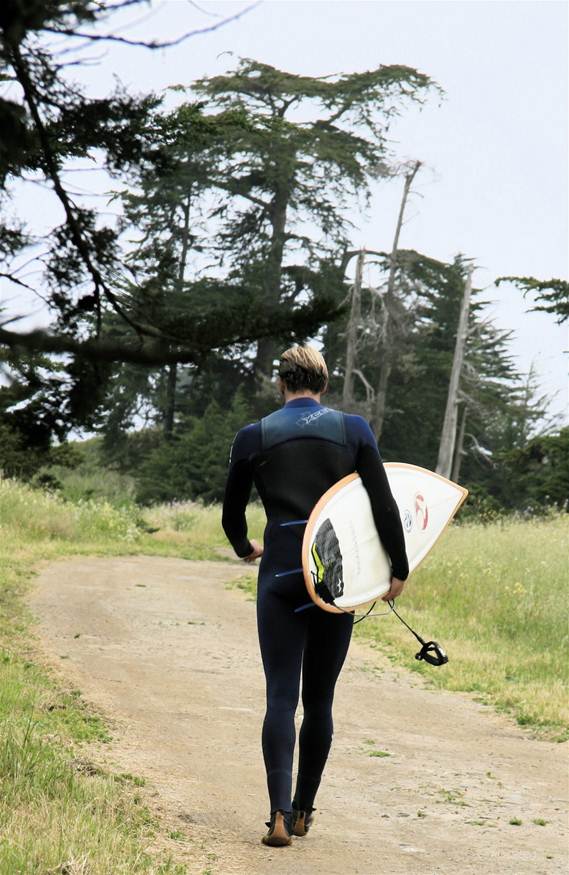
This man would love Surfer’s Paradise, Queensland, Australia: Site of ACSP February 2016

Is Christmas really almost here?

Have my high school football players really finished their seasons, and now wrestlers and basketball players are taking their places in my clinics?

Two months ago I was posting from the South African Sports Medicine Association’s meeting in Johannesburg (SASMA2015), and it feels like yesterday.

And that means that two months from now is…..tomorrow?

Two months from now I might be…..surfing???

I am excited that early in 2016 [in precisely two months] I will have the chance to attend the Australasian College of Sports Physicians (ACSP) annual meeting in Surfer’s Paradise.  I am honored to speak on the topic of youth sports, and will join colleagues such as Roald Bahr, Steven Blair, and more from 12 February to 16 February on the ‘Gold Coast’ of Queensland.

This is a special opportunity to join up with a special group of sports medicine clinicians. ACSP is one of CJSM’s affiliated societies.  With most of our Editorial Board in North America and the UK, we typically have an easier time visiting our other affiliated societies such as the Canadian Academy of Sport and Exercise Medicine (CASEM) and the American Medical Society for Sports Medicine (AMSSM).

So, in 2016, we’ll have at least two of our Editorial Board on site at ACSP, as I will join Hamish Osborne.  Last year, Dr. Osborne–our Dunedin, New Zealand-based Associate Editor– filed a couple of posts live from 2015 ACSP. This year, I’ll share the duties with him!

The Australians and the Kiwis punch above their weight in the worlds of sports and sport medicine.  I think that statement must come as no surprise to readers of this blog.  I’ve had the opportunity on several occasions to write about important contributions the folks Down Under are making in the sports medicine research world.  If you haven’t previously had the chance, listen to our podcast conversation with Alex Donaldson on ‘Footy First,’ an injury prevention intervention for Aussie Rules football. Or read the recent guest post authored by Sheree Bekker of The Australian Centre for Research into Injury in Sport and its Prevention (ACRISP).

So…..two months.  That will fly by!!!  I won’t have any chance to practice any surfing in landlocked Ohio, but I’ll soon enough have to get cracking on developing that talk!

The Cardiovascular PPE

One of the more popular articles in our November 2015 CJSM has been “Limitations of Current AHA Guidelines and Proposal of New Guidelines for the Preparticipation Examination of Athletes,” from a group of authors who are in the Division of Cardiovascular Medicine at Stanford University.  This is also one of the studies that have been picked by the Editor-in-chief to be freely available, and so if you click on that link you can read not just the abstract, but the study itself.

The authors set out “To examine the prevalence of athletes who screen positive with the preparticipation examination guidelines from the American Heart Association, the AHA 12-elements, in combination with 3 screening electrocardiogram (ECG) criteria.”  

The topic of screening to prevent sudden cardiac death (SCD) in athletes, in particular young athletes, is a perennial ‘hot button’ issue in our field — we’ve written about the issue here in the blog, and we have published several studies on the subject in the journal.  As most readers of the blog will know, in the USA (in contradistinction to Europe, Japan, Israel and elsewhere), there  is no recommendation for inclusion of an ECG in PPE screening.

There are many interesting aspects to the Stanford study.  The main outcome measures in the screen of 1596 high school and college athletes were i) the 8 personal and family history questions from the AHA 12-elements; and ii) ECGs using three separate criteria for interpretation: Seattle criteria, Stanford criteria, and European Society of Cardiology (ESC) criteria.  The different criteria had different rates of abnormal ECGs, but what was most concerning was the nearly 25% of athletes who screened ‘positive’ using AHA questions.

The authors conclude, “In a patient population without any adverse cardiovascular events, the currently recommended AHA 12-elements have an unacceptably high rate of false positives. Newer screening guidelines are needed, with fewer false positives and evidence-based updates.”

What do you think?  Take the poll, and let us know!

5 Questions with Brooke de Lench, MomsTEAM Institute of Youth Sports Safety

brooke in texas

I am pleased to have as our guest today Ms. Brooke de Lench, a pioneer and leader in the field of youth sports safety.  Brooke is founder and Executive Director of  MomsTEAM Institute of Youth Sports Safety, Producer of the PBS movie ‘The Smartest Team: Making High School Football Safer,” and author of Home Team Advantage:  The Critical Role of Mothers in Youth Sports.

Brooke has become a valued colleague, and someone I think of immediately when I’m asked what relevance social media has for a sports medicine clinician. I first ‘met’ Brooke on Twitter, and as our relationship has evolved, I now find I work with her on a weekly if not sometimes daily basis, addressing youth sports issues of mutual concern.  I am proud that I have become a member of the Board of Directors for the non-profit MomsTEAM Institute, a professional role I have written about in previous blog posts.

Much of the work MomsTEAM has done has been instrumental in advancing the cause of identifying, preventing, and managing concussions in youth sports, and there is a natural affiliation that has developed between this journal and MomsTEAM over the years, with the Institute authoring several blog posts on the research in youth concussions.  Those posts have frequently looked at work that CJSM has published.  Our November 2015 issue has, for instance, two pieces of original research that I suspect may end up in the pages of a MomsTEAM post: Register-Mihalik’s ‘Characteristics of Pediatric and Adolescent Concussion Clinic Patients with Post-concussion Amnesia,’ and  Schmidt’s ‘Does Visual Performance Influence Head Impact Severity Among High School Football Athletes?’

With MomsTEAM gearing up for a collaboration with Sony Pictures‘ Concussion (the movie)–an event that I think will impact all clinicians caring for youth athletes–I thought it was time to interview Brooke on our regularly recurring “Five Questions with CJSM” feature.

_______________________________________________

1) CJSM: How old is MomsTeam Institute and how did you found it?

BD: I established MomsTEAM Institute in 1999 and we launched our first website and workshops in August of 2000. I began writing the “Survival Guide for Youth Sports Parents” in 1998 when Random House offered to publish my book in three volumes over the subsequent five years because I had “so much information.” Instead, I turned to the limitless container of information – the new and emerging internet which was something much more exciting to me. Later in 2006, I did write a book that Harper Collins published.

In 2000, there was nowhere to find independent, objective well researched and well written information for sports parents, and so I brought together a team of experts in medicine, law, journalism, sports, and coaching who along with me as a writer-researcher, began the long journey of providing the very best information on how to keep student athletes safe:  physically, emotionally, psychologically and sexually.

Parents always seemed to turn to me with sports safety questions; my triplet sons called these regulars “Moms Team.” Hence the name. Read more of this post