Scientific Meetings

IMG_1595[1]

Carl Askling (L) & Phatho Zondi (R)

As those of you who follow CJSM on this blog and on our other social media will know, I have of late been enjoying the South African Sports Medicine Association’s 16th biennial congress (SASMA2015).  I am on the plane heading back home, and my head is swimming with what are now memories of some wonderful lectures and social experiences I enjoyed during my time in Johannesburg.

My ‘real world’ of clinical sports medicine, teaching and research await.  My ‘real world’ is where I hope, in my own way, I am making direct contributions to sports medicine:  where I can truly ‘care’ for athlete/patients and ‘create’ content from which others may learn.

But how enjoyable it is to punctuate my professional life with the chance to ‘recreate’ with peers in this special world—to break bread (and drink wine), share ideas and concerns from some great minds.  I return from such meetings re-energized for my real world, with new approaches to common problems [the dancers under my care will be benefitting from the knowledge I gained on hamstring injuries from ECOSEP’s Carl Askling, for instance]. And I return having made new friendships, including that of SASMA’s new president, Dr. Phatho Zondi.

This is an appropriate moment then to have one of our editors weigh in on her own experiences with a conference she attended recently.  I give you  Dawn Thompson, a physician who will share some of what she learned in Barcelona this month.

________________________________________________________________________

for cjsm blog HT

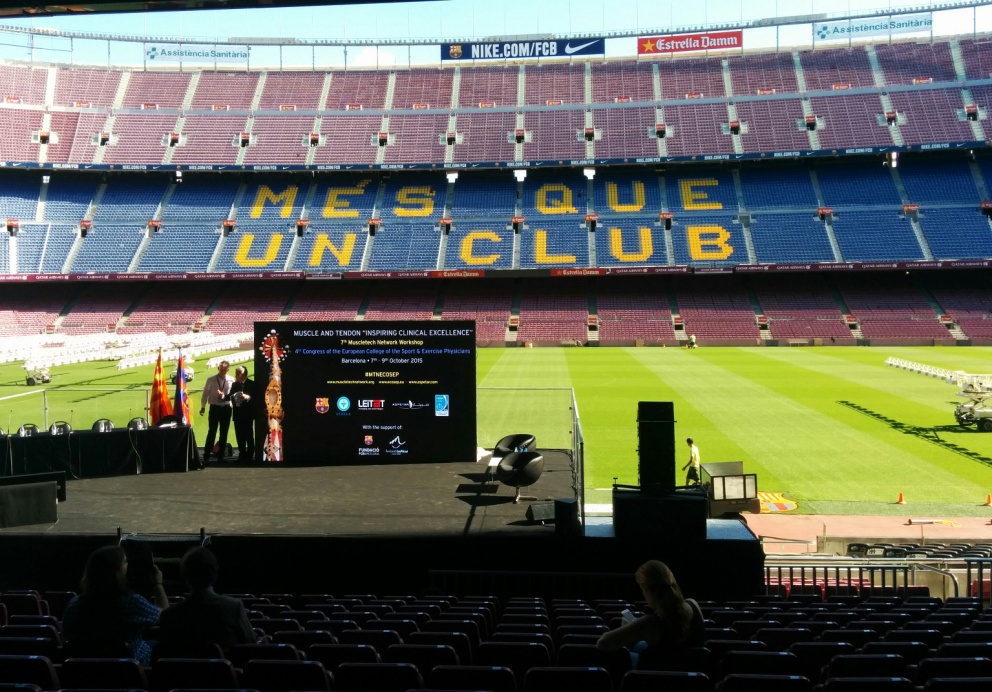
Camp Nou–home of FC Barcelona [and a recent ECOSEP conference]

It has been some time since my first blog on the use of ultrasound in musculoskeletal medicine and I have been mulling over what topics I not only have the authority to write on but also would be interesting to fellow readers and trainee doctors.

Last week I attended “Muscle and Tendon – Inspiring Clinical Excellence” conference in Barcelona organised by Muscletech and the European College Of Sports and Exercise Medicine (ECOSEP). Read more of this post

Cometh the hour, cometh the man.

IMG_1630Every so often, sports takes a back seat to other world events. So too for sports medicine.

We all know this, whether in our personal lives or in our interactions with the world at large.  There is the NFL player who is torn between performance on Sunday and ‘being there’ for his young daughter with leukemia.  There are cases where the athlete him- or herself is felled with illness–think of Lou Gehrig and amyotrophic sclerosis.  The issues of who won the last game, the intricacies of a salary negotiation, or the season missed from a knee injury pale in comparison with such ‘real world’ contingencies.

In sports medicine we sometimes experience directly the intersection between serious illness and athletics.  I think immediately of the young gymnast I saw with anterior knee pain that turned out not to be Osgood-Schlatter’s but osteogenic sarcoma of the tibia…….a ‘game changing’ event not precisely of the sports kind.

As followers of this blog or of our social media (Twitter – @CJSMOnLine) know, I have been travelling in South Africa as one of the Travelling Fellows of the American Medical Society for Sports Medicine, one of our partner societies.  We will be talking at the South African Sports Medicine Association’s Congress (SASMA) which begins tomorrow; and we have already begun to connect with several luminaries in the sports medicine world to share our research and thoughts on the various problems and puzzles in our special world.

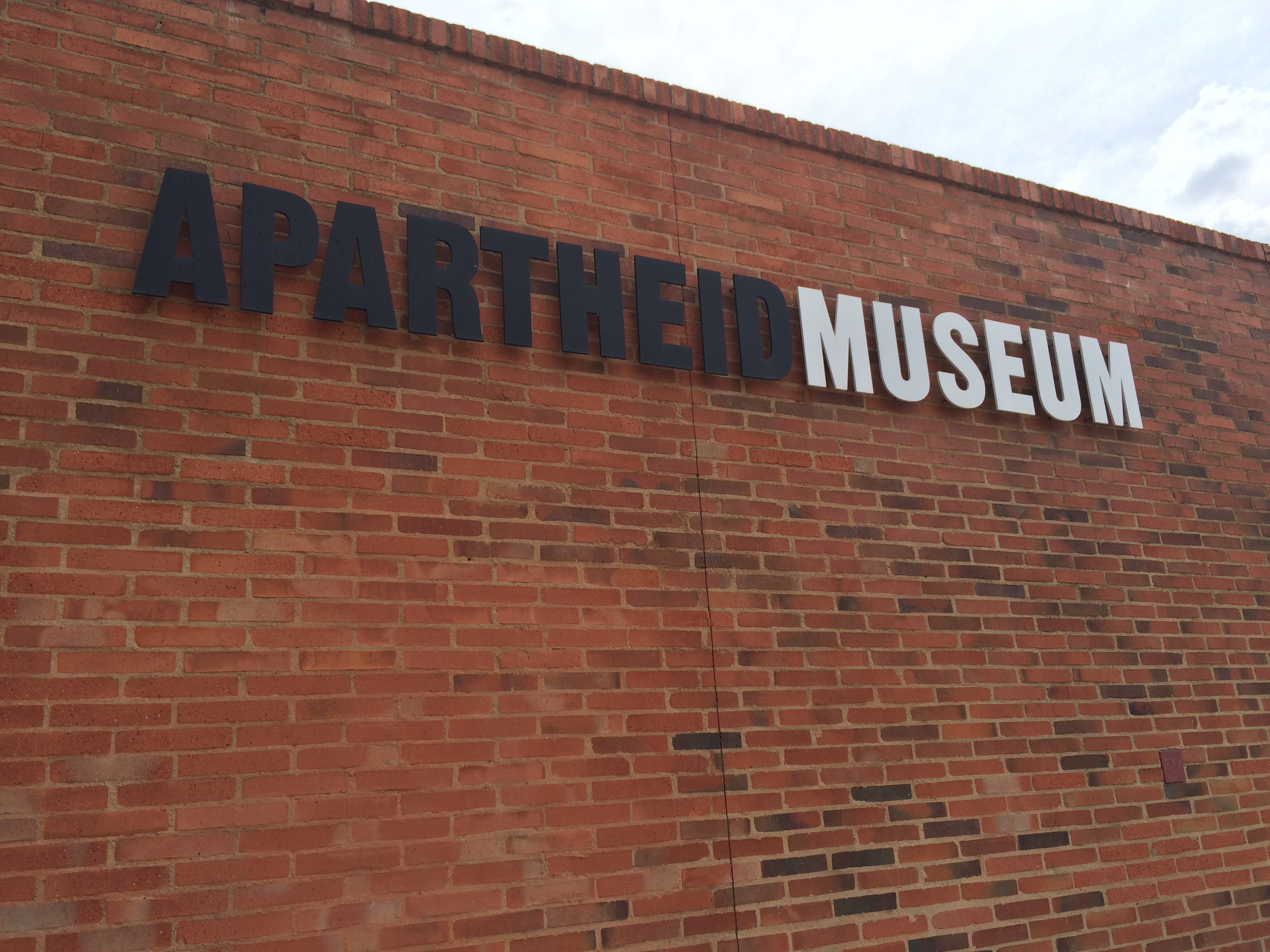
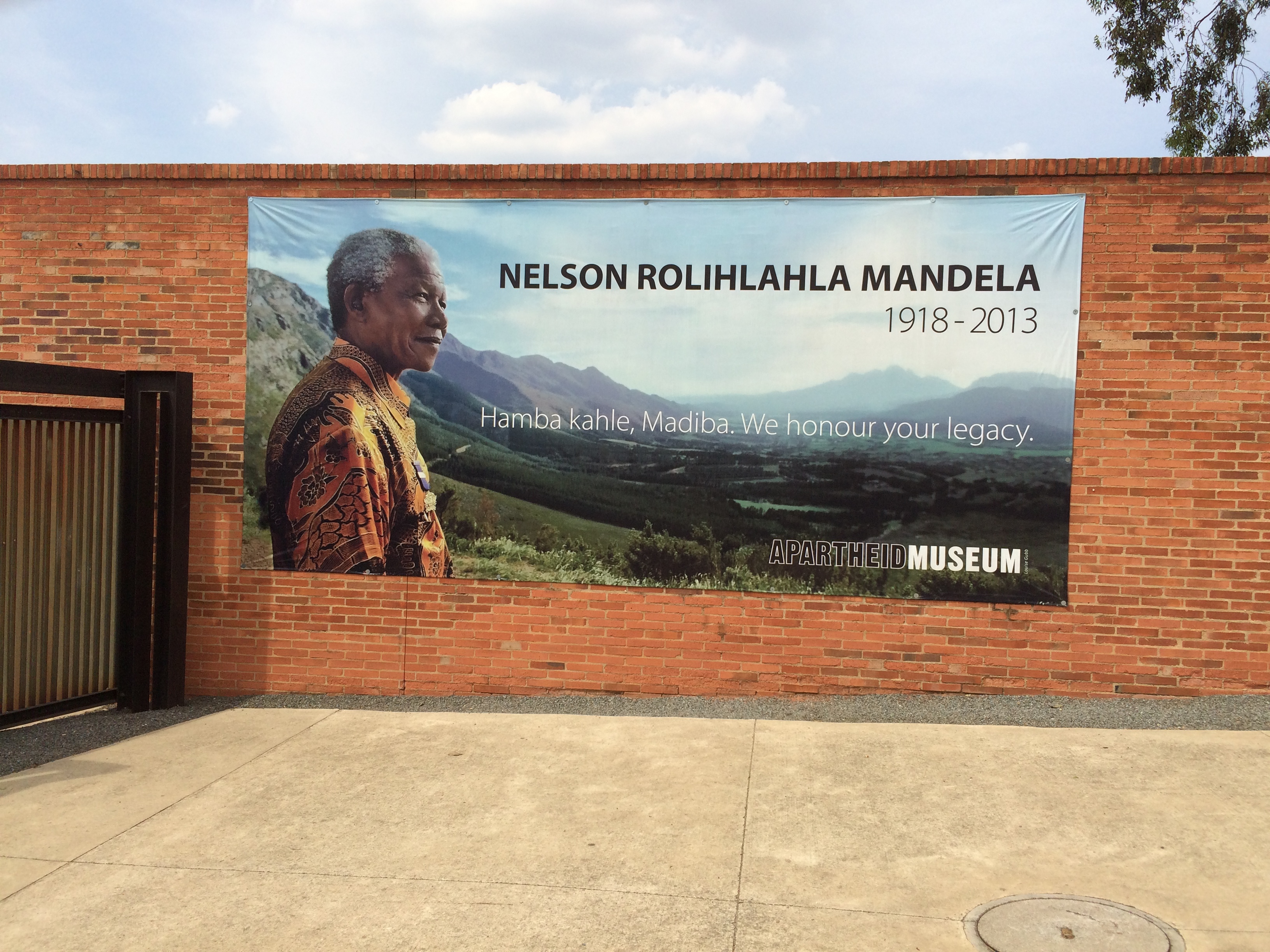
Our hosts have been extraordinary in their hospitality.  They provided one more special gift to us by organizing today a tour of Johannesburg’s Soweto, the Apartheid Museum, and Nelson Mandela’s home in Orlando West, outside of Johannesburg.

What a beautiful country South Africa is! And what an extraordinary sports medicine scene has developed here.  The SASMA Congress has been highly anticipated the world over, and I can’t wait to hear the talks and, even more, see the collaborations that develop from this meeting, which is bringing people from all over the world as well as South Africa.

But how much more beautiful South Africa is now than it was only 25 years ago, a mere blink of the eye in historic terms. Apartheid is a thing of the past.  South Africa is vibrant, and democratic.  And so much owes to the life and work of one man:  Nelson Mandela.  Absent his presence on this country’s stage, who knows where South Africa and South African sports medicine may be now?

IMG_1623Travelling through Soweto today, and visiting sites such as the Apartheid Museum, remind me of the importance of how each and everyone of us live our lives.  And how one man and his decisions can literally affect the history of a country and of the world.  “Cometh the hour, cometh the man”--a phrase I remember from history classes of my youth.  A phrase I associate with people like Mandela, whose one life has affected the world.  At that pivotal moment in time, South Africa needed such a man as Mandela.  He rose to the occasion, and an entire country was transformed.

This is true of our smaller stage of sports medicine.  It is one of the truths I am reminded of when I go to such meetings–the work we do and the research we do is so important, but how much more important are the people behind that work.  It is always such a joy to meet someone whose work I have come to admire–to meet them in person.

And so, in our own smaller way in the universe of ‘sports medicine,’ the hour is nigh.  Cometh the men and women such as Carl Askling, Margo Putukian, Cindy Chang, Lyle Micheli, Karim Khan and more.  It should be a great three days here in Johannesburg.IMG_1624

I look forward to sharing with you some of that work which will be presented.  Stay tuned.

AMSSM 2015 Travelling Fellowship — Chapter One

CQ5MPhsUAAAgQKZ

It’s a dog’s life as an AMSSM Travelling Fellow — Middelvlei Farm Winery. Photo: Dr. Alison BrooksIt’s a dog’s lifeThat is what I have been living over the last ten days.

It’s a dog’s life.

That’s what I have been living the last ten days.

I have been travelling through the country of South Africa as one of the 2015 travelling fellows of the American Medical Society for Sports Medicine (AMSSM).  I have had the privilege of sharing this journey with one of AMSSM’s founders, Dr. Doug McKeag, and one of the organization’s bright young starts, Dr. Alison Brooks.

IMG_1598[1]

One American’s contribution to Springboks’ pride

We have all enjoyed the extraordinary beauty and hospitality of our hosts.  We’ve given talks (and drunk excellent wine) at Stellenbosch University, outside of Cape Town, as we visited Dr. Pierre Viviers. We’ve done similar ‘work’ (talks and, yes, more wine) at the rival University of Pretoria, where we have been hosted by Drs. Phatho Mondi and Christa Janse van Rensburg. We spoke both to students of the university and, in a separate session, to sports medicine clinicians at the University’s affiliated High Performance Centre. At each place we’ve seen extraordinary sports medicine work being done and have been exposed to sports ranging from cricket to rugby–in the latter case we’ve found ourselves shifting allegiances (rooting for the ‘Maties’ in Stellenbosch and the ‘Tuks’ in Pretoria); we’ve watched professional Currie Cup rugby live and Springboks Rugby World Cup games in a sea of national green and gold surrounding televised feed.

IMG_1595[1]

Drs. Carl Askling & Phatho Zondi (SASMA president-elect) enjoying some time together before SASMA2015

It has already been an extraordinary journey, but it will not end until we have enjoyed the three packed days of the 16th biennial congress of the South African Sports Medicine Association (SASMA), the highlight of our trip.  Among the speakers will be Sweden’s Carl Askling, the premier voice on the management of athletic hamstring injuries.  Carl has become one of the many new friends I have made on this trip, as we’ve shared some close encounters of the elephant kind on safari.

From “Learners to Leaders,” that’s the theme of SASMA2015, and for sure South African sports medicine is in the lead in so many respects.  I look forward to meeting so many more people associated with sports medicine in Johannesburg.

There is so much more I could write, but I’m very very busy……well, um, in a special kind of way.  Indeed, I need to do some last minute preparations on my several talks for SASMA, and there is the ever-present email inbox where some work from overseas still calls my attention overseas.  And, yes, there is the ‘work’ of getting ready to view more African wildlife and enjoy more of the superb culture and food that this special country has to offer.  Such are the true joys the AMSSM Travelling Fellowship has to offer.

I know this will not be the last post I will be filing from this visit, as I will be sure to have some in depth sports medicine content to share as the SASMA proceedings progress.

And so until next time:  Totsiens, Hambani Kahle, Good bye!

IMG_1616[1]

The End

Born Free

Diana_Muldaur_Born_Free_1974

Diana Muldaur as Joy Adamson from the television program Born Free–NBC Television

Born Free, that’s the song running through my mind this morning as I am writing this post.

Er, not the Kid Rock song.

I hope there are some readers who are familiar with the movie ‘Born Free’ and its theme song.  Or perhaps they watched the TV series in the early 70’s…..I hope I don’t go too far at revealing my true age here (I’m a Baby Boomer) as I wax nostalgic about the beautifully filmed movie about a lion and its human family in Africa.

Perhaps it’s not surprising that this is currently the ‘theme song’ of my life, because I have Africa and ‘Wilderness’ on my mind: in three days  I head out to South Africa en route to the 16th biennial congress of the South African Sports Medicine Association(SASMA 2015); and I’m still reading through and enjoying our fabulous September 2015 CJSM, entirely dedicated to the subject of Wilderness Medicine.

I want to note here and now that our Wilderness Medicine theme issue, published just a month ago, remains free as of this writing–each article is freely available for a time, the better to widely (wildly?) disperse the messages about pre-participation evaluation, risk stratification, and injury prevention in the wilderness adventurer/athlete.

One of the articles I particularly enjoyed was written by Tracy Cushing et al., “General Medical Considerations for the Wilderness Adventurer:  Medical Conditions That May Worsen With or Present Challenges to Coping With Wilderness Exposure.” I especially liked this because I learned so much from it.  If I have a patient heading to altitude who has a bleeding diathesis, how do I manage that?  A patient with Parkinson’s heading to an Antarctic adventure of a lifetime–are there risks I should anticipate? There are so many similar questions, pertaining to combinations of disease and wilderness/adventure exposure, that this article addresses.

Panthera_leoP1040181

Big Cats (and Dogs) in store at SASMA2015

As things get a bit ‘wild’ in my personal life–as I toggle between seeing Big Cats on safari (e.g. Lions) and Big Dogs at SASMA2015 (e.g. Lyle Micheli)–I’ll check in as ever on this blog and on the CJSM Twitter stream.  Follow the hashtags #SASMA2015 and #AMSSM2015TF for documentation of these adventures. Look me up, please, if you are in Johannseburg for SASMA2015, and look up the current issue of CJSM regardless of where you are–you’ll be sure to learn a lot about managing those patients heading to….well, places like Africa!