Sochi and Quebec City: Memory and Desire

The first days of summer are almost here, the longest days of the year in the Northern Hemisphere.  I have been looking forward to this since the dark days of December and January.

opening ceremonies connie lebrun

Dr. Connie LeBrun, at opening ceremonies, Sochi 2014 Winter Olympics

Summer carries its intrinsic sweetness with it every year, but this year my anticipation of these days has been wrapped up with dreams of Quebec City, where the 2014 Canadian Academy of Sport and Exercise Medicine (CASEM) will have its annual meeting concurrently with the XXIII FIMS World Congress of Sports Medicine.

There is much to look forward to, including catching up with old friends.  Connie Lebrun–who will be familiar to several readers of this blog–will be among the folks I see.  Aside from communiques via email, I will typically only get the chance to see Connie at such conferences (I saw her last in Orlando, at the ACSM meeting). Among the many hats she wears, she is on this journal’s editorial board, and I enjoy her frequent contributions to the CJSM journal club feature.

Connie was the head physician for the Canadian Olympic team that traveled to Sochi earlier this year. I asked her to give a quick run down of her experiences in sports medicine at the 2014 Winter Olympics, and she has graciously obliged.

What did T.S. Eliot say about mixing memory and desire?  I’m no poet, but I think it’s a natural combination to combine the two; and so here’s to the memories of Sochi, and the anticipation of what is to come in Quebec.

___________________________________________

Memories of Sochi – Dr. Connie Lebrun


photo (9)

Alexey Pleskov and Connie LeBrun, 2014 ACSM Orlando

Just back last week from the American College of Sports Medicine Annual Meeting in Orlando Florida. The last session that I attended was a Special Event entitled “SOCHI 2014:  Sports Medicine Challenges, Strategies and Solutions. It was submitted by the ACSM Olympic and Paralympic Issues Committee, of which I am a member, and Chaired by Dr. Margo Mountjoy, member of the IOC Medical Commission. She later spoke about the International Olympic Committee (IOC) and the Injury and Illness Surveillance system that they have been using at Olympic Games since 2008. A highlight for me, though, was hearing Dr. Alexey Pleskov, the Chief Medical Officer (CMO) for the Sochi 2014 Olympics and Paralympics – discussing Medical Services at the Games. Then Dr. Paul Piccinnini (DDS), also from the IOC Medical Commission, enlightened us about Management of Dental Disease and Oro-Facial Trauma during the 2014 Winter Olympics, which apparently accounts for ~ 40% of all athlete-treatments in the Polyclinic(s) at the Olympics. This was followed by a “tag-team” of Dr. Randy Wilber (PhD, USOC Training Center, Colorado Springs) and Dr. Nanna Meyer (PhD, RD) discussing the preparation of the US Speed Skating team, in terms of physiology and training, as well as outlining some of the sports nutrition challenges and strategies.

The presentations and photos brought back many memories for me, as I was honored to have been the Chief Doctor for the Health and Science Team (HST) for the Canadian Olympic Team. Read more of this post
The Safety of Artificial Turf vs. Grass as a Sport Playing Surface

Mo soccer

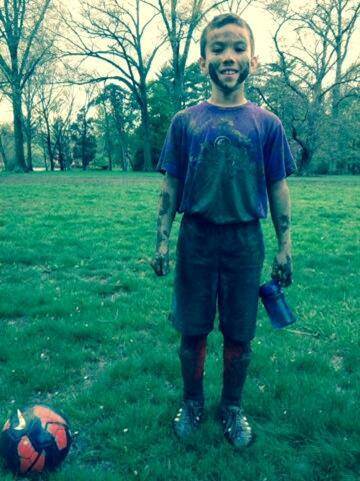
Safety aside, soccer and a muddy, grass field: a boy’s idea of heaven!

The World Cup has arrived, at last, and brought with it already the first controversy of the tournament: did Fred flop?
But in the world of football/soccer, there is another, older controversy: turf vs. grass. We revisit this issue by looking at a previous blog post (it is very difficult to write while watching Mexico vs. Cameroon!).
Turf vs. grass: which is safer? Take a read, and let us know what you think.

sportingjim's avatarClinical Journal of Sport Medicine Blog

I was interviewed last week for a newspaper article which looked at the debate over a local school’s intention to transform a grass playing surface to artifical turf.

Among the controversies in sports medicine, the turf vs. grass wars are not the loudest nor the meanest, but they have been among the most persistent ever since 1966, when the Houston Astros first introduced a synthetic turf playing surface in the Astrodome, and dubbed it Astroturf.

Picture_of_Reliant_Astrodome Reliant Astrodome

The history of the Astrodome makes for interesting reading:  of note, the original intention was for the surface to be natural grass, and the makers of the dome had installed traslucent skylights to allow for grass to grow on the indoor surface.  Alas, not enough light made it to the playing surface, the grass died, and Astroturf was born.

The progress of science and technology have seen Astroturf give way to…

View original post 1,378 more words

LeBron and Exercise-Associated Muscle Cramping

LeBron_James_2

Does this count as “Old School”? LeBron James, in his first incarnation as a Cleveland Cavalier (photo: Dave Hogg, Wikimedia)

Game 2 of the NBA finals is this weekend, and I’m sure the Miami Heat (despite their nickname) are hoping the air conditioning works.  In truth, I think most of us are hoping that we witness a straight up basketball affair determined more by athletic skill and less by Exercise-Associated Muscle Cramping (EAMC).

If you need a primer to know what I’m talking about, here’s a brief rundown of Game 1 and LeBron’s EAMC. 

‘Most of us’?  I truly have no horse in this race (speaking of that….I most definitely am rooting for California Chrome to bring home the Triple Crown later today), but outside of Texas, it seems that most of the country may be leaning toward the Heat.  At least that’s what ‘Big Data’ would suggest:  check out this great, data-driven map from the New York Times showing the breakdown of team allegiances across the United States.

Truly though, aside perhaps from a pocket deep in the heart of Texas (who may want victory, no matter what!), I think most fans of the NBA would rather see the outcome of the games determined by the players and not by a lack of AC.

As a team physician, like many of you, I have had–along with my Athletic Trainers–to deal with plenty of muscle cramping in my career.  Here in the States, I find it occurs most often in the very beginning of football season:  during August pre-season, or the early September games that may be played in temperatures approaching 90 degrees.  It seems the combination of relative deconditioning, environmental conditions, and plain foolishness (my adolescent athletes frequently forget to stay hydrated, despite constant reminders to do the same)  gives rise to any number of trips on to the field to assist a player downed with quad or abdominal cramps.  At some levels of the game, to circumvent that inability to maintain adequate oral hydration during a game, teams will turn to pre-game intravenous hydration, as has been discussed in literature published in this journal and blog.

Then again, perhaps there are other issues altogether different than these potential risk factors that give risk to EAMC. Despite the high incidence, the etiology of EAMC continues to be debated.

Yes, I am a believer in the powers of pickle juice, but EAMC remains a puzzle to me and others.  And so I turned to the CJSM website  this morning for guidance and found a great 2013 study:  Collagen genes and exercise-associated muscle cramping, from a group of South African authors.  I especially appreciated this article for its contribution to my basic science knowledge:  I learned so much about the biology behind EAMC.  I encourage you all, clinicians and non-clinicians, to check it out.

The authors begin the paper with an excellent overview of various hypotheses of EAMC, ranging from electrolyte depletion to altered neuromuscular control. They then explored the literature that points to the possibility that EAMC may be associated with a genetic predisposition to musculoskeletal soft tissue injury. Specifically, their research hypothesis was that “variants within collagen genes that code for components of the musculoskeletal system would increase susceptibility to EAMC.”  To test this, the authors conducted a ‘retrospective case-control genetic association study’. Read more of this post

Nadal’s Knees

The men’s semi-finals are upon us at the 2014 French Open, and lo and behold who is still in the bracket?  The incomparable Rafael Nadal of course.

It seems appropriate to re-visit our 2013 blog post on Rafa and his knees.  Let’s hope they hold out, and that sport (and not injury) determines the Men’s champion at Roland Garros!

(speaking of knees, in that ‘other’ big sporting event known as the World Cup, let’s hope Cristiano Ronaldo’s knees hold out!)

sportingjim's avatarClinical Journal of Sport Medicine Blog

715px-AFONSONADAL Rafael Nadal, invincible on clay, just might be beaten by this man in table tennis (Portuguese Table Tennis Coach Afonso Vilela)

What a great week it has been at the French Open in Paris.  As I write, I see that Serena Williams has just closed out Maria Sharapova in straight sets to regain the title she last held 11 years ago in 2002.  The men’s final is set for tomorrow, with the incomparable Rafael Nadal facing his Spanish countryman David Ferrer after outlasting Novak Djokovic in an epic five-set semi-final match.

Like many of this blog’s readers, I have been amazed and entertained by men’s tennis over the last decade.  It truly is a golden era for the sport, with Federer and Nadal and Djokovic and Murray each seeming to outdo the other in feats of tennis heroics.  Just yesterday Nadal made an amazing between the legs shot in…

View original post 817 more words