The November CJSM: A Discussion on the Mandatory Use of Bicycle Helmets

The November issue of CJSM has been out for a week, and I hope you’ve had a chance to look at our latest offering.  It is also our last offering for 2013 (CJSM is a bimonthly, publishing 6 times a year).  The next time the journal will hit your mailboxes and inboxes will be January 2014.

FIMS 2014

Quebec City, site of the XXXIII FIMS
World Congress of Sports Medicine
CJSM will be there: will you?

2014 promises to be a big year in sports and sports medicine.  The Winter Olympics take place in Sochi, Russia; the FIFA World Cup is in Brazil; and the Commonwealth Games are in Glasgow, Scotland.   On the sports medicine front, the Canadian Academy of Sports and Exercise Medicine (CASEM) hosts the FIMS 2014 World Congress of Sports Medicine in Quebec City, and earlier in the spring the AMSSM annual meeting takes place in the Big Easy.  And this brief listing, of course, merely scratches the surface of what is to come.

But before I get ahead of myself, best to hold on to the mantra, “Be Here Now,” and share with you a little of what’s in store when you delve into this month’s CJSM.

Headlining the November issue is CASEM’s position statement on the mandatory use of bicycle helmets.  This document is a revision of a previous statement made in 2002, and incorporates the medical evidence in support of such use that has accumulated over the last 10+ years.  There is an associated lead editorial by Murray Maitland, PhD that is definitely worth a read as well.

I was particularly interested in the CASEM offering at least in part because I am a regular bicycle commuter here in Columbus, Ohio who recently had his interest in such matters piqued after reading a provocative article in the NY Times:  “Is it OK to Kill Cyclists?”

That’s a rhetorical question mind you!

First having ensured the life insurance policy had been paid up, I then read through the CASEM statement, which packs a lot in two pages.  The statement surveys the field of what is known about the use of bicycle helmets and injury prevention, and then makes recommendations.  Some of the salient points I walked away with: 1) wearing a properly fitted helmet decreases head injuries by 63% to 88% in all ages of bicyclists; 2) introduction of legislation (i.e. not merely relying on education campaigns) is associated with a decreased injury rate and has not been shown to decrease ridership (importantly, as we seek to increase physical activity in our sedentary population); 3) youth populations are more likely to wear helmets where there is legislation that applies to riders of all ages as opposed to only 18 years and younger; 4) youth are more likely to wear helmets when cycling with an adult wearing a helmet (95%) than when cycling with an adult not wearing a helmet (41%).

The CASEM statement draws several conclusions from these data, but most importantly recommends “That all Provincial and Territorial governments should enact comprehensive legislation mandating that bicyclists of all ages wear helmets.”

I would concur with those recommendations, and I would love to hear your thoughts after reading the CASEM statement, either here in the comments section or on twitter @cjsmonline.  The CJSM executive editor, Chris Hughes, has written about this subject in a 2011 blog post, and notes that the associated poll of the readership taken at that time got more traffic than any other.  I’m hoping this month’s articles on the subject, and this blog post, encourages that same sort of commentary.
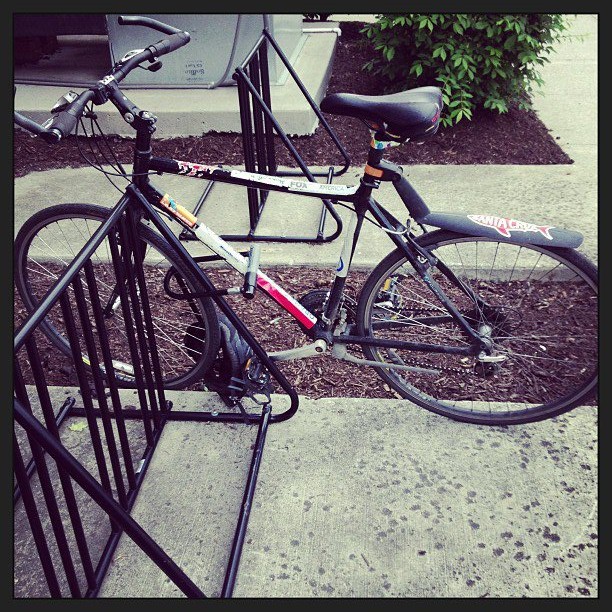
923380_10151585476514581_1263666389_n

My trusty steed has been known to fail me;
I’m happy to have a helmet on when riding it

My position on the matter (pro) is uncomplicated.  I think the data are clear and in favor of mandatory use of bicycle helmets:  mandatory legislation reduces serious injury; it encourages the most vulnerable (children) in the use of an injury prevention device; and it has not been shown to decrease ridership. Read more of this post

National Council on Youth Sports Safety

988780_10151971065024581_1620105790_n

Strained metaphor?
Like the Washington Monument,
our approach to concussions is
under revision

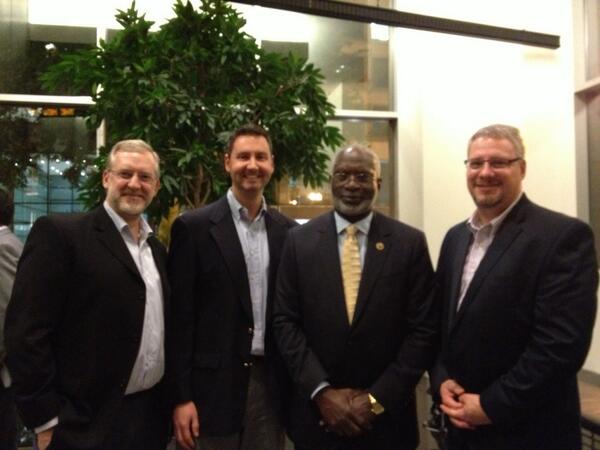
I am in Washington D.C. Thursday and Friday as a participant in the National Council on Youth Sports Safety (NCYSS), being put on by the Protecting Athletes and Sports Safety (PASS) Initiative.  Our host and keynote speaker is Dr. David Satcher, the former Surgeon General who has devoted his life to issues of public health, and has recognized that the concussion ‘epidemic’ has become a game changer in the field.

I’ve met a variety of high profile leaders, in addition to Dr. Satcher, in the world of youth sport concussion during my 24+ hours on the ground in D.C.

I don’t suppose it’s surprising,  but I think one of the most important components of these sorts of meetings is the networking:  I am coming out of this conference with at least three rather solid collaborative research ideas, not to mention commitments to work on other projects with several of the conference attendees.

BYhLP9pCEAAWm_P

Physicians from Nationwide Children’s Hospital and
Dr. David Satcher, former United States Surgeon General

On a ‘meta’ level, what I was struck by in this conference was the theme that was consistently struck:  we need more scientific research on youth sport concussion, and the urgency behind this need derives fundamentally from two areas–1) the often undervalued but critical importance of mental health and 2) the risk of children in being inactive.

In other words,  as concerned as we need to be about reducing the risk of concussion, about reducing possible long-term mental health issues consequent to this injury, we need to balance this concern with he equally strong demand that we promote physically active children.

In fact, it’s not simply the effect of sport and exercise on obesity, but also their positive effect on mental health:  for instance, physically active kids are less prone to depression.  And so, if one were concerned solely with mental health, he would need to navigate the twin perils of traumatic brain injury and physical activity.

At CJSM, we are on the frontline in these issues.  We publish original research on concussion in almost every one of our journal editions.  The November issue for  instance has an excellent study on predicting clinical concussion markers at baseline.   In the same issue we published the Canadian Academy of Sports and Exercise Medicine Position Statement on the mandatory use of bicycle helmets:  an issue of keeping youth and others safe while they are physically active.

BYkmR_SCYAA5gMH

@cjsmonline (attached to laptop)
tweeting from #NCYSS before
catching that plane

I am leaving D.C. struck….by the sight of the Washington Monument under scaffolding!  In truth, I am more than ever struck by how big of an issue concussion has become, and how it will remain central to primary care sports medicine research for years to come.  There are lots of questions that need answers.  We’ll be working on this continuously here at CJSM.

A Shout From Across the Pond: the “Lloris Affair”

CJSM is an international sports medicine journal.  We are the official journal of two American sports medicine societies (American Medical Society of Sports Medicine and the American Osteopathic Association of Sports Medicine); as well as the Canadian Academy of Sports and Exercise Medicine and the Australasian College of Sports Physicians.  I regularly liaise with our Executive Editor, Chris Hughes, who lives in London, our publisher in Philadelphia USA, and our managing editor in Calgary, Alberta.

Untitled

A small sampling of the twitter conversation
Our Executive Editor was engaged in
This weekend regarding the Lloris injury

Lots of science and lots of sports to keep track of, all over the globe.   And so it was that this weekend, residing in Columbus, Ohio, I remained blissfully unaware of the events surrounding the injury to Hugo Lloris until I noticed that the @cjsmonline twitter feed exploded with shouts of disbelief, as our executive Editor and others were busy deconstructing what they had just seen.

In short order, Chris let some other ‘tweeters’  know they could reach out to @cjsmonline, and one enterprising individual forwarded me a thoughtful piece on the situation:  voila!  The genesis of today’s guest blog.

@Daniel_Broman (Dr. Broman) is a Core Medical Trainee in London, and is currently based at Barts Health NHS Trust. He is keen to follow a career in Sport & Exercise Medicine and will be applying for specialist training in the coming months.

He shared these thoughts about the incident:

___________________________________

Concussion in Football – The Lack of Consistency in Management and The Need for Guidelines

 By Daniel Broman

The topic of concussion in sport has been placed in the media spotlight again recently, especially in the UK, with articles about the proposed new rules for Pitch-side Concussion Assessment (PSCA) in Rugby Union matches (“Rugby and Concussion:  Are Big Hits Bringing Big Headaches?” and “Rugby Union, Concussion and the Ultimate Need for Responsibility of Care”) and with several incidents in Premier League football, including the cases of:

  • Romelu Lukaku vs. West Ham United (21st September 2013), where the player completed the final 3 minutes of the match and post-match admitted that “I did not even know I had scored, I was out of it and the first thing I asked the doctor was “who scored?” and he said “you did”.”
  • Mathieu Flamini vs. Norwich City (19th October 2013) with the player taken off at the time. Arsene Wenger stated a few days later that “There is a five-day (concussion) rule that we will respect, not to take any chance. It was a concussion and the doctor advised us not to play him.”
  • Robert Snodgrass vs. Manchester United (29th October 2013) where the player was also taken off the field of play and taken to hospital. Chris Hughton stated “I think that (going to hospital) is very much a precaution”.

Clearly all incidents and cases are different and of varying severity, however the lack of consistency in their management is still concerning. Over the weekend, another particular incident, prompted several discussions both on social media and in the media, with ‘Match of The Day 2’ stating there needs to be “uniformity on a rule”. Read more of this post

Rugby and Injury Prevention

As I write, it’s early afternoon in the Midwest of the United States.  I hope wherever you are as you read this you are enjoying yourself.  If you’re reading this over the weekend, you may be taking advantage of the many sporting offerings around the globe that involve one of the football ‘codes.’

It took me a long time, as an American, to learn that the ‘football’ I grew up with was  only one of many games sharing a similar genealogy;  and, what’s more,  in most of the world, the word ‘football’ would be understood to refer to a completely different sort of game than what I saw on an NFL Sunday.

Paul-bunyan-at-msu

The Paul Bunyan trophy,
awarded to the winner of
Michigan v. Michigan State
Football (American!) game

I’m probably ‘preaching to the choir’ if you’re reading this, but today there are many different types of football games being played around the globe.  There are several NCAA American Football games (I have an eye on the Michigan v. Michigan St. (MSU) game, having grown up in Grand Rapids, Michigan); there are of course many ‘Association football’ (soccer) games going on (Arsenal v. Liverpool is one of the highlight matches in the Premiership).  England upset Australia in Rugby Union earlier today; and the Edmonton Eskimos face off against the Saskatchewan Roughriders in the Canadian Football League this evening.

And more out of ignorance than intent, I am probably forgetting to mention any number of fixtures happening in Australian Rules football, Rugby League, or Gaelic football this weekend.

Lots of ‘football.’  Many ‘codes.’

Though most of my current practice in the Northern Hemisphere fall is devoted to caring for injured American football players, I wanted today to look at a different code.  I thought it the proper time to write about a recent news item on rules changes in Rugby Union.

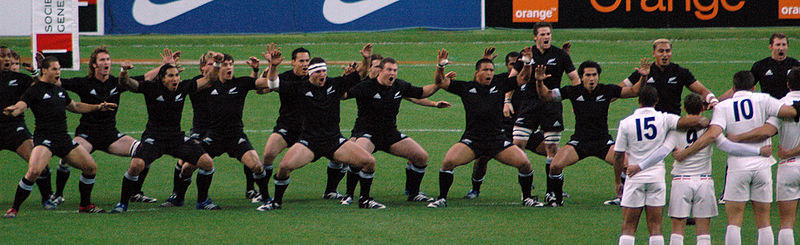
All_Blacks_Haka

The New Zealand All Blacks
performing their famous
Haka before a match with France

What prompted me to tack in this direction was a BBC article I read on line yesterday, “Rugby and Concussion:  Are Big Hits Bringing Big Headaches?”  There is controversy in the world of Rugby Union, according to the BBC, over how to manage game day concussions.

Barry O’Driscoll, a well-regarded member of the International Rugby Board’s (IRB) Medical Committee, has resigned in protest over proposed new rules for Pitchside Concussion Assessment (PSCA) in Rugby Union matches.  The new approach will replace what previously was a mandatory end to a player’s game and week rest period if a suspected concussion had occurred.  PSCA incorporates a functional assessment by a medical provider, which the BBC states includes the following:

  • A Pitch-Side Concussion Assessment can be asked for by a team doctor or referee if they suspect a player is concussed
  • The referee signals a PSCA has been requested via radio link and with three taps to his head
  • A substitute comes on while the PSCA takes place in pre-agreed place, usually a medical room
  • The injured player is assessed for symptoms, asked a series of questions – Where are we? What’s the score? etc – and given a balance test similar to the ones in drink-driving cases
  • One failed question, four balance errors and the presence of one or more symptoms means the player is removed from game*

*PSCA summary taken from BBC article

Read more of this post