Osteoarthritis: Part I

I’ve been an Associate Editor for CJSM now for six months, and so some of you in the blog world may already know a little bit of my background as it has come out over time in my various posts.

For those of you who may be new readers of this blog, I thought for today’s post it was important for me to let you know that I work at Nationwide Children’s Hospital, the pediatric hospital affiliate of Ohio State University, and my specialty is pediatric sports medicine.

So……I don’t manage a lot of osteoarthritis (OA) in my current practice.

ocd of knee jpeg

Adult OCD of the knee,
unstable lesion: destined for osteoarthritis?

However, I didn’t narrow my clinical scope of practice to the younger crowd until 2010, and I have managed my fair share of OA in my career, injecting plenty of knees with hyaluronic acid derivatives, encouraging weight management and low impact exercise…….Now, I suppose I’m more on the end of the spectrum of primary prevention of the disease: if I manage my young patients’ knee osteochondritis dissecans properly, perhaps I can spare them from degenerative joint disease later in life.

I’m not telling anyone reading this something they don’t know already when I write that career paths are varied in modern medicine.  There’ s no telling if I’ll be taking care of kids exclusively in 10 years.  We all have mandates from Certification Boards requiring us to stay abreast of the current medical literature; we’re tested on it every few years now, as Maintenance of Certification is a phenomenon here to stay.  Forces like these make it incumbent that I read and ‘stay on top of’ developments in the world of OA diagnosis and management, even if I am not seeing much of this disease in my current practice.

After all, OA is the leading cause of chronic disability among older adults in the United States.  That’s a disease worth knowing about.

I thought, therefore, that I would share with you a couple of interesting studies that have come out recently on major issues in the world of osteoarthritis.  Both studies were just published within the last month:  the first, “Shared Decision Making in Patients with Osteoarthritis of the Hip and Knee,”  published in the Journal of Bone and Joint Surgery (JBJS), I will discuss in my next blog post.  And the second, “Effects of Intensive Diet and Exercise on Knee Joint Loads, Inflammation, and Clinical Outcomes Among Overweight and Obese Adults with Knee Osteoarthritis,” published in the Journal of the American Medical Association (JAMA), I will review now.   They are both large, high quality evidence (Level 1) studies which focus on low tech, low cost interventions that have the potential of having major clinical impact.  They are both studies primary care sports/MSK clinicians like myself might be expected to be aware of. Read more of this post


Philly

Benjamin_Franklin_Parkway_from_Rocky_Steps_(6308164452)

The view of the city
from the famous “Rocky Steps”

I am in Philadelphia for the Lippincott Williams & Wilkins Journal Symposium, where I am mingling with dozens of editors from a variety of health care journals.  I’ve already attended a couple of productive sessions, one topic of which I’ll describe shortly.

Philly,  home of cheesesteak, scrapple, and legendary sporting teams:  the NFL’s Eagles, the NBA’s 76ers, MLB’s Phillies, and the NHL’s Flyers.

I think if you’re an American of a certain age (50 and counting), Philadelphia conjures up some famous sporting memories:  Dr. J and the ’82 – ’83 76ers beating the Lakers in the NBA finals; Mike Schmidt and the Phillies winning their first World Series; and the city’s most famous ‘athlete,’ Rocky Balboa, bravely battling in an epic loss to Apollo Creed in the first “Rocky”!!

Is there an American my age who likes sports who didn’t try once to drink raw eggs or do one arm pushups like Rocky?  I won’t have time this visit, but on my last trip to Philly I made the pilgrimage to the Art Museum to run the famous “Rocky Steps,” which have become one of the city’s most famous tourist attractions.

Well, the sessions at the Symposium may not be quite as thrilling as these sporting memories, but I’ve been inspired nonetheless.  A session I particularly enjoyed was hosted by the Publisher of the CJSM, Kivmars Bowling, entitled “Engaging Authors as Advocates:  Simple Digital Solutions.”

For all you prospective authors wanting to see your published studies rise to the top of Google search engines, here are a couple of tips  1) your title should ideally be seven words or less; 2) you should have at least one keyword in your title; 3) you should have three to five keywords in the first 100 words of your abstract.  These sorts of simple techniques lead to “SEO,” or “Search Engine Optimization”:  getting your studies to the top of searches, so your work can be found, used and cited.

A good example of this technique can be found in a paper I just blogged about, one which is included in the most recent CJSM:  “The Prevalence of Undiagnosed Concussions in Athletes.”  Seven words; one big keyword in the title: ‘concussions’; and I’ll let you review the abstract to determine if the authors enriched their abstract in an “SEO-friendly” way!

I wish I could get to those steps on this visit!!!!  But it’s time to head to some more meetings, and scrapple.  We’re working harder than ever to improve the CJSM.  Let us know how we’re doing!

An NFL Owner Wants to Know What YOU Think!

625578_10151958944664581_391510612_n

My wife suspects I’m more proud of this piece of paper
than I am of my M.D. diploma…….

I had an enjoyable weekend, and I hope you all did as well.  Friday night I was on the sidelines covering an American football game which extended into the late hours because of an extended lightning delay, but after that I had my first relatively free weekend in a while.

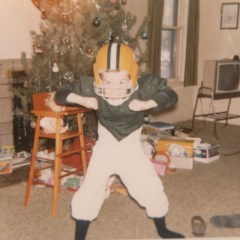
jimpackers

The author, circa 1968,
in vintage Packers gear.
There’s a reason he went
into sports medicine rather
than football.


I don’t think I’ve ever shared my bona fides with the readership, but besides being a licensed physician I am, ahem, an owner of a professional sport team*:  the Green Bay Packers,   It was with pride that I attended their game on Sunday…..but it was with sadness that I drove away from the stadium, ‘my’ team having snatched defeat from the jaws of victory.

Humor aside, it was with real sadness that I wrapped up my weekend, as I caught up with the Sunday newspaper late last night on my return from the game.  I came across this headline:  ‘Auto Accident Claims Life of Football Student-Athlete, Three Others Injured.’

I had just blogged about the new study published ahead of print in CJSM on the subject of motor vehicle accidents in collegiate athletes:  they are the number one cause of death in this population.

I haven’t posted a poll in the blog or on the CJSM main website in a while, and so I thought it was time to do so using this blog post and the study, ‘Motor Vehicle Accidents, the Leading Cause of Death in Collegiate Athletes.’

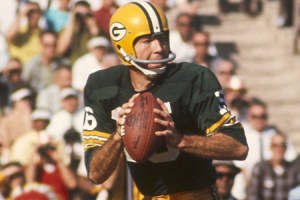
Bart_Starr_-_Green_Bay_Packers

Here’s what a REAL Packer looks like:
the Hall of Famer, Bart Starr

Without further adieu, then, take a moment now and test your knowledge (hint:  answer is both in the blog post and the study itself; but I’ll also post the answer with in my next blog piece).

*one of 364, 122 shareholders of the Packers as of this writing! Roman Abramovich I am not!

Motor Vehicle Accidents: The Leading Cause of Death in Collegiate Athletes

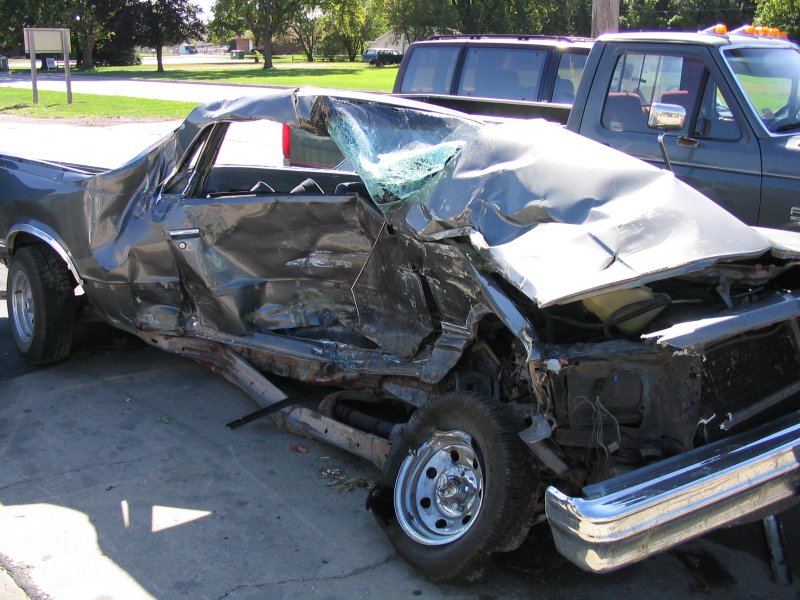
Car_crash_2

Motor Vehicle Accidents: the number one
killer of NCAA athletes

The title of today’s post is striking.

In sports medicine we focus–rightly–on entities such as sudden cardiac death, cervical spine injuries, second impact syndrome, exertional heat illness, hyponatremia……There  is a long list of conditions that can befall athletes which can cause serious mortality and morbidity.

But from a public health perspective, our priorities are possibly misplaced. At the very least I wonder sometimes if we may ‘strain at a gnat and swallow the camel‘ when we focus intensely on chest protectors and commotio cordis and say nothing about the use of seat belts in our athletes.

In August CJSM published ‘ahead of print’  “Motor Vehicle Accidents:  the Leading Cause of Death in Collegiate Athletes,” a study authored by I Asif, K Harmon, and D Klossner, authors who have published other epidemiologic work on sudden death in young athletes.  The data presented gave me pause. For all our concern about sudden death from hypertrophic cardiomyopathy,  to name one example, the data show that far and away the greatest threat to the young athletes under our care are accidents or unintentional injury.

The authors conducted a 5 year retrospective analysis using two data bases:  an NCAA database, and the “Parent Heart Watch” database.  This second database has an interesting history: a non profit group which began tracking sudden cardiac death in American athletes in 2000.   Various death rates were calculated, notably: 1) an overall death rate for athletes was found to be 13.86/100,000 athlete-years; 2) a death rate from accidents of 7.36/100,000 athlete-years; 3) a death rate from cardiac causes of 2.28/100,000 athlete-years; 4) a death rate due to accidents found highest in the sport of division I wrestlers, with a rate of 28.2/100,000 athlete-years.   Deaths from unintentional injuries occur at “….nearly twice the rate of all medical causes of death combined,” the authors note. Read more of this post