Dance Medicine and Science – a developing field. Guest Blog by Dr Manuela Angioi

Dance medicine and science is a relatively young discipline, while the wealth of information available to scientists and all those working in the dance field is expanding and moving ahead rapidly. This is also reflected in the increasing number of dance-related articles now appearing in sports medicine and science journals.

Dance performance depends on a large number of physical and psychological elements, while dancers are expected to be experts in the aesthetic as well as technical side of the art and be free from injuries. On the other hand, dance is a “high risk” activity for musculoskeletal injuries, with a recorded high prevalence and incidence of lower extremity and back injuries, with soft tissue and overuse injuries predominating.

The majority of studies refer to mixed samples of dancers, in terms of levels and styles or techniques. But should we look at dancers as a uniform group of “performing” athletes?

One of the peculiar characteristics of dance is that it is NOT just “one form of performing art or exercise”. Within the “dance box” there are a number of styles (or techniques), including: ballet, contemporary (or modern), jazz, hip hop, theatrical, street dance, aerobic and ballroom dance. These styles differ significantly in terms of, at least, technical requirements, physical prerequisites and training models. It is therefore assumed that different dance styles should have different statistics in terms of injury rate, type and incidence.

It becomes more complicated when looking at levels of dancers. In the dance world there are different “employment scenarios” beyond the “ordinary” classification of professionals versus non professionals. To simplify, dancers can be classified as professionals (these are usually only ballet or contemporary dancers), in training (vocational or non vocational) and then they could be performing for a number of days per year but they also have other occupations or they are without a formal contract (independent dancers). Total hours of training and performing, as such, can vary significantly even within the same “style” according to the “employment status” which, in turn, can affect injury rate and severity. Hence, it is not a surprise discovering the heterogeneity of the dance medicine literature in terms of injury type, rate and incidence.

The majority of published research studies have focused on ballet and contemporary dance, while there is a lack of information about other styles or techniques. Again, majority of studies have looked at either professional or pre-professional dancers, while there is a paucity of data regarding recreational and amateur dancers, even if there is an estimated number of 4.7 million participants at recreational level in UK only.  There a very few published epidemiological studies while majority of reviews are weak. The overall feeling is that there is a need for more data before drawing consistent conclusions about musculoskeletal injuries of dancers. As such, similar approaches as the one recently adopted by Campoy and colleagues, who looked at injuries characteristics in four different dance styles, are needed to broaden the ongoing dance medicine literature.

Reference

Campoy S et al. 2011. Investigation of Risk Factors and Characteristics of Dance Injuries. CJSM 21(6): 493-498

(The author of this article is Dr Manuela Angioi, Research Supervisor and research methods module leader on the MSc in Sport and Exercise Medicine at the Centre for Sport and Exercise Medicine, William Harvey Research Institute, Queen Mary University London)

(Photograph, Dr Angioi practising her art)

Leave a Comment

Leave a Comment

Boosting – time to be aware

Most Sports Physicians are well aware of the issue of doping in elite sport and many of the methods used by sports participants. However, some of us may well not have come across a method used by some athletes with a disability called ‘Boosting.’ With the forthcoming Paralympics just around the corner, now is the time to consider this method of doping for those of us who are involved with events later on this year in London 2012.

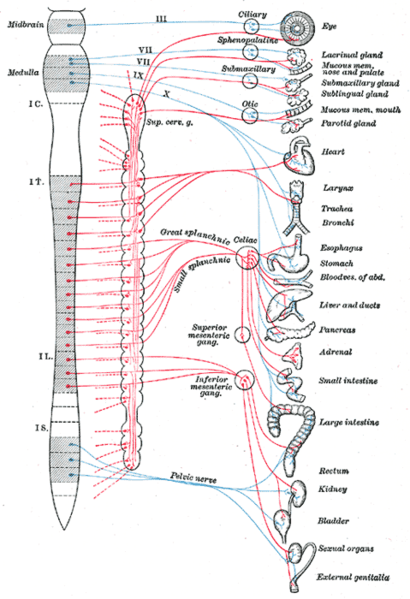
Some athletes with a high level spinal cord injury (T6 and above) may voluntarily induce an episode of autonomic dysreflexia (AD) prior to, or during, an event in order to enhance their performance. A variety of methods may be used by athletes, including clamping catheters, sitting on sharp objects, and using tight leg straps.

The resulting physiological response leads to a significantly raised blood pressure, with improved blood flow to working muscles. The performance enhancement that may ensue as a result of this response may be significant and lead to an improvement in VO2.

It is not always easy to determine whether or not a deliberate attempt to induce AD has taken place as AD is not uncommonly caused by a number of common triggers including urinary retention due to catheter blockage or misplacement, infections, constipation, or noxious stimuli from other sources such as pain due to a lower limb injury.

My first clinical encounter with a patient with AD was during my registrar training when I was working on a spinal cord injuries unit (SCIU) – the cause on that occasion was a blocked catheter. Recognition was swift due to the awareness of the ward nursing staff to the condition. The patient was treated with nifedipine plus a catheter replacement and bladder washout, and made a swift and uneventful recovery. I was to encounter a few more episodes of AD occurring in in-patients during the next 6 months when I was working on the SCIU.

Whilst not only banned by the International Paralympic Committee as a doping method, boosting is dangerous to the health of athletes and may lead to a hypertensive crisis, stroke and death.

The signs and symptoms of mild-to-moderate AD include piloerection, sweating above the level of the spinal cord lesion, headaches, blurred vision, bradycardia, facial flushing, nasal congestion and anxiety. Systolic blood pressure may rise to over 250mmHg.

Athletes are routinely checked prior to competition for any of these signs and symptoms, and repeated blood pressure measurements are taken if there is any suspicion of boosting or AD. If a systolic blood pressure of 180mm Hg or higher is persistently measured, then the athlete is not allowed to compete in the event and possible causes of AD are searched for.

In this month’s Thematic issue of the Clinical Journal of Sport Medicine on Paralympic Sports Medicine, our featured freely-available article by Krassioukov focuses on blood pressure control and AD in athletes, discussing the physiological mechanisms behind this doping method and what we know about the practice of boosting.

For those who may wish to raise awareness of boosting as a doping method, there is a useful presentation on AD and boosting available on the official website of the Paralympic movement, funded in part by the World Anti Doping Agency (WADA) and the IPC.

(Image of Iran v South Africa at 2008 Paralympic games available at Wikimedia Commons, and Autonomic Nervous System originally from ‘Gray’s Anatomy’ )

Leave a Comment

Leave a Comment


Local anesthetic use in sport for early return to play – should we be offering these jabs?

The use of local anesthetics in sports injury management is a bit of dark art – often practised, but not so often talked about. Certainly, there is a paucity of medical literature on the subject, with perhaps more articles in the lay press.

Statistics on the use of local anesthetics in different sports are not widely available, but it is likely that they are most widely used in the contact sports including the football codes (American football, soccer, and rugby league and union).

When they are used, the aim is usually to eliminate or diminish pain caused by an injury which may be acute or chronic, or another condition such as an ingrowing toenail, significantly enough in order for a player to return to play.

Some questions remain about their use, however –

– Are they safe for players in the short and long term?

– Are we currently using them in an ethically-sound manner?

The World Anti-doping Agency currently places no restrictions on the use of local anesthetics in sport, although there is a debate about whether the elimination of pain constitutes a performance enhancing intervention. Most governing bodies leave the decision as to whether use local anesthetics to the team physician and patient. The NCAA, for example, mentions that ‘use is medically justified only when permitting the athlete to continue the competition without potential risk to his or her health.’ (see section 31.2.3.4.1 of NCAA drug policies).

The assessment of potential risk to health from using local anesthetics in order to assist a player to return to play is a difficult one. To a large extent, the risk depends upon the nature of the injury. Most of us would, I suspect, be reluctant to administer a local anesthetic to a player with an acute grade 1 medial collateral ligament injury of the knee in order for them to attempt to play, but may be less concerned about blocking a toe with an undisplaced phalangeal fracture.

Orchard and colleagues reviewed a case series of 268 injuries over a 6 year period in which local anesthetic was administered to allow an early return to play. In this series, around 10% of players competing did so with the assistance of a local anesthetic. The most common injuries for which local anesthetics were administered were rib injuries, iliac crest hematomas, acromioclavicular joint injuries, and finger and thumb injuries. A total of 6 ‘major’ complications were noted, including two cases of distal clavicle osteolysis (questionable as to whether this was a true complication), a partial tendoachilles rupture, an adductor longus tendinopathy (again, causality is questionable), prepatellar infected bursitis and a scapholunate ligament tear, with 11 ‘minor’ complications.

Orchard and colleagues went on to publish a retrospective survey of 100 players over ten seasons who had been injected with local anesthetic on 1023 occasions for 307 injuries. There was an average of 5 years’ follow-up. They found that 98% of players stated they would have had the procedure in the same circumstances again, although nearly a third felt that there were side effects associated with the use of the local anesthetic. 22% of players thought that the anesthetic had delayed their recovery and 6% thought that their injury was worsened due to playing on with a local anesthetic block.

The authors concluded that ‘the most commonly injected injuries – acromioclavicular joint sprains, finger and rib injuries, and iliac crest contusions appear to be quite safe (in the context of professional sport) to inject at long-term follow up.’

They conceded that ‘a few injuries may have been made substantially worse by playing after an injection,’ and also mentioned that there was ‘still insufficient evidence to completely determine the safety of local anesthetic injections in the majority of potential circumstances,’ calling for further studies to assess long-term safety.

There is good evidence that local anesthetic injections are both chondrotoxic and myotoxic when administered during both in vitro and in vivo studies. Given that the long-term safety of local anesthetic injections is unknown, can we safely recommend and administer these to our patients in order to allow them an early return to play?

Perhaps even more important are the ethical and safeguarding issues surrounding the use of local anesthetics in sports injury. What happens if a player chooses not to have an injection following  an injury when it is common practice amongst the team for other players to have this intervention in order that they may be able to play with a similar injury? Will they be discriminated against by the team manager or other players, or be subject to coercion?

Should there be an independent assessment of the appropriateness of using these injections prior to administration?

Do we need a review and a consensus opinion from WADA or individual governing bodies ?

CJSM would like to hear your thoughts

Leave a Comment

Leave a Comment

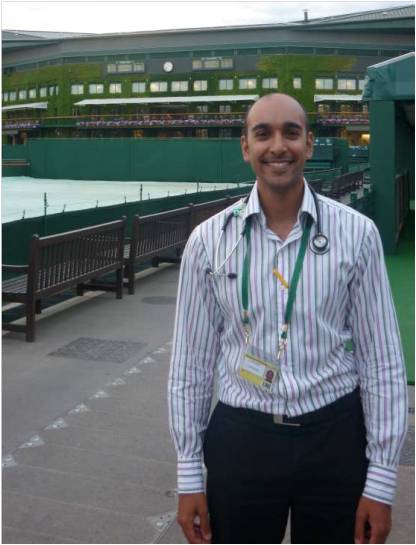
Guest blog – Starting out in SEM, by Dr Tamim Khanbhai

 I am relatively new to Sports & Exercise medicine (SEM), having made the big change from a stable career in General Practice / Family Medicine to the more uncertain life as a SEM physician. People often ask how I went into a speciality that many other medics don’t even know exist.

My story, which is no doubt different from many others in SEM started with me qualifying as a GP in 2009. Whilst being a GP registrar I realised I was weak in musculoskeletal medicine and always felt this was poorly taught in medical school, and so I was toying with the idea of doing a postgraduate qualification in musculoskeletal (MSK) problems.  A friend had done an SEM MSc, and having always enjoyed watching a variety of sports and playing a few (recreationally), it felt like a good way to go.

I also happened to have a GP group that met once weekly in the Leyton Orient FC (LO) football ground. This may sound strange but there is a ‘health centre’ within the stadium and we used a meeting room that overlooked the stadium. This group ran for about a year and there is no doubt, that starting a distance learning SEM MSc combined with watching over LO FC football ground on a weekly basis really filled me with excitement. From that moment on my ambition was to complete the MSc and work with LO in some capacity, perhaps even as their club doctor one day.

The SEM MSc took two years to complete but it was distance learning and although my knowledge was improving, getting experience in SEM medicine is not straightforward. It’s not like doing a dermatology diploma where you can simply call the local hospital and sit in with dermatologists. There are extremely few SEM clinics in the NHS or community setting in London, where I am based.

However I approached multiple SEM consultants in the NHS and predominately in the private sector, and physiotherapists. Thankfully ‘we’ seem to be quite a decent bunch and most were more than happy for me to gain experience in their clinics. For me it was a real insight into the medicine involved in SEM and it soon became apparent that the knowledge base required is huge and covers many disciplines. My aim at this point was still to complete the MSc but also be a team doctor. For me it became apparent that getting into clinics or meeting teachers on an MSc course was relatively straight forward but getting involved in a team was a much more closed circle. How to get in?? I was keen to be involved in football, as it is a sport that I played and enjoyed from as early as I can remember. Well snooker is another love, but not sure about the amount of SEM required here! Perhaps some health promotion!

Getting into club football involved attending Football Association conferences and by chance I managed to meet the doctor at Leyton Orient. Of course meeting and getting involved are two different things but by now I had made some ‘contacts’. A friend put in a good word for me and luckily LO needed a reserves team doctor. I met with the club doctor and pretty soon the role was mine.

This was really great experience, in a friendly club, and my first insight into the role and responsibilities of a club doctor and the medical setup within a professional club. Fortunately I stayed there for almost 18 months after which I managed to get the club doctor role at Barnet FC in July 2011 and where I have been working since. I also gained more experience by offering my services for ‘free’ working as a pitch side doctor for BUCS (British Universities & Colleges Sport) which was by chance organised by the England Women’s football doctor and has lead me to get a role as the team doctor for England women’s U-15’s starting in February 2012.

Over the last year whilst this was all going on, I thought more deeply about a full time career in SEM and decided to pursue this full time. It is an area that is exciting, challenging and diverse. I took the big step of leaving my successful and stable career in general practice and although nervous have been back in hospital over the last 5 months having started in August 2011. Fellow SEM registrars are supportive and although there are doubts about future jobs within the NHS, this is definitely the area of speciality that I want to pursue full time. The last few months have been great and cemented my decision to move from GP.

The role of a SEM physician is clearly challenging, especially when you have to describe your role to fellow physicians and surgeons who have never heard of your speciality and convince them of the need for SEM, let alone convincing government to provide more jobs within the NHS setting.

So why did I make this risky decision to change career? Well, because I believe SEM has a major part to play in the future of health/exercise promotion, tackling obesity, injury prevention and management  to name but a few areas. Additionally as SEM physicians in a relatively young speciality, I think it is in our hands to promote this speciality playing a major part in shaping the future of SEM to make it the success it should be.

Dr Khanbhai is a current specialty trainee (registrar) in Sport and Exercise Medicine based in London, UK

Leave a Comment

Leave a Comment