5 Questions with Brooke de Lench, MomsTEAM Institute of Youth Sports Safety

brooke in texas

I am pleased to have as our guest today Ms. Brooke de Lench, a pioneer and leader in the field of youth sports safety.  Brooke is founder and Executive Director of  MomsTEAM Institute of Youth Sports Safety, Producer of the PBS movie ‘The Smartest Team: Making High School Football Safer,” and author of Home Team Advantage:  The Critical Role of Mothers in Youth Sports.

Brooke has become a valued colleague, and someone I think of immediately when I’m asked what relevance social media has for a sports medicine clinician. I first ‘met’ Brooke on Twitter, and as our relationship has evolved, I now find I work with her on a weekly if not sometimes daily basis, addressing youth sports issues of mutual concern.  I am proud that I have become a member of the Board of Directors for the non-profit MomsTEAM Institute, a professional role I have written about in previous blog posts.

Much of the work MomsTEAM has done has been instrumental in advancing the cause of identifying, preventing, and managing concussions in youth sports, and there is a natural affiliation that has developed between this journal and MomsTEAM over the years, with the Institute authoring several blog posts on the research in youth concussions.  Those posts have frequently looked at work that CJSM has published.  Our November 2015 issue has, for instance, two pieces of original research that I suspect may end up in the pages of a MomsTEAM post: Register-Mihalik’s ‘Characteristics of Pediatric and Adolescent Concussion Clinic Patients with Post-concussion Amnesia,’ and  Schmidt’s ‘Does Visual Performance Influence Head Impact Severity Among High School Football Athletes?’

With MomsTEAM gearing up for a collaboration with Sony Pictures‘ Concussion (the movie)–an event that I think will impact all clinicians caring for youth athletes–I thought it was time to interview Brooke on our regularly recurring “Five Questions with CJSM” feature.

_______________________________________________

1) CJSM: How old is MomsTeam Institute and how did you found it?

BD: I established MomsTEAM Institute in 1999 and we launched our first website and workshops in August of 2000. I began writing the “Survival Guide for Youth Sports Parents” in 1998 when Random House offered to publish my book in three volumes over the subsequent five years because I had “so much information.” Instead, I turned to the limitless container of information – the new and emerging internet which was something much more exciting to me. Later in 2006, I did write a book that Harper Collins published.

In 2000, there was nowhere to find independent, objective well researched and well written information for sports parents, and so I brought together a team of experts in medicine, law, journalism, sports, and coaching who along with me as a writer-researcher, began the long journey of providing the very best information on how to keep student athletes safe:  physically, emotionally, psychologically and sexually.

Parents always seemed to turn to me with sports safety questions; my triplet sons called these regulars “Moms Team.” Hence the name. Read more of this post
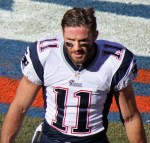
Super Bowl Aftermath

Julian_Edelman_2014

Julian Edelman, New England Patriots pic: Jeffrey Beall

It’s a Tuesday as I write, so literally (and figuratively) I do not propose to do any “Monday Morning Quarterbacking.”  I’ll leave it to others to deconstruct Pete Carroll’s decision at the end of the game (though I don’t think it was that crazy of a call, and was in keeping with other contrarian decisions he has made that actually got the Seahawks into the Super Bowl–like the fake field goal call against Green Bay in the NFC Championships).

The Russell Wilson interception obviously turned out badly for Seattle, and sent all of New England into a frenzied state of joy (though a snowstorm in the region is causing the fans there to hold off one more day from a celebratory parade through Boston).

No, I’m here to focus on sports medicine–specifically the management of Julian Edelman’s apparent concussion in the big game–and encourage you, the reader, to take a poll to stimulate conversation about the issue.

I’m sure a lot of us in the sports medicine world had a sense of deja vu when we saw Edelman stay in the game after what many viewers thought was a concussion:  in the 2014 FIFA World Cup there were several similar incidents, when several players had suspicious head injuries whose management was questionable.  In the aftermath of that tournament, we had a podcast with guests Matthew Gammons and Cindy Chang , physicians of the American Medical Society of Sports Medicine (AMSSM), exploring the issues involved with management of possible concussions in real time, in the setting of a highly visible sporting event…like the Super Bowl.

The NFL has, in the wake of much criticism, introduced new concussion protocols.  It is my understanding that “….. the NFL assigns an independent physician to each team to monitor head injuries, and there is another independent ‘spotter’ who watches players on both teams from a booth above the field and can radio to the sidelines if there is evidence of an on-field concussion.” [1] Additionally, each team has its own medical personnel to monitor the situation as well as do any necessary evaluations.

It is not clear to me, however, that there is an independent physician who is empowered to remove a player from the field of play; to mandate removal if necessary, and not just ‘monitor.’  Should there be a clinician who i) has no conflict of interest [as exists intrinsically in any dynamic that involves medical personnel employed by a team:  player safety comes first, but there are, inarguably, biases that can creep into our decisions when player performance, especially in the setting of the World Cup or the Super Bowl, is at a premium]; and ii) who has the power, and the backing from the league, to disregard the player’s opinion, the coaches’ opinions, etc. and can mandate even the removal of a key player like, say, Tom Brady, for suspicion of a concussion, on the biggest stage of their sport.

And so, today’s poll:


References

[1] The Super Bowl’s Concussion Calculation, The New Yorker, Ian Crouch.

http://www.newyorker.com/news/sporting-scene/super-bowls-concussion-calculation, accessed 2/3/15


Year’s End

Wells_Cathedral_in_the_reflecting_pool_in_the_grounds_of_the_Bishops_Palace

Reflections (Wells Cathedral)

We are all heading toward the finish line of 2014, and what a year it has been.

I’ll be in something of a reflective mood, I think, over these next several weeks, and I suspect my blog posts will, well, ‘reflect’ that state of mind….I hope to highlight some of this year’s developments in the sports medicine world, especially those that CJSM has contributed to.

The world of media is continuously expanding, and many of us now get our clinical sports medicine information from a multitude of sources besides print.  You may follow us on Twitter as well as get these blog posts delivered to your email inbox, for instance.

One of the exciting innovations we began this year at the journal was the “CJSM podcast,” which you can subscribe to on iTunes.  Our first podcast was with Drs. Oliver Leslie and Neil Craton, and concerned their critique of the Zurich Consensus Statement on Concussion in Sport, which appeared in CJSM’s March 2014 issue.  The conversation regarding the consensus statement and the controversial critique has literally continued this entire year.  In our November 2014 issue, closing out this calendar year, there are a host of ‘Letters to the Editor’ addressing this issue:  these include  one written by the past-president of the Canadian Academy of Sport and Exercise Medicine (CASEM), Pierre Fremont, as well as the reply made by Drs. Leslie and Craton to the various responses they received regarding their piece.

Other podcasts have addressed a variety of issues, including the concussion controversy at the 2014 FIFA World Cup [we had guests Drs. Cindy Chang, former president of the American College of Sports Medicine (AMSSM) and Matt Gammons, current AMSSM VP for that podcast] and the impact neuromuscular training programs can have on reducing ACL injury rates in youth soccer players.

I hope you have a chance to listen to all the podcasts, and to peruse all the contents of the November issue before this month ends.  Soon, we’ll be turning the corner into 2015, when we have a lot more in store to advance the cause of clinical sports medicine.  The January issue will be a good one, packed with new research and an important AMSSM consensus statement as well–highlighted, of course, by a podcast!

The Black Cyclone

Jrobinson

#42, Jackie Robinson Photo by Bob Sandberg, Look

The intersection of art and sport, that’s the subject of my brief post today.  And who can get away from the subject of concussion in sport medicine these days?  So that’s in the mix too……

First, a quiz:  who is the first African-American to play professional football in the United States?

We all know Jackie Robinson broke the ‘color barrier’ in Major League Baseball.  April 15, the anniversary of that day in 1947, is now celebrated as a holiday in MLB, and his #42 is retired across the league.

But what of football?  I had thought the answer was Marion Motley of the Cleveland Browns, but it turns out I had the wrong man, and the wrong era.

Charles Follis, a native Ohioan, played for the Shelby Athletic Club from 1902 – 06, and has the distinction of being the first black professional American football player.  He lived and played before the NFL even existed, and he is a subject of a play which I just watched, “The Black Cyclone.”

It’s a fascinating story and a wonderful play.  Malabar Farms, the venue where I watched the show, is equally enchanting, a true gem of central Ohio:  the working farm and former home of Louis Bromfield, an author and screenwriter as well as a man truly devoted to sustainable agriculture.  Malabar Farms is simply beautiful, and is perhaps best known as the place where Humphrey Bogart and Lauren Bacall (who died earlier this year) were married.

6531961_122590335060

Charles Follis, ‘The Black Cyclone’

The play was held in a barn on the farm, and was well attended.  The story of Charles Follis’ life has dramatic power and should deservedly be better known.  I felt somewhat chastened that I had never known his name prior to watching the play.  There is even a direct connection between Charles Follis and Jackie Robinson:  Branch Rickey*, the general manager of the Brooklyn Dodgers and the man who brought Jackie Robinson on to the team, was a friend and football teammate of Charles Follis.

One of the more fascinating moments of the evening was what I saw as the intersection of my sports medicine life and this story.

Charles’ younger brother Curtis died when they were both young men playing football. The scene is recreated on stage. Curtis is playing football and gets tackled roughly by players who are none to happy to be playing against a black man. The actor demonstrates symptoms of a concussion; he returns to the playing field and is hit again, at which point–in dramatic fashion–he succumbs to ‘diffuse cerebral swelling.’

Head injury fatalities in youth football remain, unfortunately, a contemporary subject.  Only a week before watching this play, the national news was running the story of a New York high school player who died on the field after an on-field collision.

In Curtis Follis’ case, one might hope that should these injuries occur on the field in 2014, an athletic trainer or team physician would identify the first injury and hold the player from a return to the game.  It certainly is incumbent upon those of us caring for athletes to monitor the situation on the field, as underreporting of significant head injuries remains distressingly all too common:  in high school football more than 50% of such injuries are not reported by the players, according to a well-known 2004 CJSM study by McCrea et al. 

Better concussion management is also the subject of one of our podcasts:  take a listen when you have the chance. 

I do not know what plans the producers of the play have for taking ‘The Black Cyclone’ on the road, but I do hope it comes your way.  The Charles Follis story is most definitely one that should be better known.  The same can be said for Malabar Farms:  if you’re ever in central Ohio, it’s well worth the visit.

_______________________________________________________________

*Branch Rickey is deservedly famous for his instrumental role in integration of American sports.  As he put it, “Ethnic prejudice has no place in sports, and baseball must recognize that truth if it is to maintain stature as a national game.”

He should also be known as being instrumental in the introduction of batting helmets, a major step toward improving baseball player safety…..but that’s a subject for another post!