Pre-game intravenous hyperhydration, anyone?

The #NFL #SuperBowlXLVIII takes place this weekend, and we revisit one of our most talked about studies in the last few years.  Thanks to our Executive Editor Chris Hughes, @SportsDoc_Chris, for this 2011 post.

Chris Hughes's avatarClinical Journal of Sport Medicine Blog

The editorial in this month’s CJSM by Coombes and colleagues on Intravenous Rehydration in the National Football League highlights the widespread prevalence of the practice of pre-game hyperhydration as reported in the study by Fitzsimmons and colleagues, also in this month’s Journal here .

Fitzsimmons and colleagues surveyed the head athletic trainers of 32 NFL teams using an online survey tool and managed to achieve an impressive 100% response rate. They found that 75% of all teams had used pre-game hyperhydration with iv fluids, with an average of 5 to 7 players per team per game receiving intravenous fluids prior to play. The most common reasons for this strategy cited by trainers were to prevent muscle cramps (23 out of 24), prevent dehydration (19), at the request of the player (17), to prevent heat illness (14), and to improve player exercise tolerance (8).

It is somewhat alarming to find out that this practice…

View original post 177 more words

Return to Play Decisions

535001_10201384038456502_1470889600_n

Though a beautiful time of year, fall is not
the most idyllic for a sports medicine clinician

Like many of the readers out there, my colleagues and I are deep in a football season, where we are managing various teams and their mounting injuries.  For a sports medicine physician, fall in America must be a bit like early spring for an accountant (tax day = April 15):  it’s the time to buckle down and crank through patients, the time, from a certain perspective, to see the volume of patients that will sustain the business through leaner times of the year.

When I’m out of the clinic and on the sidelines, I’m also doing one of the parts of my job that is the most fun, and I’m sure my colleagues out in the blog sphere will agree.  But I wouldn’t describe the work as an idyll.  I can be enjoying my team’s performance, and then called in three directions at once, treating players and making decisions on whether they can get back into the game:  decisions that can have significant consequences for the player and the team.

I thought I would write somewhat extemporaneously today, and in sharing some of the more interesting cases I have seen of late think in a more structured way about how we primary care sports medicine physicians make return to play (RTP) decisions.

RTP decisions make the headlines all the time.  In the professional leagues of North American sports, in just the last two weeks, we have seen discussions about Kobe Bryant’s return to the NBA from late spring Achilles tendon surgery; Rob Grownkowski’s ‘delayed’ return from a surgically treated forearm fracture; the much anticipated return of Derrick Rose more than a year after his ACL reconstruction; debate over RGIII and whether he has come back too soon from his own multi-ligamentous knee injury…….the list goes on!

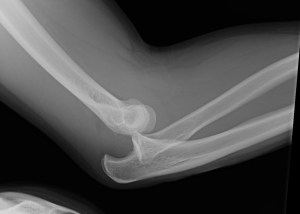
pos elbow disloc

The end of a season?

In my own practice, I have been trying to return players back to American football while they have recovered from a kidney contusion, a posterior elbow dislocation, a complete rupture of the ulnar collateral ligament, and a demyelination injury of the axillary nerve.  Of the four, two are back playing; the elbow dislocation is still rehabbing, and i hope to return in a hinged knee brace before the end of the year; and the axillary nerve injury continues to have pain and profound weakness of his deltoid, and his recovery will extend beyond the end of this season (much to the coach’s dismay).

Despite being one of the more important aspects of our job, there is very little in the way of evidence-based medicine to guide a clinician in these decisions. Read more of this post

League of Denial: A review of the PBS documentary

steve young

49ers legend Steve Young
one of the great interviews on the
documentary, “League of Denial”

I watched the PBS Documentary “League of Denial” this week, and I’m sure many of you did as well.

In one word:  Bravo.

I thought the folks at PBS’ Frontline did a fantastic job, touching on many facets of what is arguably the biggest sport public health story of the last two decades.  There were so many dimensions to the nearly two hour documentary, it’s hard to know where to begin my review.  In nearly two hours, PBS (with a ‘redacted assist,’ if that’s the phrase, from ESPN), covered a lot of ground.

I thought I would highlight some of the major personas that showed up, and divide them into the following four categories: “Winners,” “Losers,” “Meh,” and “In Memoriam”

Winners

Bennet Omalu, the neuropathologist who broke the story of chronic traumatic encephalopathy (CTE), is my pick for the most compelling figure in this documentary.  A physician of great training and accomplishment, he had the mixed fortune of conducting the post-mortem examination of Mike Webster, the Pittsburgh Steelers icon who died young and whose brain showed the pathologic changes of CTE, the first case documented in an NFL player and reported in this study.

Dr. Omalu’s story, both personally and professionally, is worthy of its own documentary.  Originally from Nigeria, he knows little about American fooball and nothing about the Steelers icon when he first meets the latter’s corpse and goes about his job.  He reports being thoroughly unimpressed with the gross morphology of the deceased’s brain:  how it looked ‘normal.’  It was only on conducting his histopathologic exam that he made his stunning discovery.

For this and further efforts in investigating CTE in deceased NFL players’ brains, he was smeared by the NFL and its affiliated physicians.  Omalu poignantly states as a result, he wished he had never ‘met Mike Webster.’

As an Associate Editor of a medical journal, I found the calls by some in the NFL medical community (see below) for Omalu to retract his CTE study and their ad hominem attacks to be the more egregious sins (among many) reported in the documentary.  The process of science, spearheaded by peer-reviewed literature, is one of openness; disagreements are cause for further study, not suppression.  Retraction should be reserved for outright fraud.  The calls for retraction in this case are shameful.

Ann McKee, another neuropathologist now with the Boston Center for the Study of Traumatic Encephalopathy, has picked up the baton and is continuing to carry on the research into CTE in former professional football players, despite further pushback from vested interests and more ad hominem attacks that insinuate that, as a woman, what might she know about football?

Steve Young who experienced five or six concussions in his career, is one of the former players interviewed for this documentary.  I remember Steve Young well, as I lived in the Bay Area for many of the seasons of his glorious career with the 49ers, and I remember too when he had his career-ending concussion. Read more of this post

Pre-game intravenous hyperhydration, anyone?

The editorial in this month’s CJSM by Coombes and colleagues on Intravenous Rehydration in the National Football League highlights the widespread prevalence of the practice of pre-game hyperhydration as reported in the study by Fitzsimmons and colleagues, also in this month’s Journal here .

Fitzsimmons and colleagues surveyed the head athletic trainers of 32 NFL teams using an online survey tool and managed to achieve an impressive 100% response rate. They found that 75% of all teams had used pre-game hyperhydration with iv fluids, with an average of 5 to 7 players per team per game receiving intravenous fluids prior to play. The most common reasons for this strategy cited by trainers were to prevent muscle cramps (23 out of 24), prevent dehydration (19), at the request of the player (17), to prevent heat illness (14), and to improve player exercise tolerance (8).

It is somewhat alarming to find out that this practice is so widespread, especially in view of the fact that iv fluid administration pre-competition and intra-competition is clearly prohibited under the prohibited methods category of the 2011 WADA anti-doping code , and as discussed by Coombes and colleagues, it will be interesting to see how WADA and the NFL react to the results of this study.

An additional point to note, again as highlighted by Coombes and colleagues, is that there is practically no evidence that pre-game hyperhydration actually achieves any of the desired outcomes cited by trainers.

This study highlights yet another example of a dubious and potentially dangerous practice being adopted by elite teams in the absence of evidence of effectiveness of the intervention to achieve desired outcomes.

One wonders why such widespread practice is allowed to occur without action being taken against individual Clubs and players engaging in the use of these methods, or why the practice is not specifically banned under the code of the NFL.

Surely now is the time for a formal investigation into this issue?

CJSM would like to hear your views.