The Thunder From (mostly) Down Under

I’ve been an Associate Editor for CJSM for just over six months now, and have written over 50 posts for this blog.  I have never received so much traffic and commentary in this brief tenure as I have on my most recent two posts:  A Discussion on Mandatory Bicycle Helmet Legislation and a poll about the same.  Both relate to two very interesting pieces in the most recent, November issue of CJSM that I encourage you to read:  “Bicycle Helmets:  Don’t Say Something by not Saying Something” and the Canadian Academy of Sport and Exercise Medicine Position Statement on Mandatory Bicycle Helmet Legislation.

I have received an overwhelming and gratifying response to the post and the poll, most especially from Down Under: Australia and New Zealand have in place mandatory bicycle helmet legislation (MHL), and there are thunderous voices coming from there dissenting with their respective nation’s MHL.  I have especially appreciated the voices that avoid references to Hitler and religious zealotry and instead share with me evidence from the medical literature on the issue. I encourage you to go the comments section on both posts to see this robust discussion.  I have passed the information on to the papers’ authors as well.

If you’re reading this and you disagree with MHL initiatives, I’d ask you to take one more poll.  I have been curious to understand what single issue folks find most drives their opposition to MHL.  So, if you could take a moment to take the poll below I’d appreciate it.  I’ll share the results from this poll and the previous one  in an upcoming post.

Keep the comments coming (as they say in All I Really Need to Know I Learned in Kindergarten, Be nice and play fair! All comments are moderated). And, as ever, have a great weekend.

The Polls are Open: Vote Early, Vote Often

35218_418761694580_6127199_n

Starting young on the skis

I’m on vacation, and will return next week to write more about the world of clinical sports medicine.  There will be new studies to report on, new injuries (unfortunately) in athletes to profile.  August is a wonderful month for sport:  The PGA Championship in golf commences; the U.S. Open in Tennis as well.  The English Premiership season kicks off, as does the Collegiate American Football season.

In the mean time, I wanted to offer those of you not lounging on a beach to visit some of the polls we’ve profiled in this blog over the last several months.  If you haven’t been able to share your opinion on some crucial questions in the world of clinical sports medicine, now is your chance!

So, it’s not November, and in American politics it’s an ‘off’ year for elections.  But the polls that really matter to sports medicine clinicans are open right here, right now:

1) We recently asked your thoughts on Baseline Computerized Neurocognitive Tests

and on the existence of “Second Impact Syndrome”

2) A month ago, we asked if you thought gluten-free diets enhanced athletic performance.

3) And at the beginnng of the summer, we asked you which you thought was the safer playing surface for footballers:  turf or grass?

When I return from my northern lake idyll, I’ll check on these polls and see what you all think, and I’ll be sure to report the results in an upcoming blog post.  Keep your eyes peeled to this site:  we’ll be profiling concussions in August, the start of the football (both soccer and American football) seasons here in North America and Europe.  I’m sure you, like me, will be expecting a tsunami of concussed athletes coming into your clinics this month.

Two for Tuesday: “Two-a-days” and Secondary Prevention/”Second Impact Syndrome”

Ebritton

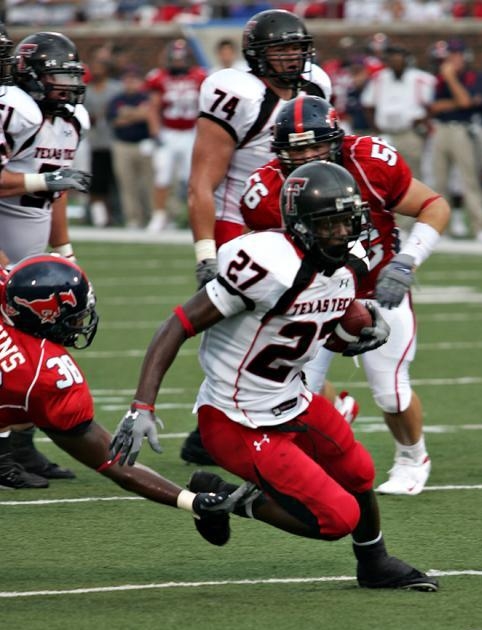
Photo courtesy of Jay Davis and
Wikimedia Commons

August.  How did that happen?

It’s Tuesday, and it’s still July; but August 1 is a mere two days from now,  and in the United States that means football season is cranking up (the NFL opened their training camps last week, with injuries already mounting).  August has represented historically the time of year when football teams run their notorious “Two-a-days”:  workouts morning and afternoon, intended to prepare the youngsters for the battles of the season (and weed out the poorly conditioned or poorly motivated.)

Two-a-days and August have typically represented a pair that leads to increases in Exertional Heat Illness (EHI), which is definitely something I plan to talk about later in the month.  The epidemiology of EHI in High School athletes is something that has been explored recently by Dawn Comstock  and her group, a team of researchers I have profiled before in these blog pages. 

Today, however,  I wanted to focus on another injury whose incidence is expected to rise this month:  concussions.

This is a topic I plan to return to several times during the month of August, with blog posts planned to look at the 2012 Zurich Consensus Statement on Concussion in Sport as well as the CJSM’s planned collection of free concussion research (up and running soon) and interesting perspectives on concussion from University of North Carolina researcher Jason Mihalik.

But just now, I feel like being somewhat provocative, and I most definitely want to hear from the readership on their views of a controversial subject:  Second-Impact Syndrome.

One of the new wrinkles in concussion management we will face in Ohio this football season is a “Zachary Lystedt” type law which will affect how we return youth athletes to sport after they have suffered a concussion or any head injury suspected of being a concussion.  These laws are predicated on the idea of secondary prevention:  that holding a youth player out from sport until a concussion has resolved will lower the incidence of the complication of ‘secondary impact syndrome.’

The subject of ‘secondary impact syndrome’ is controversial, with some authors arguing against its existence.  There is consensus on one extremely rare catastrophic complication of single brain impacts:  namely diffuse cerebral swelling.   This occurs more frequently in children and adolescents, and is a dreaded (albeit rare) complication of youth collision sports. However, there is more debate over whether having a prodrome of a previous, unresolved concussion raises the risk of having this post-traumatic cerebral swelling.  Paul McCrory, in a CJSM article from 2001 that has been widely cited, argues strongly against the existence of a separate entity known as ‘secondary impact syndrome.’  He updated this position in 2012 with a more recent review of the literature, and came to this same conclusion.

So, I’ll put it to the readership in the form of a poll (in the spirit of this blog, it will come as two polls:  here on the blog, and the same one on the main CJSM web site).   Let us know what you think, and we’ll let you know what the results are…..and what we think about this, and more of the associated issues around the big medical concern of concussions.

There’s an App for that 3.0

The summer solstice (winter for my friends in the antipodes) occurred yesterday, and the languor of that season is upon us.  Not to mention it’s the weekend!

I will brief this morning.

If you haven’t had a chance to see our recent posts about apps for clinical use in sports medicine, I’d encourage you to check out ‘versions’ 1.0 and 2.0 and let me know what you think on twitter @cjsmonline or in the comments section of this post.  Or check some older posts on patient education apps here and here.

And I wanted to encourage readers to take the CJSM polls, available on this blog or on the main journal web page.

We’ve reformatted the main journal web page so that the poll is on the upper right in a viewer’s field of vision.  The current poll will also start appearing on this blog page.  I am eager to get more feedback on clinical sports medicine issues from the readership.  I plan over time to use the polls at times to ‘push’ the content we might discuss on this page:  that is, polls can help determine what are some of the most interesting, maybe even controversial, topics to talk about in sports medicine.

I also am eager to use the polls to highlight the powerful, original research that is published every other month in CJSM.

So…..before you climb into your hammock, or hunker down by the fireplace if you’re in NZ, click one of the radio buttons above.  Thanks as ever for participating and reading, and we’ll see you in the blogosphere next week.

6/26/13 update:

And did you know there are proper ways to cite social media (e.g. twitter posts, blog posts, etc.) in medical journals?  iMedical apps told me so!