What to do about heading?

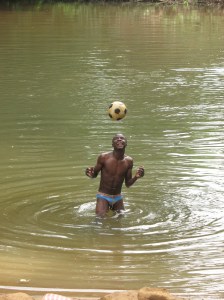
Heading the ball — photo courtesy of Wikimedia

I have been meaning to write a blog post for over a week, since a bit of breaking sports medicine news occurred with the publication of some research in the New England Journal of Medicine (NEJM).

It took a Tweet this morning to rouse me to action.  I promise it hasn’t been sloth on my part that has slowed my hand, but pleading “I’m busy” to the group of folks who usually will be reading CJSM media is not going to gain much sympathy.

And yes, with fall sports, I sure have been busy.  But I am sure you have too.

I hope, however, not too busy to have missed this piece of research from NEJM: “Neurodegenerative Disease Mortality Among Former Professional Soccer Players.”  There was an accompanying editorial to this study, a piece that is most definitely worth a read too. “Soccer and Mortality — Good News and Bad News”

The published research was a large retrospective cohort study looking at former professional Scottish football (soccer) players: 7676 cases were identified from databases of Scottish football players and 23,028 controls (3:1) from the ‘general population’ were identified using a Scottish ‘Community Health Index.’ Controls were matched to players on the basis of sex, age, and degree of social deprivation.  Of note, all the participants in this study were male.The researchers looked at two dependent outcome variables:  i) cause of death as noted on death certificates and ii) dispensed medications, information for which was obtained from the Scottish national Prescribing Information System.  Follow up information for study participants was for a median of 18 years (for each individual, “Age was used as the time covariate, with follow-up from age 40 years to the date of data censoring, which was either the date of death or the end of the follow up (December 31, 2016), whichever occurred first).”

The researchers report several important findings in this study, to note just a few:
Read more of this post

Prescribed Exercise for Managing Concussions — the CJSM Blog Journal Club

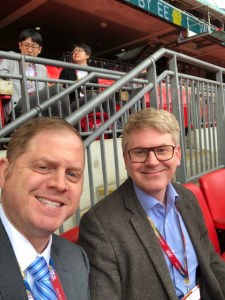
Our Editor-in-Chief Chris Hughes (R) and Jr. Assoc. Editor Jason Zaremski (L) taking a brief spell from their busy lives.

Our fifth edition of the year went live at the beginning of September, and it’s a special one:  we have devoted the entire issue to the theme of pediatric athletes.

Our guest editor Alison Brooks M.D., M.P.H. has assembled an impressive line up of authors, including John Leddy M.D. of SUNY Buffalo who is the lead on an interesting new study demonstrating the benefits of prescribed aerobic exercise in the recovery of adolescent males from sport-related concussion.

Our Jr. Assoc. Editor Jason Zaremski M.D. has submitted another insightful journal club piece looking at the details of Dr. Leddy’s study.

As fall approaches in the Northern Hemisphere, and spring in the Southern, sports-related concussions will continue to show up in a variety of sports our young athletes play.  This work from Dr. Leddy et al. (including both this new study and his CJSM 2018 study) will be transformative in the way we manage our athletes.

Enjoy the original research paper itself (here) and the journal club article (below).

________________________________________________________________________________

Jason Zaremski M.D., Junior Associate Editor CJSM

Title:

Leddy JJ, et al. A Preliminary Study of the Effect of Early Aerobic Exercise Treatment for Sport-Related Concussion in Males. Clin J Sport Med 2019 29(5):353-360.

Introduction:  

As the temperature begins to change and we enter the fall season, millions of student-athletes have returned to school and sport. With such large participation numbers in sport inevitably comes a rise in injury. One of these injuries is sports related concussions (SRC). In recent years, our overall knowledge of how to diagnose, manage, and treat SRC has improved thanks to the ever-growing research in this area. However, one aspect that is continuing to evolve is the timing and intensity of physical activity after sustaining a SRC. While rest (cognitive and physical) has been a mainstay of treatment in the past, there is a growing body of research that indicates physical activity may accelerate recovery versus physical rest only. Thus, it is our pleasure to provide this month’s CJSM Journal Club by reviewing Leddy and colleagues’ new work on the effects of early aerobic exercise as a potential treatment for SRC in adolescent males.

Purpose/Hypothesis(es):

The primary purposes of this research is to compare early subthreshold aerobic exercise (STAE) versus prescribed rest and days to recovery from concussion for adolescent males. The authors hypothesized that STAE would reduce the days to recovery after treatment prescription. Read more of this post

The CJSM Podcast with Dr. Tamara McLeod — Pediatric & Adolescent Concussions

Our guest for the newest CJSM podcast is a friend and colleague I see in a variety of professional settings, and it’s always a pleasure when our paths cross.  Tamara Valovich McLeod PhD, ATC is a busy clinician and researcher at A.T. Still University in Arizona, USA, where she is J.P. Wood, D.O., Chair for Sports Medicine and Professor as well as Director of the Athletic Training Program.

Dr. McLeod is the lead author of an original research paper in our July 2019 CJSM: Patient, Injury, Assessment and Treatment Characteristics & Return-to-play Timelines After Sport-Related Concussion.

Dr. McLeod does it all — from teaching to research to racing.

In our podcast, Dr. McLeod describes how her team did a deep-dive into data from a growing practice-based research network (now encompassing 37 states in the USA) to uncover some of the finer points associated with the presentation, management and outcomes seen in pediatric and adolescent sport-related concussion.

The Athletic Training Practice Based Research Network (AT-PBRN) is centered at A.T. Still University and is a valuable resource for the profession of athletic trainers  (ATs) and sports medicine clinicians in general.  You’ll be sure to see more research coming out of this database in the coming years.

If you’re listening from outside of the USA, you may not be so familiar with ATCs and their central role to the care of athletes, most especially at the secondary school and university levels.  You’ll learn more about the profession if you listen in on the conversation I had with Dr. McLeod.

As ever, you can find this podcast episode (and all of our episodes) on both iTunes and on the CJSM main website.

Remember to subscribe to the podcasts via iTunes so you can access an episode as soon as it is released, and while you are visiting the iTunes site be sure to rate and comment on the good and the bad after listening.  We’re always seeking to improve our media at CJSM.

The Mental Health Podcast and CASEMCON2019

I hope readers of this blog, and listeners of the podcast, have been following #CASEMCON2019 on their social media feeds this week. The Canadian Academy of Sport and Exercise Medicine (CASEM) has been conducting its annual meeting in Vancouver these past several days, and is scheduled to wrap up today, May 18.  I have learned so much from following this #, as well as following the feeds of CJSM Twitter friends including Drs. Jane Thornton  Margo Mountjoy and Laura Cruz.

The topic of mental health in sport has figured prominently in the CASEM proceedings:  for instance, Clint Malarchuk, a retired NHL player, is scheduled to talk today about the stigma of mental health in sport.

And so one of our more recent publications and our most recent podcast could not be timelier (published in our May 2019 journal): The Canadian Centre for Mental Health and Sport (CCMHS) Position Statement: Principles of Mental Health in Competitive and High-Performance Sport

Krista Van Slingerland, of CCMHS and the University of Ottawa

The CCMHS is a relatively new organization and, along with a similar group in Sweden, represents one of the first such initiatives on the planet.  The co-founder of CCMHS, Ms. Krista Van Slingerland of the University of Ottawa, is the lead author of the position statement. She graciously met me on Skype (she, in Ottawa, and I in Columbus) to conduct a podcast exploring the issue of mental health in sport and the work CCMHS is doing to bring further attention to this issue and begin treating individual athletes for the problems they are facing.

CJSM is committed to providing a platform for this important issue, one which has been relatively neglected for too long in our world of sport and exercise medicine.  In my training — and I would suspect in yours, too — the focus was primarily on musculoskeletal medicine,  Medical issues such as managing diabetes or exercise-induced asthma, screening for cardiac disease, etc. would demand our attention at times.  The issue of concussion and its sequelae have of course become central to our athletes’ lives and our practice.  But identifying and helping our athletes cope with anxiety, depression, suicidality — I received little to no training in sports medicine about this, and have heretofore relied on my training in family medicine to help.

The new position statement as well as the CJSM CME Module we have created will help clinicians, including myself, learn more about the importance of mental health in the athletes we serve, and will help us be better able to identify and address the issues uncovered.  High profile and tragic stories like that of the life and death by suicide of Olympic cyclist Kelly Catlin underscore the vital importance of improving our care.

Besides the timeliness of #CASEMCON2019 wrapping up today in Vancouver with Clint Malarchuk’s talk, there is a bit of additional serendipity to the publication date for the CCMHS statement and this podcast, as well, for May is #MentalHealthAwarenessMonth!

And so…..your action items for this weekend

  1. Follow #CASEMCON2019 on your social media feeds
  2. Listen to the podcast, which can be found on our journal web page and on our iTunes feed
  3. Read the position statement — one of the Editor’s picks for this month
  4. Check out the CME module CJSM has produced on the topic of mental health in sport