Le Tour et La Corse

800px-Panorama_view_mountains_in_Corsica

Les montagnes de L’Île de Beauté: La Corse

…et La Centieme:  The 100th edition of Le Tour, the Tour de France, begins today, with the Grand Start in Corsica for the first time in the race’s history.
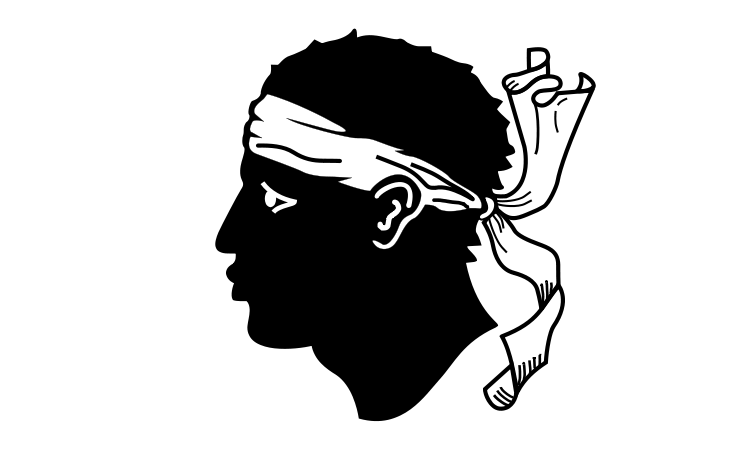
750px-Flag_of_Corsica_svg

Who needs the Tricolor? The Flag of Corsica: once an independent republic, now part of France, still with its own language and distinct customs.

What a way to celebrate the centennial of the Tour!

Corsica, or La Corse, is a French island in the Mediterranean, and is comprised of two of that nation’s departments: Haute-Corse and Corse-du-Sud.  It is the only region of France which has not previously hosted a stage of Le Tour.

The island has a long history, perhaps best told in one of the finer travel books I have ever read, The Granite Island, by Dorothy Carrington.  The island has passed through many hands over its history:  the Carthaginians, Romans, Genoans and others have all claimed the island for their own.  The island even enjoyed an independent existence for some years:  the Corsican Republic was formed in 1755 under the leadership of Pasquale Paoli.  Corsica’s most famous son, Napoleon, was born there in 1769.  And it was during the time of the “Napoleonic wars” that he set loose on Europe that the island became part of France.  It has remained a part of that country ever since.

I have a special fondness for this land, known by the French as  L’Île de Beauté:  the Isle of Beauty.  I have visited Corsica twice, and was smitten with the island from the first my eyes lay sight on the port of Calvi. (Some readers may recognize Calvi as the site of the 2011 IOC Advanced Team Physician course.)

Corsica is quite simply arresting:  from its mountains and trails, to its beaches, to the very smell of the island (its vegetation, known as the ‘maquis’, has a distinctively lovely fragrance), it can put anyone under its spell.

That said, I suspect the cyclists in Le Tour this year may be smitten in a different way than I was on my visits.  Like any beauty, Corsica has its caprices.  The mountains I found lovely will almost certainly pose extraordinary challenges to the competitors.

GR_20_Cirque_de_la_solitude

Cirque de la solitude: in the mountains of central Corsica
corte

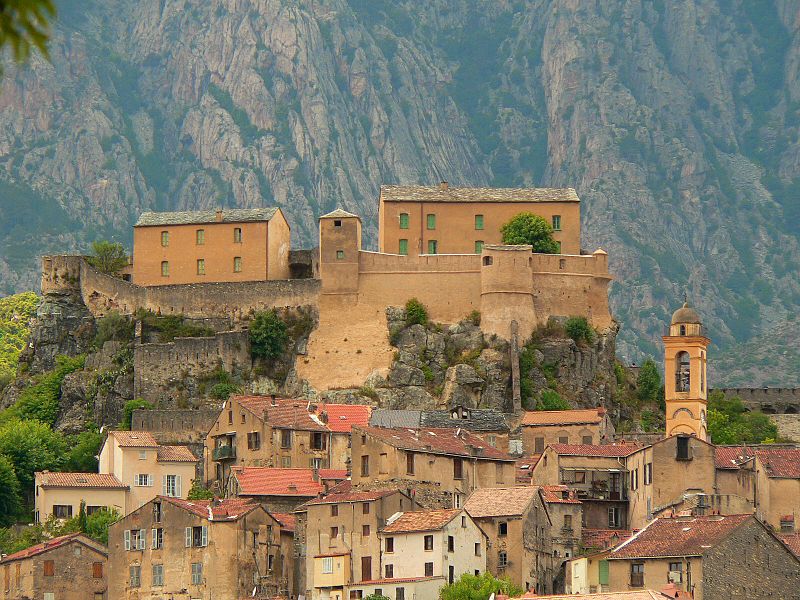
The capital of Corsica: Corte, through which the 2nd stage of the Tour will pass


The second stage of the Tour this year will traverse the mountains that form a spine through the center of the Island, heading from Bastia on the east coast, through the mountainous capital of Corte, and ending on the west coast in Ajaccio, the birthplace of Napoleon.  The Tour’s website describes the ride as a rollercoaster; “Expect some real damage,” the site boasts menacingly!    Let’s hope no one meets his ‘Waterloo’!

Read more of this post

Paralympics, Sochi 2014, ACSM and more!

It’s been almost a month since the ACSM 2013 meeting in Indianapolis wrapped, but it’s the gift that keeps on giving for me.

Meetings like those of the American College of Sports Medicine (ACSM), the American Medical Society for Sports Medicine (AMSSM), or the Canadian Society for Sports and Exercise Medicine (CASEM)–all partner societies with the Clinical Journal of Sports Medicine (CJSM)–are such a pleasure because a sports medicine clinician like myself can interact with clinician researchers from across the globe.

rayne

Michael Phelps better watch his back: My good friend and Paralympic Swimmer, Rayne McCann and her haul of medals

At both the ACSM meeting and the AMSSM meeting in San Diego I saw my friend and fellow CJSM editor, Connie LeBrun, M.D., from the University of Alberta.  I heard she chaired a wonderful session on the Paralympics at ACSM, one I could not attend because there was a concurrent session that took me away (such are the ‘downsides’ of these meetings–there is usually too much to fit in!)

What could I do, but beg Connie to pen a guest blog for me so I could learn more about her session at ACSM.  Little did I know, I could also live vicariously her jet-set life:  catching up with her between Indianapolis, Calgary, Russia, and all points between (I’m beginning to wonder if she’s involved in the Edward Snowden affair).  It has been hard to track her down!  But worth it.

And so I present the guest blog from my colleague, Connie Lebrun, M.D.

____________________________________________________________

Union_Flag_Wenlock_(1)

London 2012: Wenlock? Or Mandeville?

Can’t believe how fast the time has flown since the recent ACSM Annual Meeting in Indianapolis! A huge highlight for me, was chairing the Special Event submitted by the Olympic/Paralympic Sports Medicine Issues (OPSMI) Committee, of which I am a member. It was entitled: “London 2012: A Look Back at the Sports Medicine and Sport Science Issues of the Olympics and Paralympics.”

We had a stellar cast of speakers, beginning with David Epstein, a brilliant young “investigative journalist” for Sports Illustrated, who has won many awards for his science writing. He has produced innumerable cover stories for SI, on a variety of topical and controversial sports issues, including the piece that broke the news that Yankees third baseman Alex Rodriguez had used steroids.

Read more of this post

Nadal’s Knees

715px-AFONSONADAL

Rafael Nadal, invincible on clay, just might be beaten by this man in table tennis (Portuguese Table Tennis Coach Afonso Vilela)

What a great week it has been at the French Open in Paris.  As I write, I see that Serena Williams has just closed out Maria Sharapova in straight sets to regain the title she last held 11 years ago in 2002.  The men’s final is set for tomorrow, with the incomparable Rafael Nadal facing his Spanish countryman David Ferrer after outlasting Novak Djokovic in an epic five-set semi-final match.

Like many of this blog’s readers, I have been amazed and entertained by men’s tennis over the last decade.  It truly is a golden era for the sport, with Federer and Nadal and Djokovic and Murray each seeming to outdo the other in feats of tennis heroics.  Just yesterday Nadal made an amazing between the legs shot in the fifth set, but is that perhaps outdone by the amazing forehand Djoko ripped off Federer to save match point in the 2011 U.S. Open (going on then to win the semi-final)?

Read more of this post

Risk Factors for Injury in Elite Youth Ice Hockey

I had planned today on writing a sequel to my weekend post on spondylolysis, and I will definitely do so later this week.  But I have hockey on my mind this morning.

Our local team, the Columbus Blue Jackets, fought valiantly this shortened NHL season, and came within a whisker of the playoffs.  The team I grew up with, the Detroit Red Wings, have moved on to the Conference semi-finals, and so if I have any skin left in the game, it is with the Wings.

But I was captivated last night, as I’m sure some of the blog’s readership was, with an extraordinary Game 7 between the Toronto Maple Leafs and the Boston Bruins which brought to mind Jim McKay’s famous line from the “Wide World of Sports”:  “the thrill of victory, and the agony of defeat.

Patrice_Bergeron

Patrice Bergeron scored the goals at end of regulation and in OT to send Bruins to victory

800px-Toronto_Maple_Leafs_bild

The Maple Leafs: deflated at the end of a heartbreaking game.

Somehow, the Maple Leafs went from leading 4-1 to losing 5-4 in overtime, as the Bruins, playing at home in Boston, achieved one of the more memorable comebacks in NHL playoff history.

As this was happening, my Twitter feed exploded with #bruins and #leafs posts, as two cities were collectively either shouting with joy or gnashing their teeth.  If you’ve never ‘watched’ a sporting event via Twitter, I commend the experience to you: it’s a bit like tapping into the collective consciousness of whatever group your following. Read more of this post