The November CJSM: A Discussion on the Mandatory Use of Bicycle Helmets

The November issue of CJSM has been out for a week, and I hope you’ve had a chance to look at our latest offering.  It is also our last offering for 2013 (CJSM is a bimonthly, publishing 6 times a year).  The next time the journal will hit your mailboxes and inboxes will be January 2014.

FIMS 2014

Quebec City, site of the XXXIII FIMS
World Congress of Sports Medicine
CJSM will be there: will you?

2014 promises to be a big year in sports and sports medicine.  The Winter Olympics take place in Sochi, Russia; the FIFA World Cup is in Brazil; and the Commonwealth Games are in Glasgow, Scotland.   On the sports medicine front, the Canadian Academy of Sports and Exercise Medicine (CASEM) hosts the FIMS 2014 World Congress of Sports Medicine in Quebec City, and earlier in the spring the AMSSM annual meeting takes place in the Big Easy.  And this brief listing, of course, merely scratches the surface of what is to come.

But before I get ahead of myself, best to hold on to the mantra, “Be Here Now,” and share with you a little of what’s in store when you delve into this month’s CJSM.

Headlining the November issue is CASEM’s position statement on the mandatory use of bicycle helmets.  This document is a revision of a previous statement made in 2002, and incorporates the medical evidence in support of such use that has accumulated over the last 10+ years.  There is an associated lead editorial by Murray Maitland, PhD that is definitely worth a read as well.

I was particularly interested in the CASEM offering at least in part because I am a regular bicycle commuter here in Columbus, Ohio who recently had his interest in such matters piqued after reading a provocative article in the NY Times:  “Is it OK to Kill Cyclists?”

That’s a rhetorical question mind you!

First having ensured the life insurance policy had been paid up, I then read through the CASEM statement, which packs a lot in two pages.  The statement surveys the field of what is known about the use of bicycle helmets and injury prevention, and then makes recommendations.  Some of the salient points I walked away with: 1) wearing a properly fitted helmet decreases head injuries by 63% to 88% in all ages of bicyclists; 2) introduction of legislation (i.e. not merely relying on education campaigns) is associated with a decreased injury rate and has not been shown to decrease ridership (importantly, as we seek to increase physical activity in our sedentary population); 3) youth populations are more likely to wear helmets where there is legislation that applies to riders of all ages as opposed to only 18 years and younger; 4) youth are more likely to wear helmets when cycling with an adult wearing a helmet (95%) than when cycling with an adult not wearing a helmet (41%).

The CASEM statement draws several conclusions from these data, but most importantly recommends “That all Provincial and Territorial governments should enact comprehensive legislation mandating that bicyclists of all ages wear helmets.”

I would concur with those recommendations, and I would love to hear your thoughts after reading the CASEM statement, either here in the comments section or on twitter @cjsmonline.  The CJSM executive editor, Chris Hughes, has written about this subject in a 2011 blog post, and notes that the associated poll of the readership taken at that time got more traffic than any other.  I’m hoping this month’s articles on the subject, and this blog post, encourages that same sort of commentary.

923380_10151585476514581_1263666389_n

My trusty steed has been known to fail me;
I’m happy to have a helmet on when riding it

My position on the matter (pro) is uncomplicated.  I think the data are clear and in favor of mandatory use of bicycle helmets:  mandatory legislation reduces serious injury; it encourages the most vulnerable (children) in the use of an injury prevention device; and it has not been shown to decrease ridership. Read more of this post

Rugby and Injury Prevention

As I write, it’s early afternoon in the Midwest of the United States.  I hope wherever you are as you read this you are enjoying yourself.  If you’re reading this over the weekend, you may be taking advantage of the many sporting offerings around the globe that involve one of the football ‘codes.’

It took me a long time, as an American, to learn that the ‘football’ I grew up with was  only one of many games sharing a similar genealogy;  and, what’s more,  in most of the world, the word ‘football’ would be understood to refer to a completely different sort of game than what I saw on an NFL Sunday.

Paul-bunyan-at-msu

The Paul Bunyan trophy,
awarded to the winner of
Michigan v. Michigan State
Football (American!) game

I’m probably ‘preaching to the choir’ if you’re reading this, but today there are many different types of football games being played around the globe.  There are several NCAA American Football games (I have an eye on the Michigan v. Michigan St. (MSU) game, having grown up in Grand Rapids, Michigan); there are of course many ‘Association football’ (soccer) games going on (Arsenal v. Liverpool is one of the highlight matches in the Premiership).  England upset Australia in Rugby Union earlier today; and the Edmonton Eskimos face off against the Saskatchewan Roughriders in the Canadian Football League this evening.

And more out of ignorance than intent, I am probably forgetting to mention any number of fixtures happening in Australian Rules football, Rugby League, or Gaelic football this weekend.

Lots of ‘football.’  Many ‘codes.’

Though most of my current practice in the Northern Hemisphere fall is devoted to caring for injured American football players, I wanted today to look at a different code.  I thought it the proper time to write about a recent news item on rules changes in Rugby Union.

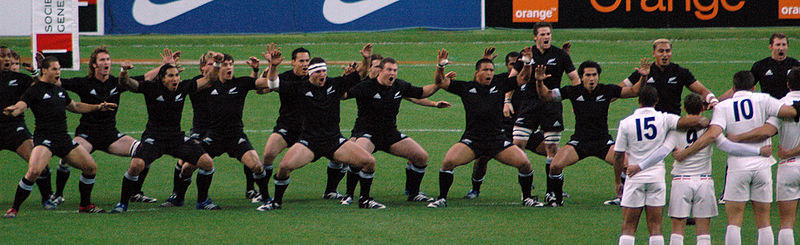
All_Blacks_Haka

The New Zealand All Blacks
performing their famous
Haka before a match with France

What prompted me to tack in this direction was a BBC article I read on line yesterday, “Rugby and Concussion:  Are Big Hits Bringing Big Headaches?”  There is controversy in the world of Rugby Union, according to the BBC, over how to manage game day concussions.

Barry O’Driscoll, a well-regarded member of the International Rugby Board’s (IRB) Medical Committee, has resigned in protest over proposed new rules for Pitchside Concussion Assessment (PSCA) in Rugby Union matches.  The new approach will replace what previously was a mandatory end to a player’s game and week rest period if a suspected concussion had occurred.  PSCA incorporates a functional assessment by a medical provider, which the BBC states includes the following:

  • A Pitch-Side Concussion Assessment can be asked for by a team doctor or referee if they suspect a player is concussed
  • The referee signals a PSCA has been requested via radio link and with three taps to his head
  • A substitute comes on while the PSCA takes place in pre-agreed place, usually a medical room
  • The injured player is assessed for symptoms, asked a series of questions – Where are we? What’s the score? etc – and given a balance test similar to the ones in drink-driving cases
  • One failed question, four balance errors and the presence of one or more symptoms means the player is removed from game*

*PSCA summary taken from BBC article

Read more of this post

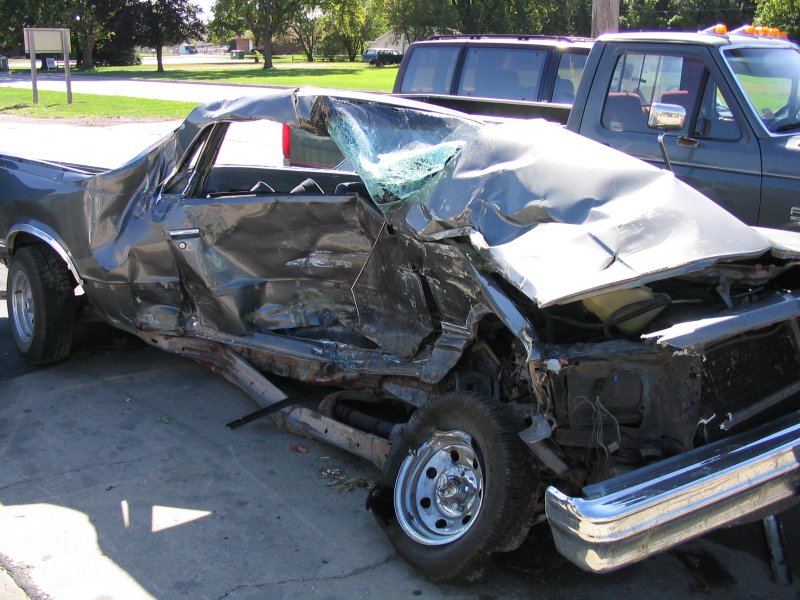
Motor Vehicle Accidents: The Leading Cause of Death in Collegiate Athletes

Car_crash_2

Motor Vehicle Accidents: the number one
killer of NCAA athletes

The title of today’s post is striking.

In sports medicine we focus–rightly–on entities such as sudden cardiac death, cervical spine injuries, second impact syndrome, exertional heat illness, hyponatremia……There  is a long list of conditions that can befall athletes which can cause serious mortality and morbidity.

But from a public health perspective, our priorities are possibly misplaced. At the very least I wonder sometimes if we may ‘strain at a gnat and swallow the camel‘ when we focus intensely on chest protectors and commotio cordis and say nothing about the use of seat belts in our athletes.

In August CJSM published ‘ahead of print’  “Motor Vehicle Accidents:  the Leading Cause of Death in Collegiate Athletes,” a study authored by I Asif, K Harmon, and D Klossner, authors who have published other epidemiologic work on sudden death in young athletes.  The data presented gave me pause. For all our concern about sudden death from hypertrophic cardiomyopathy,  to name one example, the data show that far and away the greatest threat to the young athletes under our care are accidents or unintentional injury.

The authors conducted a 5 year retrospective analysis using two data bases:  an NCAA database, and the “Parent Heart Watch” database.  This second database has an interesting history: a non profit group which began tracking sudden cardiac death in American athletes in 2000.   Various death rates were calculated, notably: 1) an overall death rate for athletes was found to be 13.86/100,000 athlete-years; 2) a death rate from accidents of 7.36/100,000 athlete-years; 3) a death rate from cardiac causes of 2.28/100,000 athlete-years; 4) a death rate due to accidents found highest in the sport of division I wrestlers, with a rate of 28.2/100,000 athlete-years.   Deaths from unintentional injuries occur at “….nearly twice the rate of all medical causes of death combined,” the authors note. Read more of this post

And We’re Off……

308627_10150325936247969_726779957_n

The author and colleague attending
to downed football player

The college football season began here in the USA last night, and the high school football season begins here in Ohio tonight.  I’ll be on the sidelines tonight and every week for the next 10 weeks….or more, if the team I cover makes the playoffs. Ohio Dominican University, the college whose sports our group covers, has been picked to do well this year, and I think the Panthers will, if they stay injury-free.    I hope all the players we’re involved with, high school and college, can stay as safe as can be expected.

The American football season represents the busiest time of our year. This stands to reason, of course, as both injury and participation rates in the sport consistently ‘top the charts’ in almost any study looking into the matter.  My friend and colleague R. Dawn Comstock, Ph.D., whom I mention frequently in these blog posts because of the many articles she has published, authored one such study in the Journal of Athletic Training, 2008:  ‘An Epidemiologic Comparison of High School Sports Injuries Sustained in Practice and Competition.’  Of all the sports studied, football had the highest competition and practice injury rates: 12.09 and 2.54 per 1000 athlete-exposures, respectively.  And as for participation, over 1 million high schoolers and nearly 80,000 college  students play football each year.   Combine these high participation rates and injury rates, and you have lots of bodies to attend to in the fall here in America.

It can be a brutal sport.  Boden et al. published a fine study in the American Journal of Sports Medicine this spring, “Fatalities in High School and College Football Players,” where he and his colleagues looked at the epidemiologic data from the National Center for Catastrophic Sports Injury Research from 1990 to 2010.  They found that football is associated with the highest number of fatalities for any sport reported to the Center, with 243 fatalities reported during the study period.  The reported rates of fatality were 1.0 per 100,000 participants.  They found, too, that college football was riskier, with 2.5 deaths per 100,000 participants for collegiate athletes, as compared with 0.9 deaths per 100,000 in high schoolers.

The theme for August here at the CJSM blog and at the mother journal herself has been “Concussion.”  The blog posts for this month have all focused on this issue, and the journal has made freely available this month a set of ten high quality concussion research articles it has published recently in a special concussion “collection.”  And so I would be remiss, with two days left in this month, if I did not briefly mention concussion injury rates in the sport of football.  Again, I will turn to the exceedingly productive Dr. Comstock, who reported in 2007 on “Concussions Among United States High School and Collegiate Athletes.”  Once again, the sport of football tops the injury rate charts, with Comstock’s group reporting rates for high school football players of  1.55 per 1000 athlete exposures; for the collegiate players the rates, as they are for fatalities, are higher, with 3.02 concussions per 1000 athlete exposures.

Time to start reviewing the Zurich consensus statement on Concussion in Sport.

With August’s end, we won’t stop talking about concussion, of course.  It is one of the most newsworthy items in the current field of clinical sports medicine, and I can tell you (having had a sneak peek at the upcoming September edition), that there are some excellent original research articles on the subject being published in CJSM in the next week.  I also have a “Question and Answer” blog post with the illustrious William Meehan, M.D., Director of the Sports Concussion Clinic at Boston Children’s Hospital, coming for the blog in September.  So keep your eyes on these pages, the journal’s website, and follow us on Twitter @cjsmonline (join the 2000+ who already do).  We’ll keep you up-to-date on the news and research relevant to you in your clinical practice of sports medicine.

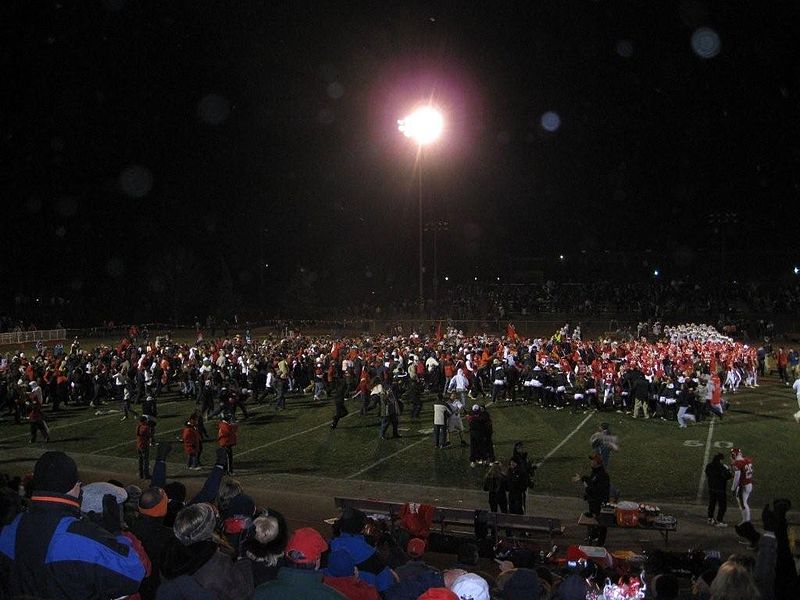
800px-MT._CARMEL_062

Friday Night Lights,
may you and yours be safe this season.

I sign off knowing that many of the readers of this blog will be on sidelines and in training rooms this fall, and I wish you all good luck.  All the fall sports, and especially football, will keep you busy I know.  May you, and the athletes you care for, enjoy health–or recover quickly from injury–under the lights this fall.