Overuse Injuries and Burnout in Youth Sports

Pawsox_17937_2013-06-30

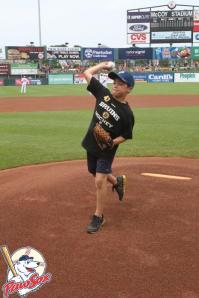
10,000 hours of practice, and
he might make the Red Sox?*

We’re very pleased at CJSM to open the New Year with a shout:  a fantastic systematic review and position statement on the subject of youth sport, from the American Medical Society for Sports Medicine (AMSSM).

The focus of the paper–in the January 2014 issue, which has just published–is on overuse injuries, which are thought to represent roughly half of all the injuries youth athletes sustain.

All readers of the journal, and of this blog, will find this a worthwhile read.  I have a selfish interest in the subject, as I am currently practicing pediatric sports medicine, and in my professional life I live and breathe the issues discussed in the paper. Moreover, I know several of the authors of this paper, and I think highly of them all.

But this is not about ’eminence based’ medicine.  No, it’s evidence-based all the way.  The paper is both a systematic review and the AMSSM position statement on the subject of “Overuse Injuries and Burnout in Youth Sports”.  The authors conducted a thorough review of the literature, identifying 953 papers and citing 208 unique references in their comprehensive analysis of this broad subject.  They go on to review what is known, and then make recommendations, classified using the Strength of Recommendation Taxonomy (SORT) grading system.

The paper is broadly organized into the following subsections:  epidemiology; risk factors (intrinsic and extrinsic); discussion of high-risk overuse injuries;  discussion of several concepts mentioned frequently in the literature of youth sports (readiness for sport; sport specialization; burnout); and prevention.

The study is so very comprehensive, I cannot do better justice to it than encourage you to read it yourself.  I thought I might here mention some of what stood out for me. Read more of this post

Dr. Keith Yeates guests on “5 Questions with CJSM”

keith

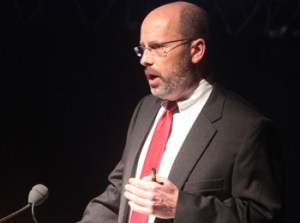
Dr. Keith Yeates revs up the crowd at
the International Brain Injury Association meeting
in Edinburgh, Scotland

I live and work in Columbus, Ohio, United States, and I am privileged to be surrounded by many leaders in the field of sports medicine.  One such figure, who is doing great work advancing the evidence to support the diagnosis and management of sport-related concussions, is Keith Yeates, Ph.D.

Dr. Yeates and I work at the same institution, Nationwide Children’s Hospital; I have found him to be a great resource to turn to for questions regarding the sport-related concussions in kids that I manage as part of my clinical practice.  He is a prolific researcher and writer, who has been a contributor to the pages of CJSM and journals beyond.  He is a lead neuropsychologist for a multi-site study of traumatic brain injury in children and adolescents, funded by the CDC.

I just learned from a press briefing that Dr. Yeates has become a millionaire of sorts:  he has been awarded a prestigious R01 grant to continue his work in the field of traumatic brain injuries.   And so I had to try to catch up with him and have him sit for 5 questions before his various other commitments overwhelmed him!  I got lucky, and here are Dr. Yeates’ thoughts on the state of concussion research.

___________________________________________________________________________

CJSM asks Dr. Keith Yeates 5 questions

1) CJSM: Congratulations!!  We understand you just received a $3M R01 grant for ‘predicting outcomes in children with MTBI.”  What areas of research do you plan on pursuing with this grant?

KY: The grant will fund research to examine how well diagnostic methods commonly used for children with mild TBI can predict persistent postconcussive symptoms (PCS) and functional deficits. Various methods are recommended for the diagnostic evaluation of children with mild TBI, including assessment of presenting signs/symptoms, acute mental status examination and balance testing, neuropsychological testing, and neuroimaging. Although these methods discriminate between children with mild TBI and healthy children, we don’t know whether they predict outcomes such as persistent PCS and functional impairments among children with mild TBI. As a result, decision tools are not available to physicians and other health care providers to guide the disposition and care of children with these very common injuries. This comprehensive study of common diagnostic methods and their incremental utility in predicting outcomes should have a major impact on clinical practice, particularly in acute care settings, by helping improve prognostic determinations, develop decision tools, and focus treatment efforts. The study should also add substantively to the scientific understanding of the outcomes of mild TBI. Read more of this post

Osteoarthritis: Part I

I’ve been an Associate Editor for CJSM now for six months, and so some of you in the blog world may already know a little bit of my background as it has come out over time in my various posts.

For those of you who may be new readers of this blog, I thought for today’s post it was important for me to let you know that I work at Nationwide Children’s Hospital, the pediatric hospital affiliate of Ohio State University, and my specialty is pediatric sports medicine.

So……I don’t manage a lot of osteoarthritis (OA) in my current practice.

ocd of knee jpeg

Adult OCD of the knee,
unstable lesion: destined for osteoarthritis?

However, I didn’t narrow my clinical scope of practice to the younger crowd until 2010, and I have managed my fair share of OA in my career, injecting plenty of knees with hyaluronic acid derivatives, encouraging weight management and low impact exercise…….Now, I suppose I’m more on the end of the spectrum of primary prevention of the disease: if I manage my young patients’ knee osteochondritis dissecans properly, perhaps I can spare them from degenerative joint disease later in life.

I’m not telling anyone reading this something they don’t know already when I write that career paths are varied in modern medicine.  There’ s no telling if I’ll be taking care of kids exclusively in 10 years.  We all have mandates from Certification Boards requiring us to stay abreast of the current medical literature; we’re tested on it every few years now, as Maintenance of Certification is a phenomenon here to stay.  Forces like these make it incumbent that I read and ‘stay on top of’ developments in the world of OA diagnosis and management, even if I am not seeing much of this disease in my current practice.

After all, OA is the leading cause of chronic disability among older adults in the United States.  That’s a disease worth knowing about.

I thought, therefore, that I would share with you a couple of interesting studies that have come out recently on major issues in the world of osteoarthritis.  Both studies were just published within the last month:  the first, “Shared Decision Making in Patients with Osteoarthritis of the Hip and Knee,”  published in the Journal of Bone and Joint Surgery (JBJS), I will discuss in my next blog post.  And the second, “Effects of Intensive Diet and Exercise on Knee Joint Loads, Inflammation, and Clinical Outcomes Among Overweight and Obese Adults with Knee Osteoarthritis,” published in the Journal of the American Medical Association (JAMA), I will review now.   They are both large, high quality evidence (Level 1) studies which focus on low tech, low cost interventions that have the potential of having major clinical impact.  They are both studies primary care sports/MSK clinicians like myself might be expected to be aware of. Read more of this post

William P. Meehan III, M.D. guests on “5 questions with CJSM”

bill m stanley cup

Bill Meehan & The Stanley Cup
One of the few awards he has
not garnered in his career.

Readers of the blog will remember in August I was able to interview Dr. Jason Mihalik, University of North Carolina, about his work while using the ‘5 questions with CJSM’ format.  I’m happy to say I have another willing victim for this format.

I have known William P. Meehan III, M.D. for several years; we both did our sports medicine training in Boston under the illustrious doctors Lyle Micheli, M.D. and Pierre d’Hemecourt, M.D., authors whose names will be familiar to readers of the journal as they have both been published in CJSM numerous times.

Bill, as I know him, is likewise establishing his own enviable track record in the clinical management and study of sport-related concussions.    I have mentioned some of the work he has done in a recent blog post, and so in the spirit of brevity let’s get right to the interview.

_______________________________________________________________________

Five Questions with CJSM

WM:  Thanks so much for inviting me to be part of your blog, Jim.  You do great work here at the Clinical Journal Sports Medicine I appreciate your including me.

1)    CJSM:  Thanks for those kind words Bill, and congratulations on your receipt of the first AMSSM-ACSM Foundation’s Clinical Research Grant for your project titled “A Randomized, Double-Blind, Placebo-Controlled Trial of Transcranial Light Emitting Diode Therapy for the Treatment of Chronic Concussive Brain Injury.”  Can you tell us what potential you see for LED therapy in this arena

WM:  The idea of using light emitting diodes (LEDs) to treat concussive brain injury was brought to my attention by Margaret Naeser, PhD, who works at the VA Boston Healthcare System and Boston University School of Medicine. Dr. Naeser approached me one day after a lecture and suggested that perhaps LED therapy could help people suffering from concussive brain injury. To be honest, I was a bit skeptical at first. But she was passionate and convincing about it.  After reading some of the previous medical and scientific literature about light therapy, my mentor in the laboratory, Michael Whalen, MD at Massachusetts General Hospital conducted some experiments on mice that had suffered a traumatic brain injury.  The results were promising.  So the three of us, together with Rebekah Mannix, MD, MPH, Alex Taylor, PsyD, and Ross Zafonte, DO set out to conduct the study.

As you know, the current hypothesis of concussion is that a rapid rotational acceleration of the brain leads to changes in the ionic gradients across the axonal membrane. Those ionic gradients are restored to homeostasis by the action of the sodium-potassium pump. The sodium-potassium pump operates on adenosine triphosphate (ATP). It turns out that light in the red and near infrared spectrum when applied to cells in culture increases the activity of cytochrome C oxidase. This results in further ATP synthesis. Thus, some very astute researchers hypothesized that shining light in the red/near infrared spectrum on the brain would result in an increase in ATP production and perhaps decrease the healing times after certain brain injuries, including traumatic brain injury.

Dr. Whalen was nice enough to conduct an experiment in his laboratory using mice that had sustained brain injuries when we first heard about this.  Those experiments showed that treatment with laser in the red/near infrared spectrum resulted in better outcomes on measures of cognitive functioning, specifically the Morris water maze. After considering all of the evidence I followed up with Dr. Naeser. She informed me that she had an ongoing trial of light emitting diode therapy for people suffering from chronic traumatic brain injury. She had also published a case series of two patients who sustained concussions during motor vehicle collisions, athletic participation, and military service, who showed improvements of their cognitive functions after LED therapy. So we decided to conduct a randomized, double-blinded, placebo-controlled trial of LED as treatment for concussion.  Thus far, we have recruited half of our estimated sample size of 48 patients.

2) CJSM:  Congratulations as well for becoming Director for the Micheli Center.  If you had to compose a 140 character tweet to tell the world about the work you expect to accomplish there, what would it say?

WM:  Thank you.  I was delighted to become director of the Micheli Center for Sports Injury Prevention. We believe we are the first center in the world where athletes can come and learn which injuries they are at highest risk of sustaining, and what steps they can take to reduce the risk of those injuries.  The full Injury Prevention Evaluation takes about 3-3.5 hours.  It starts by collecting historical information, such as what sports the athletes play, what injuries the athletes have previously suffered, how many hours per week the athletes train, etc.   Then the athletes move out to the assessment floor where we measure bony angles, flexibility at the joints, strength in various muscle groups, speed, power, agility, and many other factors that are associated with the risk of injury.  The full evaluation includes over 300 data points, all based on the available medical and scientific evidence.  At the end of the evaluation, athletes are given a list of the injuries for which they are at highest risk, and an individualized prescription that outlines the steps they can take to reduce their risk of sustaining those injuries.

Our goal is to encourage safe participation in athletics while simultaneously decreasing the risk of injuries sustained during sports.

Although I don’t have twitter account, if I had to put out a 140 character tweet to the world I would say, “Our goal is to reduce the risk of sustaining sports injuries while simultaneously encouraging athletic participation.”

(CJSM:  21 characters to spare with that tweet!  Hey, Bill, with a name like yours, you can imitate RG3 and see if the twitter handle WM3 is available.  You can make the Micheli Center go viral!) Read more of this post