LeBron and Exercise-Associated Muscle Cramping

LeBron_James_2

Does this count as “Old School”? LeBron James, in his first incarnation as a Cleveland Cavalier (photo: Dave Hogg, Wikimedia)

Game 2 of the NBA finals is this weekend, and I’m sure the Miami Heat (despite their nickname) are hoping the air conditioning works.  In truth, I think most of us are hoping that we witness a straight up basketball affair determined more by athletic skill and less by Exercise-Associated Muscle Cramping (EAMC).

If you need a primer to know what I’m talking about, here’s a brief rundown of Game 1 and LeBron’s EAMC. 

‘Most of us’?  I truly have no horse in this race (speaking of that….I most definitely am rooting for California Chrome to bring home the Triple Crown later today), but outside of Texas, it seems that most of the country may be leaning toward the Heat.  At least that’s what ‘Big Data’ would suggest:  check out this great, data-driven map from the New York Times showing the breakdown of team allegiances across the United States.

Truly though, aside perhaps from a pocket deep in the heart of Texas (who may want victory, no matter what!), I think most fans of the NBA would rather see the outcome of the games determined by the players and not by a lack of AC.

As a team physician, like many of you, I have had–along with my Athletic Trainers–to deal with plenty of muscle cramping in my career.  Here in the States, I find it occurs most often in the very beginning of football season:  during August pre-season, or the early September games that may be played in temperatures approaching 90 degrees.  It seems the combination of relative deconditioning, environmental conditions, and plain foolishness (my adolescent athletes frequently forget to stay hydrated, despite constant reminders to do the same)  gives rise to any number of trips on to the field to assist a player downed with quad or abdominal cramps.  At some levels of the game, to circumvent that inability to maintain adequate oral hydration during a game, teams will turn to pre-game intravenous hydration, as has been discussed in literature published in this journal and blog.

Then again, perhaps there are other issues altogether different than these potential risk factors that give risk to EAMC. Despite the high incidence, the etiology of EAMC continues to be debated.

Yes, I am a believer in the powers of pickle juice, but EAMC remains a puzzle to me and others.  And so I turned to the CJSM website  this morning for guidance and found a great 2013 study:  Collagen genes and exercise-associated muscle cramping, from a group of South African authors.  I especially appreciated this article for its contribution to my basic science knowledge:  I learned so much about the biology behind EAMC.  I encourage you all, clinicians and non-clinicians, to check it out.

The authors begin the paper with an excellent overview of various hypotheses of EAMC, ranging from electrolyte depletion to altered neuromuscular control. They then explored the literature that points to the possibility that EAMC may be associated with a genetic predisposition to musculoskeletal soft tissue injury. Specifically, their research hypothesis was that “variants within collagen genes that code for components of the musculoskeletal system would increase susceptibility to EAMC.”  To test this, the authors conducted a ‘retrospective case-control genetic association study’. Read more of this post
#BikeToWork

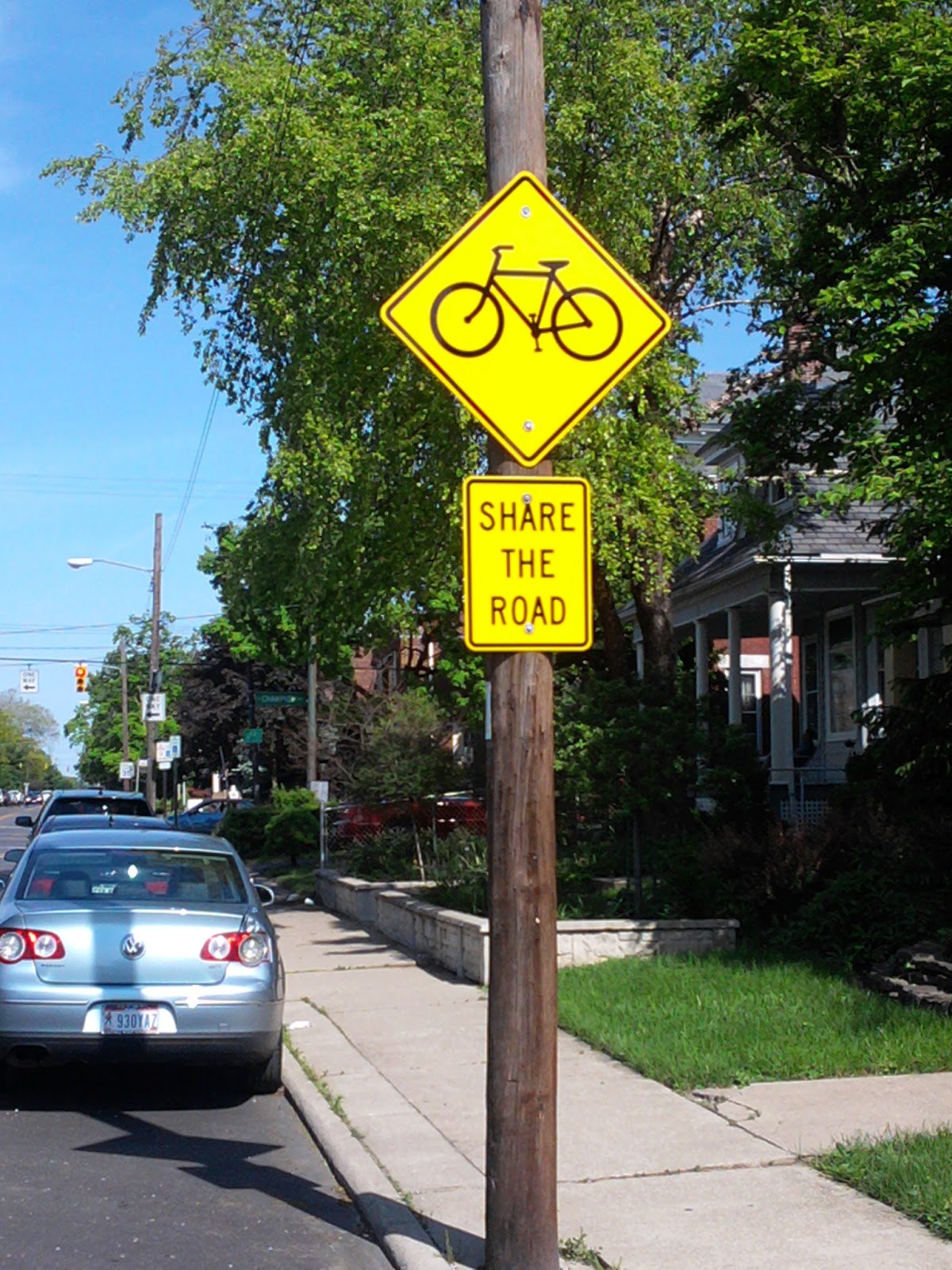
share the road

Amen to that!

It’s #BikeToWork week, a time to celebrate….by getting on your bike!

When I’m not on the bike, but instead wandering the ‘twittersphere,’ I have come upon some gems this week.  @NerdWallet posted a great set of slides profiling such data as the top American cities where people bike commute (Davis, California tops the list; but my previous home town of Santa Cruz, California is in the top 10–it’s number 5).

We publish frequently on the subject of cycling and sport medicine in the journal.  On the blog, too, we profile cycling:  from the Tour de France to the contentious issue of bicycle helmet use as injury prevention.

In celebration of this week (allowing me more time on the cycle, and less on the computer) I thought I’d direct you to my personal blog for a post I made a couple of years ago on the joys of discovery on the local bike paths here in Columbus, Ohio.

Enjoy your week, and make it better with an active commute!


Avery Faigenbaum y Cinco Preguntas con Revista Clinica de Medicina Deportiva

You read that right.

Like the NBA teams that don a Spanish jersey for an evening, at CJSM we are getting our Spanish on.

Faigenbaum_diRoda (1)

Drs. Avery Faigenbaum and
Provincial Senator Cristina diRado
in Mar del Plata, Argentina

Our good friend and contributor to these blog pages and to the journal, Dr. Avery Faigenbaum, has agreed to sit with us for “5 Questions with CJSM.” We have been trying to catch up with him since his trip to Argentina this summer where he was lecturing on Exercise Deficit Disorder (EDD) and working on his own Spanish skills.  I’m know he’s a lot better in that area than I am.

Dr. Faigenbaum is a professor in the Dept. of Health and Exercise Science at The College of New Jersey.  He has written about EDD in youth (“Thinking Outside the Sandbox”) and about the benefits and safety of resistance training in youth.  He has lectured widely:  I’ve heard him speak in various settings in the United States, and he’s set to speak to the American Academy of Pediatrics in 2014 on EDD. Catch him if you can, you’re sure to learn a lot and be entertained as well: his energy is infectious.

And here’s just a taste of what you’re in for if you do get to see him:

________________________

Avery Faigenbaum: Five Questions with CJSM

1) CJSM: With the recent award of the 2020 Olympic games to Tokyo, can you comment on any evidence out there that such events stimulate activity in young fans/viewers?  Is there a ‘trickle down’ effect for youth athletics/exercise from events like the Olympics?

AF: Last summer James Bond and the “Queen” opened the Olympic Games in London by jumping out of a helicopter. This was followed shortly thereafter by stellar performances from world class athletes including sprinter Usain Bolt, swimmer Michael Phelps, boxer Nicola Adams, and 23 year old Rosannagh MacLennan who started jumping on the trampoline at the age of seven. But in stark contrast to these remarkable feats of athleticism, physical inactivity among the world’s population is now recognized as a pandemic. Read more of this post

National Council on Youth Sports Safety

988780_10151971065024581_1620105790_n

Strained metaphor?
Like the Washington Monument,
our approach to concussions is
under revision

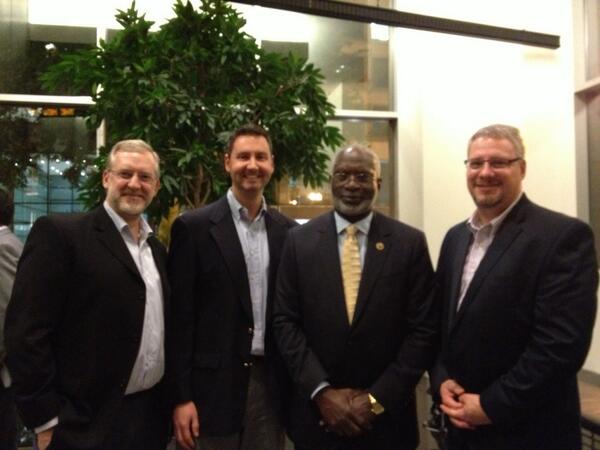
I am in Washington D.C. Thursday and Friday as a participant in the National Council on Youth Sports Safety (NCYSS), being put on by the Protecting Athletes and Sports Safety (PASS) Initiative.  Our host and keynote speaker is Dr. David Satcher, the former Surgeon General who has devoted his life to issues of public health, and has recognized that the concussion ‘epidemic’ has become a game changer in the field.

I’ve met a variety of high profile leaders, in addition to Dr. Satcher, in the world of youth sport concussion during my 24+ hours on the ground in D.C.

I don’t suppose it’s surprising,  but I think one of the most important components of these sorts of meetings is the networking:  I am coming out of this conference with at least three rather solid collaborative research ideas, not to mention commitments to work on other projects with several of the conference attendees.

BYhLP9pCEAAWm_P

Physicians from Nationwide Children’s Hospital and
Dr. David Satcher, former United States Surgeon General

On a ‘meta’ level, what I was struck by in this conference was the theme that was consistently struck:  we need more scientific research on youth sport concussion, and the urgency behind this need derives fundamentally from two areas–1) the often undervalued but critical importance of mental health and 2) the risk of children in being inactive.

In other words,  as concerned as we need to be about reducing the risk of concussion, about reducing possible long-term mental health issues consequent to this injury, we need to balance this concern with he equally strong demand that we promote physically active children.

In fact, it’s not simply the effect of sport and exercise on obesity, but also their positive effect on mental health:  for instance, physically active kids are less prone to depression.  And so, if one were concerned solely with mental health, he would need to navigate the twin perils of traumatic brain injury and physical activity.

At CJSM, we are on the frontline in these issues.  We publish original research on concussion in almost every one of our journal editions.  The November issue for  instance has an excellent study on predicting clinical concussion markers at baseline.   In the same issue we published the Canadian Academy of Sports and Exercise Medicine Position Statement on the mandatory use of bicycle helmets:  an issue of keeping youth and others safe while they are physically active.

BYkmR_SCYAA5gMH

@cjsmonline (attached to laptop)
tweeting from #NCYSS before
catching that plane

I am leaving D.C. struck….by the sight of the Washington Monument under scaffolding!  In truth, I am more than ever struck by how big of an issue concussion has become, and how it will remain central to primary care sports medicine research for years to come.  There are lots of questions that need answers.  We’ll be working on this continuously here at CJSM.