Can you do a brief but comprehensive examination of a concussed patient in your clinic?

Well, can you?

If your exam is brief, can it be comprehensive? If it’s comprehensive, will you be able to get through all of the patients on your schedule?

These are some practical questions that most of us in the world of sports medicine struggle with.

I’m looking at my clinic schedule tomorrow, and I have 15 minutes for most patients; for new concussed patients I’m ‘given’ 30 minutes.

Most of us know these clinic slots are a Procrustean bed – there really is little chance we can fit the patient and their needs, as well as our obligation to diagnose and manage the injury, in these time frames.
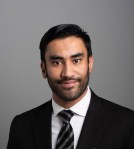
M. Nadir Haider, M.D.

Good news, then – authors from the University of Buffalo Concussion Management Clinic have just produced a Practical Management article that promises to make your approach much more efficient when you next see a clinic patient with a sports related concussion (SRC).

The first and corresponding author of this manuscript, M Nadir Haider, M.D., is our guest on the newest CJSM blog post. Dr. Haider is affiliated with the Jacobs School of Medicine, State University of New York (SUNY), Buffalo where he is an Assistant Professor of Orthopedics and Sports Medicine and the Assistant Director of Research at the University Concussion Management Clinic. Many of the readers of CJSM and listeners of the podcast will be familiar with the voluminous research that comes out of the SUNY, Buffalo center.  This work has been transformative in the area of SRCs.

Listen in on our conversation, where Dr. Haider walks us through the evidence-based exam, and then go to the September 2020 CJSM where you will find the Practical Management article itself, currently free of charge.

As always you can find the podcast on our journal website, or you may go to iTunes to listen in and subscribe as well.

Any way you read, listen or engage with CJSM, we are happy you are part of our sports medicine community.

CJSM Journal Club — Nondisclosure of concussion symptoms by athletes

Jason Zaremski MD, au courant with medical clothing styles circa 2020. Go Gators!

Our May 2020 issue has recently published, and as ever our Jr. Assoc. Editor Dr. Jason Zaremski is ready to share his pick for the newest CJSM Blog Journal Club.

Concussion Symptom Underreporting Among Incoming National Collegiate Athletic Association Division I College Athletes is the subject for today’s blog post.

Dr. Zaremski is himself a physician at The University of Florida, well known for its Division 1 College Athletic program, the Florida Gators. Whether we treat collegiate athletes, pros, or children, we in sports medicine ALL have an interest in addressing the issue of concussion nondisclosure.

Thanks to the authors for this timely study, and thanks to Dr. Zaremski for your ongoing contributions in this journal club.

___________________________________________________

Jason Zaremski, MD

Introduction:  As we enter the early stages of the summer and approach a “new normal” with regards to sports, it is incumbent upon sports medicine team physicians to be vigilant as we bring freshman athletes to college campuses with potentially different methods to screen and perform pre-participation physical examinations. While dealing with the new challenges COVID will pose, including the possibility of conducting assessments remotely, clinicians will need, as always, to obtain accurate historical information in order to care for our student-athletes. With that in mind, we present the May 2020 Journal Club on Concussion Symptom Underreporting Among Incoming National Collegiate Athletic Association Division I College Athletes by Dr Fiona Conway and colleagues.

Purpose: To examine concussion knowledge and the relationship of knowledge to reasons for concussion symptom nondisclosure in NCAA Division one incoming athletes. Read more of this post

A Conversation with Dr. Louise Tulloh, ACSEP President

Dr. Louise Tulloh, current president of the Australasian College of Sport and Exercise Physicians (ACSEP)

Today’s podcast guest is a physician I have been ‘after’ for a few months, and I am delighted I finally caught up with her to have a chat.

Dr. Louise Tulloh is a sports physician in Sydney Australia and she is in the midst of serving her two-year term as President of the Australasian College of Sport and Exercise Physicians (ACSEP).  We were planning to talk shortly after IOC Injury Prevention Monaco when COVID took over the world, and we have both just managed to get our heads above water to arrange a conversation.

And so one recent morning my time (evening hers) we had our chat, and I want to share it with you in this podcast.

We covered the intense trajectory Australian sport has taken over the last six months, from the bush fires to COVID. We got to review the ACSEP conference that took place in Canberra, at the end of February, one of the last sports medicine conferences to take place in 2020 before COVID upended the calendar.

The ACSEP is an international leader in sports medicine, and Dr. Tulloh was also able to share some of the extraordinary work the college is continuing in this new COVID era:

  • The on-line ACSEP Sport and Exercise Medicine Academy, a new and comprehensive curriculum that covers the gamut in our field.  It includes both free content (ECG modules, concussion) and for-fee content that can be accessed by anyone worldwide.
  • The ACSEP social media feeds, which include @ACSEP_ and @ACSEPpresident where the college is leading the charge in addressing current issues such as the maintenance of physical activity during a time of social distancing and home lockdowns. If you don’t follow those feeds, you simply must.  The ACSEP puts the ‘exercise’ into ‘sport and exercise’ medicine, for sure.

Take the time now to check out this newest podcast in our lineup of 40 (and growing) podcasts to be found on our journal website and on iTunes.

Thank you Dr. Tulloh for your time and leadership, and thank you ACSEP for the model you set for SEM colleges and societies around the world.

Brave New World

Sports Medicine Clinic — the Contemporary Look (2020)

As many of you know, the word ‘blog’ is a modern portmanteau, a combination of the words ‘web’ and ‘log’ (a “web log” or “blog”).  It is a word with a provenance similar to ‘motel’ (“motor” and “hotel”) or ‘brunch’ (“breakfast” and “lunch”).

Long before I joined the Editorial Board of the Clinical Journal of Sport Medicine (CJSM) in 2013, I produced a personal blog, begun when my children were born sixteen years ago.  It was a journal I could share on line with interested parties (i.e. family) to allow others access to photos and personal musings they might enjoy. It truly was a “log” of my experiences I shared on the “web.” A diary.

Today’s post feels to me like those earlier, rough, immediate attempts to write as a new parent.  Today’s post is a first draft really of thoughts, and emotions, new to me.  In many ways, I don’t know what I am doing: a similar state of affairs to being a new parent. And I am sharing inchoate thoughts and reactions to this new world I occupy (as do we all): the COVID-19 world. A world which, in the USA, is more or less about one month old.

In fact, that’s it! I am writing as if I were a new father to a one month old…..but, no, that analogy is not quite right…..I am writing as if I were the child himself, just born into a world whose dimensions I am trying to fathom.

Wait.  A father? A child?  Which is it?

What?!……..

I am mostly writing with the intent to ask how others may be handling this. Read more of this post
