The Thunder From (mostly) Down Under

I’ve been an Associate Editor for CJSM for just over six months now, and have written over 50 posts for this blog.  I have never received so much traffic and commentary in this brief tenure as I have on my most recent two posts:  A Discussion on Mandatory Bicycle Helmet Legislation and a poll about the same.  Both relate to two very interesting pieces in the most recent, November issue of CJSM that I encourage you to read:  “Bicycle Helmets:  Don’t Say Something by not Saying Something” and the Canadian Academy of Sport and Exercise Medicine Position Statement on Mandatory Bicycle Helmet Legislation.

I have received an overwhelming and gratifying response to the post and the poll, most especially from Down Under: Australia and New Zealand have in place mandatory bicycle helmet legislation (MHL), and there are thunderous voices coming from there dissenting with their respective nation’s MHL.  I have especially appreciated the voices that avoid references to Hitler and religious zealotry and instead share with me evidence from the medical literature on the issue. I encourage you to go the comments section on both posts to see this robust discussion.  I have passed the information on to the papers’ authors as well.

If you’re reading this and you disagree with MHL initiatives, I’d ask you to take one more poll.  I have been curious to understand what single issue folks find most drives their opposition to MHL.  So, if you could take a moment to take the poll below I’d appreciate it.  I’ll share the results from this poll and the previous one  in an upcoming post.

Keep the comments coming (as they say in All I Really Need to Know I Learned in Kindergarten, Be nice and play fair! All comments are moderated). And, as ever, have a great weekend.

Mandatory Bicycle Helmets for Cyclists: Tell us What You Think

I hope the CJSM and CJSM blog readers have had the chance now to take a look at this month’s CJSM to read the CASEM statement on mandatory bicycle helmet use and the accompanying editorial by Murray Maitland. We wrote a blog post about the subject earlier this week and have heard back from some of you on our twitter feed @cjsmonline.

I wanted to give more of the on-line a community to share their thoughts, and so I’ve set up a poll (below).  Please vote,  and I also want to encourage you to scroll to the bottom of this blog post where you can leave your comments to engage with us and others in an on-line discussion about this important, controversial sports medicine and public health issue.

Exercise your right to vote!  Make your voices heard!  As Dr. Maitland writes, “Don’t say something by not saying something.”  Vote and “Leave a Reply,” but please remember to be civil.  All comments are moderated.   Thanks for your engagement!

p.s. I’ve received so many comments on this and the previous post, especially from folks in Australia and New Zealand where MHL is in place, that I wanted to share a monograph from the Centre for Accident Research & Road Safety (CARRS).  It is a comprehensive review of so many of the aspects of this issue brought up by the people writing in:  CARRS’ Bicycle Helmet Research, Monograph 5.  Check it out.

The November CJSM: A Discussion on the Mandatory Use of Bicycle Helmets

The November issue of CJSM has been out for a week, and I hope you’ve had a chance to look at our latest offering.  It is also our last offering for 2013 (CJSM is a bimonthly, publishing 6 times a year).  The next time the journal will hit your mailboxes and inboxes will be January 2014.
FIMS 2014

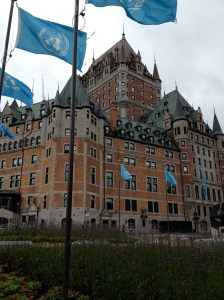
Quebec City, site of the XXXIII FIMS
World Congress of Sports Medicine
CJSM will be there: will you?

2014 promises to be a big year in sports and sports medicine.  The Winter Olympics take place in Sochi, Russia; the FIFA World Cup is in Brazil; and the Commonwealth Games are in Glasgow, Scotland.   On the sports medicine front, the Canadian Academy of Sports and Exercise Medicine (CASEM) hosts the FIMS 2014 World Congress of Sports Medicine in Quebec City, and earlier in the spring the AMSSM annual meeting takes place in the Big Easy.  And this brief listing, of course, merely scratches the surface of what is to come.

But before I get ahead of myself, best to hold on to the mantra, “Be Here Now,” and share with you a little of what’s in store when you delve into this month’s CJSM.

Headlining the November issue is CASEM’s position statement on the mandatory use of bicycle helmets.  This document is a revision of a previous statement made in 2002, and incorporates the medical evidence in support of such use that has accumulated over the last 10+ years.  There is an associated lead editorial by Murray Maitland, PhD that is definitely worth a read as well.

I was particularly interested in the CASEM offering at least in part because I am a regular bicycle commuter here in Columbus, Ohio who recently had his interest in such matters piqued after reading a provocative article in the NY Times:  “Is it OK to Kill Cyclists?”

That’s a rhetorical question mind you!

First having ensured the life insurance policy had been paid up, I then read through the CASEM statement, which packs a lot in two pages.  The statement surveys the field of what is known about the use of bicycle helmets and injury prevention, and then makes recommendations.  Some of the salient points I walked away with: 1) wearing a properly fitted helmet decreases head injuries by 63% to 88% in all ages of bicyclists; 2) introduction of legislation (i.e. not merely relying on education campaigns) is associated with a decreased injury rate and has not been shown to decrease ridership (importantly, as we seek to increase physical activity in our sedentary population); 3) youth populations are more likely to wear helmets where there is legislation that applies to riders of all ages as opposed to only 18 years and younger; 4) youth are more likely to wear helmets when cycling with an adult wearing a helmet (95%) than when cycling with an adult not wearing a helmet (41%).

The CASEM statement draws several conclusions from these data, but most importantly recommends “That all Provincial and Territorial governments should enact comprehensive legislation mandating that bicyclists of all ages wear helmets.”

I would concur with those recommendations, and I would love to hear your thoughts after reading the CASEM statement, either here in the comments section or on twitter @cjsmonline.  The CJSM executive editor, Chris Hughes, has written about this subject in a 2011 blog post, and notes that the associated poll of the readership taken at that time got more traffic than any other.  I’m hoping this month’s articles on the subject, and this blog post, encourages that same sort of commentary.

923380_10151585476514581_1263666389_n

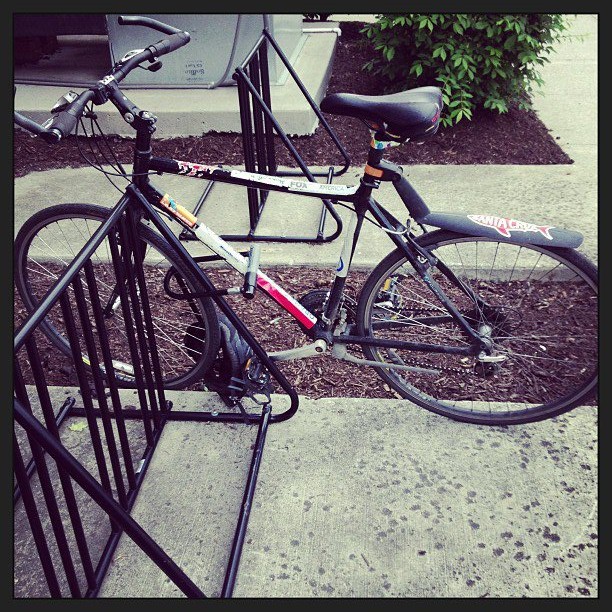
My trusty steed has been known to fail me;
I’m happy to have a helmet on when riding it

My position on the matter (pro) is uncomplicated.  I think the data are clear and in favor of mandatory use of bicycle helmets:  mandatory legislation reduces serious injury; it encourages the most vulnerable (children) in the use of an injury prevention device; and it has not been shown to decrease ridership. Read more of this post

National Council on Youth Sports Safety

988780_10151971065024581_1620105790_n

Strained metaphor?
Like the Washington Monument,
our approach to concussions is
under revision

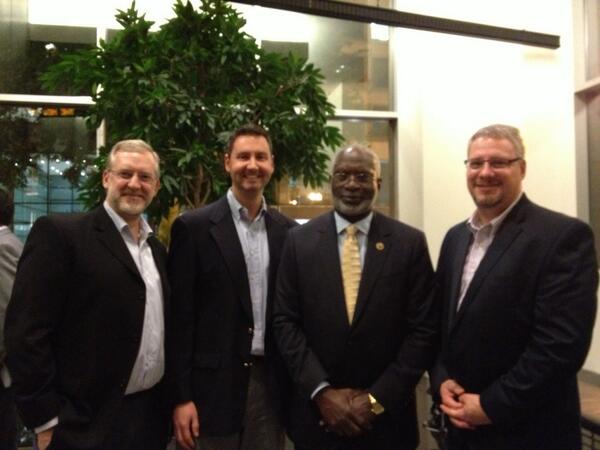
I am in Washington D.C. Thursday and Friday as a participant in the National Council on Youth Sports Safety (NCYSS), being put on by the Protecting Athletes and Sports Safety (PASS) Initiative.  Our host and keynote speaker is Dr. David Satcher, the former Surgeon General who has devoted his life to issues of public health, and has recognized that the concussion ‘epidemic’ has become a game changer in the field.

I’ve met a variety of high profile leaders, in addition to Dr. Satcher, in the world of youth sport concussion during my 24+ hours on the ground in D.C.

I don’t suppose it’s surprising,  but I think one of the most important components of these sorts of meetings is the networking:  I am coming out of this conference with at least three rather solid collaborative research ideas, not to mention commitments to work on other projects with several of the conference attendees.

BYhLP9pCEAAWm_P

Physicians from Nationwide Children’s Hospital and
Dr. David Satcher, former United States Surgeon General

On a ‘meta’ level, what I was struck by in this conference was the theme that was consistently struck:  we need more scientific research on youth sport concussion, and the urgency behind this need derives fundamentally from two areas–1) the often undervalued but critical importance of mental health and 2) the risk of children in being inactive.

In other words,  as concerned as we need to be about reducing the risk of concussion, about reducing possible long-term mental health issues consequent to this injury, we need to balance this concern with he equally strong demand that we promote physically active children.

In fact, it’s not simply the effect of sport and exercise on obesity, but also their positive effect on mental health:  for instance, physically active kids are less prone to depression.  And so, if one were concerned solely with mental health, he would need to navigate the twin perils of traumatic brain injury and physical activity.

At CJSM, we are on the frontline in these issues.  We publish original research on concussion in almost every one of our journal editions.  The November issue for  instance has an excellent study on predicting clinical concussion markers at baseline.   In the same issue we published the Canadian Academy of Sports and Exercise Medicine Position Statement on the mandatory use of bicycle helmets:  an issue of keeping youth and others safe while they are physically active.

BYkmR_SCYAA5gMH

@cjsmonline (attached to laptop)
tweeting from #NCYSS before
catching that plane

I am leaving D.C. struck….by the sight of the Washington Monument under scaffolding!  In truth, I am more than ever struck by how big of an issue concussion has become, and how it will remain central to primary care sports medicine research for years to come.  There are lots of questions that need answers.  We’ll be working on this continuously here at CJSM.